Con Dao, known as the Pearl Island of the East Sea, was once the infamous “Hell on Earth” — a prison island that existed for more than 113 years. It is also the final resting place of over 20,000 revolutionary soldiers who sacrificed their lives for Vietnam’s independence. Today, Con Dao has become one of the country’s most meaningful spiritual destinations, where historical relics remain intact and thousands of visitors come to pay tribute every year.
Below are the 9 most iconic spiritual and historical sites in Con Dao you should not miss.
Con Dao Pier 914 – a tragic symbol of forced labor
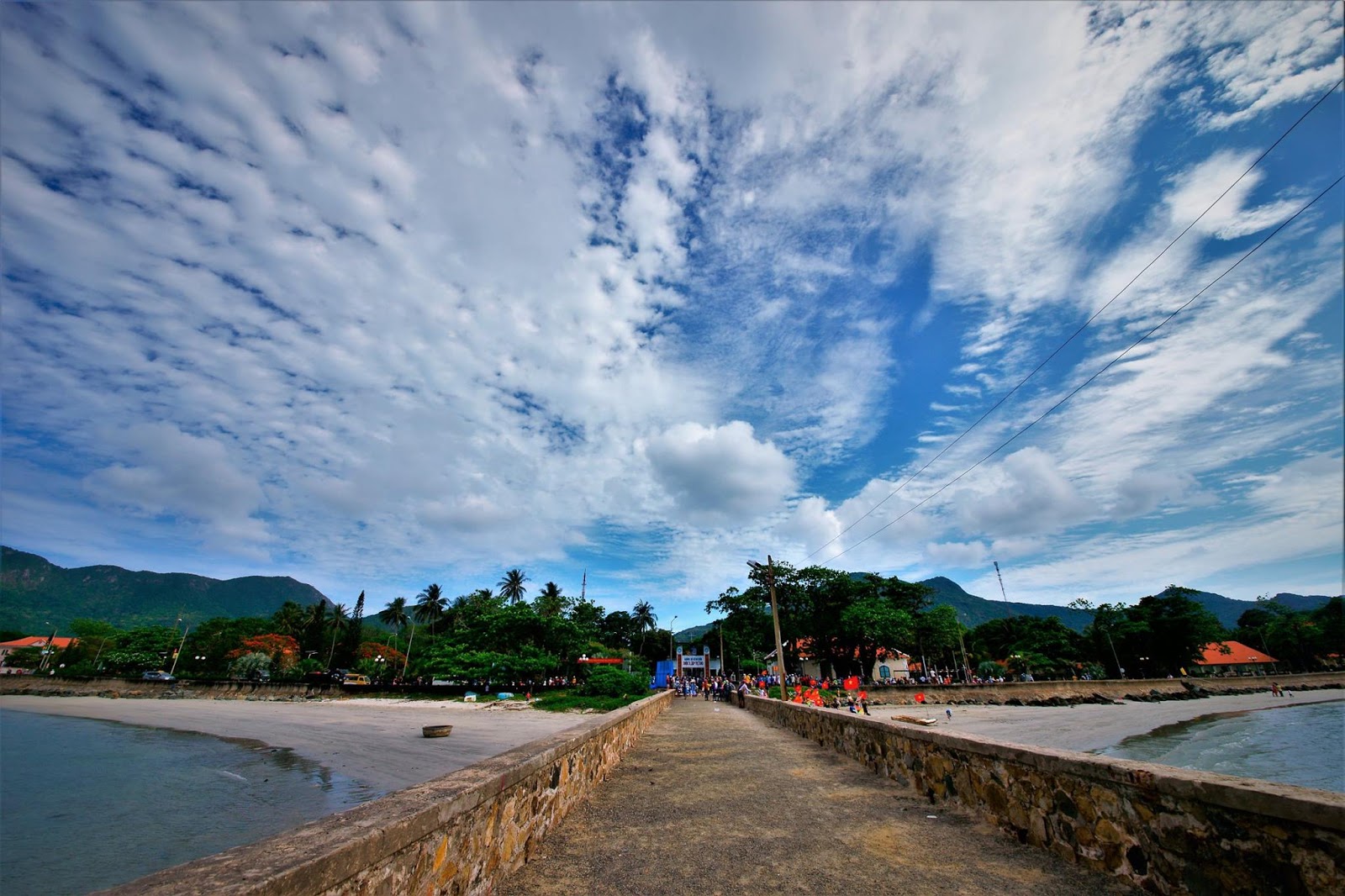
Built in 1873 in front of the Governor’s Palace, Con Dao Pier 914 was constructed using massive stone blocks weighing several tons each. Hundreds of prisoners died while carrying these stones, giving rise to the symbolic number “914.”
This pier witnessed countless brutal punishments — yet it also witnessed the jubilation of freedom during the August Revolution in 1945 and national reunification in 1975.
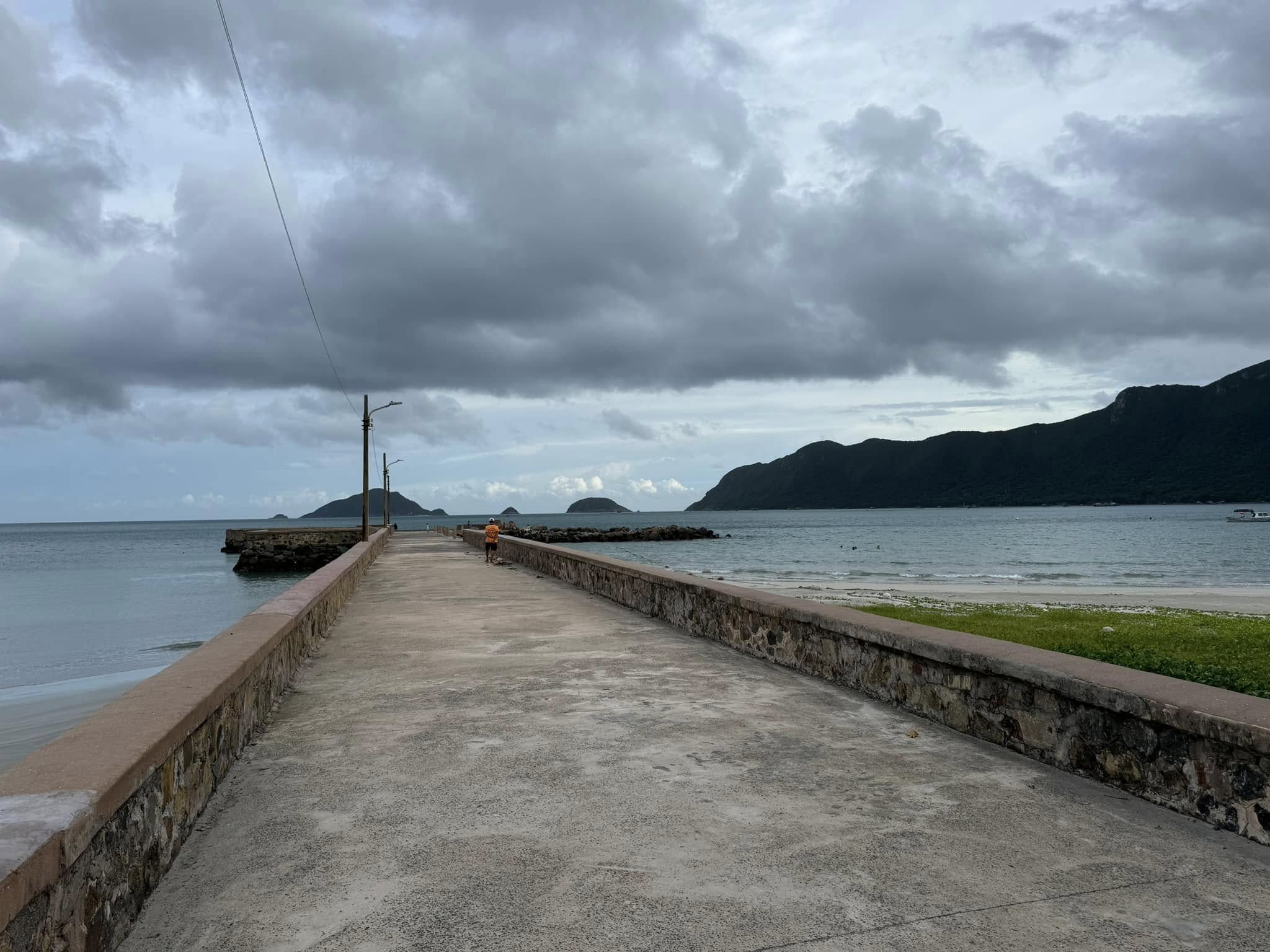
Recognized as a Special National Relic (Decision 548/QĐ-TTg, 10/5/2012).
Hang Keo Cemetery – the first resting ground of Con Dao’s prisoners
Covering 80,000 m², Hang Keo Cemetery was where nearly 10,000 prisoners were buried during the early 20th century until the period of “White Terror” in 1940–1941.
The prisoners had a saying full of sorrow:
“Côn Lôn đi dễ khó về,
Sống nương Núi Chúa, thác về Hàng Keo.”
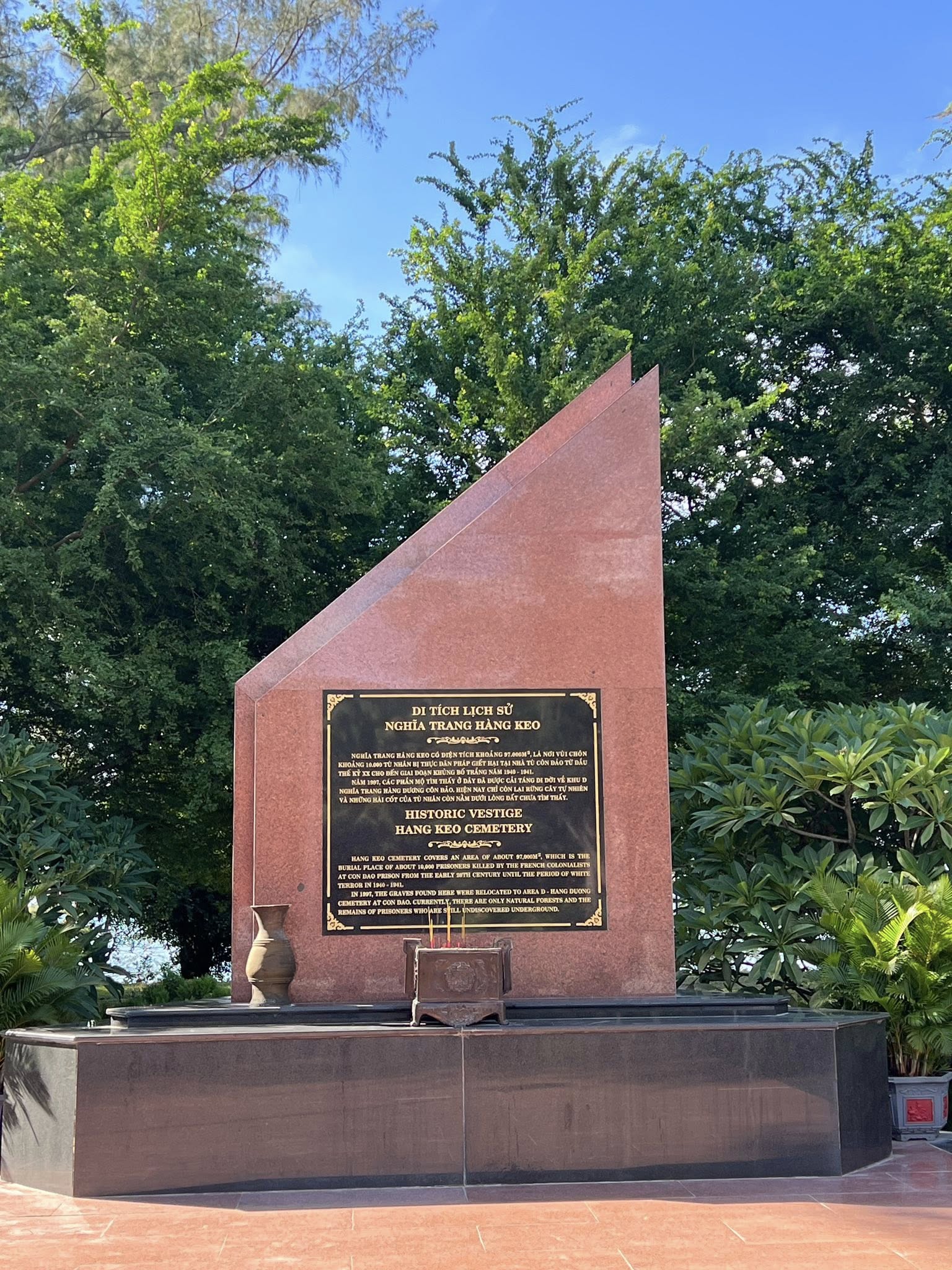
Most remains have been relocated to Hang Duong Cemetery, but beneath this forested area still lie countless unidentified prisoners.
Recognized as a Special National Relic.
Con Dao Temple – honoring heroic souls
Constructed from 2009 to 2011 on a site of over 30,000 m², Con Dao Temple features 10 architectural structures including the Main Hall, Bell Tower, Five-Element Lake, and ceremonial courtyard.

This is a sacred place dedicated to national heroes, revolutionary soldiers, and innocent civilians who perished throughout 113 years of oppression.
Hang Duong Cemetery – the spiritual heart of Con Dao
As the largest cemetery on the island (190,000 m²), Hang Duong is the resting place of thousands of Vietnamese revolutionaries from different periods. The site is divided into four areas: A, B (B1/B2), C, and D.
Prominent graves include:
- Lê Hồng Phong – Former General Secretary of the Communist Party
- Nguyễn An Ninh – patriot and writer
- Võ Thị Sáu – national heroine
- Lê Văn Việt – Hero of the People’s Armed Forces
- Trần Văn Thời – Hero of the People’s Armed Forces (Area D)
Visitors often come to Hang Duong at night to light incense — an emotional, unforgettable experience.
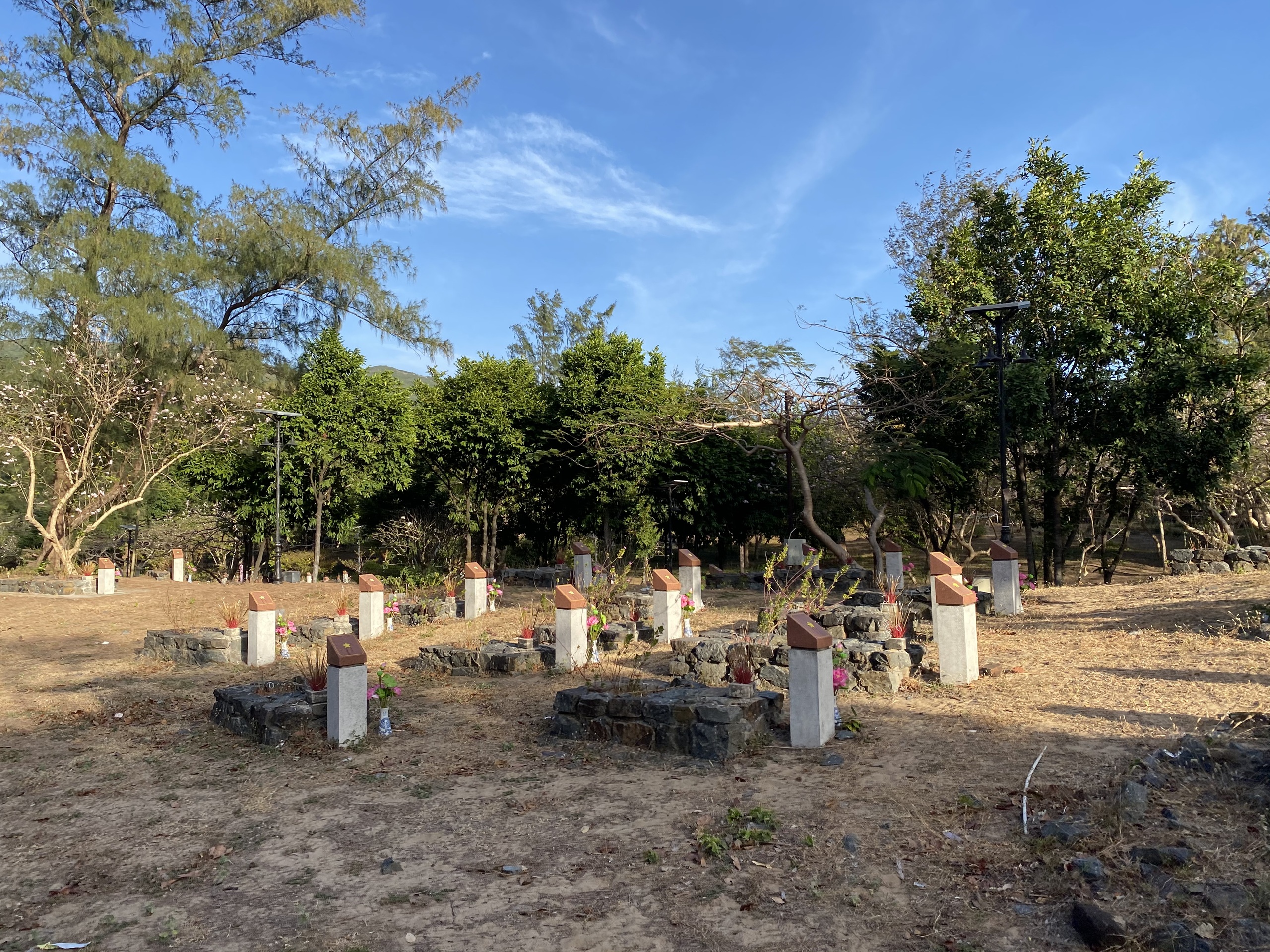
Recognized as a Special National Relic.
Ma Thien Lanh Bridge – an unfinished construction built with blood
Started in 1930, Ma Thien Lanh Bridge was built on a steep, dangerous mountain trail. Prisoners were forced to cut rocks, carry timber, and work under harsh conditions. Hundreds died due to starvation, exhaustion, falling rocks, and brutal beatings — long before the bridge could be completed.
Its name, “Ma Thien Lanh,” symbolizes hardship and death, reminiscent of the treacherous mountain in Chinese folklore.
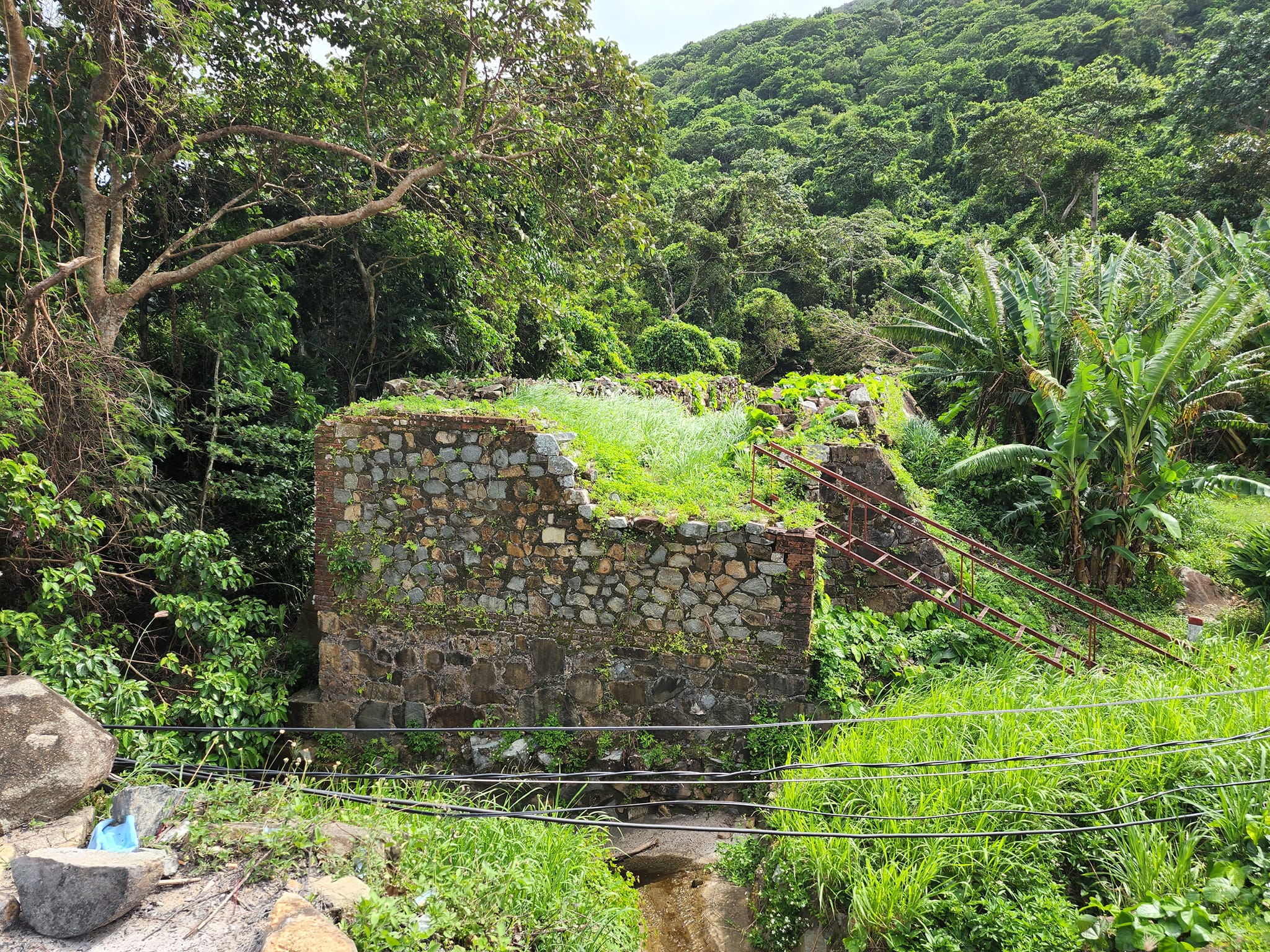
Recognized as a Special National Relic.
Nui Mot Pagoda (Van Son Pagoda) – the most scenic temple in Con Dao
Built in 1964 by the US-backed regime, Nui Mot Pagoda served both religious needs and political propaganda purposes.
Perched on Mount One, the pagoda offers breathtaking views of Con Son Town, An Hai Lake, and the surrounding mountains. Today, it stands as a symbol of peace, traditional Vietnamese architecture, and spiritual harmony.
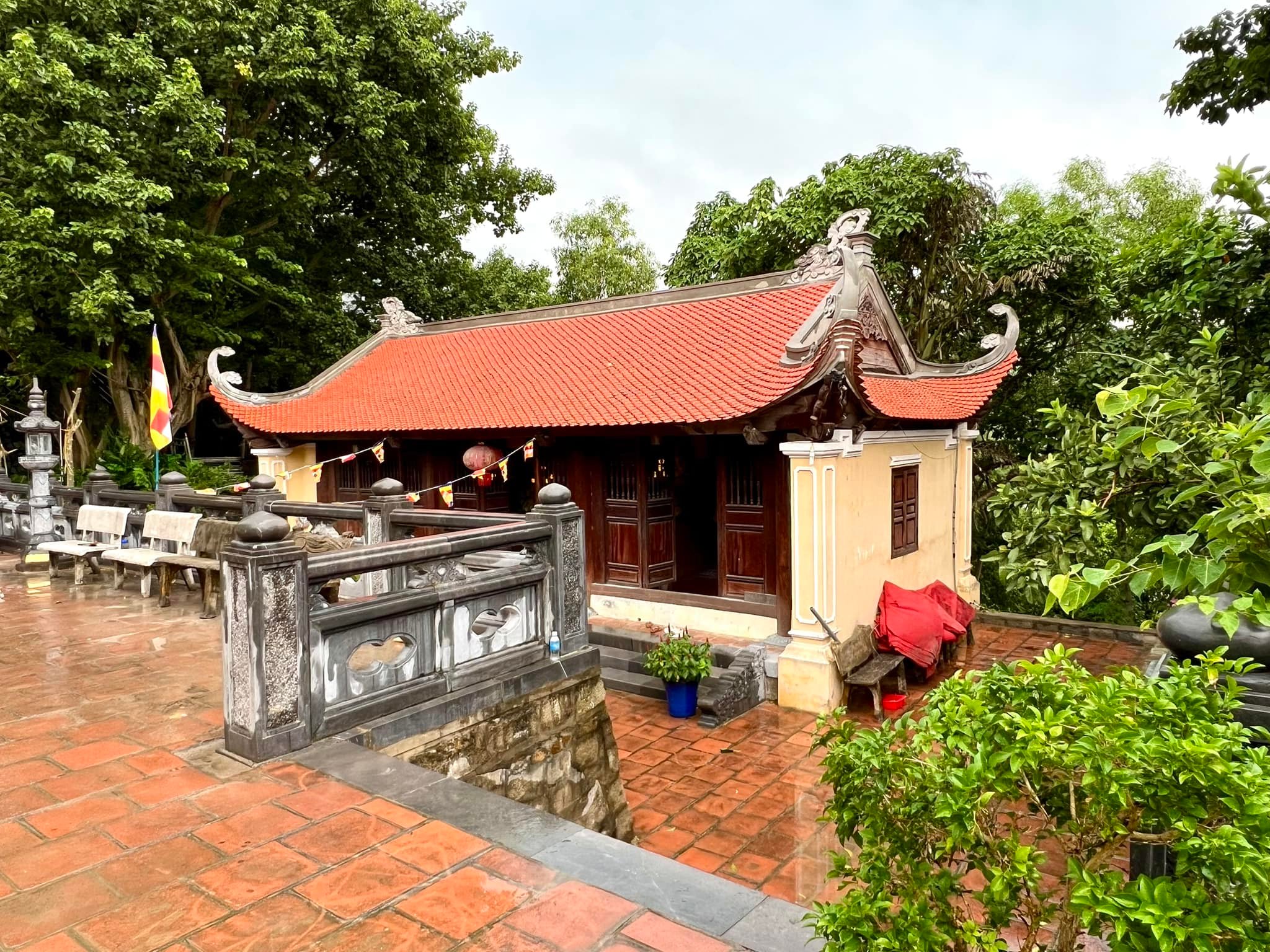
Recognized as a provincial cultural and historical site.
Phi Yen Shrine (An Son Shrine) – honoring a virtuous woman
Phi Yen Shrine worships Lady Phi Yen (Lê Thị Răm), concubine of Lord Nguyễn Ánh. According to legend, she opposed his plan to seek foreign military support, and as a result, she was imprisoned on Hon Ba Island.
Lady Phi Yen chose to end her life to preserve her virtue, and the people built a shrine to honor her loyalty and courage.

Every year on the 18th day of the 10th lunar month, a solemn memorial ceremony is held.
Recognized as a provincial historical relic.
Cau Shrine – resting place of Prince Cai
The shrine worships Prince Hội An (Prince Cai), the young son of Lady Phi Yen and Lord Nguyễn Ánh. When he cried out for his mother as the fleet prepared to flee, he was thrown overboard. His body washed ashore in Co Ong Village, where villagers buried him and built a shrine.
Today, Cau Shrine is a beloved place for locals and visitors to pray for peace, health, and protection.
Ngu Hanh Shrine (Shrine of the Five Goddesses)
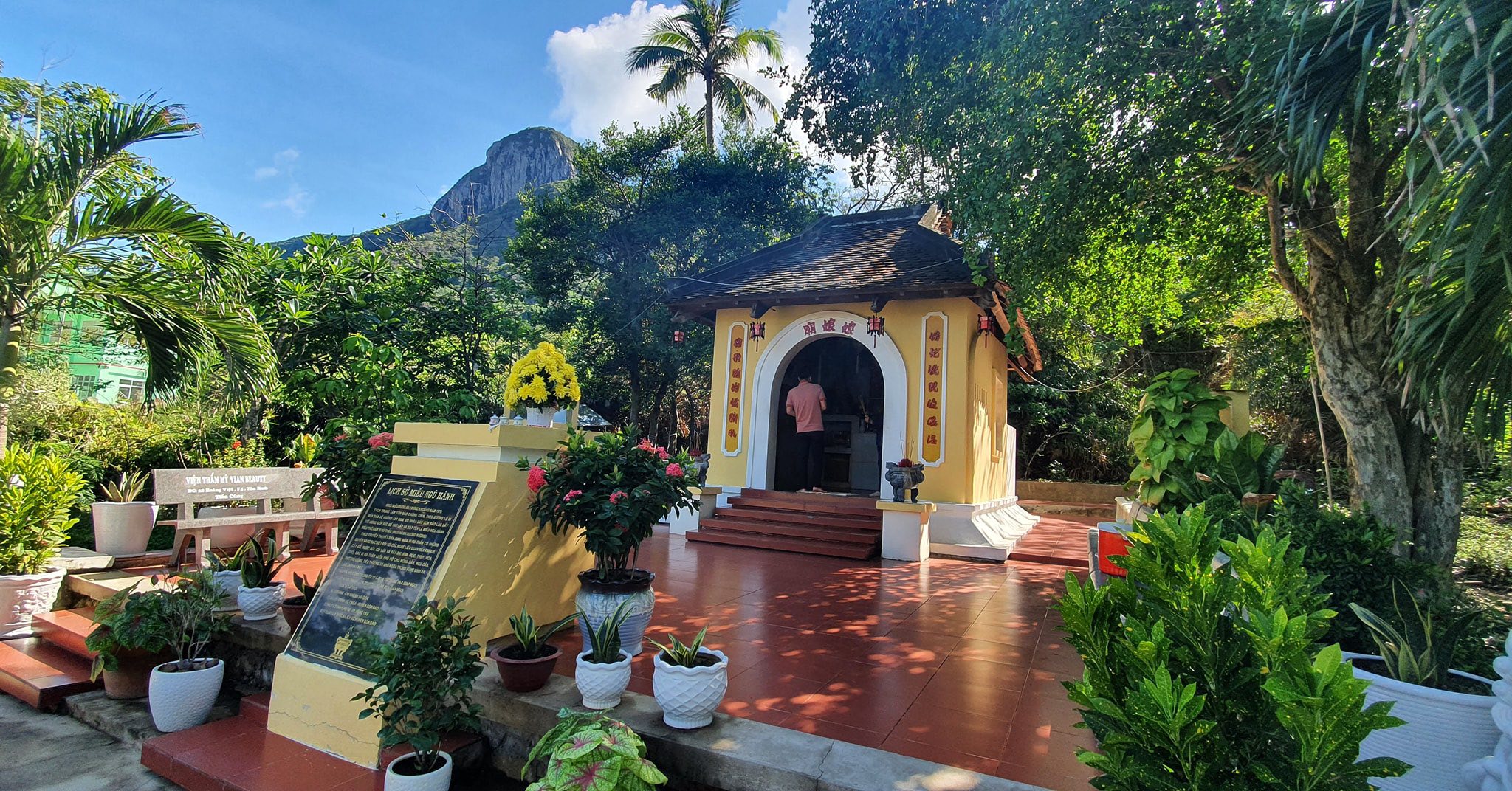
Built around 1967, Ngu Hanh Shrine was dedicated to the Five Element Goddesses representing Metal – Wood – Water – Fire – Earth. It served as a spiritual sanctuary for soldiers, officers, and local families on the island.
Today, it remains an important cultural and spiritual site where people pray for calm seas, good weather, luck, and prosperity.
Visiting Con Dao’s spiritual sites is more than a sightseeing trip — it is a deeply emotional experience that honors the resilience, sacrifice, and indomitable spirit of those who fought for the nation. Each relic tells a story, reminding generations of the value of peace and freedom.