When I was still a child, the very first book I ever read was Crossing Con Dao by Phung Quan. One afternoon after herding buffalo, hungry and rummaging through my mother’s stash of peanut seeds to steal a handful, I stumbled upon the book hidden deep in a rice bin. More than half a century has passed, yet the characters from that book still linger vividly in my mind. Since then, I had always carried a quiet wish: one day, I must set foot on Con Dao.
Last year, during a business trip opportunity, I finally decided to go. The afternoon before leaving, I visited Ben Thanh Market to buy three bunches of white lilies, a horn comb, and a thin voile scarf—simple offerings from a visitor coming from Ho Chi Minh City.
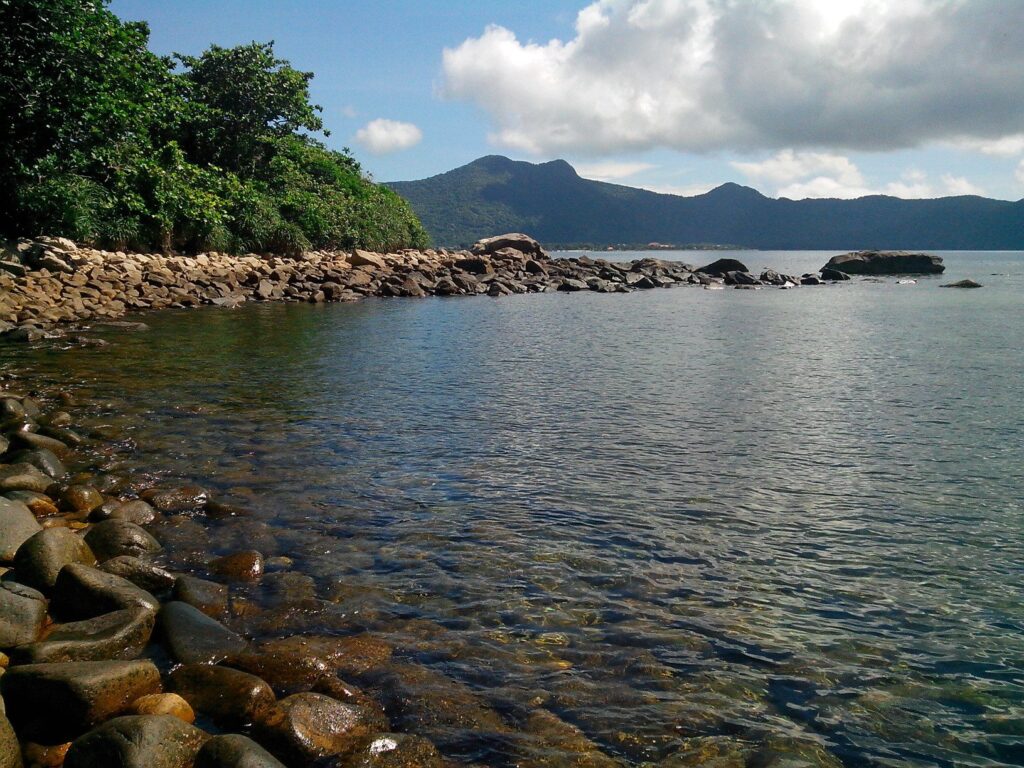
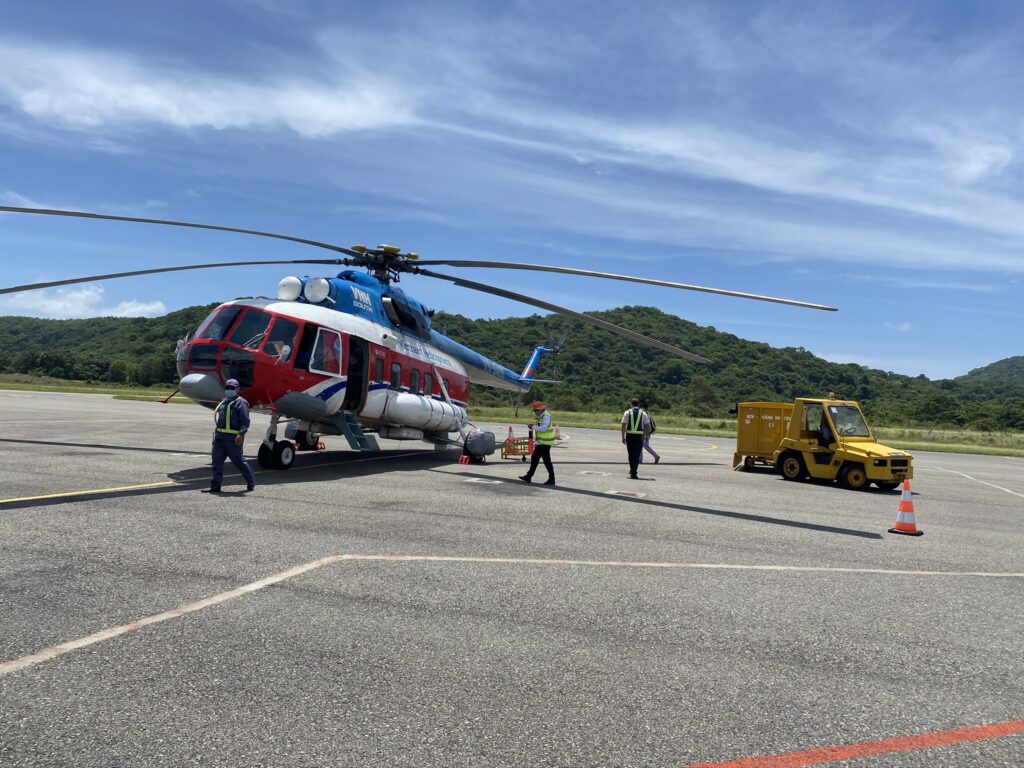
From the window of the ATR-72, Con Dao unfolded beneath me like a deep green crescent-shaped valley surrounded by mountains and floating alone in the vast blue sea. When the plane touched down at Co Ong Airport under bright sunlight and ocean wind, passengers hurriedly stepped out, capturing their first precious moments. As for me, I stood still for a moment, turning slowly, overwhelmed by the realization that I had finally arrived at this place once called “hell on earth.”
Located 97 nautical miles from Vung Tau, Con Dao consists of 16 islands. The distance from the airport to the town center is around 15 km. It was the dry season, and the weather was cool and gentle. That evening, after washing away the dust of travel, my companions and I brought incense and flowers to Hang Duong Cemetery and the Memorial of Heroine Vo Thi Sau. The late afternoon air felt strangely quiet; fallen almond leaves rustled along the empty roads as the sea winds pushed them toward the historic pier. Waves crashed violently, sending white foam into the air. Walking toward the cemetery, I gazed at the majestic silhouette of Nui Chua rising before us. I soon realized we were not alone—pilgrims from the North, Central, and South had come here on spiritual tours, by air or by boat from O Cap Port. Each person had their own reason for traveling to Con Dao, but all wished to light incense in gratitude to the Vietnamese souls who sacrificed for the nation’s freedom.
As night fell, Hang Duong Cemetery shimmered with soft lights powered by solar energy—like countless spirits still watching over the island. Locals said that except during heavy storms, the cemetery is never empty. When I arrived, people patiently formed a quiet line around the grave of Vo Thi Sau. White lilies covered the ground, incense smoke curled into the night, and the fragrance of agarwood filled the air. As I waited my turn, I suddenly heard in my mind the song by Nguyen Duc Toan:
“Though Sister Sau has fallen, her voice still echoes in the hearts of those who live on…”
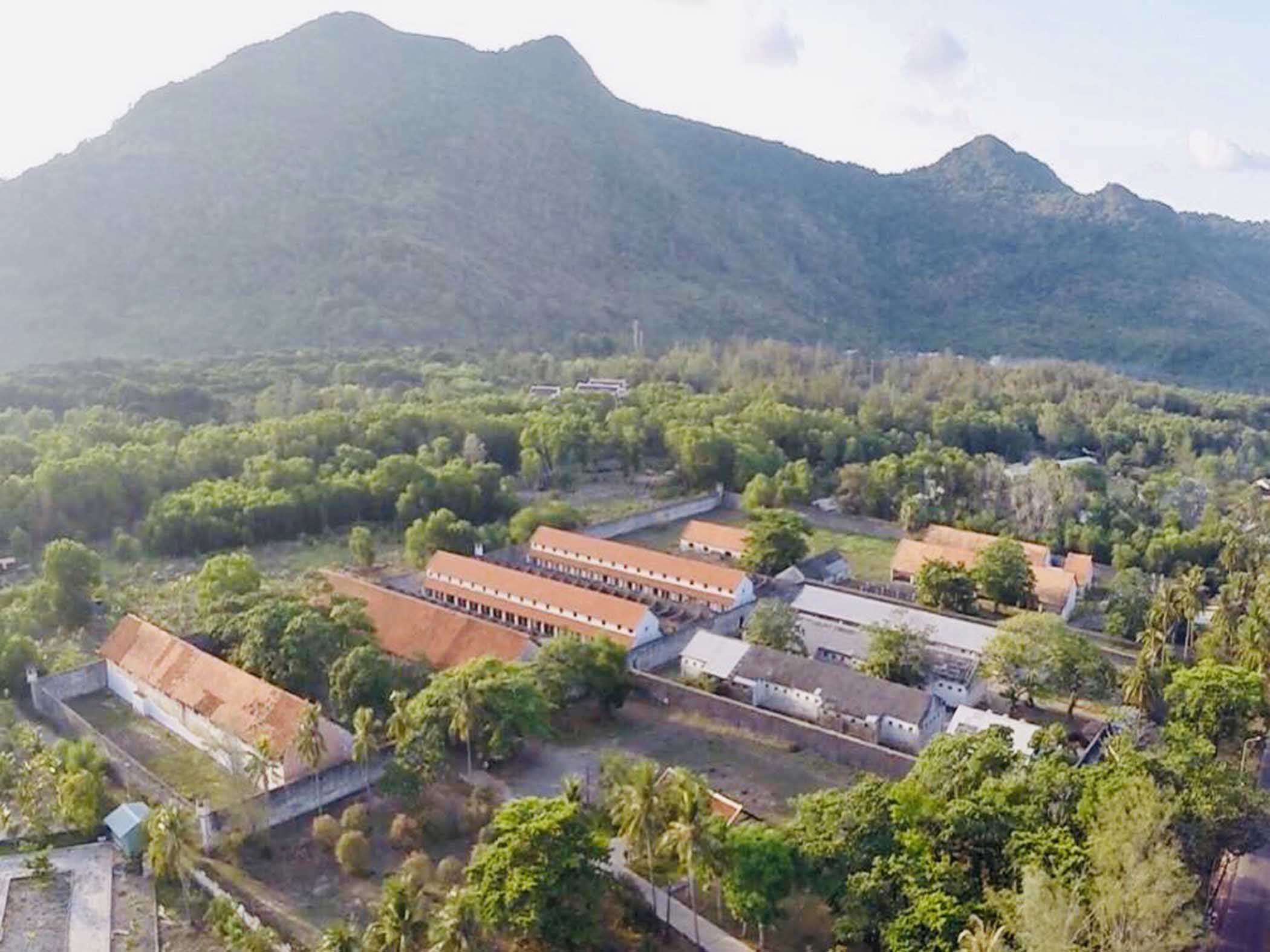
Early the next morning, I had the honor of joining a group of former Con Dao prisoners from the Southeast provinces visiting the old prison sites. I saw with my own eyes the French tiger cages, the American tiger cages, the isolation cells, and the grain-milling pit—where prisoners endured horrifying torture. The enemy once forced Uncle Ton Duc Thang into that pit intending to harm him through the hands of hardened criminals. Yet remarkably, he not only survived but reformed their behavior, earning their respect.
If the French tiger cages already sent chills down our spines, the American ones were even worse. Listening to survivors recount the brutal torture methods, one person in our group fainted on the spot. From Phu Tuong Camp to Phu Binh and then Phu Hai, we made our way toward Ma Thien Lanh Bridge and offered incense at Skull Hill. I could hardly imagine the scenes of revolutionaries being locked underground in cattle pits filled with waist-deep filth—had it not been for the former prisoners describing them in heartbreaking detail.
For more than a century, the Con Dao prison system was a revolutionary school, a place where unbreakable wills were forged. Iron and stone may rust with time, but the spirit of the revolutionaries remains eternal. Every inch of this land carries the blood and suffering of tens of thousands of patriots. And although Con Dao is now celebrated as one of the world’s ten most beautiful islands, visitors should still walk softly and lower their voices. For in the deep quiet of night, the wind still whispers, as if trying to comfort the countless sacred souls resting here.
Perhaps that is why the people of Con Dao are so gentle, kind, and sincere. It may well be the only place in Vietnam where theft, deceit, and social evils are virtually absent. Truly, Con Dao is a sacred land—where each visit cleanses the soul, reminding us to live with dignity, gratitude, and humanity.