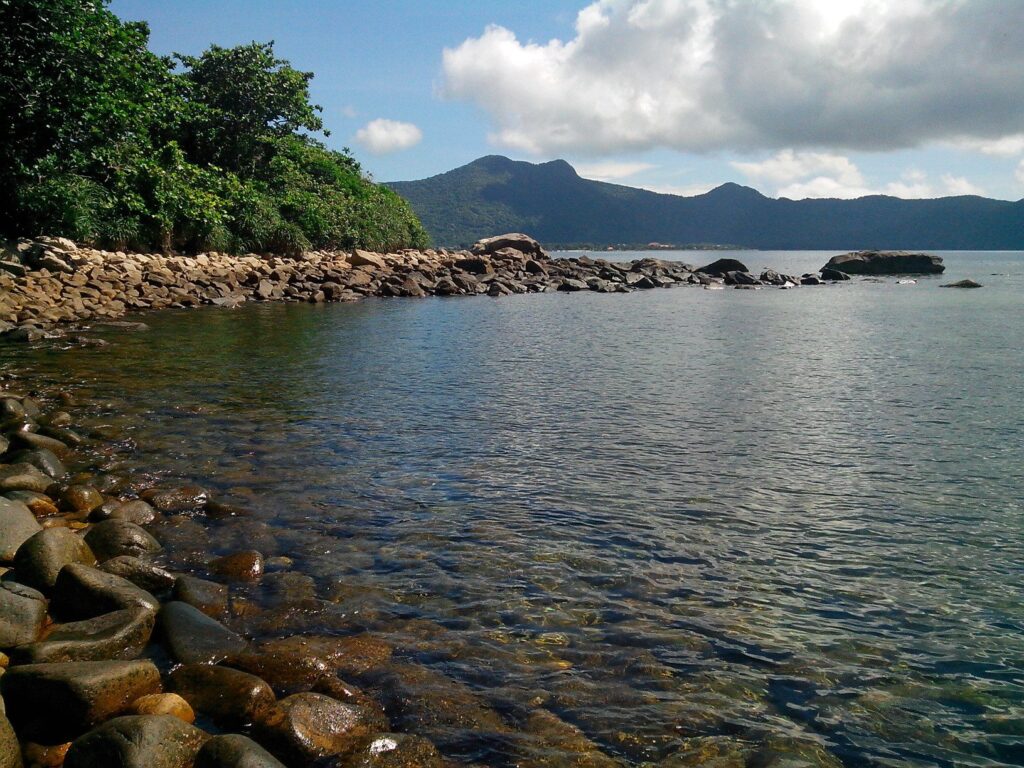
Côn Đảo is a quietly captivating destination, one that always seems to stir curiosity. In geography lessons and on maps, it appears as nothing more than a tiny dot in the sea.
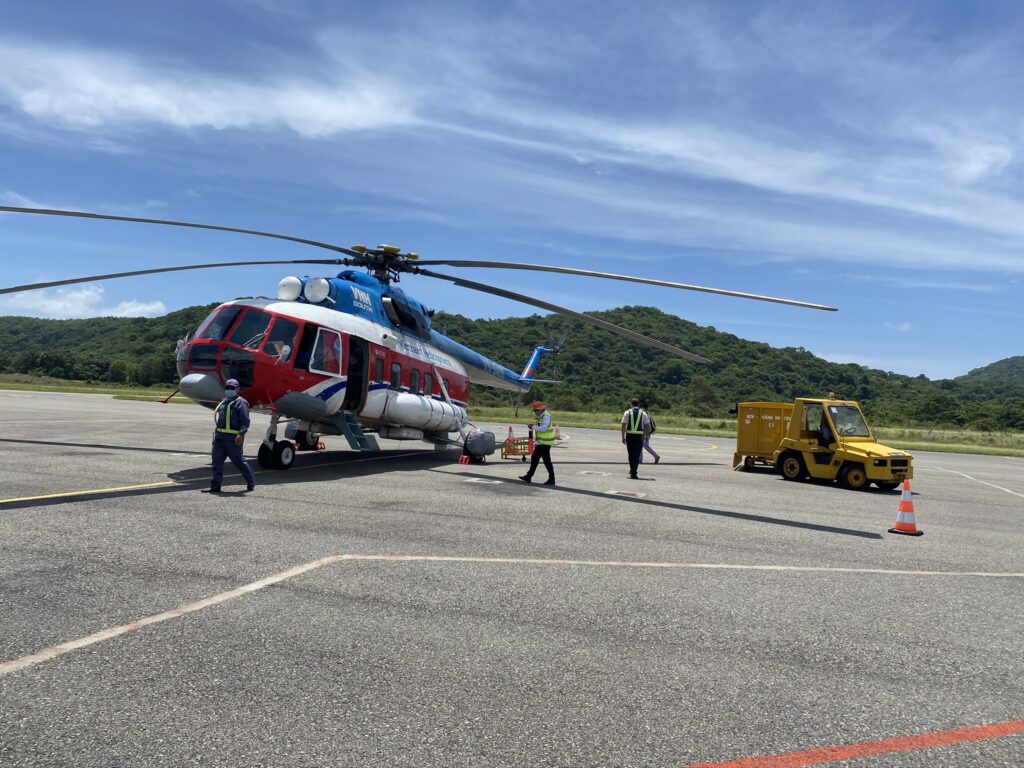
In the past, journeys to Côn Đảo were mostly made by ferry, taking an entire night at sea. Today, travelers can reach the island by high-speed boat from Sóc Trăng, Cần Thơ, or Vũng Tàu, or simply fly in. From Ho Chi Minh City, the flight takes about 50 minutes. The airport here is small and modest—not grand like others—but somehow, it feels perfectly sufficient.
Administratively, Côn Đảo is a district of Bà Rịa–Vũng Tàu Province. The island is laced with narrow, almost empty roads shaded by lush greenery—trees whose names I could hardly identify. We stayed at a small hotel on Võ Thị Sáu Street, which is considered the island’s central axis: close to the market, near historical sites such as the Côn Đảo Prison complex and Pier 914, and within easy reach of cafés. It’s no exaggeration to say that a day of walking is enough to become familiar with nearly every street. The greenery here is carefully tended, giving visitors a sense of calm—quite different from the grim images one might imagine of a former penal colony.
There are very few bánh mì carts—perhaps no more than six in total—and they sell versions similar to those on the mainland. Breakfast spots are mostly clustered around an area known as the old market. While the selection isn’t extensive, it’s satisfying enough, with dishes like phở, hủ tiếu, and cơm tấm—each prepared in a style distinct from the mainland. Cafés, on the other hand, are plentiful. Many have spacious fronts with tables set out along the sidewalks, where guests can sit comfortably since pedestrian traffic is light. We visited four different cafés, each with its own approach, but all shared one thing in common: well-brewed coffee and old, nostalgic music that lends the space a gentle romantic air. As one café owner explained, Côn Đảo is so small that regulars and first-time visitors are easily recognized—but regardless, prices remain fair, with no overcharging.
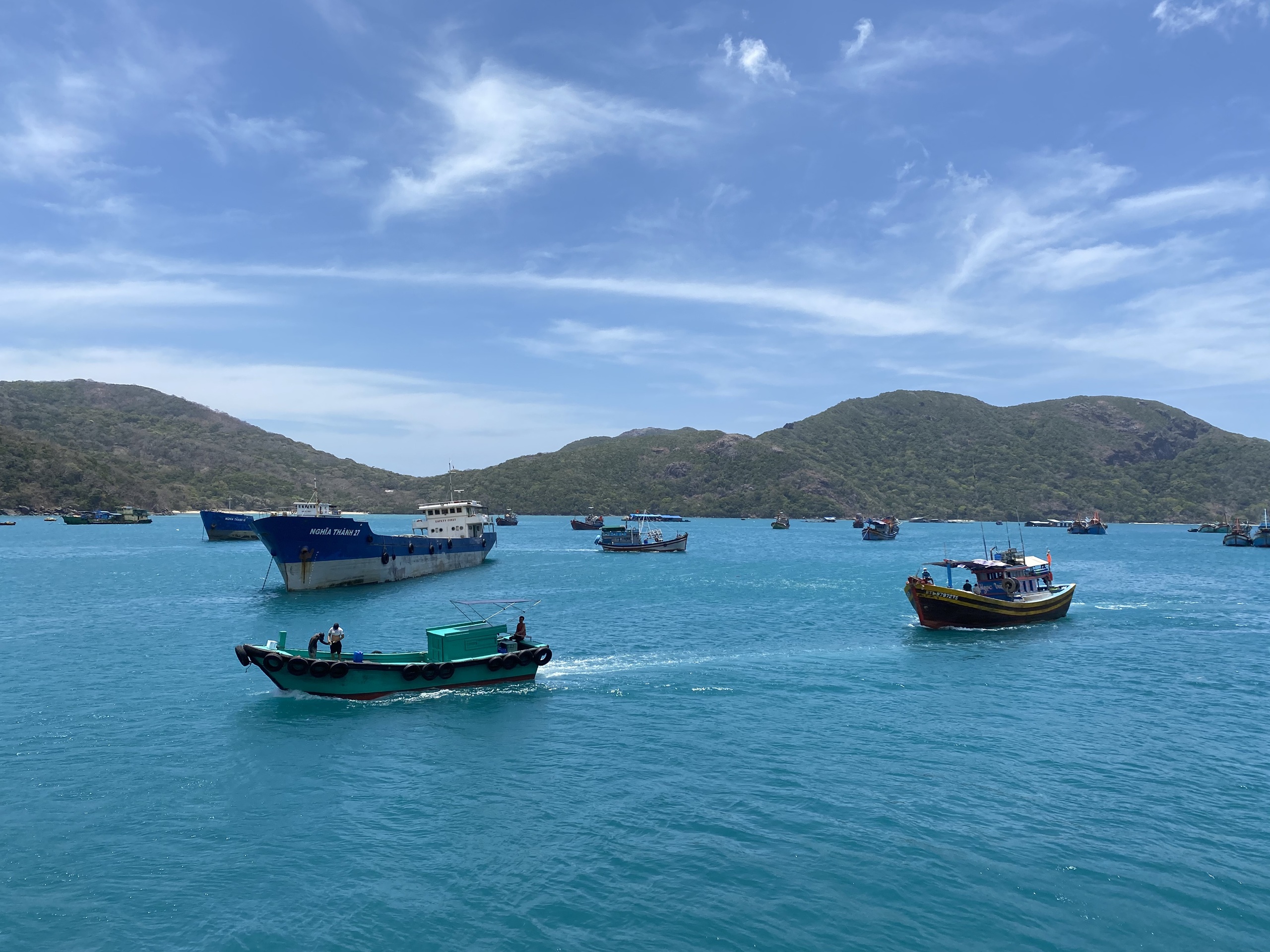
Dining options are fairly diverse, though seafood restaurants are the most popular—unsurprising for an island surrounded by sea, where most locals make a living from fishing. We stopped by a snail eatery near the Côn Đảo market. It was bustling with customers, offering plates of snails priced between 90,000 and 100,000 VND, prepared mainly by steaming or salt-roasting depending on the variety. One standout dish was sun-dried mackerel, remarkably flavorful at 250,000 VND per kilogram. And then there are the tropical almond seeds—hạt bàng—a local specialty that nearly every visitor buys as a souvenir. Online prices average around 500,000 VND per kilogram, but at the market they sell for about 400,000 VND for roasted seeds, and 350,000 VND for those mixed with sugar, ginger, or pandan leaves. Some shops outside even offer them for 350,000 or as low as 300,000 VND.
Võ Thị Sáu Street is also lined with flower vendors selling blooms brought in from Đà Lạt for visitors paying respects at Hàng Dương Cemetery and the grave of Võ Thị Sáu. Alongside visits to the museum, prison sites, the governor’s residence, and the Tiger Cages, a pilgrimage to Hàng Dương Cemetery is an essential part of the journey. Offerings typically include white lotus, rose, or chrysanthemum arrangements. A basket with flowers and fruit costs around 350,000 VND, while flower-only offerings range from 150,000 to 300,000 VND. The demand is high, and flowers sell quickly. From Võ Thị Sáu Street, it’s just a short walk to the sea. Near Pier 914 stands a memorial honoring the 914 prisoners who lost their lives while building the pier. The coastal road here is especially beautiful, lined with carefully preserved heritage almond trees. Follow this road straight on, and it eventually leads to Cỏ Ống Airport.
To me, Côn Đảo feels like a low, resonant musical note. Cars stop obediently at red lights even when there’s no oncoming traffic; vendors speak in the gentle accents of Cần Thơ or Kiên Giang, adding flavor to a morning cup of coffee; and the sound of waves breaking against the shore seems to echo all the way back to the mainland.