
As I wandered through Côn Đảo town at night, the bright rows of shops didn’t surprise me—the colorful signboards of eateries, cafés, karaoke lounges, spas, travel service counters, speedboat tours, squid-fishing trips, snorkeling tours, and airline ticket offices were all glowing beside modern hotels and homestays.
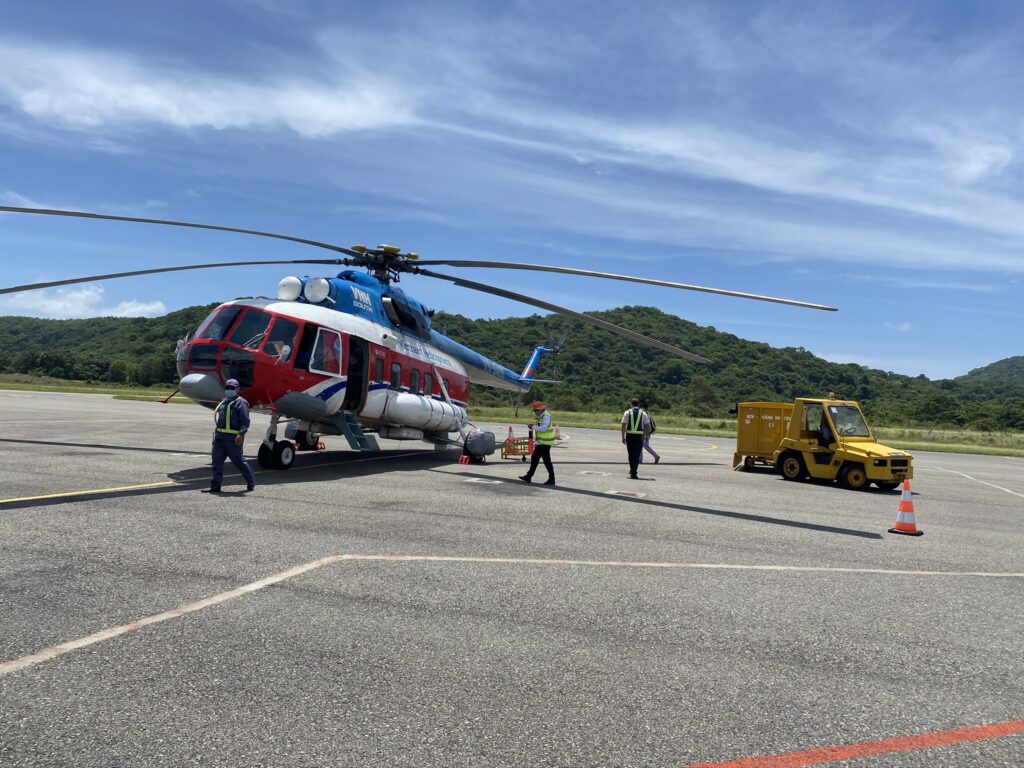
A recent report from the Côn Đảo District People’s Committee notes that the island’s population has surpassed 7,000 people. Tourism now accounts for 71% of the local economy, followed by industry (20%) and agriculture (8%). Four mobile networks, wireless landline service, and high-speed internet cover the entire island. Air Mekong, Vietnam Airlines, Vasco and others operate regular flights from Hanoi, Ho Chi Minh City, and Cần Thơ. Taxis and electric shuttles run nearly 24 hours a day.
Hàng Dương Cemetery – When Night Falls, the Sacred Path Beckons
What truly astonished me was the midnight crowd moving toward Hàng Dương Cemetery, carrying flowers, incense, and offerings. At 11 p.m., the cemetery was even brighter than the town center thanks to towering solar-powered lamps. The atmosphere resembled a spiritual festival—quiet, solemn, yet full of life.
Hàng Dương spans nearly 20 hectares, containing 1,921 graves of revolutionary martyrs. Only 713 of them bear names; the remaining 1,208 rest in anonymity, their identities still lost to time.
Unlike most cemeteries in Vietnam, the graves here are not arranged in neat rows. Instead, they lie scattered across natural slopes, beneath old trees, or along winding footpaths. A cemetery caretaker explained:
“Wherever a martyr’s remains were found, that is where a grave was built. That is why Hàng Dương holds graves everywhere you step.”
He paused, then added quietly:
“Under every patch of soil, every tree root in Côn Đảo… still lie the bones of countless martyrs.”
The Sacred Presence of “Miss Sáu”
In area B2, the grave of the young heroine Võ Thị Sáu was surrounded by hundreds of visitors. Incense smoke drifted thickly around the offerings piled high at her memorial.
Locals often speak of a mysterious story: for years, no tree survived when planted before her grave—until a lê-ki-ma tree brought from her hometown Đất Đỏ finally took root and flourished.
The sight immediately brought to mind the song “Gratitude to Sister Võ Thị Sáu” and its famous line:
“When lê-ki-ma flowers bloom on the red-earth homeland…”
Thạch Chí Nhân, a young Côn Đảo native and guide for HI Phú Quốc, shared:
“Most visitors who come here at night are spiritual travelers—from Hanoi or Saigon. Young people and office workers often come on weekends. After paying their respects, they go swimming, squid fishing, snorkeling or shopping for pearl jewelry.”
With a spirited Khmer-heritage charm, he added:
“Miss Sáu is truly sacred. It’s not only people from the North who come to pray—fishermen here, who are rough and straightforward by nature, would never dare swear using her name.”
Whether every story is accurate or not, the bustling rows of flower stalls, piles of fresh lê-ki-ma fruit, trays of offerings, and handwritten signs reading “We prepare chicken–sticky rice sets for worship” made me believe there must be some truth behind the legends.
Pilgrims also visit the graves of General Secretary Lê Hồng Phong, patriot Nguyễn An Ninh, and other heroes such as Cao Văn Ngọc, Lưu Chí Hiếu, Lê Văn Việt, Nguyễn Thị Hoa, along with many unnamed martyrs. Every stop is marked by a deep sense of reverence.

Other Sacred Spiritual Sites Across Côn Đảo
Following the flow of worshippers, I visited Phú Sơn Pagoda, dedicated to Madam Hoàng Phi Yến, a woman honored for her virtue and loyalty. She was exiled to Côn Lôn Islet (now Hòn Bà) after urging Nguyễn Ánh not to seek French intervention—an act deemed treasonous. Islanders still commemorate her through an annual ceremony.
Continuing toward the old village of Cỏ Ống, I stopped at Miếu Cậu, dedicated to Prince Cải, son of Phi Yến. According to legend, the young prince refused to flee with Nguyễn Ánh unless his mother was rescued. In anger, the king ordered the boy thrown into the sea. Fishermen later built a shrine in his memory as a symbol of filial devotion.
On this island, it is not only Miss Sáu who holds spiritual significance—the stories of Phi Yến and Prince Cải have also become deeply rooted in local belief.
I cannot say for certain where myth ends and history begins. But as I stood before these sacred sites—lighting a stick of incense, breathing the salty ocean air—I felt an unexpected peace.
A quiet gratitude.
A sense of honor for those who gave everything for their homeland.