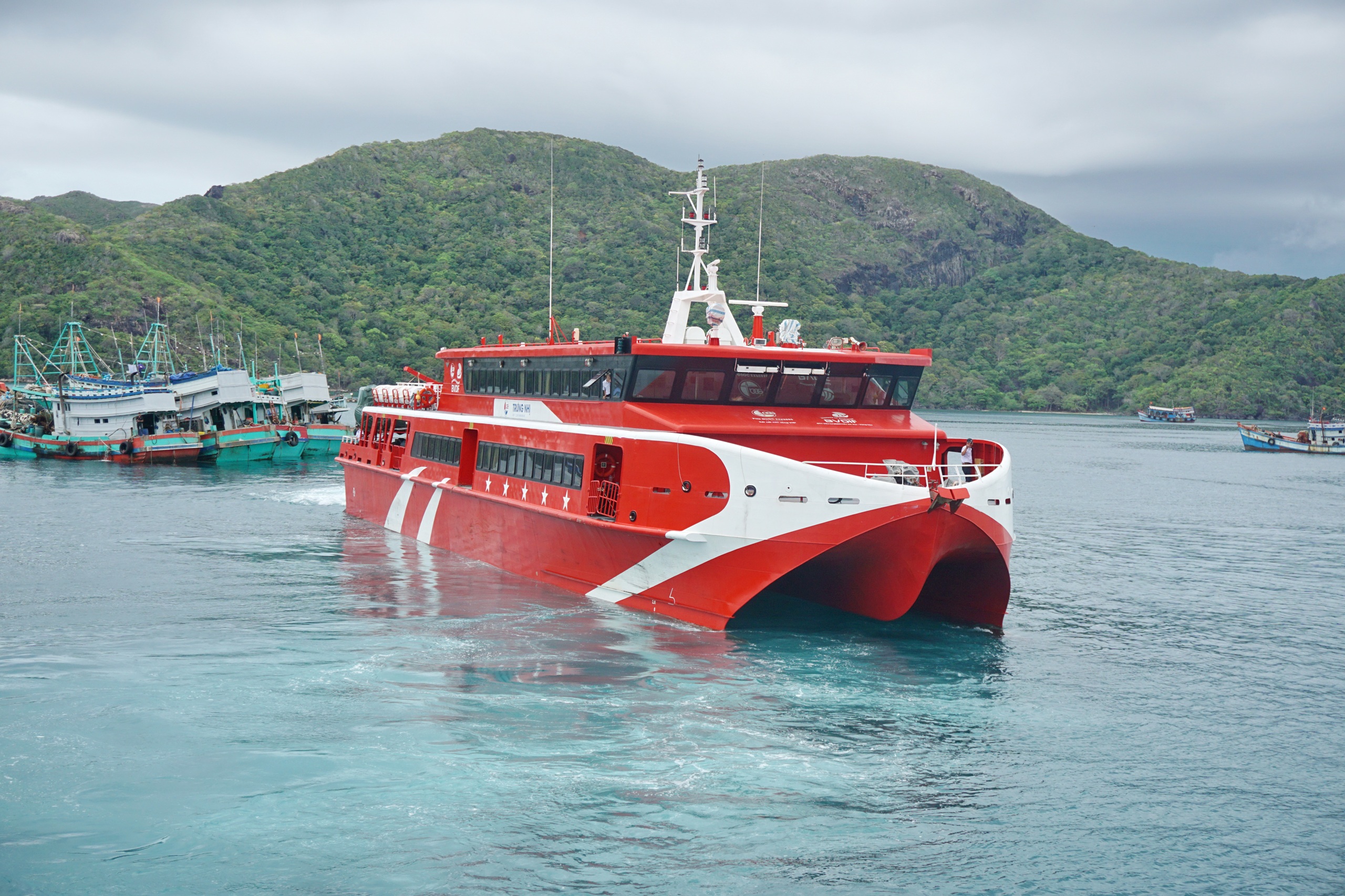
Vietnamese engineers have now fully mastered the technology of designing and building twin-hull high-speed vessels (catamarans). These ships are constructed using a combination of domestic engineering and premium imported materials such as Italian aluminum hulls and world-class Rolls-Royce engines from the United Kingdom.
The localization of technology allows Vietnam to take the initiative in production, reduce costs, and ensure high standards of quality, performance, and durability for vessels serving marine tourism.
The Global Rise of Catamarans — and Vietnam’s Adoption
Catamarans are becoming increasingly popular worldwide thanks to their outstanding stability, speed, and safety. Beyond tourism, twin-hull vessels are also used in military operations, rescue missions, and rapid-response scenarios.
In Vietnam, major passenger routes to islands such as Cô Tô, Lý Sơn, Phú Quý, Côn Đảo, and Phú Quốc now predominantly use catamaran ferries. These vessels are particularly favored by travelers for their smooth ride and reduced seasickness.
Key Advantages of Catamaran High-Speed Vessels
Superior stability – reduced seasickness:
The two-hull design offers significantly better balance compared to traditional monohull boats, reducing roll motion and ensuring a smoother ride—even in rough seas.
High speed with lower fuel consumption:
With reduced hydrodynamic drag, catamarans achieve higher speeds with the same engine power. This shortens travel time and lowers operating costs.
Wide decks and flexible space:
The twin-hull structure allows a much wider deck—up to several dozen percent larger than monohull vessels of the same capacity. This extra space is ideal for additional passenger cabins, cargo holds, amenity areas, or scenic viewing decks.
Lightweight materials and modern technology:
Modern catamarans are built from aluminum alloys or composite materials, making them lightweight, durable, and easy to maintain. Vacuum-assisted bonding technology is used instead of traditional welding, improving noise reduction and structural longevity.
Structure and Technical Characteristics
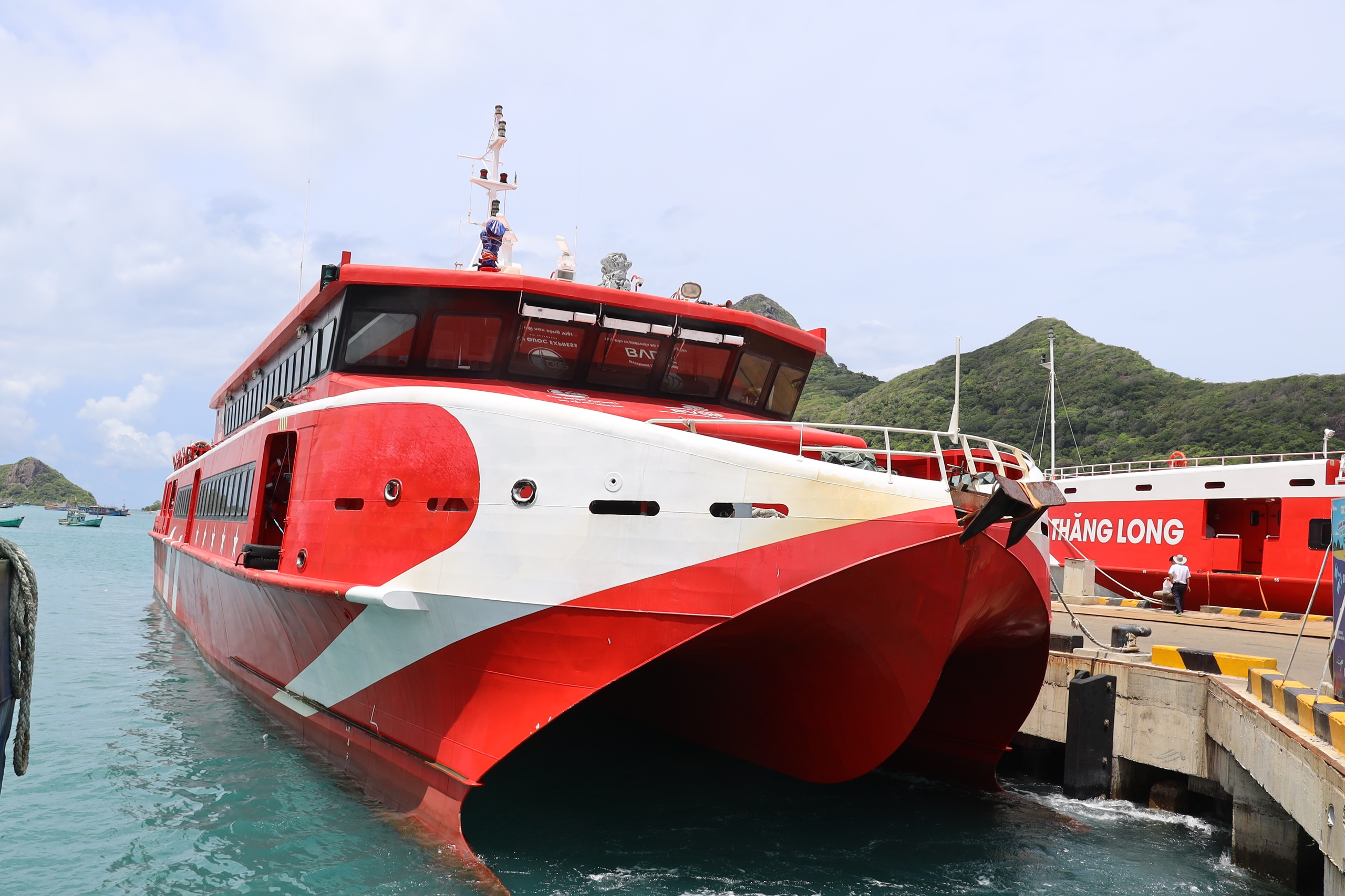
A catamaran essentially consists of two separate hulls connected by a bridging structure. This design resolves the traditional conflict between stability and smoothness—a major limitation of monohull vessels.
With two independent engines, catamarans retain propulsion even if one engine fails. Cross-beam stability is also greatly enhanced, making capsizing virtually impossible and improving overall passenger safety.

Performance and Real-World Applications
Thanks to their low resistance and high speed (Fr > 0.5), twin-hull vessels are perfectly suited for passenger transport, tourism services, and offshore support operations. Their wide deck and adaptable layout also make them ideal for cargo transport, fisheries operations, and maritime patrols.
Notable Catamaran Fleets in Vietnam
Côn Đảo Express – Operating the Vũng Tàu ↔ Côn Đảo route, known for its modern design, large capacity, and exceptionally smooth voyages.
Phú Quốc Express – Serving multiple island routes including Phan Thiết – Phú Quý, Rạch Giá – Phú Quốc, and Sóc Trăng – Côn Đảo.
All of these vessels meet international standards, utilize advanced shipbuilding technology, and contribute significantly to the growth of Vietnam’s marine tourism industry.