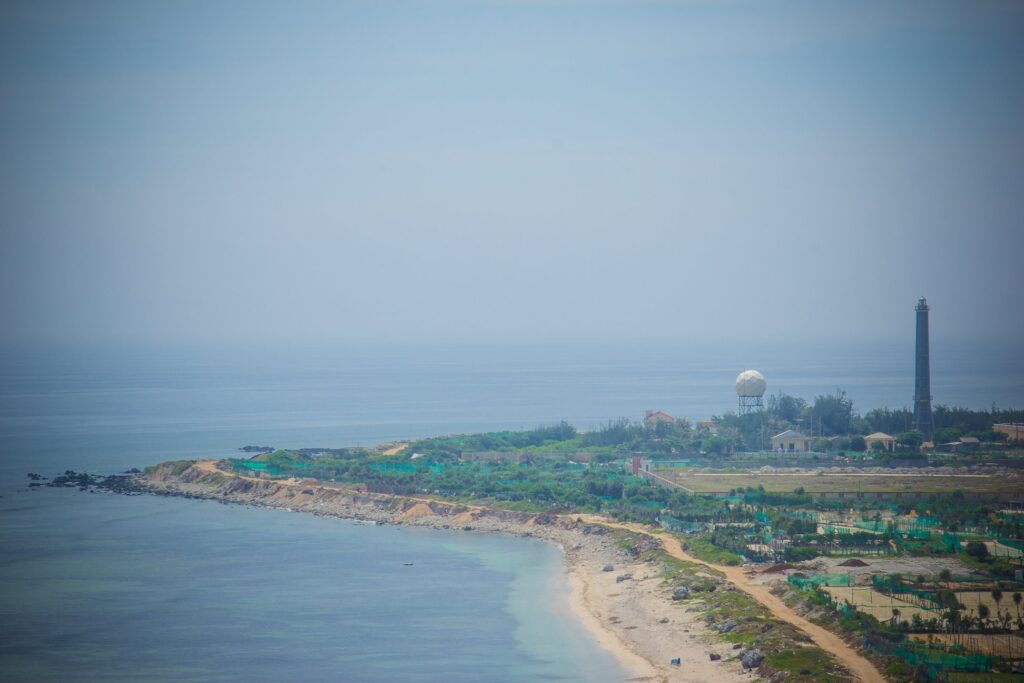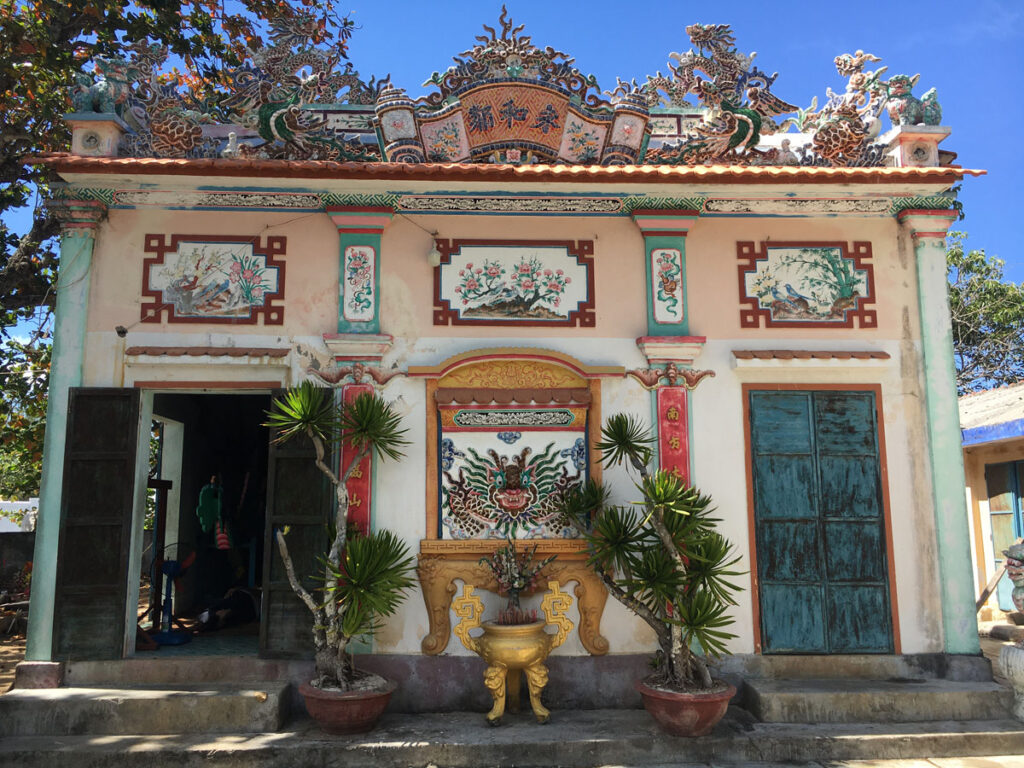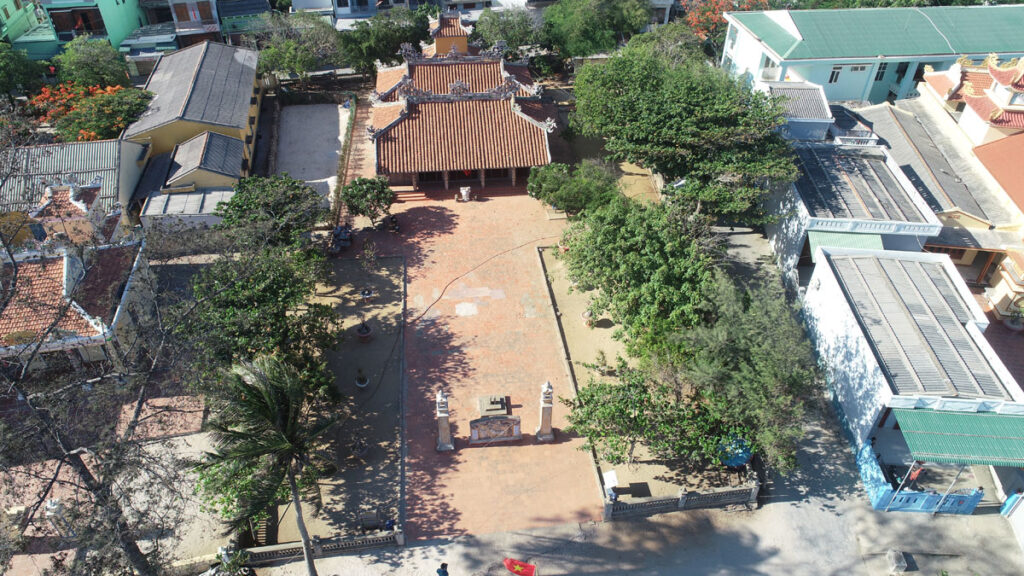
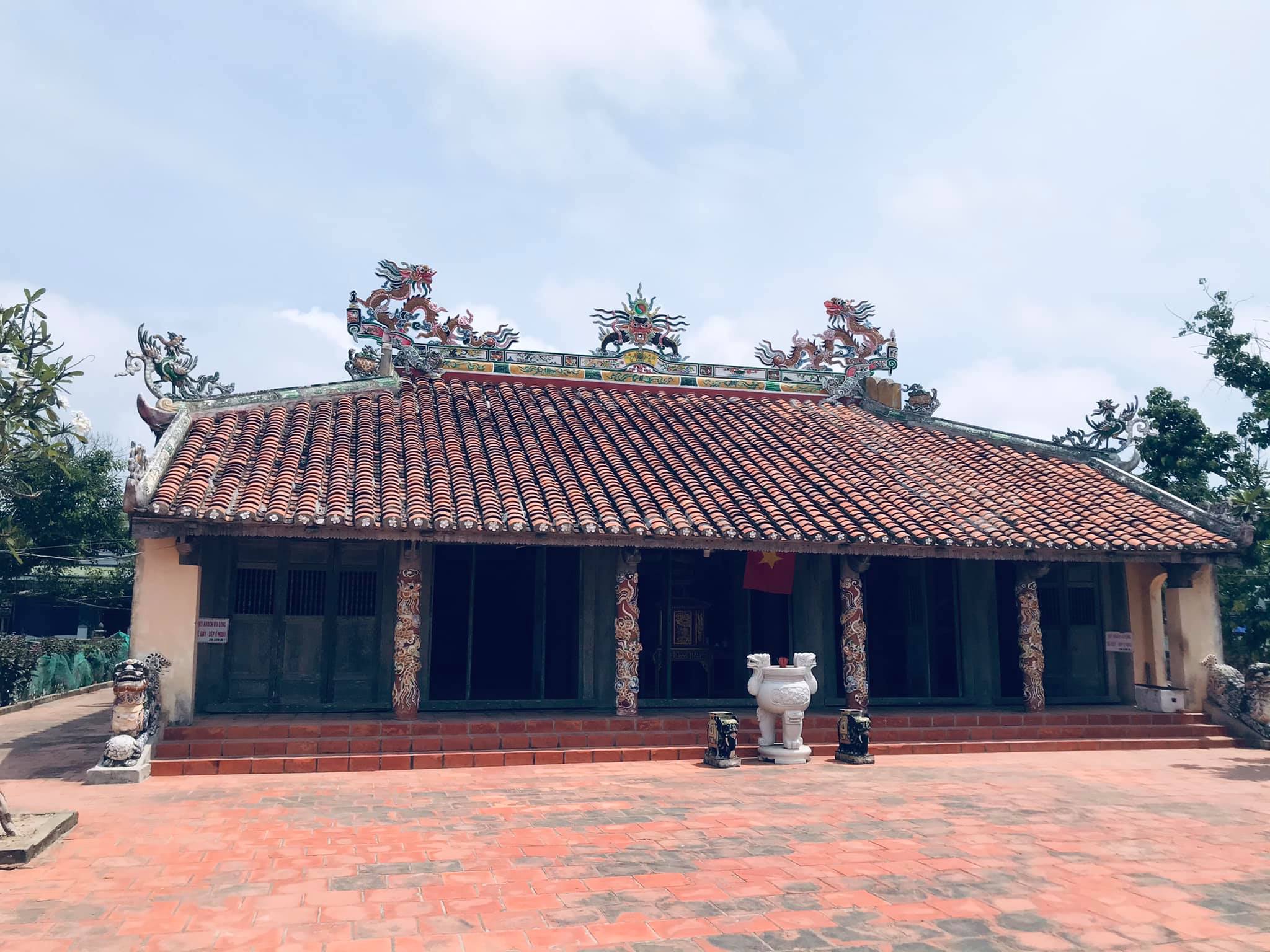
An Vinh Communal House is located in Dong Hamlet, An Vinh Commune, facing Ben Dinh Wharf – the very place where the Hoang Sa naval soldiers once set sail to collect marine resources and perform sovereignty missions over the Hoang Sa (Paracel) and Truong Sa (Spratly) archipelagos under royal orders.
Historical Background
According to historical documents, the communal house was originally built in 1798 (Year of the Horse), initiated by Võ Văn Khiết, a Hoang Sa fleet captain who mobilized villagers to construct the shrine. In the past, An Vinh Communal House was an extensive complex consisting of three main structures: the Lower Hall, the Middle Hall, and the Upper Hall.
In 1953, the communal house was bombed and destroyed by the French military, and all royal decrees (sắc phong) were burned. By 1957, the structure had completely collapsed. Residents then built a small ancestral hall to maintain local worship traditions.
In 2009, based on the original foundation and architectural research, the Vietnamese government restored and rebuilt An Vinh Communal House as a place to worship the village’s guardian deity, the Hoang Sa captains and sailors, and as the official site for the Hoang Sa Soldier Feast and Commemoration Ceremony.
Architectural Structure of An Vinh Communal House
The communal house follows a traditional sacred axis layout, consisting of:
1. The Screen Wall and Pillars
- A screen wall decorated in the “front dragon – rear tiger” motif stands solemnly at the entrance, symbolizing protection and balance.
2. The Lower Hall (Đình Hạ)
- Supported by 30 wooden pillars, divided into three worship compartments
- Features trụ tiêu – con tôm wooden beam systems
- Porch pillars decorated with coiling dragons, with bases resting on the backs of guardian nghê statues
- Displays the gilded plaque “An Vinh Đình”
- Parallel couplets in Han script:
“The virtues that built Ly Island endure;
The loyalty that shaped Hoang Sa remains.”
3. The Middle Hall (Đình Trung)
- Supported by 24 pillars, connected to the Lower Hall via gutters shaped like carp heads
- Central altar dedicated to the Council of Deities
- Side altars to honor the founding ancestors, later settlers, and especially the Hoang Sa captains and sailors
4. The Upper Hall (Đình Thượng – Hậu Cung)
- Constructed entirely from brick with eight-layered roofs in the chồng diêm architectural style
- Dedicated to the village’s guardian deity
- Includes side altars (tả ban – hữu ban) and Han-script couplets adorning the interior
Surrounding Sacred Structures
Within the communal house precinct lies a remarkable complex of spiritual architecture:
- The Ancestral Hall – worshiping the six pioneers who founded An Vinh Village
- Lang Chanh Whale Shrine – dedicated to Cá Ông (the Whale God)
- Vinh An Pagoda – located east of the communal house, forming a harmonious spiritual landscape
Together, these structures create the largest religious–cultural complex in An Vinh Commune.
Cultural Value & Annual Festivals
An Vinh Communal House was officially recognized as a National Historical Site in 2013.
Every year, the site hosts important traditional ceremonies, including:
- The Four-Linh Boat Racing Festival (4–7 January, Lunar New Year)
- The Biannual Spring–Autumn Rituals
- The Groundbreaking Ceremony (Lễ Động Thổ)
- The Hoang Sa Soldier Feast & Commemoration (15–16 Lunar March)
This last ceremony holds profound meaning: it honors the Hoang Sa naval soldiers who sacrificed their lives for the nation and affirms Vietnam’s sacred sovereignty over the Hoang Sa and Truong Sa archipelagos.