


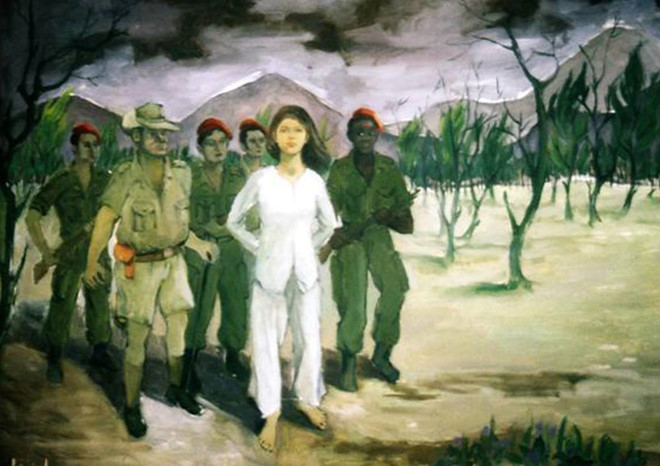
Võ Thị Sáu is remembered as the first and only female political prisoner exiled and executed by the French colonialists on Côn Đảo during the resistance war. For generations, Vietnamese people have affectionately called her “Sister Sáu,” a symbol of youthful courage and unyielding patriotism.
She was born in 1933 in Phước Thọ (now Phước Long Thọ), Đất Đỏ District, Bà Rịa – Vũng Tàu Province. At just 14, she joined the Đất Đỏ Security Forces, carrying out missions to punish traitors and protect the local population. On July 14, 1948, she bravely threw a grenade at a rally organized by the French-backed authorities, striking fear into the enemy and earning praise from her comrades.
In early 1950, during a Tết market raid, she was captured. At the French military court, she declared: “Loving my country and fighting the invaders is not a crime.” The court sentenced her to death and ordered the confiscation of her property, to which she boldly replied: “All I have are a few trash cans in Chí Hòa Prison—go take them if you dare.”
Because she was underage, the French delayed the execution and continued to detain her. On January 21, 1952, she was transported to Côn Đảo. At dawn on January 23, before being taken to the execution site, a priest asked if she wanted to confess. She answered firmly: “I have no sins. Only those about to kill me are guilty.”
When asked for a final request, she said: “Do not blindfold me. Let me see my homeland with my own eyes until the last second.”
She was executed at 7 a.m. on January 23, 1952 (the 27th day of the last lunar month, Year of the Cat). That same day, the French also executed revolutionary Hồ Văn Năm.
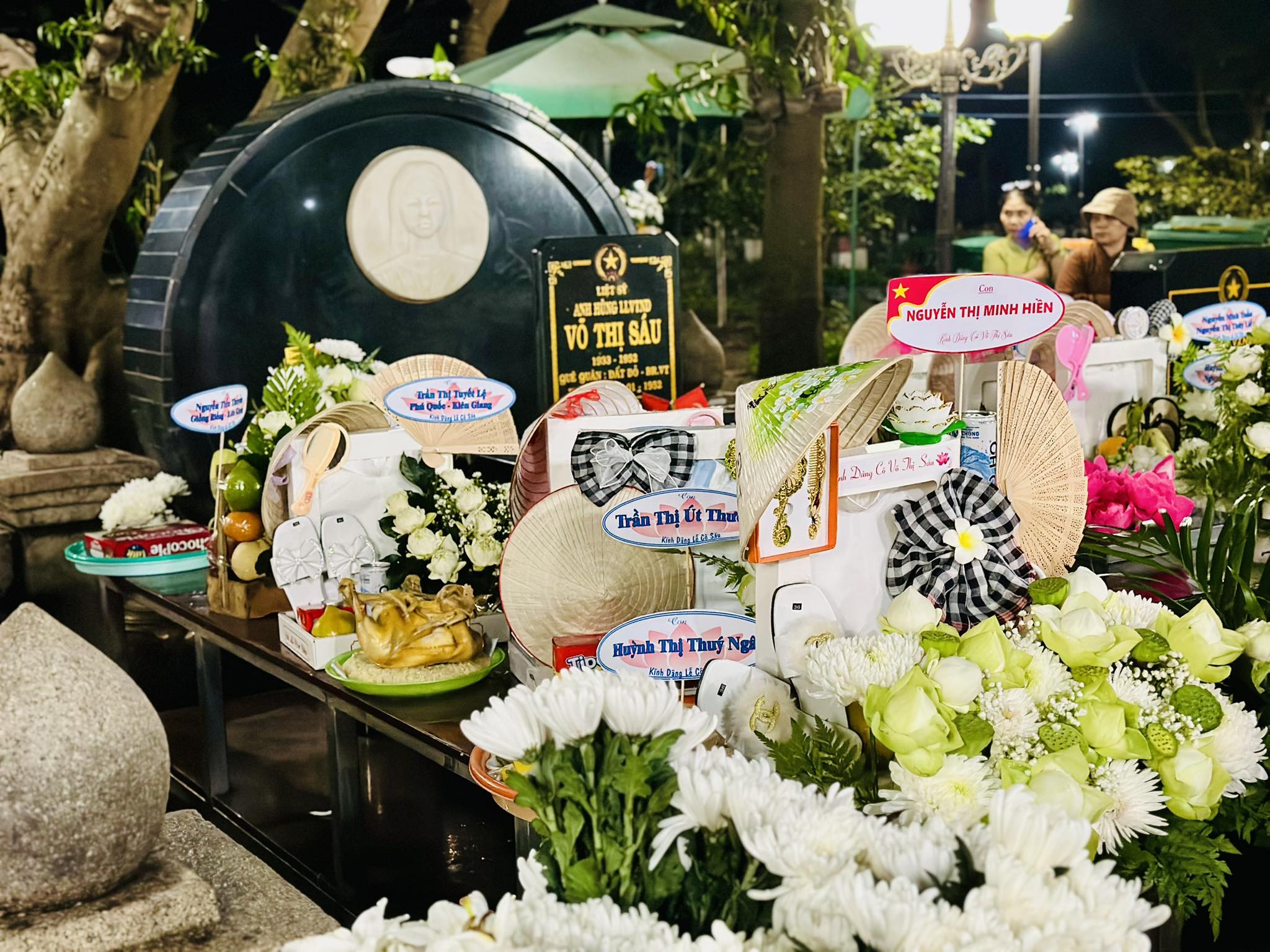
That night, imprisoned workers secretly made her a cement headstone. Although the prison guards repeatedly destroyed it, new headstones appeared again and again. Fear took hold among the guards, who began whispering that “Sister Sáu is sacred; her grave cannot be destroyed.” Ever since, prisoners, guards’ families, and even civilians would stop by her grave to offer a stone, a flower, or a stick of incense.
In the 1960s, even officials of the old regime quietly worshipped her as a protective spirit. In 1964, her grave was rebuilt with a stone marker inscribed “Heroic Martyr Võ Thị Sáu.”
Her life story is honored in national history, in the records of the Communist Party of Vietnam, and in the heritage of Côn Đảo Prison. President Lê Đức Anh posthumously awarded her the title Hero of the People’s Armed Forces in 1993.
Each year, on the 27th day of the last lunar month, the people of Côn Đảo hold a solemn memorial ceremony for her—just as they would for a beloved family member. Today, her grave at Hàng Dương Cemetery remains one of the most revered spiritual sites in Vietnam, where countless visitors come to pay their respects to the young woman who gave her life for her country.



)