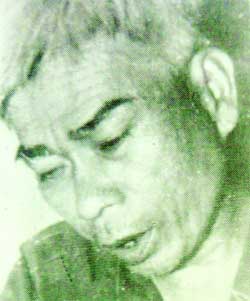
Cao Văn Ngọc is a name recorded in the famous book Bất Khuất (“Unyielding”), and to this day he remains the first and only person honored as a Hero of the People’s Armed Forces solely for his resistance inside prison. I first encountered his name unexpectedly on a sunny afternoon in Côn Đảo, standing before the gate of a local primary school marked “Cao Văn Ngọc Primary School.” That question—“Who was he?”—followed me until I reached Ho Chi Minh City and met Võ Huy Quang, a former Côn Đảo prisoner who has long studied the island’s “hell on earth.” Only then could I piece together the outline of this remarkable man.
Born in 1897 in An Ngãi village (now Long Điền district, Bà Rịa – Vũng Tàu), Cao Văn Ngọc was not originally a communist. He served as a village official before the August Revolution awakened his political consciousness, prompting him to join the local National Salvation Farmers’ Association. On September 28, 1956, he was arrested for possessing three bundles of documents supporting the Geneva Accords. Though the charge was minor, he received a heavy sentence: one year in Biên Hòa Prison, two years’ extension, and ultimately deportation to Côn Đảo.
By 1961, during the harshest phase of the “anti-separation” struggle inside the notorious Tiger Cages, Ngọc—now a 63-year-old prisoner—had endured prolonged starvation, beatings, and nights of being soaked with cold water. Yet when prison warden Phạm Sau approached him one winter morning, Ngọc still managed to sit upright with dignity. Sau could not understand how this old farmer, not even a Party member, possessed such unbreakable resolve. Many fellow inmates urged Ngọc, out of pity, to sign a “separation declaration” to ease his suffering. He refused: “I am old. I’ve tasted enough joy and hardship. Now, only death for the Revolution is missing.”
During fierce ideological debates among prisoners—some wavering, some collapsing—Ngọc quietly listened. Though he had little formal education, his words carried weight: “You are communists. To fight and die for your ideals is an honor. I am not yet a communist, but I wish I could be.” His simple truth helped many regain their conviction. Admired by inmates, feared by prison officials, Ngọc became a symbol too powerful to ignore. Unable to break him through torture, the guards turned to persuasion. Sau tried to coax him with sweetened words: “You’re over sixty. Why suffer for a movement you’re not even part of? You owe nothing to Hồ Chí Minh.” Ngọc answered sharply: “President Hồ liberated our people from slavery. I owe him a debt for life.”
Brutality escalated. The infamous guard Dậu beat him until he bled, dragging him toward the “separation” block. Ngọc pulled away and shouted: “Send me back to Block I, or I’ll smash my head and die right here!” Dậu, shocked, relented. When asked how he could withstand such torture, Ngọc replied simply: “I have a treasure.” That “treasure” was his ability to recite hundreds of Hồ Chí Minh’s poems—explaining each line with clarity and passion.
As the Saigon authorities pressed for harsher measures, the provincial chief Lê Văn Thể ordered the elimination of the most determined resisters. Prisoners were forced to write declarations: those who refused separation would be executed. Ngọc picked up the pen and wrote calmly, even humorously: “My name is Cao Văn Ngọc, 64 years old. Because I am old and ignorant, I cannot ‘separate.’ I wish to remain here until my death.” He signed his statement in traditional Chinese characters—one final act of defiance.
On the night of March 27, 1961, during a brutal crackdown, the guards killed five prisoners on the spot. Among them was Cao Văn Ngọc. Years later, survivor Phan Trọng Bình wrote: “If anyone among us never wavered for even a moment, it was Lưu Chí Hiếu and the old man, Cao Văn Ngọc.”
Thirty-seven years after his death, on July 31, 1998, the President of Vietnam posthumously awarded him the title Hero of the People’s Armed Forces. Researcher Nguyễn Đình Thống noted: “He is the first—and so far the only—person honored as a Hero for resistance conducted entirely inside prison. This recognition marks an important shift in how the nation views revolutionary prisoners.”
Text and photos: Nguyễn Ban Mai – qdnd.vn