The boat takes nearly two more hours weaving between large and small islands before reaching Ben Dam Port in the Con Dao Special Administrative Zone. The island turns its back to the mainland, giving me a strange sense of nostalgia. I recall my first trip in 1984, when the boat approached Con Son Town facing the East Sea. Towering cliffs—massive grey-green walls—rose straight from the water. The closer the boat moved toward the shore, the more those walls opened up, revealing deep cracks running through the rock as if a giant blade had sliced the island in half.
Con Dao is made up of 16 islands and islets, often called “Vietnam’s paradise for coral diving.” Small islands like Bay Canh, Hon Tai, Hon Tre, Hon Trac, Hon Trung, and Hon Cau shelter some of the most pristine and colorful coral reefs in the country. The best time to dive is from March to September, when the sea is calm and clear.
Years ago in Con Son Bay, two border guards borrowed a canoe from an old coconut gardener and took us 300 meters offshore. With masks and snorkels on, we slipped into the crystal-clear water and, for the first time in our lives, saw coral blooms swaying gently with the currents, surrounded by schools of grouper gliding through like in a magical aquarium. The soldiers even showed us how to catch giant clams—placing the anchor between the shells so they closed tightly, then prying them off the reef with a dagger. We rinsed the fresh clam meat in seawater and ate it right on the canoe. It was unbelievably sweet.
Con Dao National Park is home to over 1,300 marine species. Seagrass and seaweed here provide food for the endangered dugong, which still lives in these waters. From the ticket station near Ma Thien Lanh Bridge, a steep 700-meter descent leads to Ong Dung Beach. The slope is enough to make you breathless, but the cool forest air, rustling leaves, and giant vines hanging across the trees feel refreshing with every step.
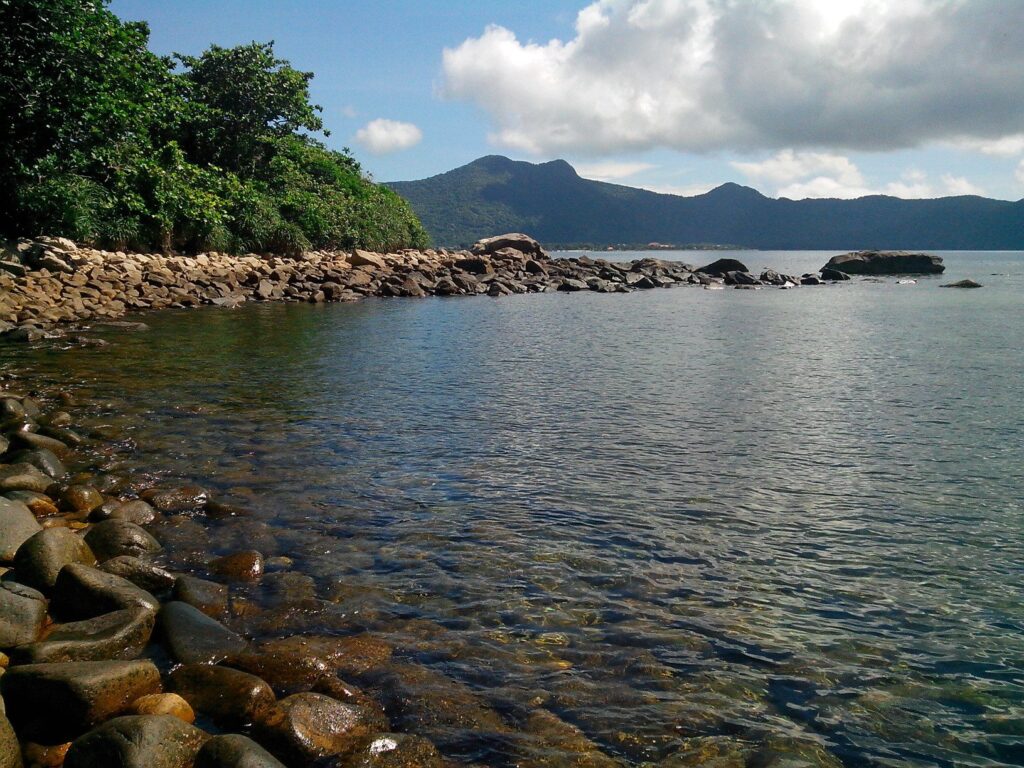
We arrived at Ong Dung in the late afternoon. Sunlight filtered through the canopy, casting soft shadows across the forest floor. Long-tailed squirrels leapt between branches, flying foxes cried out in the distance, and the birdsong echoed gently through the trees. The beach was covered in smooth stones of all shapes and colors. At low tide, a vast reef of submerged rocks appeared, surrounded by mangrove forest—the home of the large “tank crabs” locals often talk about. Ong Dung is also a great snorkeling spot, or simply a peaceful place to soak in the cool, clear sea.
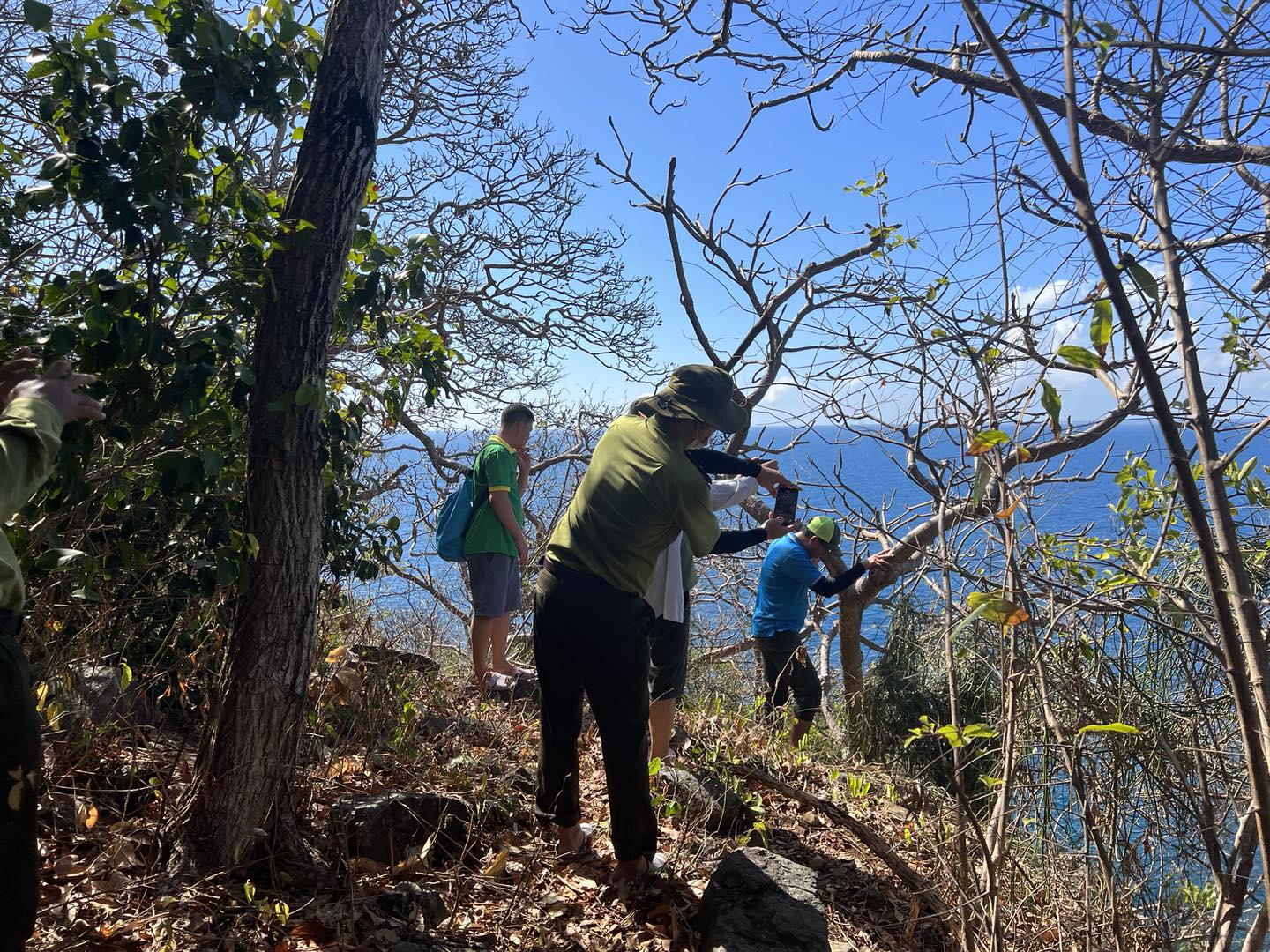
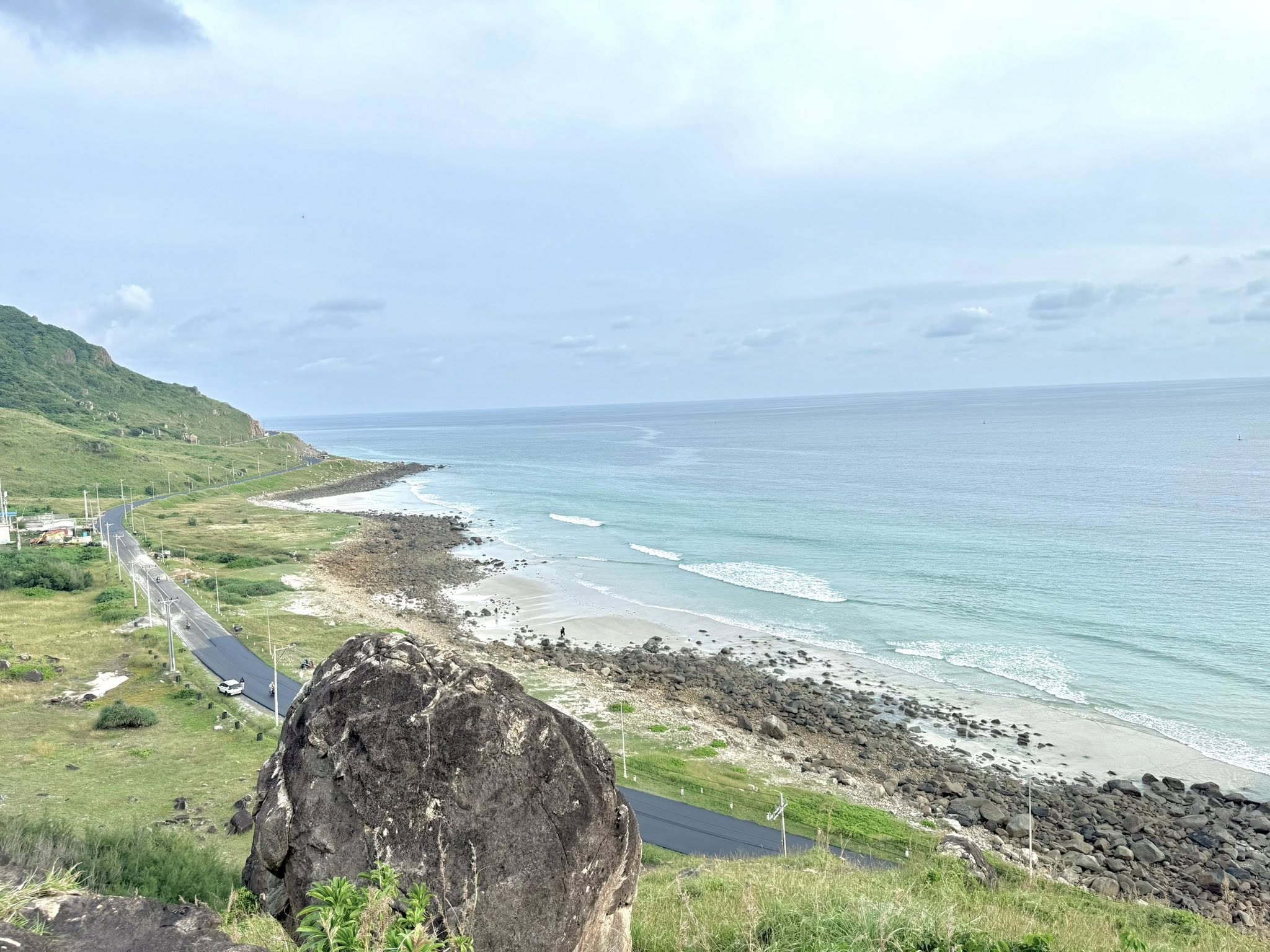
From town, we trekked three kilometers to the foot of Chua Mountain to begin the climb to the radar station—the island’s “eye in the sky.” The path twisted steeply upward, sometimes at a 45-degree incline, forcing us to climb with our hands on our knees. Midway up, cool air drifted from the forest, and mist wrapped around the mountainside. Towering schefflera trees two or three people could barely embrace, clusters of dracaena with long fragrant blossoms, and countless small streams surrounded by lush medicinal plants made the journey unexpectedly enchanting. After more than an hour and six kilometers of steep ascent, we reached the radar station and stood in awe of the view: green islands blanketed in forest and the vast ocean dotted with distant fishing boats.
Walking through the forest of Con Dao, you can learn endless wonders of nature. Over 100 species of vines here are “smart plants,” using trees as ladders to climb toward sunlight. Ants act as tireless “forest workers,” transporting nutrients, spreading seeds, and helping pollinate flowers. Termites are the “recycling factories,” breaking down fallen trees and returning nutrients to the soil. Thanks to them, the forest floor is always fertile with new life.
Con Dao also has “urban forests” lining the roads of the town. Rows of ancient tropical almond trees, hopea, and dipterocarp species create a landscape where “the forest meets the town, and the town blends into the forest.” In many places, signs read: “Blue sea, green forests, green homeland.” It is a gentle reminder to both residents and visitors to keep Con Dao forever pristine, peaceful, and beautiful.