In the past, Côn Đảo was known as the Côn Lôn Archipelago, described in Đại Nam nhất thống chí as “standing magnificently at the center of the East Sea,” like a forward fortress guarding the southeastern maritime frontier of the nation. From 1862, French colonial forces occupied Côn Đảo, built a prison system, and exiled Vietnamese patriots there.
Côn Đảo became the first prison, the largest in scale, and the most notoriously brutal—a true “earthly hell”—of the colonial regime in Indochina. The 113-year history of this “earthly hell,” from the establishment of the prison by the French to complete liberation (1862–1975), is inseparable from the heroic struggles of generations of Vietnamese patriots who fought for national independence and freedom.

Across successive periods—the national liberation movement, the resistance against French colonialism, and the resistance against U.S. intervention—the struggles of Côn Đảo’s prisoners formed an epic of indomitable will. They stand as a monument to patriotism and revolutionary optimism, as affirmed by the late General Secretary Lê Duẩn: “Côn Đảo is a great historical site; Côn Đảo is a great school for future generations.”
In the 37 years after liberation (1975–2012), Côn Đảo underwent administrative transitions—from a district of Hậu Giang Province (1977), to a district of the Vũng Tàu–Côn Đảo Special Zone (1979), to a district of Bà Rịa–Vũng Tàu Province (1991)—and emerged as a strategic island district on the southern continental shelf, developing across economic, cultural, social, security, and defense sectors.
Côn Đảo has thus become a compelling subject for scholars. Long associated with Bà Rịa–Vũng Tàu, researcher Nguyễn Đình Thống devoted many years to studying this topic. He is the author and co-author of numerous works on Côn Đảo, including Côn Đảo Prison 1862–1975, An Island of Relics and Scenic Sites, The Historical Relics of Côn Đảo Prison, Seizing an Enemy Ship to Escape Côn Đảo, Songs of Female Political Prisoners, Võ Thị Sáu—The Person and the Legend, Uncle Hồ Forever in Our Hearts, and Côn Đảo Prison—Phú Quốc Prison, among others—published by the Ho Chi Minh City General Publishing House and warmly received by readers nationwide.
Côn Đảo—From a Historical Perspective brings together his specialized studies presented across scholarly forums.
The book offers a fresh lens on Côn Đảo by examining individual events and historical figures, enabling readers to better understand the fierce struggles of patriots and revolutionaries amid the harsh realities of this “earthly hell,” and how these struggles intertwined with the vicissitudes of Vietnam’s revolutionary path. Each chapter vividly and authentically reconstructs historical contexts and portraits of representative figures across periods—from the prison’s establishment (by Admiral Bonard’s decree dated February 1, 1862) to the day of complete liberation (May 1, 1975).
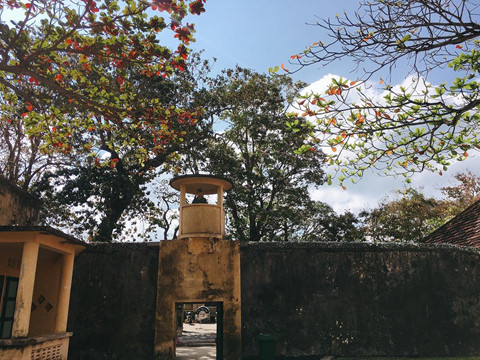
Beyond events and people, even the stones of the historic pier, the cracks in the Tiger Cages, and the gravestones at Hàng Dương Cemetery come alive, bearing witness to a resilient, tragic, and deeply moving history of struggle. Through the upheavals of time, Côn Đảo remains steadfast and dignified, preserving evidence of the brutal crimes of colonialism and imperialism.
Côn Đảo—From a Historical Perspective guides readers back to the island’s origins as a special national historical site, home to Hàng Keo and Hàng Dương cemeteries, where countless named and unnamed graves of the nation’s finest sons and daughters rest—often described as an “altar of the Fatherland.” The book imprints enduring values of independence and freedom, awakening aspirations toward a higher moral purpose beyond everyday limits.
In 2012, marking 150 years since the beginning of the indomitable struggle at Côn Đảo Prison, 37 years since the prison’s liberation, and 37 years since the complete liberation of the South and national reunification, the Ho Chi Minh City General Publishing House respectfully introduced Côn Đảo—From a Historical Perspective to readers near and far.