


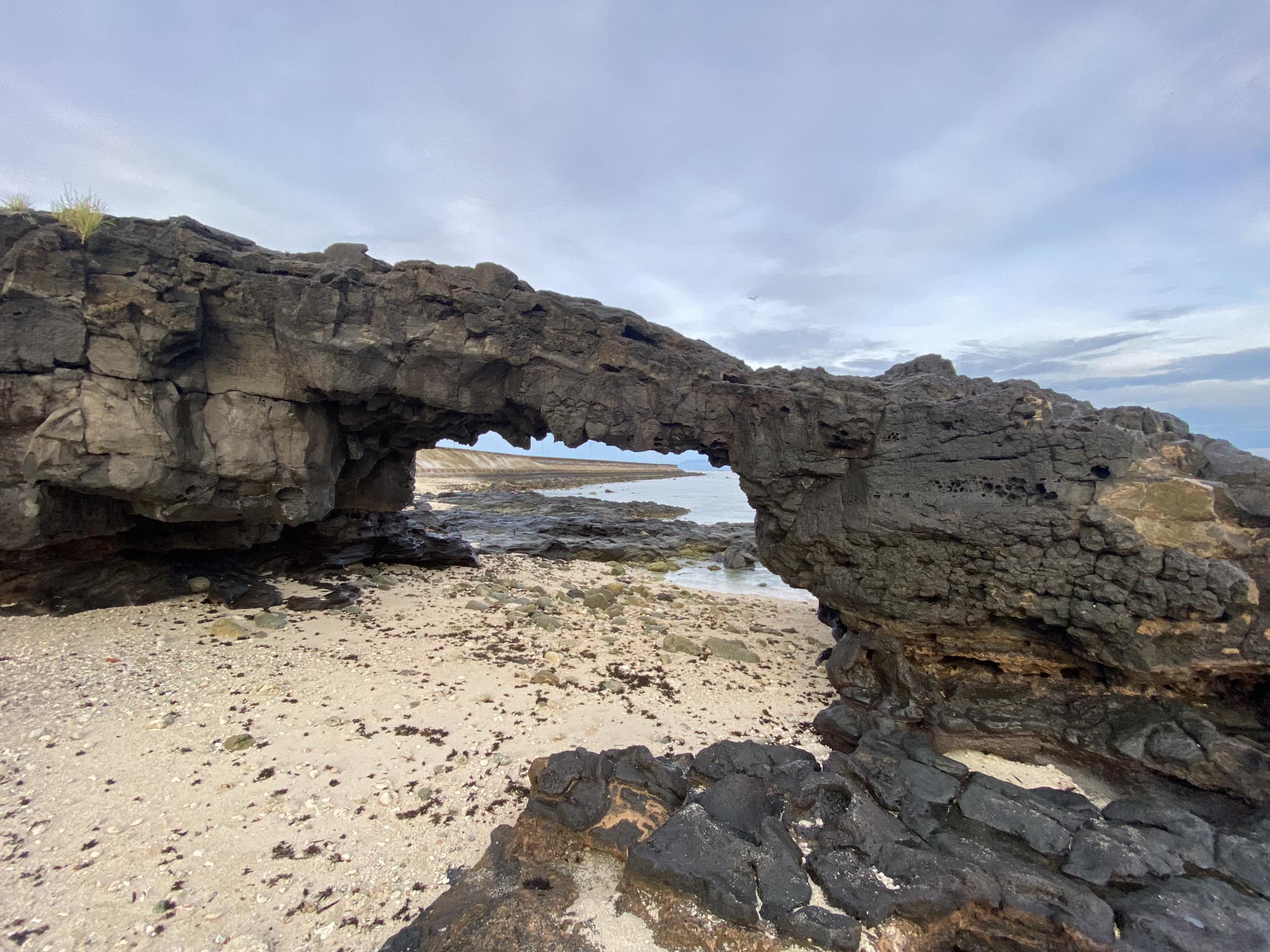
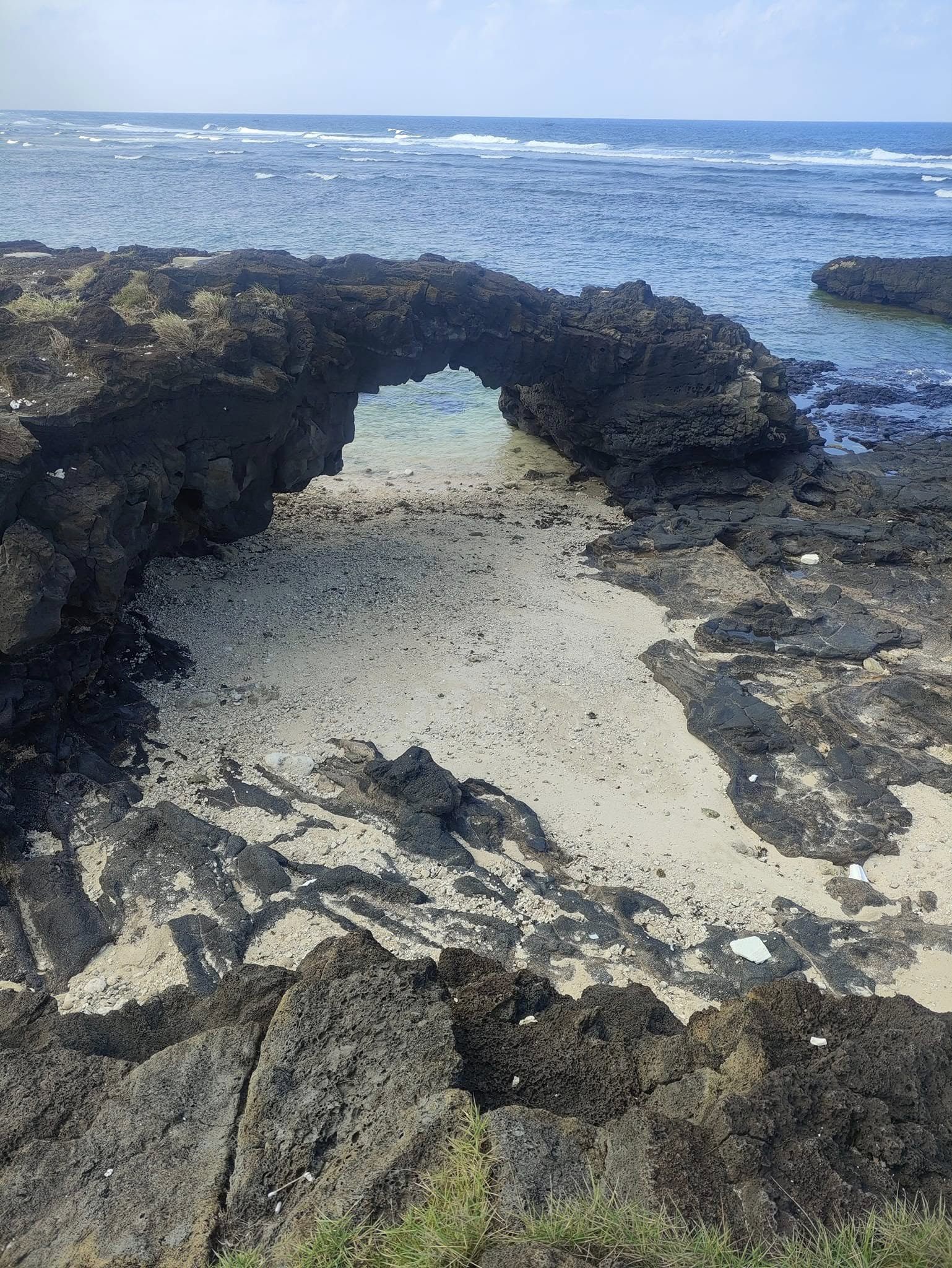
Located in Tay Village, An Vinh Commune on Ly Son Island (Quang Ngai Province), Cổng Tò Vò is one of Vietnam’s most iconic natural landmarks. This striking basalt arch, formed entirely by nature, rises proudly on the edge of the sea and has become a symbol of Ly Son’s wild beauty.
With its unique silhouette resembling a “stone gate” opening toward the East Sea, Cổng Tò Vò is a must-visit destination for anyone setting foot on Ly Son Island.
A Natural Basalt Arch Sculpted by Ancient Volcanoes
Cổng Tò Vò is a natural basalt arch measuring nearly 8 meters long and 5–6 meters high depending on the tide. It was formed thousands of years ago from the eruption of the Gieng Tien volcano, which created thick layers of basalt along the shoreline.
Over time, coastal erosion and the Flandrian transgression gradually carved away the softer rock in the center, leaving behind the solid upper structure. This natural sculpting process created an extraordinary arch that resembles the nest of a “tò vò” (a type of mud wasp), giving the landmark its name.
This rare geological formation is considered one of the most unique volcanic relics in Vietnam—a true masterpiece shaped by nature.
Officially Recognized as a National Scenic Monument
On September 9, Vietnam’s Ministry of Culture, Sports and Tourism officially designated Cổng Tò Vò as a National Scenic Monument.
The recognition affirms the site’s outstanding values:
- Geological and scientific significance: a vivid testimony to Ly Son’s volcanic history.
- Aesthetic value: among the most breathtaking sunrise and sunset spots on the island.
- Tourism and service value: a popular check-in point that attracts countless visitors every year.
- Economic value: supporting local livelihoods through tourism and coastal fisheries.
- Cultural significance: part of the broader heritage landscape linked to the Hoàng Sa Flotilla and Vietnam’s maritime traditions.
Becoming a National Scenic Monument ensures better conservation and elevates Cổng Tò Vò as a driving force for Ly Son’s tourism and cultural development.
A Landmark Surrounded by Layers of Heritage
Cổng Tò Vò sits within a rich cultural and geological complex that defines Ly Son Island:
- Gieng Tien volcano
- Chua Duc – Hang Cau (Cave Pagoda)
- Thoi Loi volcano
- Xo La well
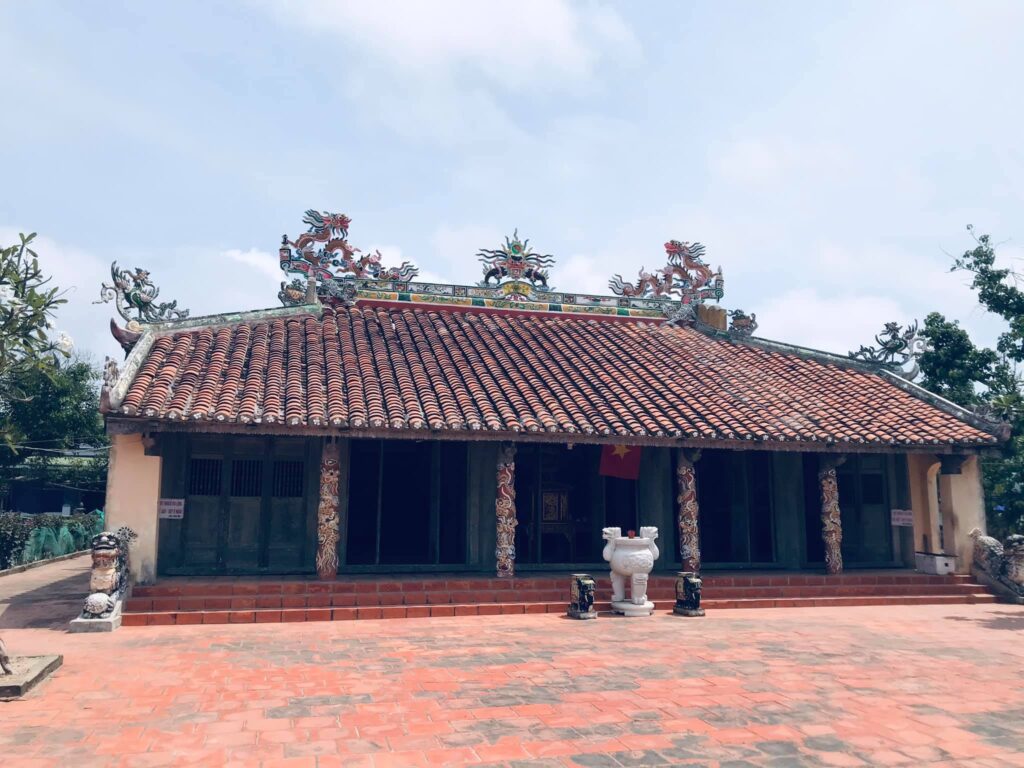
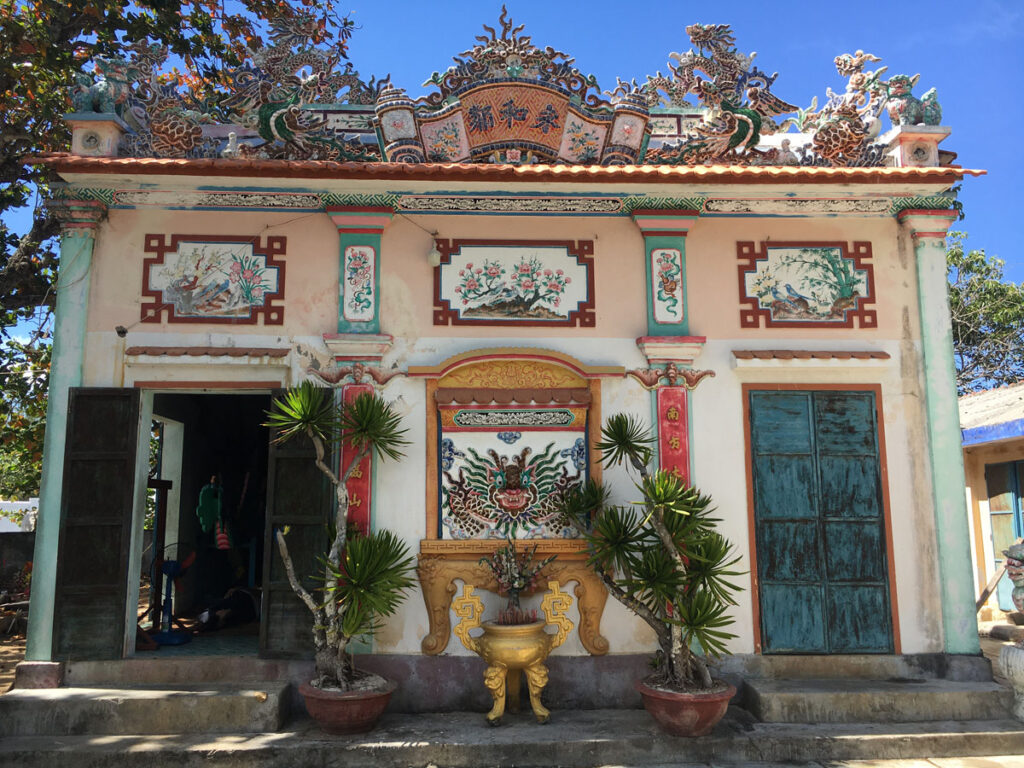
- An Hai communal house, Âm Linh Pagoda
- Hoang Sa Flotilla Exhibition House
- Coral reefs, seagrass beds, and the small islet Dao Be
- Heritage layers of Sa Huynh – Champa – Dai Viet cultures
Intangible heritage: the Hoàng Sa Soldier Feast and Commemoration Ceremony, Nghinh Ong Festival, traditional garlic–onion farming, net weaving, folk performing arts, and ancient Han-Nom documents
This unique combination makes Cổng Tò Vò not only a scenic attraction but also a living classroom for culture, history, and geology.
A Perfect Spot for Sunrise & Sunset Photography
Cổng Tò Vò is one of the most photogenic spots on Ly Son Island:
- Sunrise: the sun rises through the arch, creating a spectacular glowing frame.
- Sunset: the sky turns orange-violet as the sun sinks into the sea, reflecting off the basalt surface.
Whether you are a photographer, a nature lover, or simply seeking a peaceful moment, this is the perfect place to pause and admire the beauty of the island.
The Symbol of Ly Son’s Natural and Cultural Identity
More than a scenic viewpoint, Cổng Tò Vò represents:
- The identity of Ly Son Island
- The harmony of nature – culture – maritime history
- A source of inspiration for writers, artists, and photographers
- A reminder of the island community’s long connection with the sea
- It embodies the resilience, simplicity, and beauty of life on this volcanic island.
If you are planning a trip to Ly Son Island, make sure Cổng Tò Vò is on your itinerary. Stand beneath the arch, gaze out toward the East Sea, and let the timeless beauty of this volcanic masterpiece fill your senses. It is a moment you will remember long after you’ve left the island.

+–+A+One-of-a-Kind+Volcanic+Masterpiece+in+Vietnam)