Surrounded by lush tea plantations, coffee farms and fruit-growing hills, Dambri Waterfall rises dramatically from the green landscape of Bao Loc Plateau.
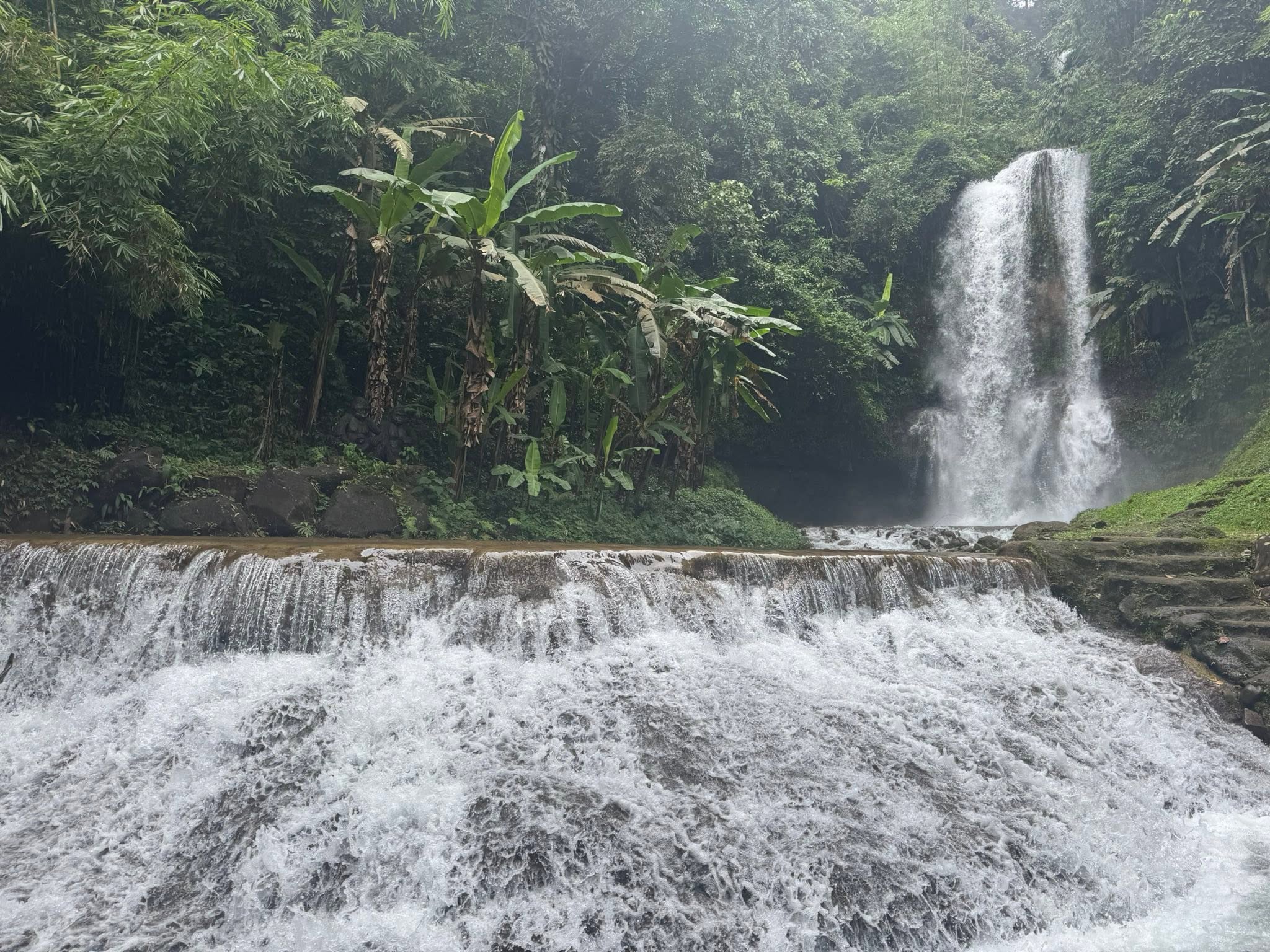
With water plunging nearly 60 meters down a rocky cliff, Dambri is one of the most impressive waterfalls in Lam Dong Province. Dense forest, ancient trees and a diverse ecosystem surround the cascade, creating a striking natural landscape characteristic of Vietnam’s southern Central Highlands.
Dambri is also closely associated with a traditional K’Ho love story, in which the name of the waterfall is connected with the idea of waiting, devotion and enduring love.
Where is Dambri Waterfall?
Dambri Waterfall is located in Bao Loc Ward 2, Lam Dong Province, approximately 17–18 km northwest of Bao Loc city center.
It is about 130 km from Da Lat via National Highway 20 and approximately 190–200 km from Ho Chi Minh City.
The journey from Bao Loc to Dambri passes through the region’s characteristic tea plantations, coffee farms and fruit-growing areas before entering the forested landscape surrounding the waterfall.
The waterfall lies within a forested area of nearly 300 hectares, where visitors can find mature trees, vines, birds and diverse vegetation.
Dambri Waterfall at a glance
| Feature | Details |
|---|---|
| Name | Dambri Waterfall |
| Location | Bao Loc Ward 2, Lam Dong Province |
| Distance from Bao Loc | Approximately 17–18 km |
| Distance from Da Lat | Approximately 130 km |
| Height | Approximately 57–60 m |
| Width | Nearly 30 m |
| Surroundings | Forest, mature trees, streams and valleys |
| Highlights | Waterfall, K’Ho culture and the Dambri legend |
A Powerful Waterfall in the Forest
The first thing that captures visitors’ attention at Dambri is the height and power of the cascade.
Water plunges from a cliff nearly 60 meters high, forming a broad white curtain against the surrounding forest. During the rainy season, increased water flow makes the waterfall particularly dramatic, while its powerful roar can be heard from far across the valley.
From viewpoints above the waterfall, visitors can appreciate the full scale of the cascade as it drops into the valley below.
The closer you get to the base, the louder the water becomes and the cooler the air feels as fine mist rises from the falls.
Surrounding the waterfall are mature trees, vines and layers of vegetation that create the characteristic green landscape of the southern Central Highlands.
Dambri – The Story of Waiting
In K’Ho cultural tradition, the name Dambri is commonly associated with the meaning “waiting.”
The name is connected with a traditional love story.
Long ago, according to the legend, a young K’Ho man and woman fell deeply in love. The young man was a strong and talented warrior, while the woman was known for her beauty and gentle character.
Their relationship faced opposition from their families and traditional social customs. One day, the young man was taken far away into the mountains and could not return.
The young woman remained behind, waiting for him beside a stream.
Season after season passed, yet she continued to hope that her beloved would return.
According to the story, her tears eventually became a great waterfall flowing endlessly through the mountains.
Her spirit was said to have become part of the surrounding landscape, transforming Dambri into a symbol of faithfulness, devotion and enduring love.
The story gives the waterfall a cultural meaning that goes far beyond its physical beauty.
The Dambri Forest
The forest surrounding the waterfall is an important part of its natural character.
Covering nearly 300 hectares, the area contains mature trees, vines, shrubs and layers of vegetation that form a diverse forest ecosystem.
The forest also provides habitat for numerous bird species and other wildlife.
On clear days, sunlight filters through the canopy, creating shifting patterns of light and shadow along the trails. The cool, humid atmosphere around the waterfall offers a refreshing contrast to the urban environment of Bao Loc.
Exploring the Waterfall
Unlike completely undeveloped waterfalls, Dambri has been developed as an ecotourism destination, with facilities that make the waterfall easier to access.
Visitors can reach the lower section either by walking along the hillside or by using the waterfall’s elevator system.
For those who enjoy walking, the forest trail provides a more immersive way to experience the landscape, with views of the surrounding trees, rocks and valley.
Near the base, fine spray from the waterfall creates a cool atmosphere. On sunny days, sunlight passing through the mist can produce colorful rainbows in front of the falls.
Experiences at Dambri Ecotourism Area
The Dambri destination offers more than the waterfall itself, combining nature, recreation and cultural experiences.
Visitors can:
- Walk through the forest and explore the surrounding landscape.
- View the waterfall from different perspectives.
- Enjoy boating and recreational activities on Dambri Lake.
- Camp and have outdoor picnics.
- Try outdoor recreational activities.
- Experience the Alpine Coaster.
- Learn about K’Ho and Chau Ma culture.
- Discover traditional brocade weaving.
- Experience gong performances and other cultural activities when available.
One of the area’s most distinctive attractions is the Alpine Coaster, which winds through the forest and connects the Dambri area with nearby Dasara Waterfall.
K’Ho and Chau Ma Cultural Heritage
An important feature of Dambri is the combination of natural scenery and indigenous culture.
The tourism area includes spaces where visitors can learn about the traditional life of local communities, particularly the K’Ho and Chau Ma.
Visitors may discover traditional brocade weaving, communal architecture, local customs and gong culture.
These experiences add another layer to a visit to Dambri. The destination is not simply a place to admire a waterfall, but also an opportunity to learn about the cultural heritage of the communities that have long been connected with the forests and highlands of Bao Loc.
Dambri Through the Seasons
Dambri takes on a different character throughout the year.
During the rainy season, roughly from May to October, the waterfall reaches its greatest volume. The increased flow makes the cascade more powerful, while the surrounding forest becomes particularly lush.
However, paths near the base can become wet and slippery, so visitors should take extra care.
During the dry season, roughly from November to April, conditions are generally more comfortable for outdoor activities. Trails are usually drier, making it easier to explore the waterfall and surrounding forest.
Whenever you visit, suitable footwear and waterproof protection for cameras and electronic devices are recommended when approaching the waterfall.
Places to Combine with Dambri
A visit to Dambri can easily be combined with other experiences around Bao Loc.
Travelers can explore the region’s tea plantations and coffee-growing areas, visit local agricultural farms or simply enjoy the scenic highland roads surrounding the city.
Nearby Dasara Waterfall, known for its multi-tiered cascade, offers another option for those interested in exploring the area’s waterfalls and forests.
Bao Loc also makes a convenient stop on journeys connecting Ho Chi Minh City, Bao Loc and Da Lat, particularly for travelers interested in highland scenery and nature-based experiences.
Dambri – Where Nature Preserves a Love Story
Dambri Waterfall is more than a cascade nearly 60 meters high.
Within the forests of Bao Loc, the waterfall carries a story about a young woman who spent her life waiting for the person she loved.
The sound of falling water, ancient trees, mist and deep green forest seem to give that story a lasting presence in the landscape.
Dambri is therefore a place where nature and culture exist side by side, where the waterfall continues to flow through the forest while the story of waiting and devotion lives on through generations.
For anyone visiting Bao Loc, Dambri is a destination worth exploring, not only for its dramatic scenery but also for the natural and cultural heritage that gives this part of Lam Dong its distinctive character.