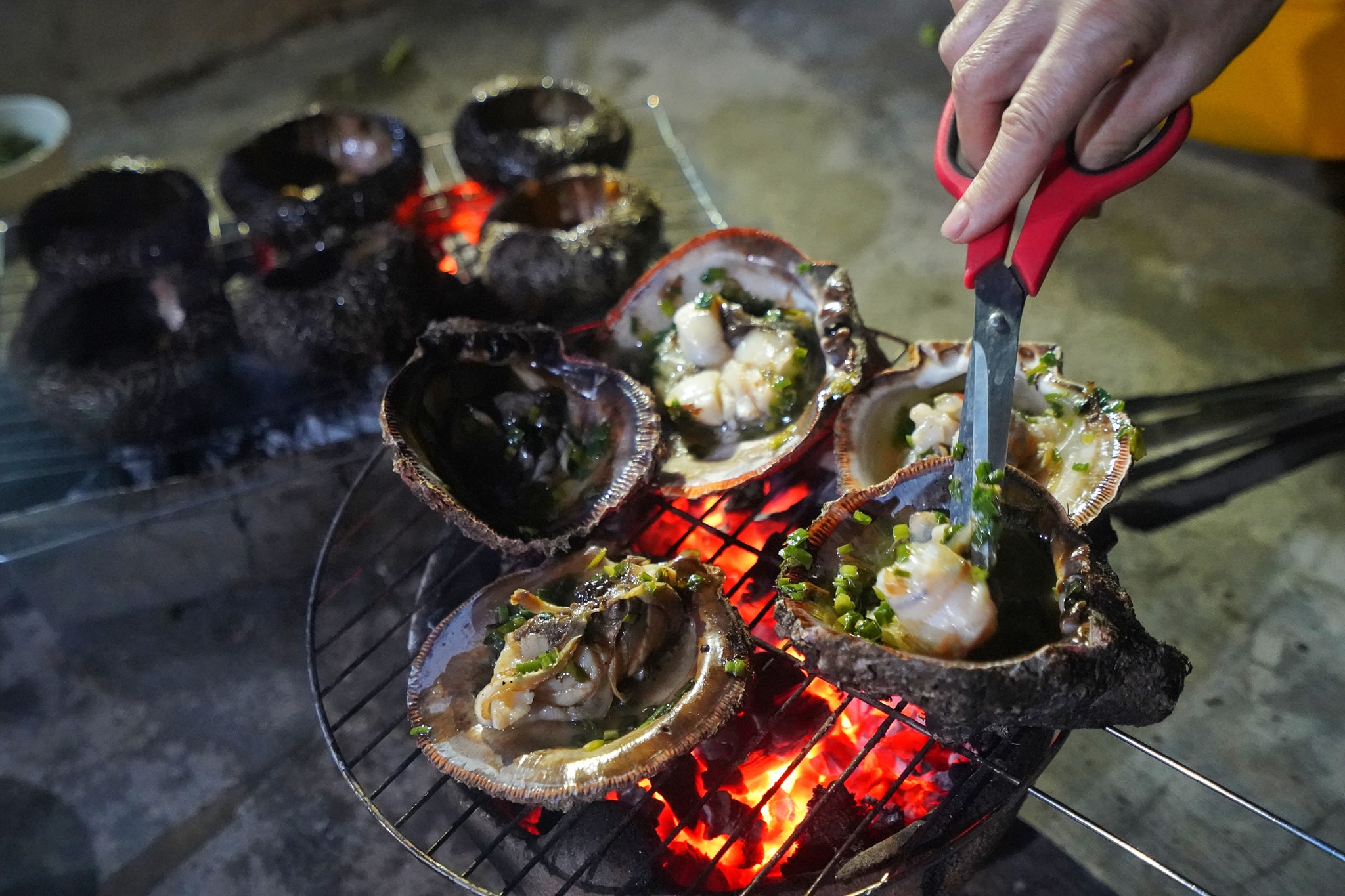
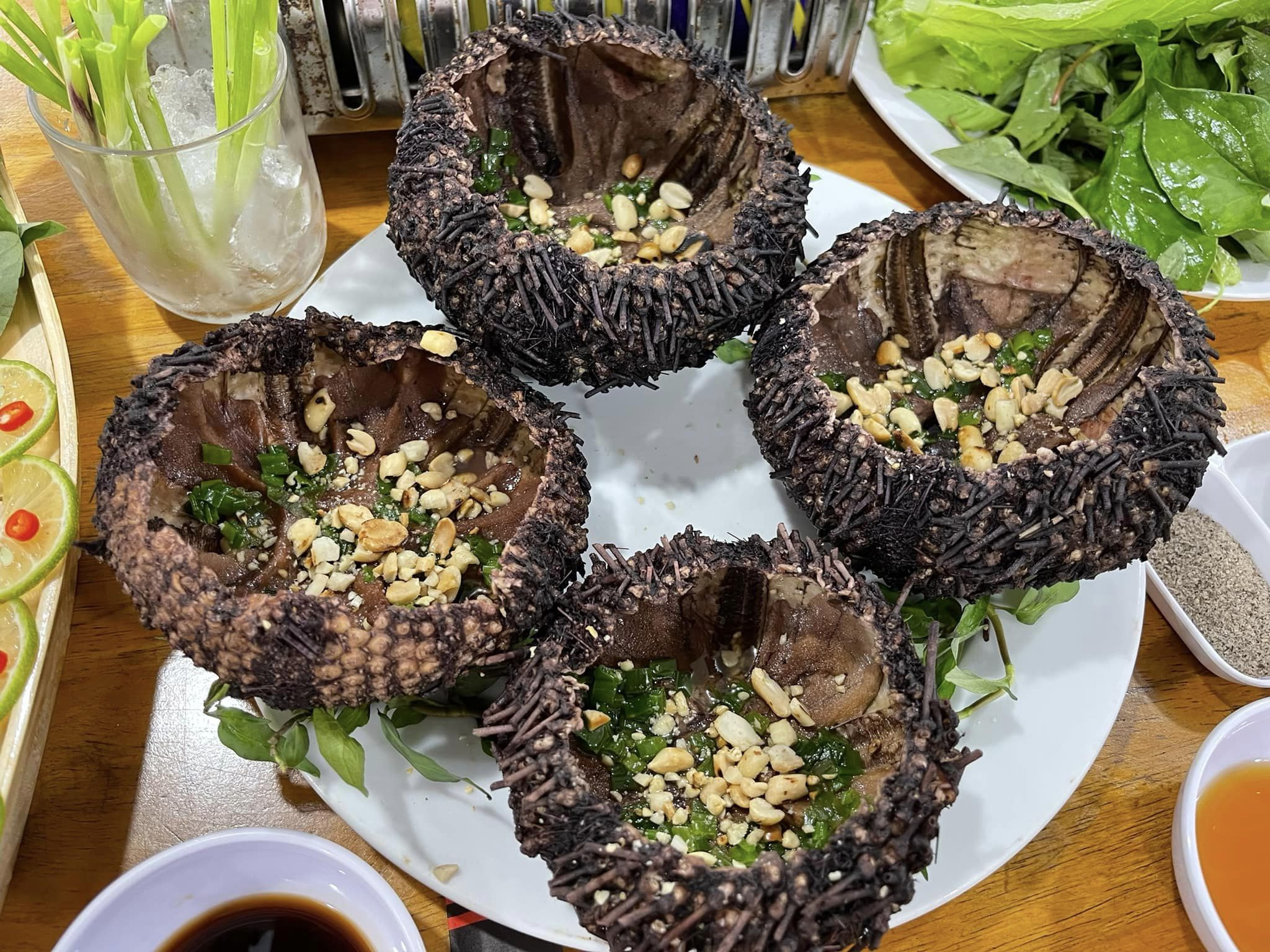
In Phu Quy, fresh sea urchin dishes are surprisingly affordable, priced at only 30,000–40,000 VND per urchin. Compared to other types of seafood, sea urchin truly offers the perfect trio: tasty, healthy, and inexpensive.
Called nhím biển or cầu gai in Vietnamese, sea urchins belong to the Echinoidea family—close relatives of clams and mussels. They have a round, slightly flattened body, covered with sharp spines, and adults typically measure between 8–15 cm across. Sea urchins thrive in areas with seaweed or coral, and according to local divers, Phu Quy’s coastal waters are full of them—often just a few dozen meters from shore.
The edible part of a sea urchin, known as uni or urchin roe, is highly nutritious and can be prepared in many delicious ways: cooked into porridge, grilled with scallion oil, or eaten raw with mustard. Fishermen believe that sea urchin porridge helps restore energy quickly and supports digestion, while many locals consider it a natural tonic that enhances vitality and boosts strength.
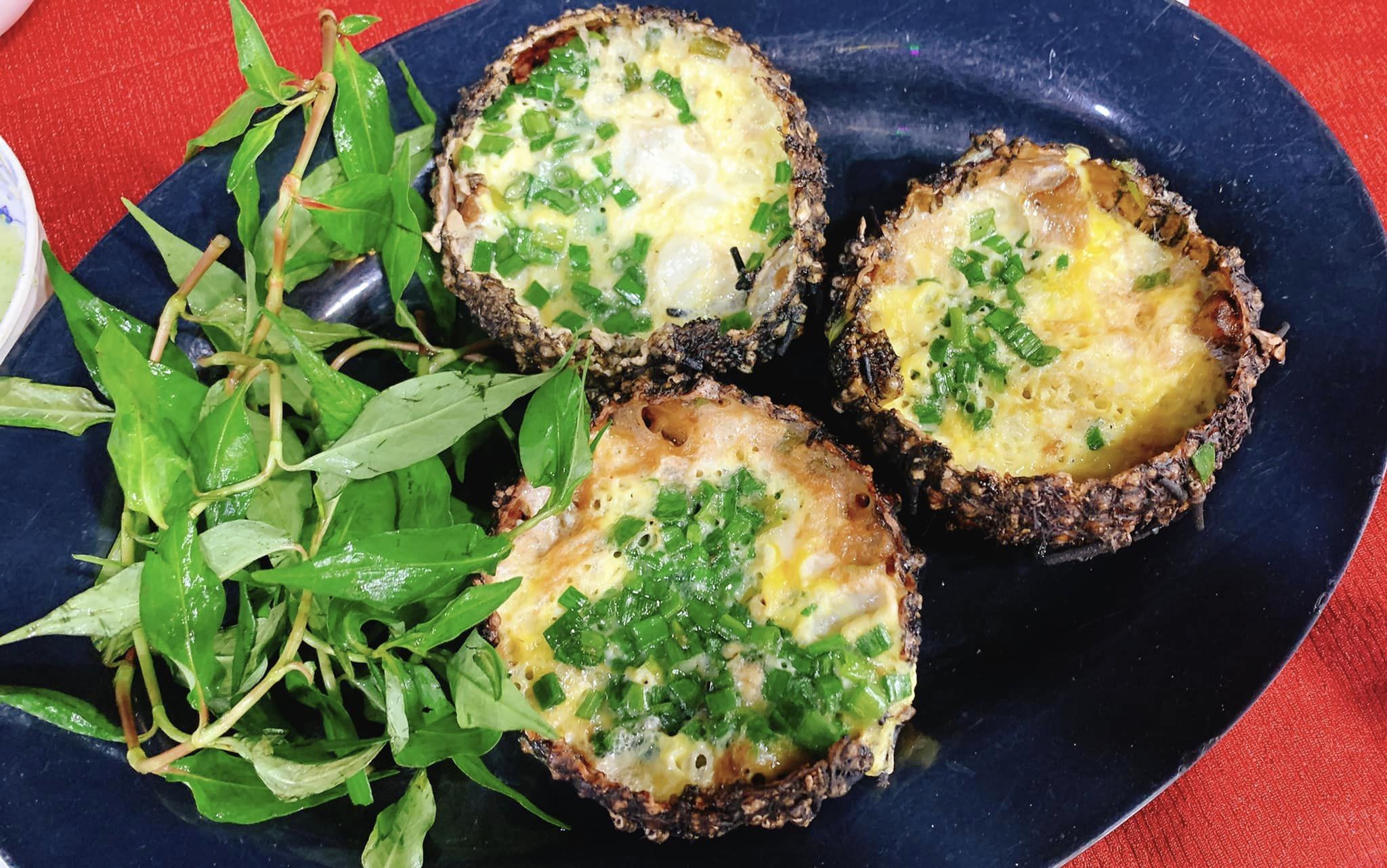
Phu Quy islanders often enjoy sea urchin the simple, traditional way:
- Split the urchin in half
- Scoop out the roe
- Dip it in lime salt and mustard
- Eat it fresh right after harvesting
Sea urchin can also be mixed with eggs and steamed to eat with rice, or grilled and stewed with banana blossom and young banana stems. Yet the most beloved preparation remains the hot sea urchin porridge, prized for its rich, warming, deeply satisfying flavor.
With its exceptional taste and ginseng-like nutritional benefits, sea urchin was once considered precious enough for coastal communities to ferment into mắm nhum, a rare delicacy traditionally offered to kings.