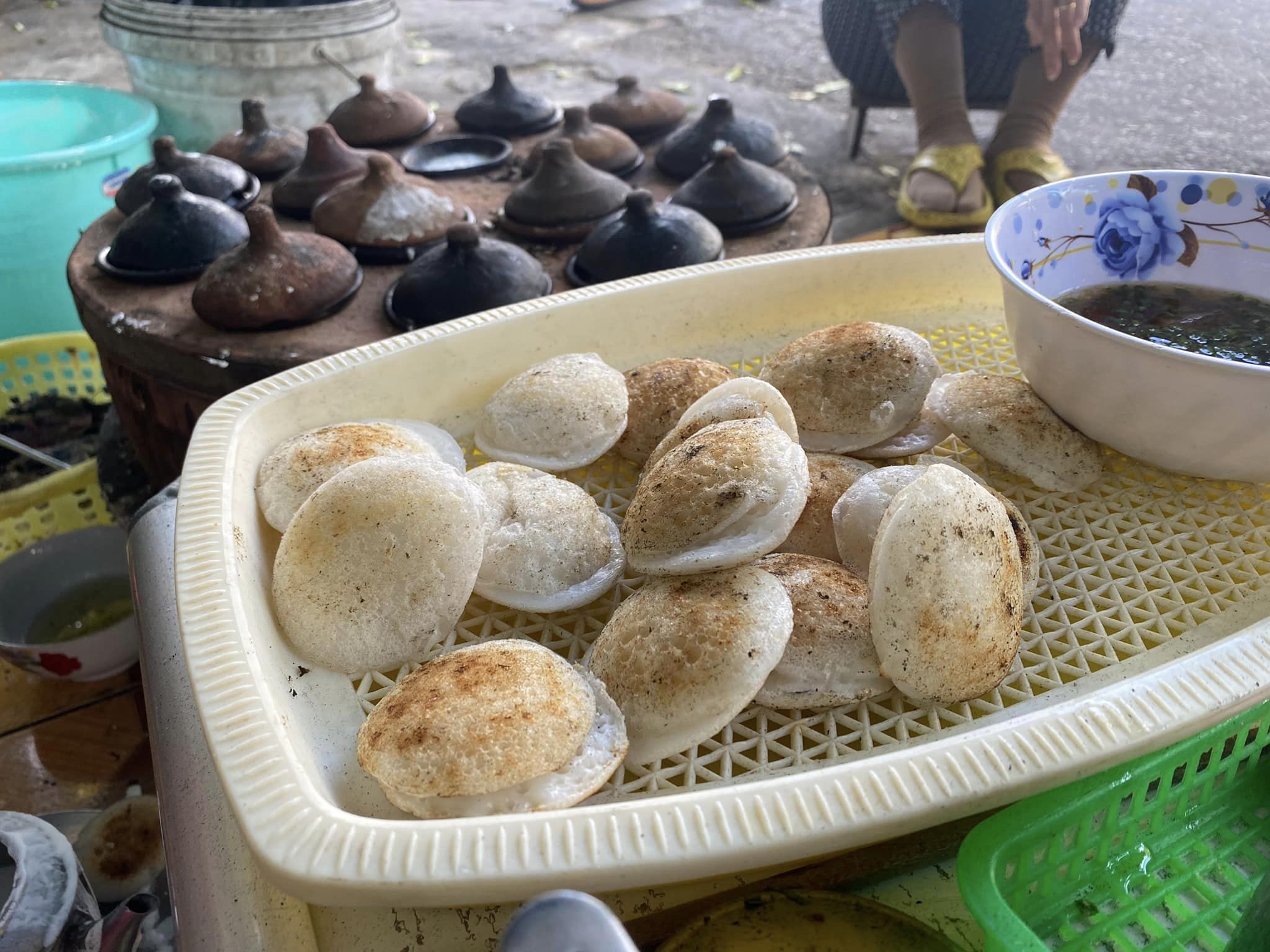
As you wander through the streets, alleys, and local markets of Long Hải, Ngũ Phụng, or Tam Thanh, you’ll easily come across a dish that looks a bit like bánh khọt—but isn’t quite the same. That is bánh căn, one of Phú Quý’s most beloved rustic specialties.
Historical records show that Phú Quý was once part of the ancient Champa Kingdom, known to the Chăm people as Koh-rong. Later, Vietnamese settlers called it Cổ Long, and over time the island went by many other names: Thuận Tịnh, Cù Lao Khoai Xứ, Cù Lao Thu, Đảo Chín Làng, and Phú Quý (Pulo Cecir de Mer). Though documentation is limited, it is believed that the Chăm settled here between the 15th–16th centuries, followed by Vietnamese settlers in the late 16th to early 17th century.
Food is an essential part of cultural heritage, and many locals say bánh căn originated as a simple Chăm dish. Over generations, it has become a familiar and comforting food to the island’s residents.
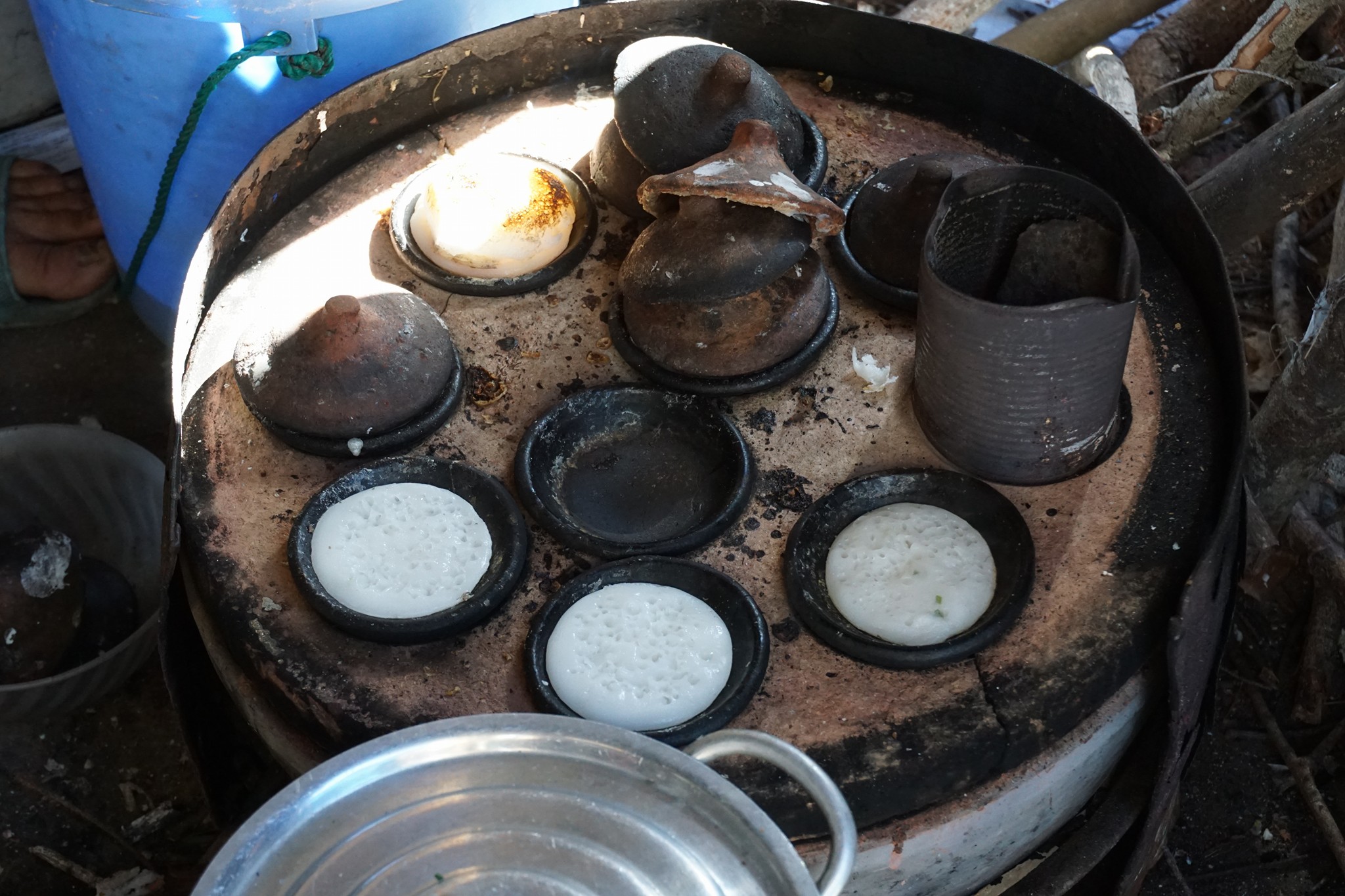
How Bánh Căn Is Made
The batter begins with soaked white rice, ground finely. Before grinding, a small amount of sun-dried leftover rice is added—a local secret that creates a signature crispiness. As with most rice-based cakes, dry-aged rice is preferred; fresh or sticky