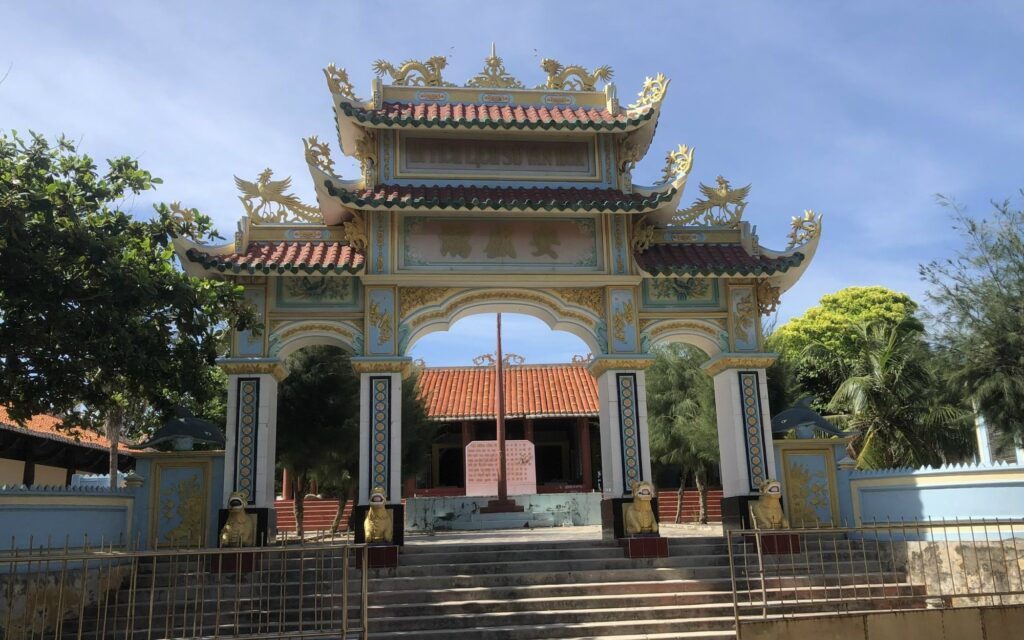
Duc Pagoda is one of the few Buddhist temples found in the Ly Son Special Administrative Zone. Located in Tay Hamlet, An Vinh Commune, the pagoda rests halfway up the majestic slopes of Mount Giếng Tiền—an ancient volcano that has lain dormant for thousands of years. To reach the temple, visitors must follow the mountain path and climb more than 100 stone steps. The first striking sight upon arrival is the grand entrance gate bearing the Han-script name “Đỉnh Liêm Tự”, standing solemnly against the rugged landscape.
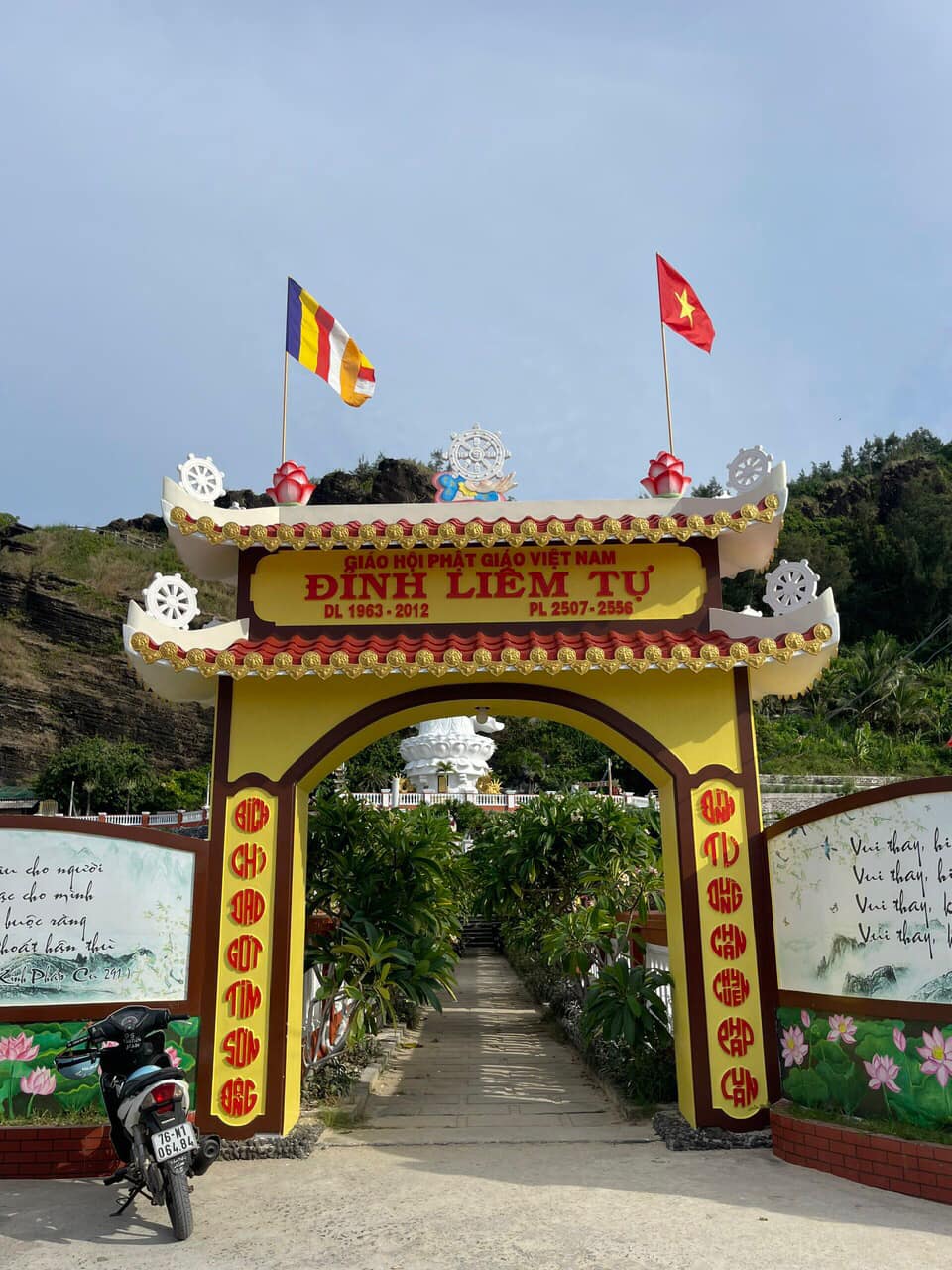
Quiet, secluded, and remarkably serene, Duc Pagoda exudes a peaceful charm that captivates every visitor. More than sixty years ago, this place was merely a cave inhabited by wild animals. It later became a place of meditation chosen by Monk Giác Tuấn, marking the early beginnings of the pagoda. It was not until the early 2000s that Duc Pagoda was renovated and rebuilt into the graceful temple seen today.
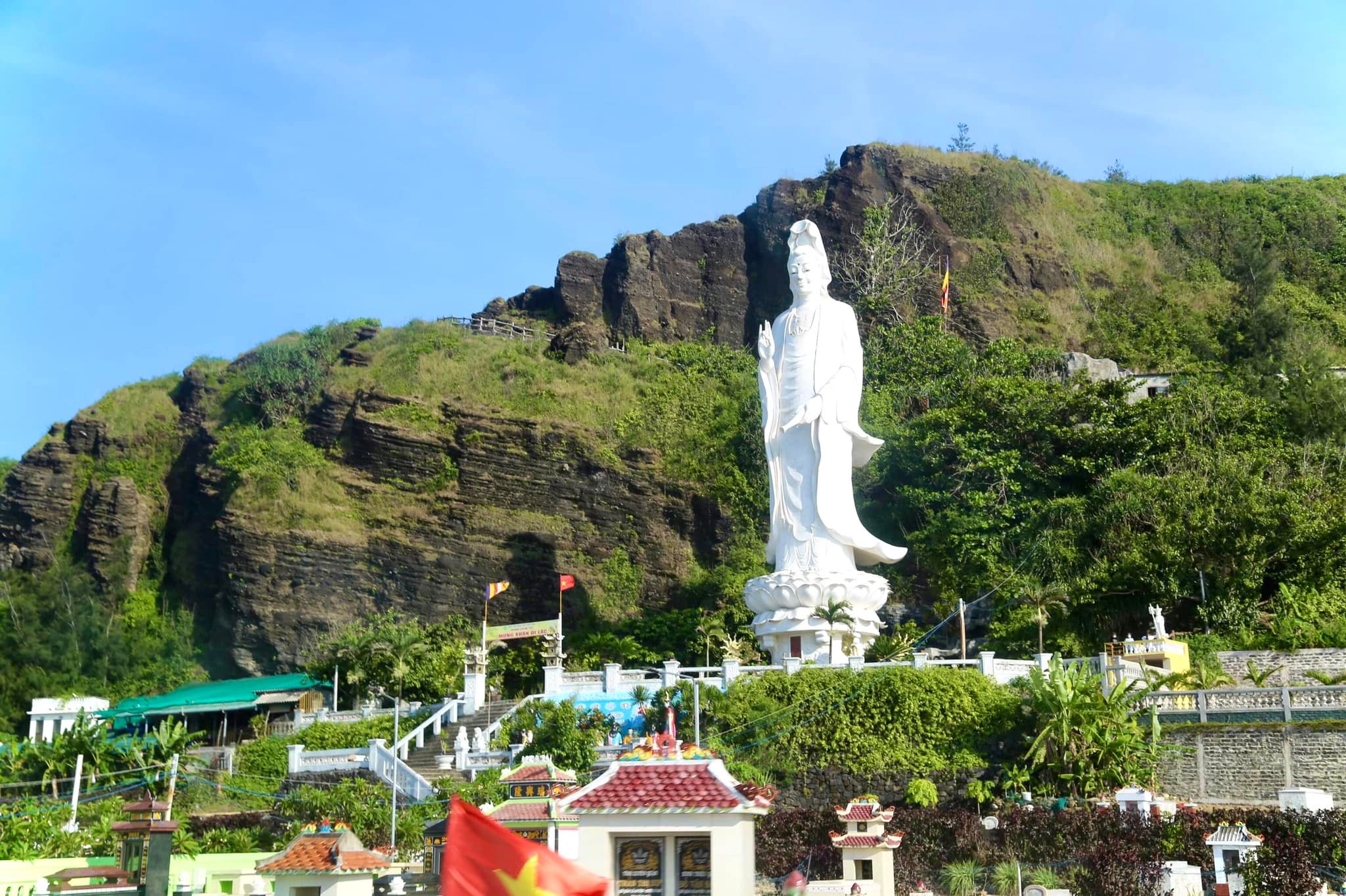
At the front courtyard of the scenic complex stands the magnificent 27-meter-tall statue of Avalokitesvara Bodhisattva, seated on a pristine white lotus base at the foot of the mountain. From here, pathways lead to ancient worship chambers tucked deep within the rocky heart of the volcano, creating a sacred and contemplative atmosphere.
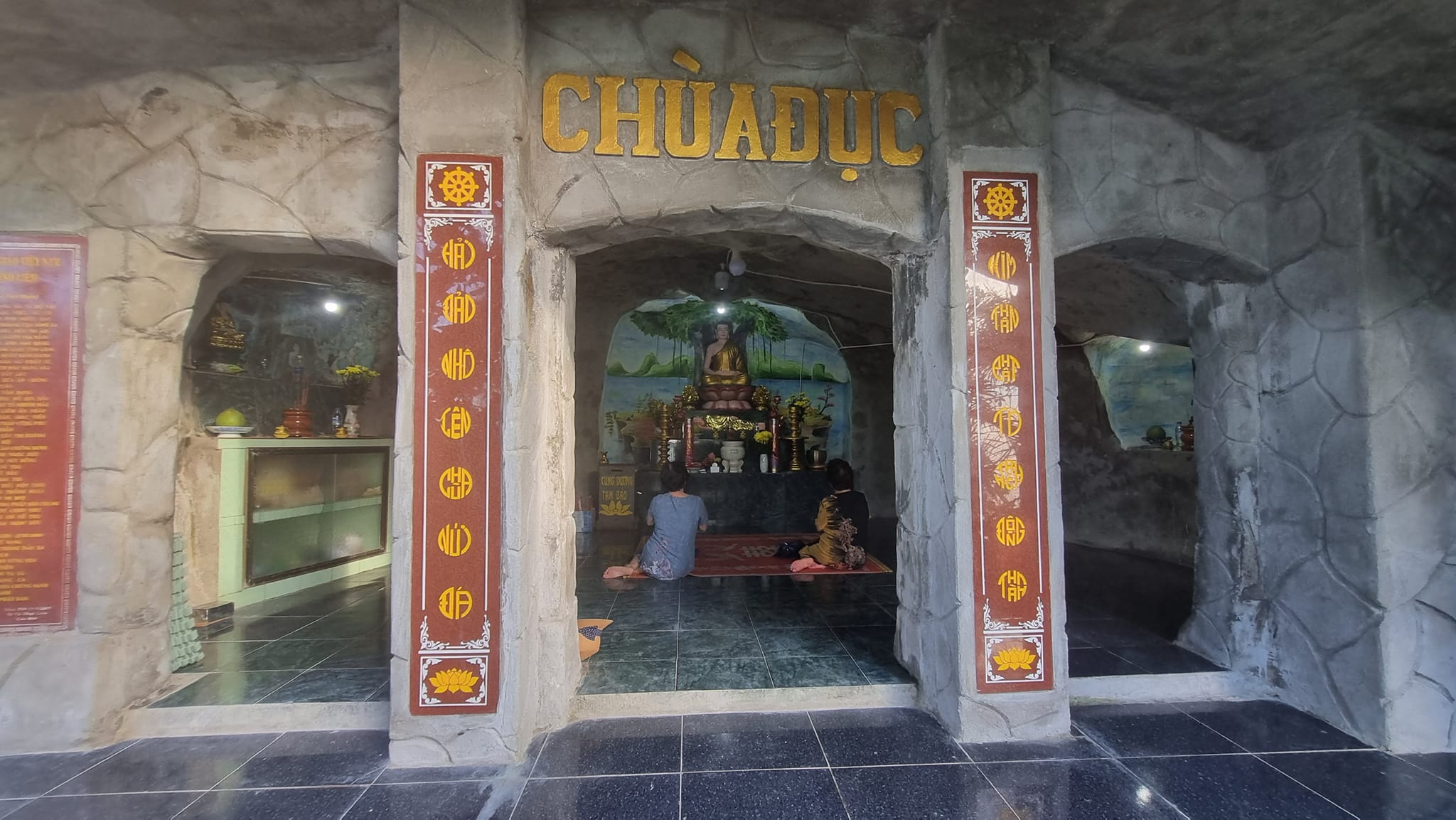
Duc Pagoda consists of three natural stone caves of different sizes. The first cave, with a volume of about 65 cubic meters, houses the main altars: the central altar worships Shakyamuni Buddha, the left side honors Kṣitigarbha Bodhisattva, and the right altar is dedicated to the pagoda’s first abbot. According to local Buddhist belief, Avalokitesvara once chose this site as a sacred dwelling, protecting islanders from storms and natural disasters. Both the Bodhisattva statue and the pathway leading up to the temple were constructed in 2010 and inaugurated in 2012 through contributions from monks, followers, and the heartfelt labor of Ly Son residents.
From Duc Pagoda, looking toward the sea in the direction of the Bodhisattva statue, visitors are treated to a breathtaking panorama—an enchanting harmony of sky and ocean. For an even more spectacular view, climb to the summit of Liêm Tự Peak, where the crater of the ancient Giếng Tiền volcano appears as a lush green basin. This vantage point is considered one of the most beautiful spots to admire the entire Ly Son archipelago from above, helping visitors understand why the island is often compared to a heavenly realm.
Duc Pagoda is like a gentle pause in the symphony of a journey through Ly Son. Located far from residential areas, the temple offers a tranquil environment ideal for meditation and spiritual retreat. The Bodhisattva statue facing the sea symbolizes blessings and protection, watching over Ly Son’s fishermen as they venture out across the waves.