Emperor crab—known locally as cua huỳnh đế—is considered the most precious seafood specialty of Phu Quy Island in Binh Thuan Province. According to local fishermen, this rare crab thrives in Phu Quy’s pristine environment thanks to its golden sandy seabed and exceptionally clean, clear waters, which provide the ideal habitat for the species.
Unlike ordinary crabs, emperor crabs are remarkably clever and naturally gifted at camouflage. With their striking appearance—spiny backs, whisker-like fringes on the shell, short legs and claws—they can easily blend into coral reefs to hunt or evade predators. Because of this, catching emperor crab is a challenging task that demands skill, patience, and long experience. Fishermen typically use nets, dive manually, or set special traps known as rap, cone-shaped devices baited with fresh fish and placed 5 meters apart along the seabed. Once the crab crawls in to eat the bait, the trap closes.
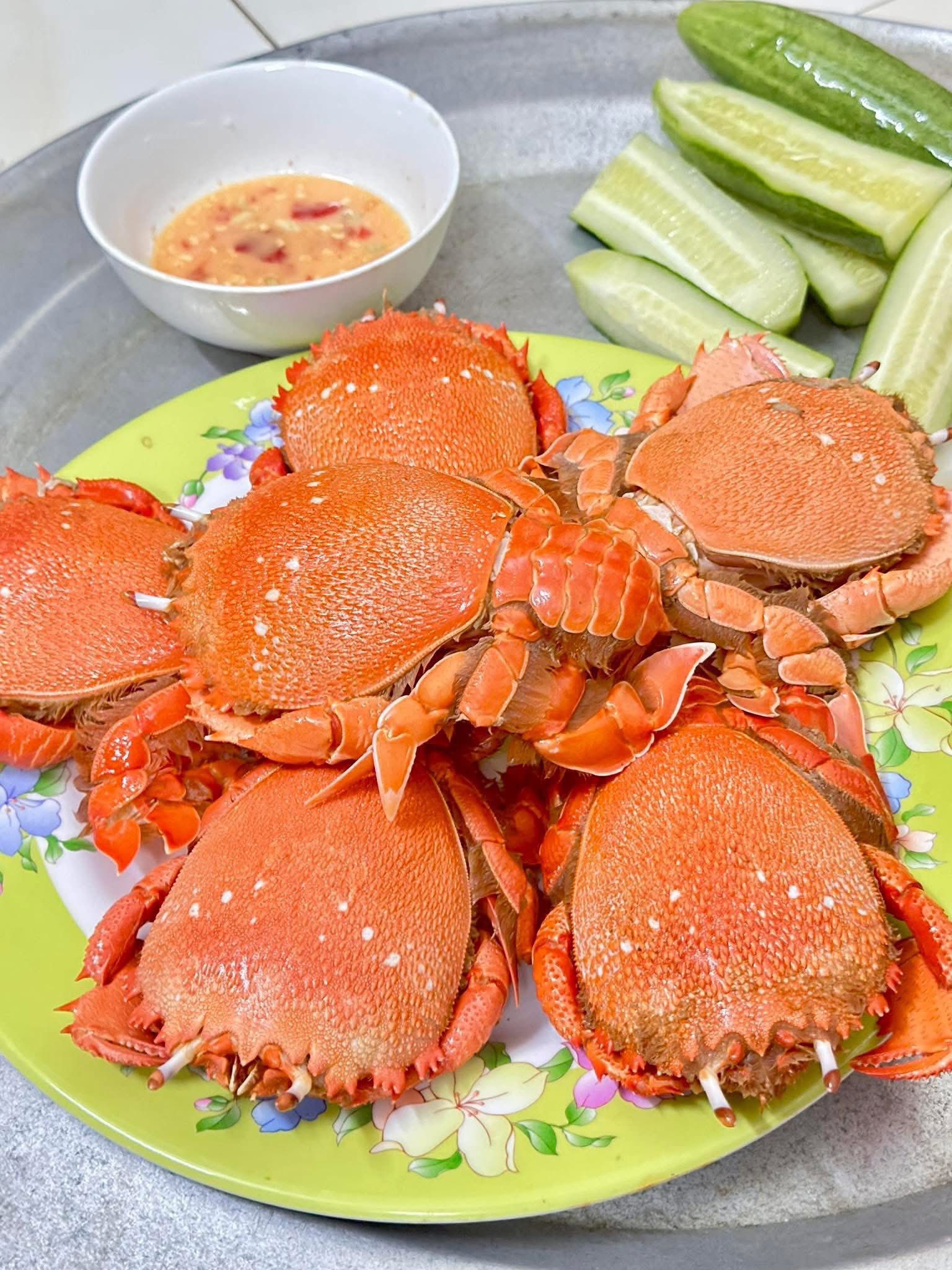
Locals say that emperor crabs have dense hair-like fibers around the neck and tail. Legend has it that when King Gia Long visited the small island of Hon Tranh near Phu Quy during his journey along the central coast, local fishermen presented him with this extraordinary delicacy. The crab revitalized the king, and from then on, islanders named it cua huỳnh đế (Imperial or Emperor Crab). Over time, it also became a symbol of good fortune among local fishing communities.
Each afternoon, fishing boats return to shore with freshly caught emperor crabs—large, lively, and irresistible with their waving claws. To preserve their premium quality, fishermen must keep the crabs alive until sold, ensuring firm meat, natural sweetness, and rich, bright-orange roe.
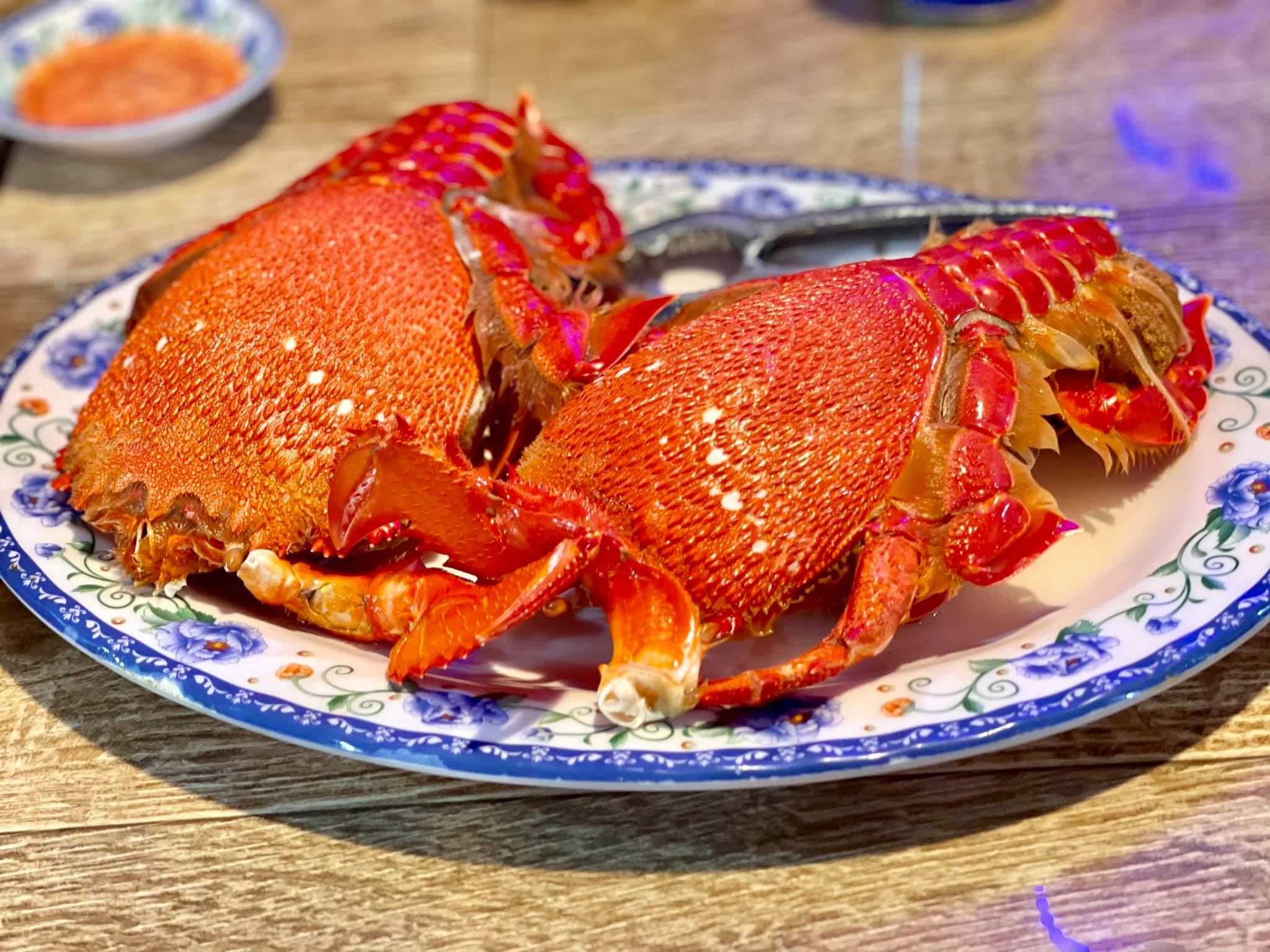
Renowned for its exceptional flavor and nutritional value, emperor crab has long been considered the “champion” of all crab species. In ancient times, it was served exclusively on royal tables. Today, it can be prepared in numerous ways: stir-fried with tamarind, roasted with salt, grilled, steamed, or made into fragrant porridge. Emperor crab porridge is particularly treasured for its rich aroma and restorative qualities—believed to boost vitality in men and nourish postpartum women.
Because the crab contains extremely high levels of protein, locals often advise those with gout to avoid consuming it. Receiving emperor crab from a fisherman is regarded as a high honor, reserved only for the most esteemed guests.
For many, the purest way to enjoy emperor crab is simply steamed, then dipped into salt, pepper, and local bird’s-eye chili. The moment you lift the shell, the aroma of creamy golden roe fills the air. Each piece of firm, sweet, succulent meat—white and glistening—awakens your senses and keeps you wanting more.
Due to overharvesting in past years, emperor crab has become increasingly scarce. Today, it sells for 700,000–800,000 VND per kilogram on Phu Quy Island, with seafood wholesalers buying as much as they can get.
Emperor crab truly lives up to its name—the king of all crabs. Once you taste it, you’ll understand why travelers who visit Phu Quy always long to return for more. If you ever find yourself on this beautiful island, missing out on this royal delicacy would be a real loss.