


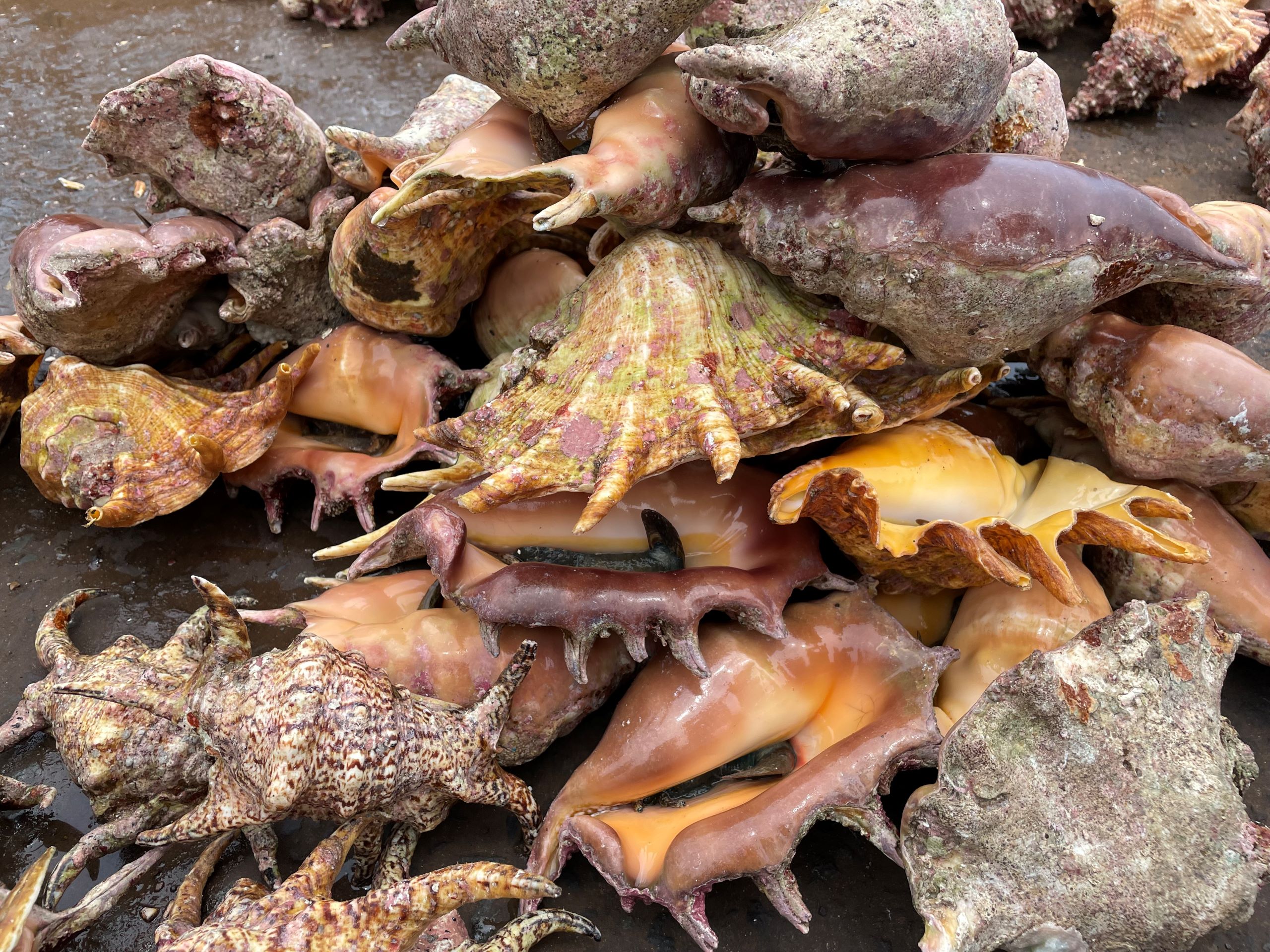
Ốc Bàn Tay—literally called the “Hand Shell”—is one of Phu Quy Island’s most intriguing seafood specialties. Its unusual name may make some travelers hesitate at first, but once tasted, it quickly becomes a favorite. In fact, it’s so popular that many restaurants only serve it when ordered in advance.
What Makes It Special?
The Hand Shell has a distinctive oval shape with a brown–yellow–black shell. Its most unique feature is the seven pointed ridges, five of which are arranged just like the fingers of a human hand—hence the name Ốc Bàn Tay.
Each shell is about the size of an adult’s fist, and the species is commonly found in the south-central coastal waters of Vietnam. Hand Shells live at depths of 25–50 meters, so fishermen can only harvest them by deep diving during calm, clear seas.
The species begins mating and reproducing around October, and a fully mature Hand Shell can live over 20 years.
Flavor & Nutritional Value
Hand Shell meat is known for its soft yet chewy texture, snappy bite, and naturally sweet ocean flavor. This seafood is also rich in nutrients, including:
- Protein
- Healthy fats
- Calcium, phosphorus, iron
- Vitamins A, C, and B2
Best Ways to Enjoy Hand Shell
Ốc Bàn Tay can be prepared in several simple but delicious ways:
- Steamed Hand Shell – sweet, clean, naturally aromatic
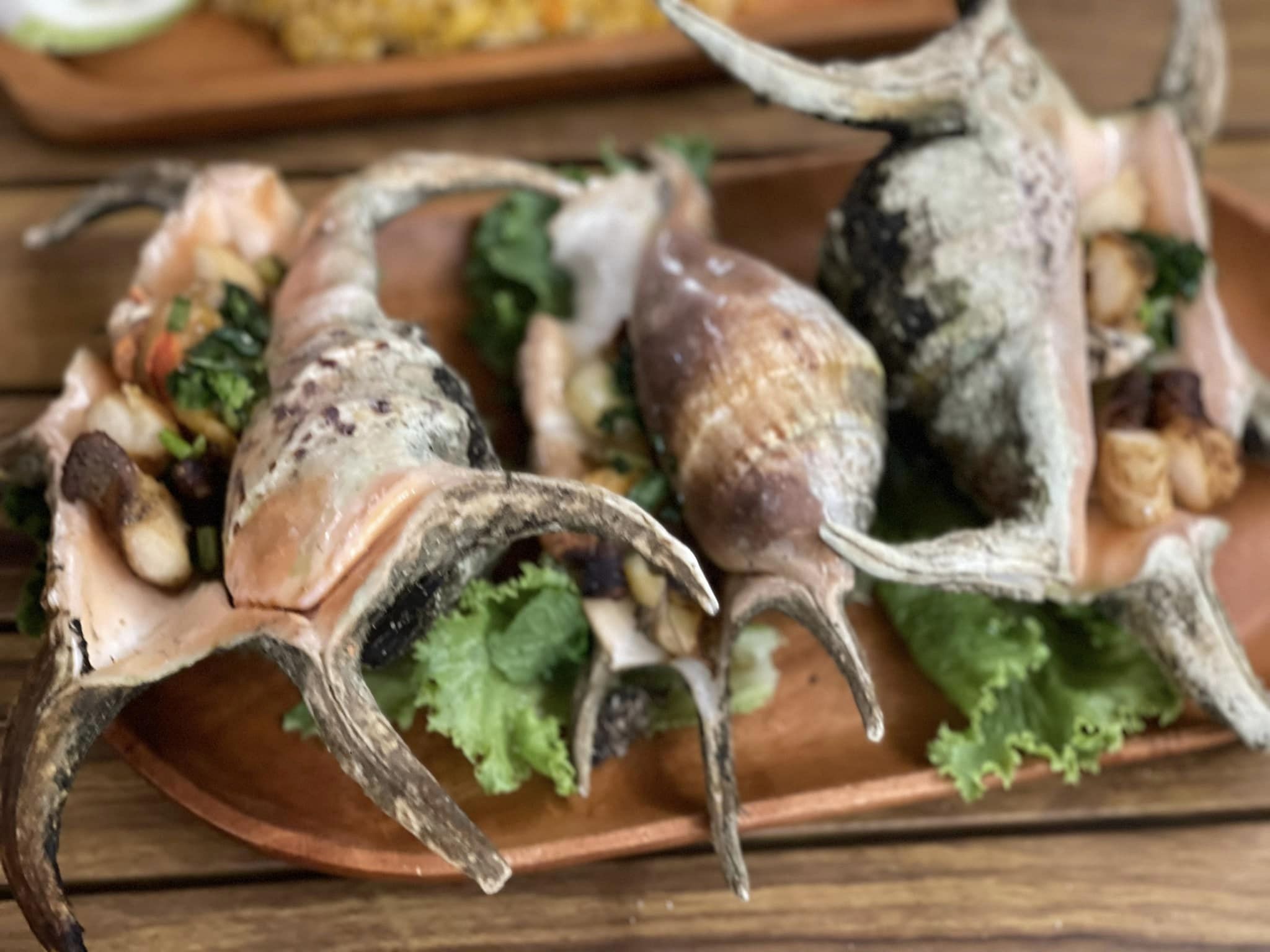
- Grilled Hand Shell – smoky, juicy, perfect with salt & chili
- Stir-fried with garlic (in some restaurants)
No matter how it’s cooked, the result is always satisfying—fresh, flavorful, and uniquely Phu Quy.





+of+Phu+Quy+Island)