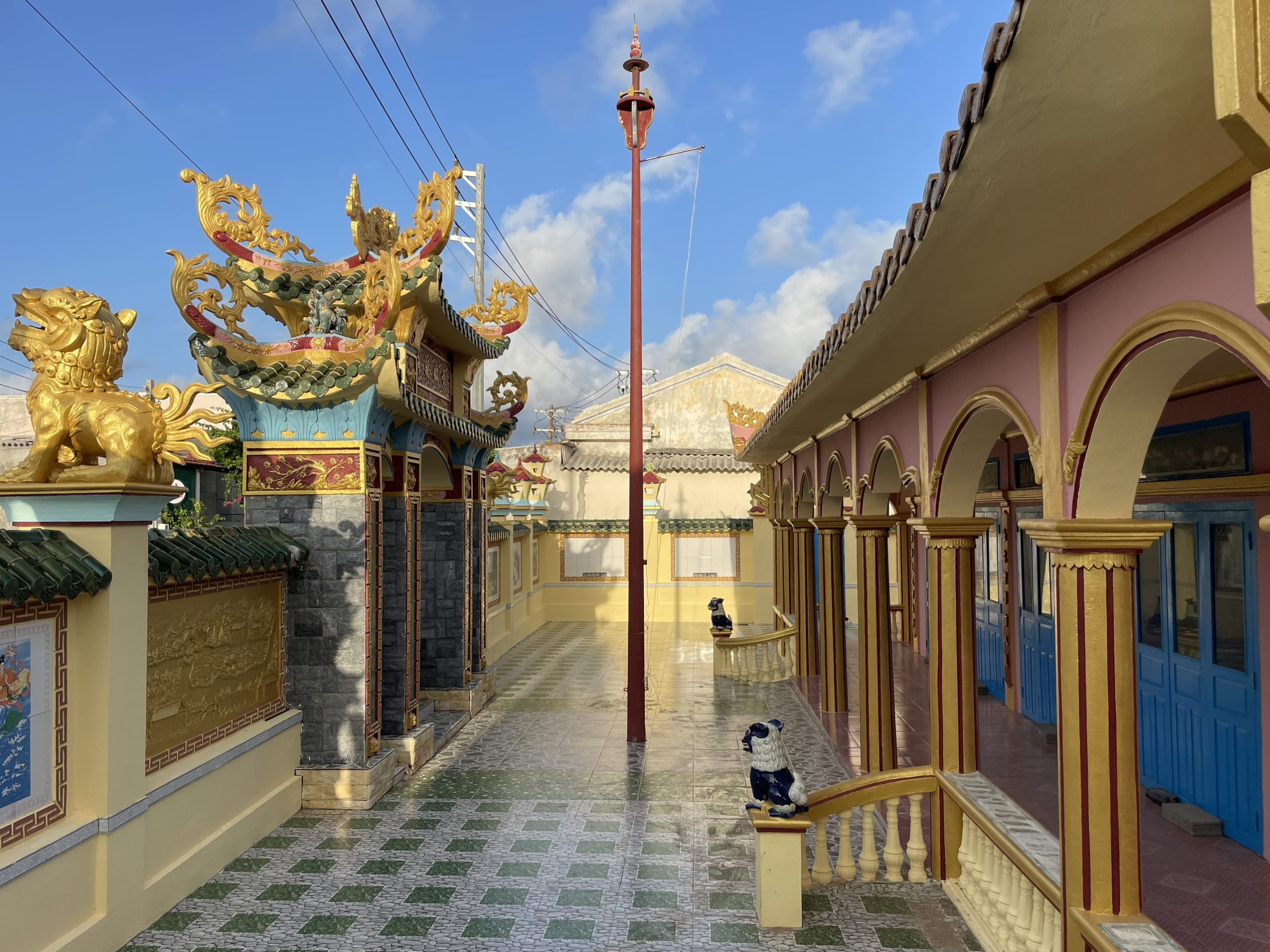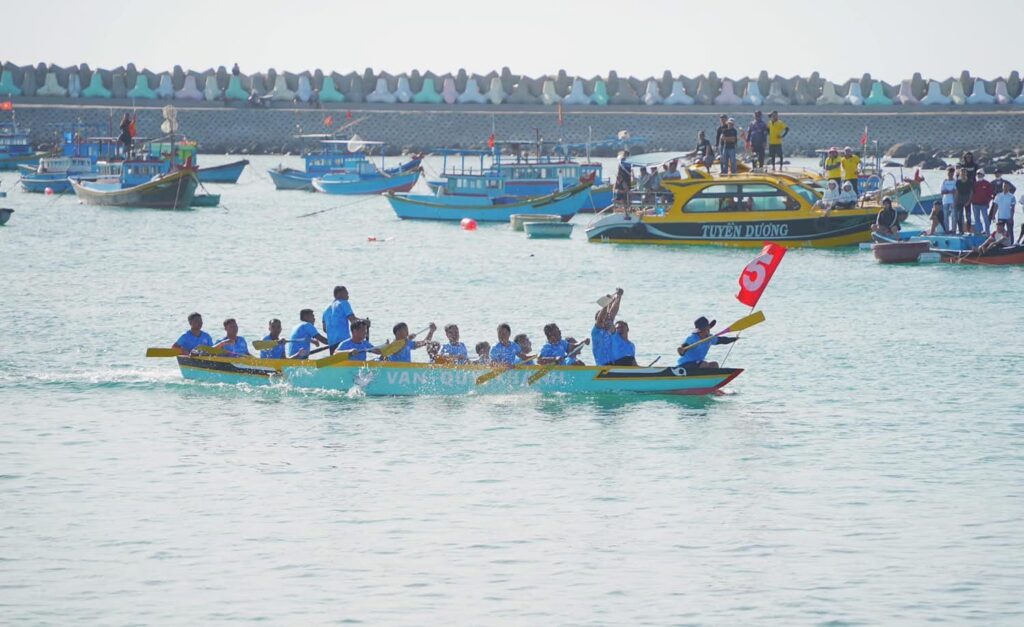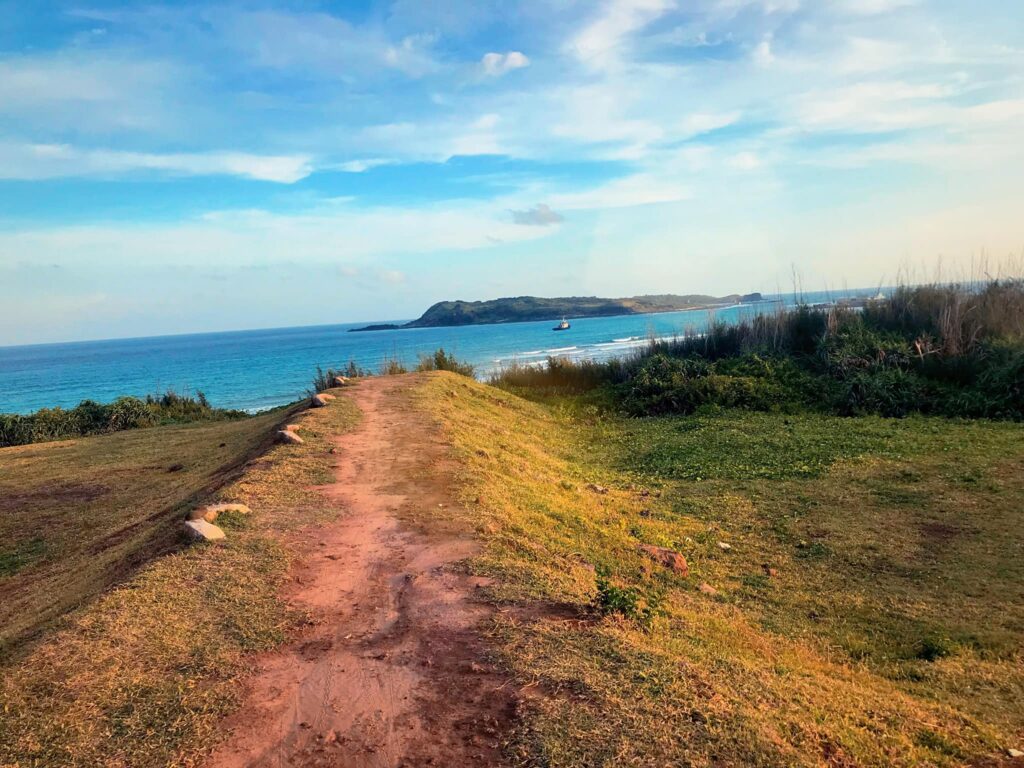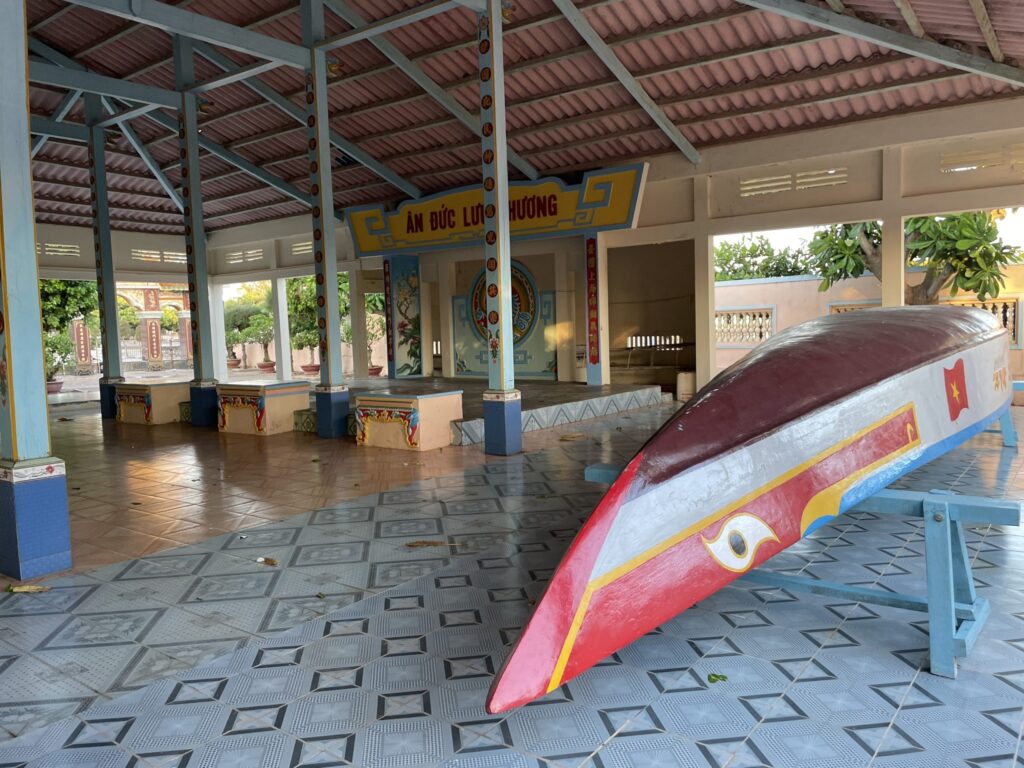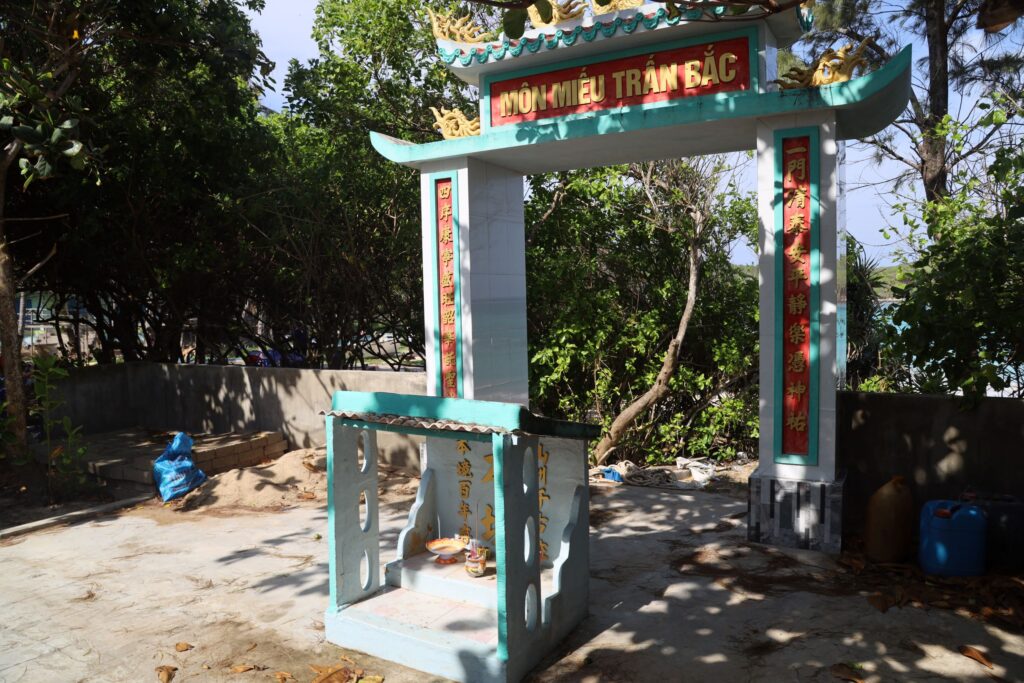

Phu Quy Island is home to five historic communal houses (đình làng), each dedicated to the worship of the Thành Hoàng Bổn Cảnh—the village’s tutelary deity—as well as the tiền hiền and hậu hiền, the forefathers who founded the early settlements and contributed to the establishment of local communities.
Unlike the more elaborate communal houses on the mainland, most đình on Phu Quy are smaller and more modest, a result of the island’s harsh climate and limited natural resources. Traditional wood materials were often replaced over time with modern reinforced concrete due to decay and weathering. A unique characteristic is that all communal houses face the sea, reflecting the islanders’ deep connection with the ocean.
Below is an overview of the five ancient đình làng that form the spiritual backbone of Phu Quy’s cultural heritage.
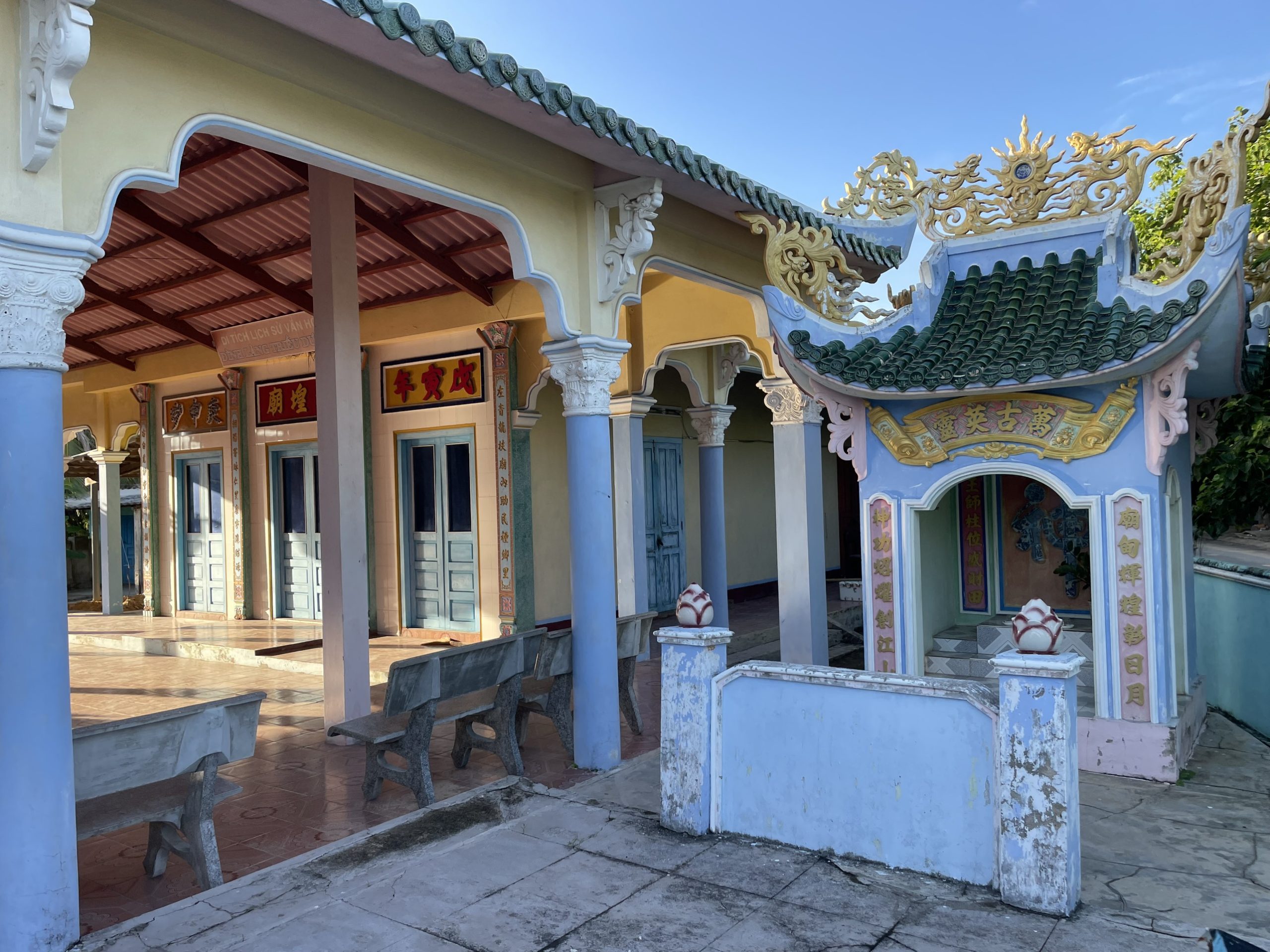
Triều Dương Communal House
Located in Triều Dương Village (Tam Thanh Commune), the Triều Dương Communal House was first built in 1773. It preserves five royal decrees (sắc phong) granted to the local tutelary deity during the reigns of Emperors Tự Đức, Đồng Khánh, and Khải Định.
Every year, two major ceremonies are held:
- Spring Offering (Tế Xuân): in the 1st or 2nd lunar month
- Autumn Offering (Tế Thu): in the 7th or 8th lunar month
These ceremonies express gratitude to the deities and prayers for peace, prosperity, and favorable weather.
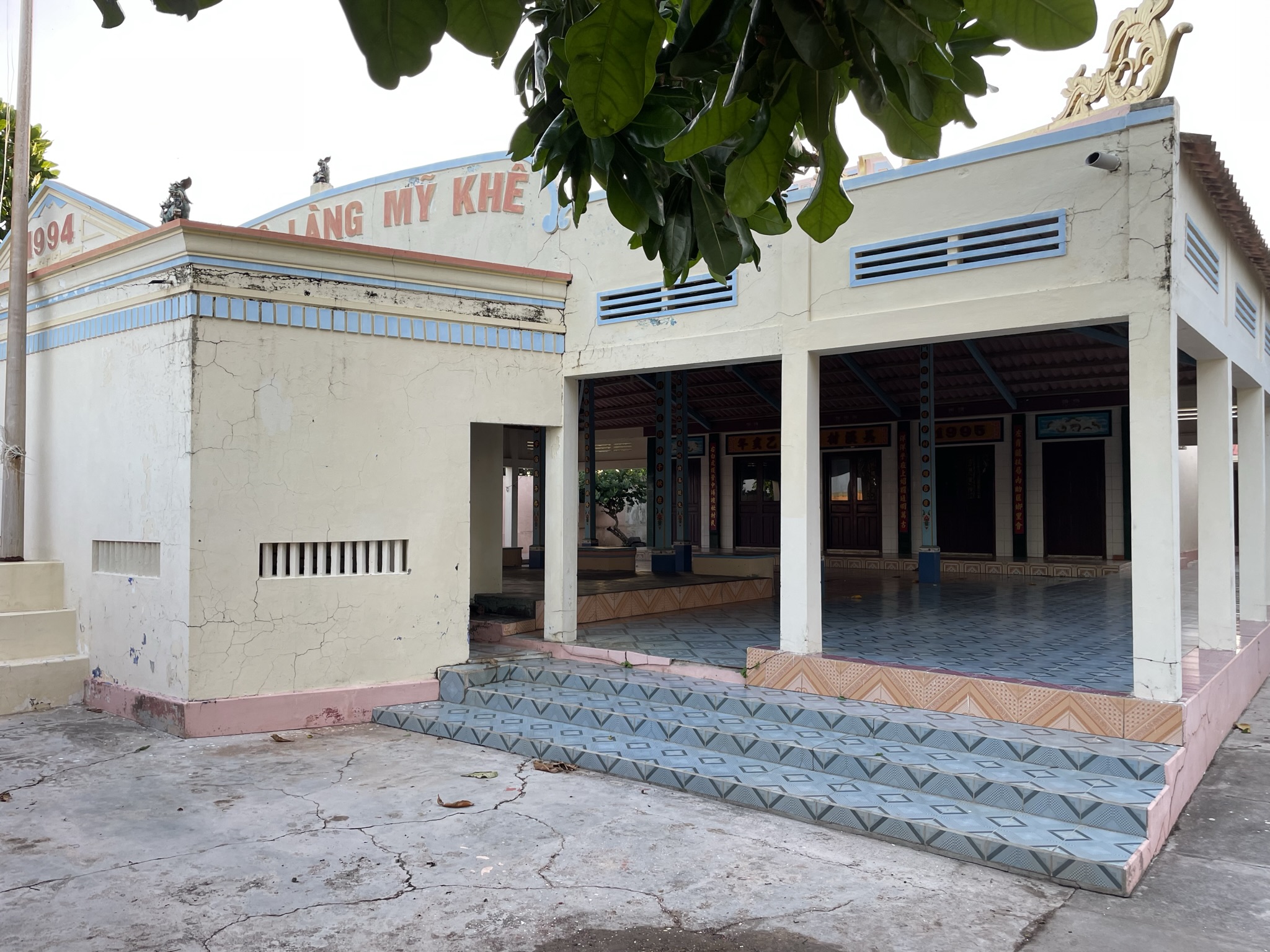
Mỹ Khê Communal House (Miếu Thành Hoàng Mỹ Khê)
Situated in Mỹ Khê Village (Tam Thanh Commune), this communal house was built around 1752, the same year as the construction of Lăng Cô Mỹ Khê. Like Triều Dương, it retains five imperial decrees honoring the Thành Hoàng Bổn Cảnh.
Its annual ceremonies include:
- Spring Offering (Tế Xuân) in the 1st lunar month, praying for national peace, abundant harvests, and calm seas
- Autumn Offering (Tế Thu) in the 7th lunar month, held to give thanks to the deity
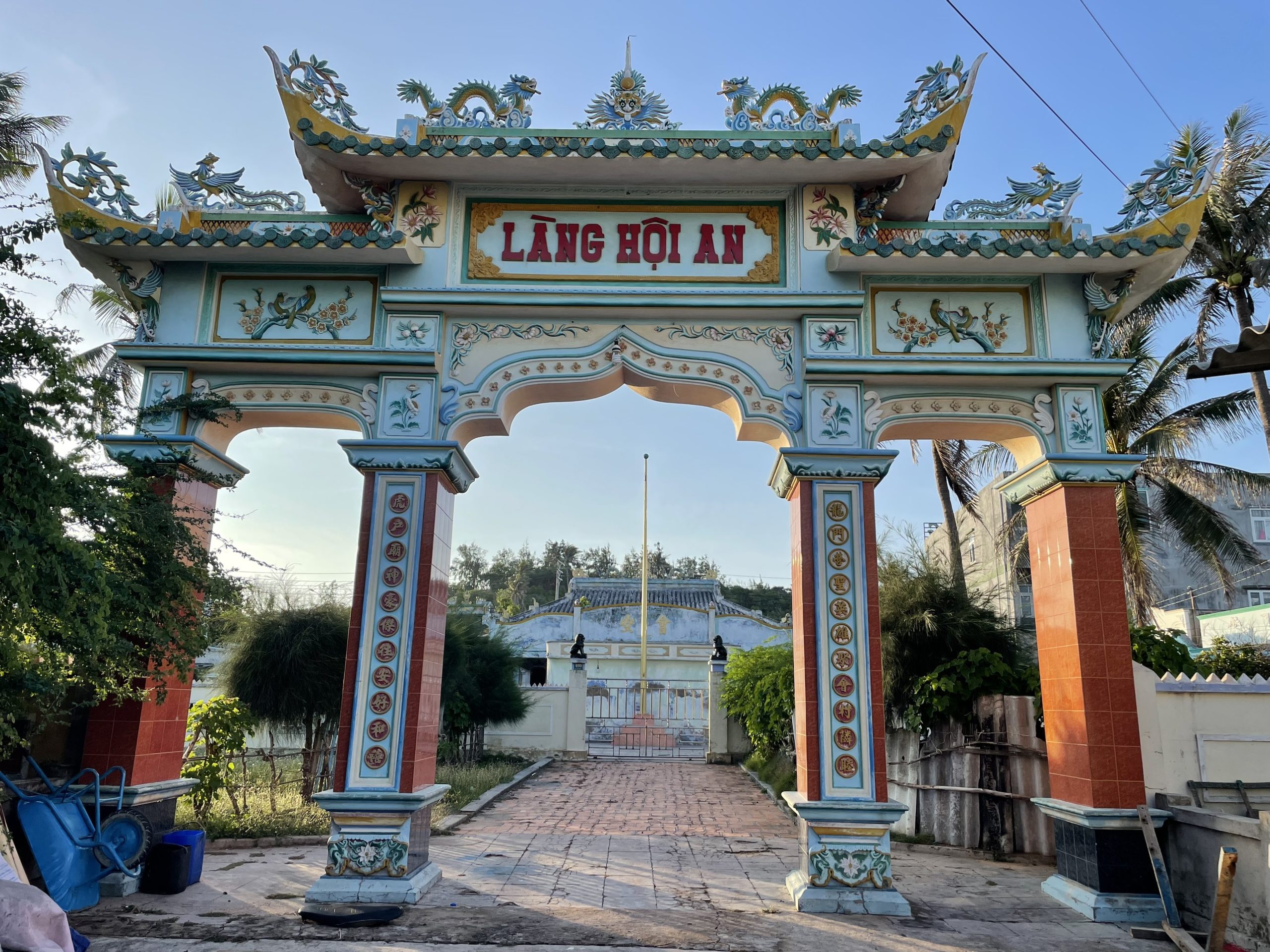
Hội An Communal House
Located in Hội An Village (Tam Thanh Commune), this communal house was first built in the late 18th century and underwent major restoration in 1812, resulting in a larger and more prominent structure.
The two traditional ceremonies held annually are:
- Spring Offering (Tế Xuân) – 1st lunar month
- Autumn Offering (Tế Thu) – 7th lunar month
These rituals uphold centuries-old customs passed down by the village’s founding ancestors.
Phú Mỹ Communal House (Miếu Phú)
Phú Mỹ Communal House is located in Phú Mỹ Village, formed by the merger of two former villages: Phú Ninh and Mỹ Xuyên (Ngũ Phụng Commune). Built in 1813, the communal house unfortunately lost most of its original imperial decrees over time.
Today, the only remaining decree preserved here belongs to the Bạch Mã Thái Giám Temple, housed within the same complex.
Phú Mỹ Communal House also maintains two annual ceremonies:
- Spring Offering (Tế Xuân) – 1st lunar month
- Autumn Offering (Tế Thu) – 7th lunar month
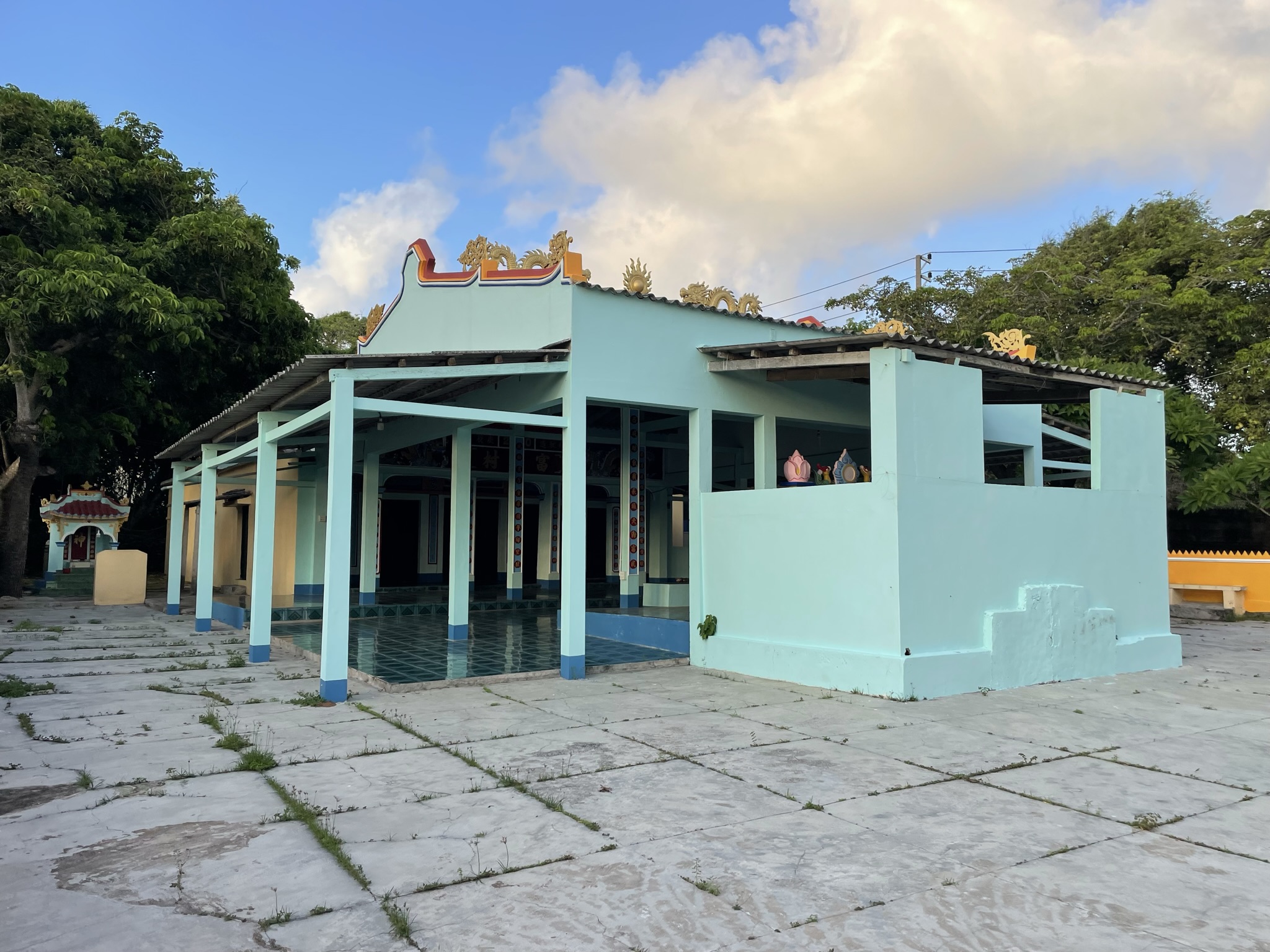
Long Hải Communal House (Nhà Vuông)
Located in Long Hải Commune, the Long Hải Communal House—locally known as Nhà Vuông (“the Square House”)—was constructed in the late 18th century.
Although its royal decrees have not survived, the communal house preserves valuable artifacts and Hán-Nôm documents that reflect over 200 years of local history, culture, and settlement.
Its two major annual ceremonies include:
- Spring Offering (Tế Xuân) – 1st or 2nd lunar month
- Autumn Offering (Tế Thu) – 7th or 8th lunar month
These events uphold the traditional ritual calendar that has shaped the island’s identity for generations.