The giant clam, known in Vietnamese as ốc tai tượng or trai tai tượng, is one of the most endangered marine species in Vietnam. It is listed under the Catalogue of Rare and Precious Aquatic Species requiring protection, restoration, and development according to Decision No. 82 issued by the Ministry of Agriculture and Rural Development.
Because of this, all activities related to harvesting, trading, or consuming giant clams are strictly prohibited. Both fishermen and visitors must comply with these regulations to help preserve marine biodiversity. Any violation will be subject to strict penalties under Vietnamese law.
How to Identify the Giant Clam
Despite being called an “ốc,” the giant clam actually belongs to a family of large marine bivalves—often referred to as the “giants of the ocean.”
Key identifying features include:
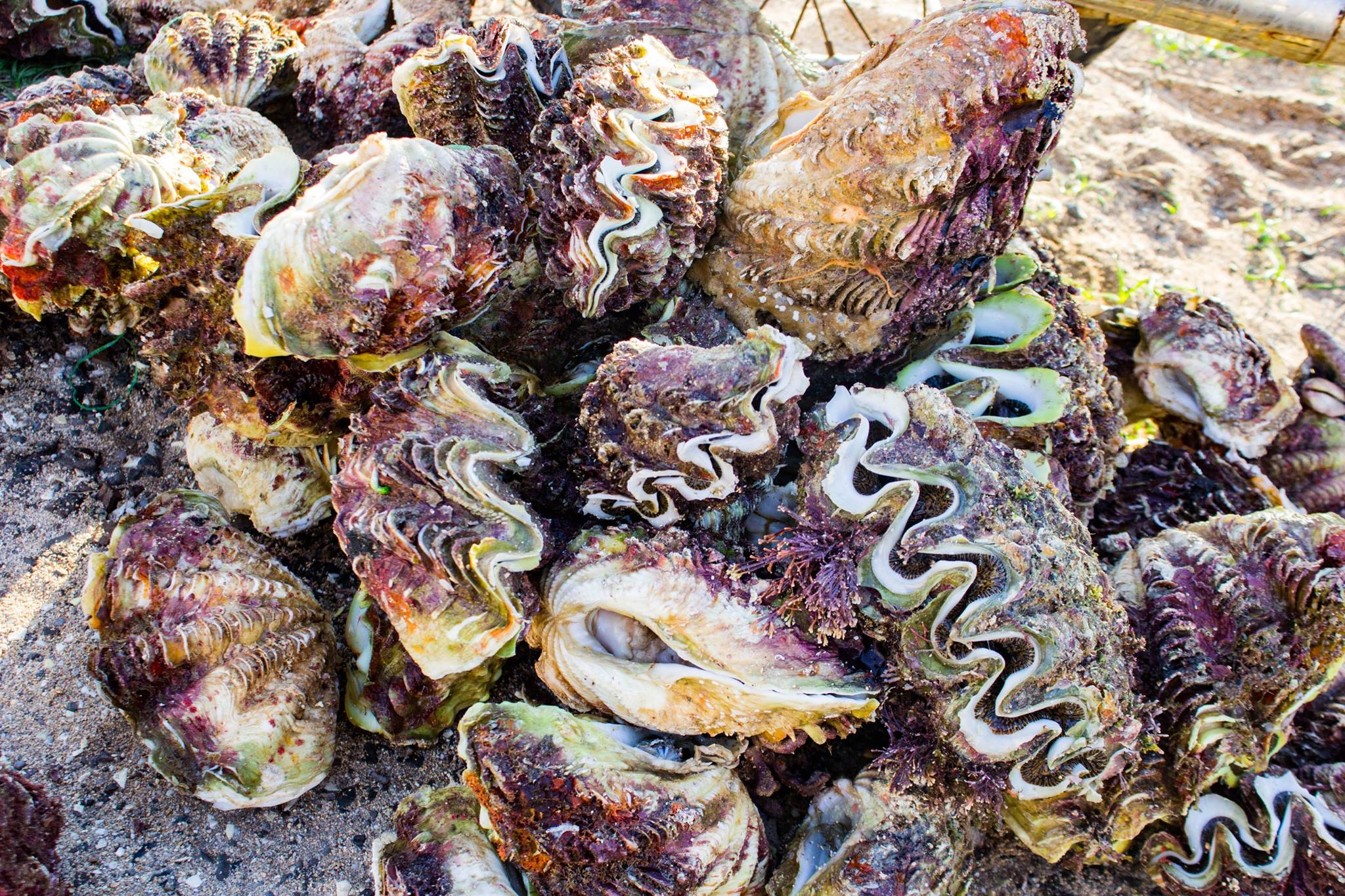
- A thick and extremely large shell, usually with 4–7 pronounced vertical folds.
- The shell provides shelter not only for the clam itself but also for small fish and organisms living in coral reefs.
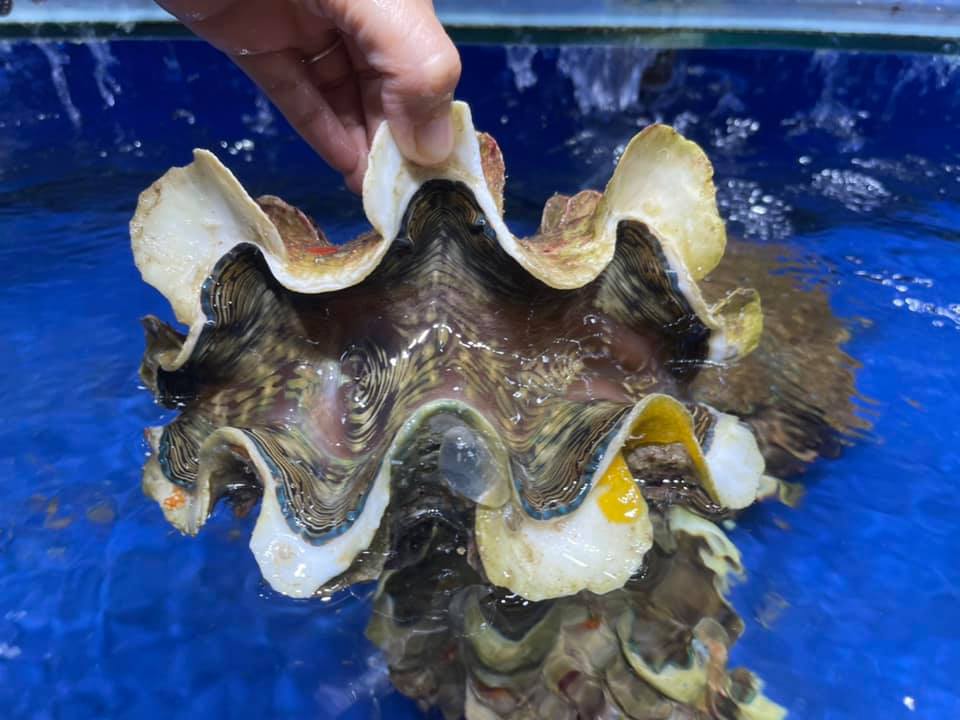
Inside the shell is a colorful mantle that can be copper brown, golden yellow, deep blue, or bright green. Each individual clam displays unique color patterns—no two clams look alike—making them the “fingerprints of the sea.”
Of particular interest are the tiny iridescent spots on the mantle, which act like natural “light windows.” These allow sunlight to filter through, enabling the clam’s symbiotic algae to photosynthesize and generate energy—an extraordinary survival mechanism.
Distribution of Giant Clams in Vietnam
In Vietnam, giant clams are found mainly in tropical coastal waters with healthy coral reefs, especially in:
- Ha Long Bay (Quang Ninh)
- Binh Dinh, Phu Yen
- Nha Trang waters (Khanh Hoa)
- Lam Dong jurisdiction (formerly the Binh Thuan marine region)
- Ho Chi Minh City jurisdiction (formerly the Ba Ria – Vung Tau marine region)
- An Giang jurisdiction (including Nam Du Archipelago, Phu Quoc, and neighboring islands)
These areas share ideal conditions for giant clams: clear water, year-round warm temperatures, and strong coral ecosystems.
Threats and the Importance of Conservation
Overexploitation in the past, combined with coral reef degradation, has drastically reduced the giant clam population. As a keystone species, giant clams play a vital role in maintaining ecological balance and serve as indicators of a healthy marine environment.
Protecting giant clams is not just about saving a rare species—it is about preserving marine biodiversity and ensuring a sustainable future for Vietnam’s oceans.