


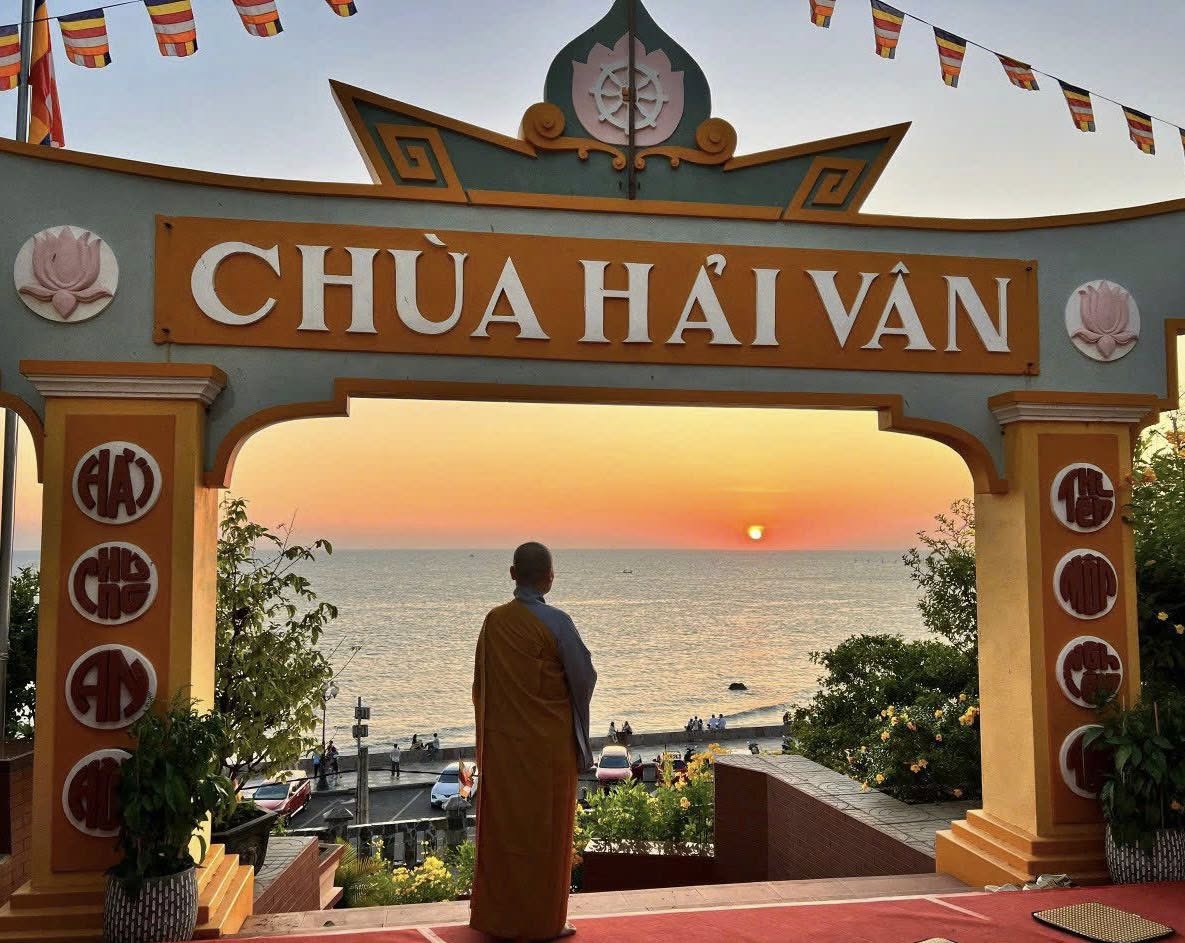
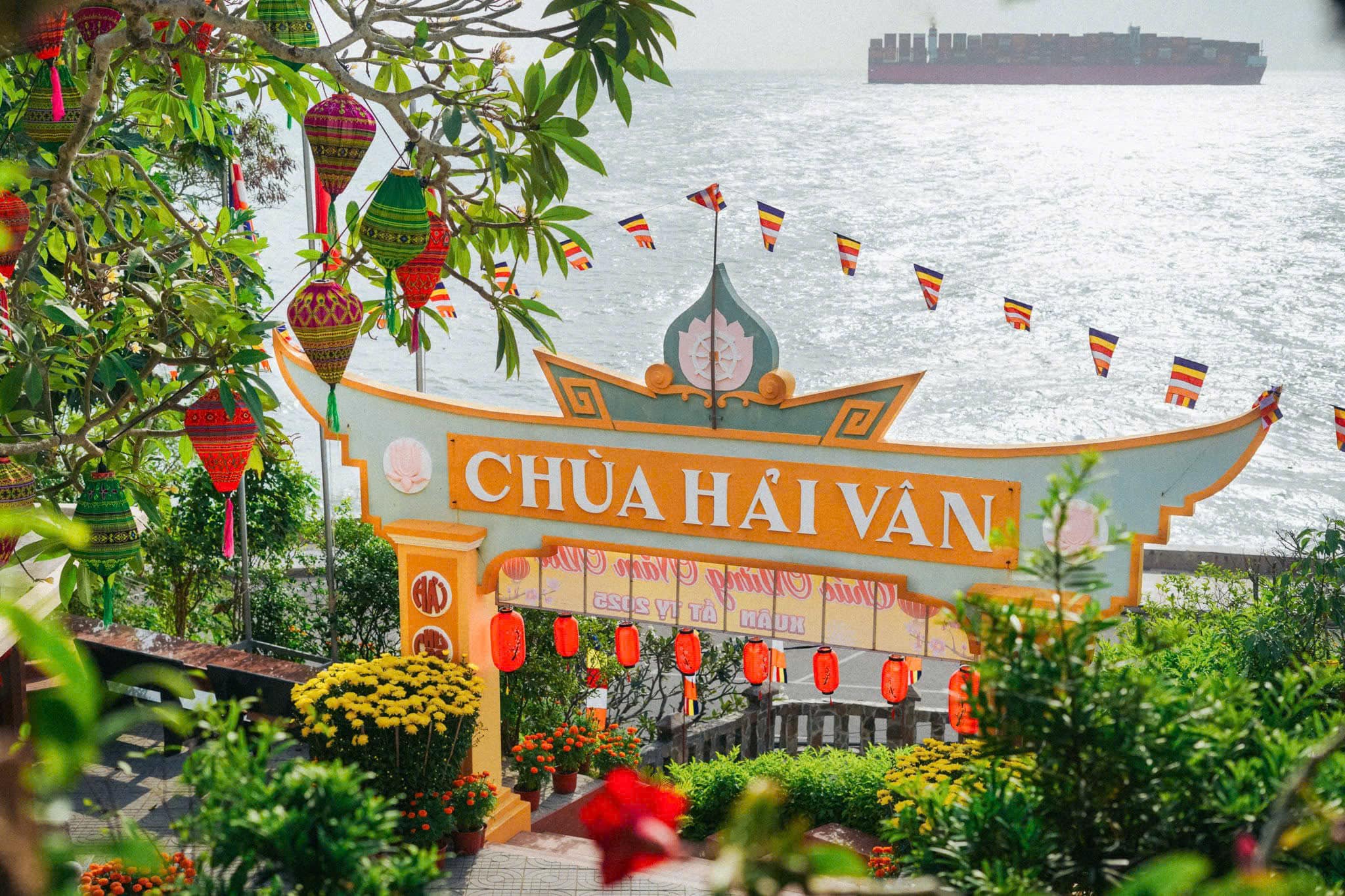
Backed by Núi Nhỏ (Tao Phùng Mountain) and facing the blue waters of Bãi Dứa Beach, Hải Vân Pagoda enjoys a dramatic natural setting. Located on Hạ Long Street in Vũng Tàu, Ho Chi Minh City, the pagoda has long been a familiar stop for travelers seeking serenity amid the coastal landscape.
In early spring, following Hạ Long Road from Bãi Sau toward Bãi Dứa, visitors arrive at Hải Vân Pagoda in the gentle sea breeze, with traces of spring lingering along the way. The scenery is especially poetic: on one side, the vast open sea; on the other, rugged mountain cliffs. Although the pagoda rests on the mountainside, its entrance gate opens directly onto Hạ Long Road at the foot of Núi Nhỏ.
Welcoming visitors, Venerable Nun Huệ Nghĩa, who currently practices at the pagoda, explains that Hải Vân Pagoda belongs to the Northern (Mahayana) Buddhist tradition. With the aspiration of establishing a quiet sanctuary amid majestic mountain scenery—particularly to support elderly devotees wishing to enter monastic life and to form a training center for the nuns’ community—in 1964, Venerable Thích Nữ Như Thanh, former Abbess of Huê Lâm Pagoda (District 11, Ho Chi Minh City), chose Núi Tao Phùng as the site for Hải Vân Pagoda, with assistance from architect Nguyễn Hữu Thiện.
Covering an area of more than 739 square meters, Hải Vân Pagoda consists of three main zones: the Main Hall, the ceremonial courtyard, and the front hall. The meditation hall was completed in 1965. In 1969, construction of the main sanctuary and the ancestral hall was finished. By 1972, the Dharma Treasury (Pháp Bảo Tạng) was completed, housing the Taishō Tripiṭaka—the modern edition of the Buddhist canon brought from Japan.
In 1992, the Avalokiteśvara Shrine (Quan Âm Bảo Điện) was completed through donations from Buddhist devotees in Canada. Two paths lead up to the shrine: one follows a winding staircase toward the front hall, while the other ascends directly along the side wall.
From the front hall, visitors walk around the ceremonial courtyard and ascend three rising levels to reach the Avalokiteśvara Shrine—symbolizing the Noble Eightfold Path and the Twelve Links of Dependent Origination. The shrine stands tall and dignified, its curved tiled roof resembling rolling waves. Inside is a nearly 10-meter-tall statue of Avalokiteśvara Bodhisattva, with a gentle and compassionate expression.
The right wall features a relief depicting the Bodhisattva’s subjugation of Mount Potalaka, while the left wall illustrates Sudhana (Thiện Tài Đồng Tử) seeking enlightenment from Avalokiteśvara. Along the ascending wall are 53 poetic verses recounting Sudhana’s spiritual journey, inspired by the Entering the Dharma Realm chapter of the Avataṃsaka (Flower Garland) Sutra. With its artistic and symbolic richness, the Avalokiteśvara Shrine of Hải Vân Pagoda is regarded as one of the most significant Buddhist architectural works in the former Bà Rịa–Vũng Tàu Province.
Beyond its architectural value, Hải Vân Pagoda also maintains a Bát Quan Trai retreat center, welcoming hundreds of lay practitioners from different regions for study and practice.
As we took our leave, Venerable Nun Huệ Nghĩa selected a book of poems composed during the lifetime of the late Venerable Thích Nữ Như Thanh and offered it as a gift. Two lines from the collection beautifully capture the spirit of the place:
“Hải Vân mirrors the eastern tides,
Peach blossoms glow in the spring sunset sky.”
In the lively rhythm of the seaside city, Hải Vân Pagoda remains a quiet refuge—where mountains, sea, and Buddhist devotion come together in timeless harmony.


)