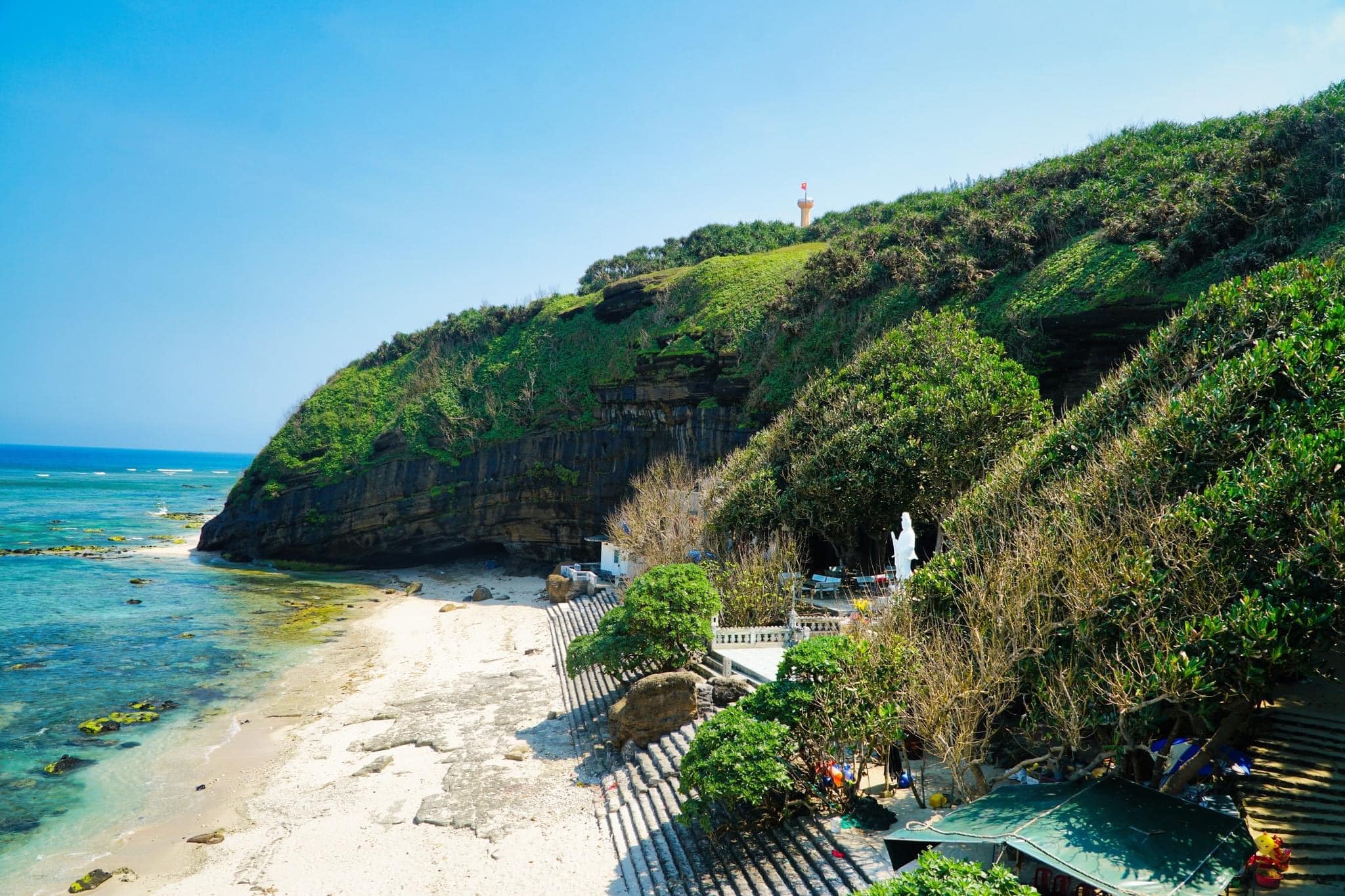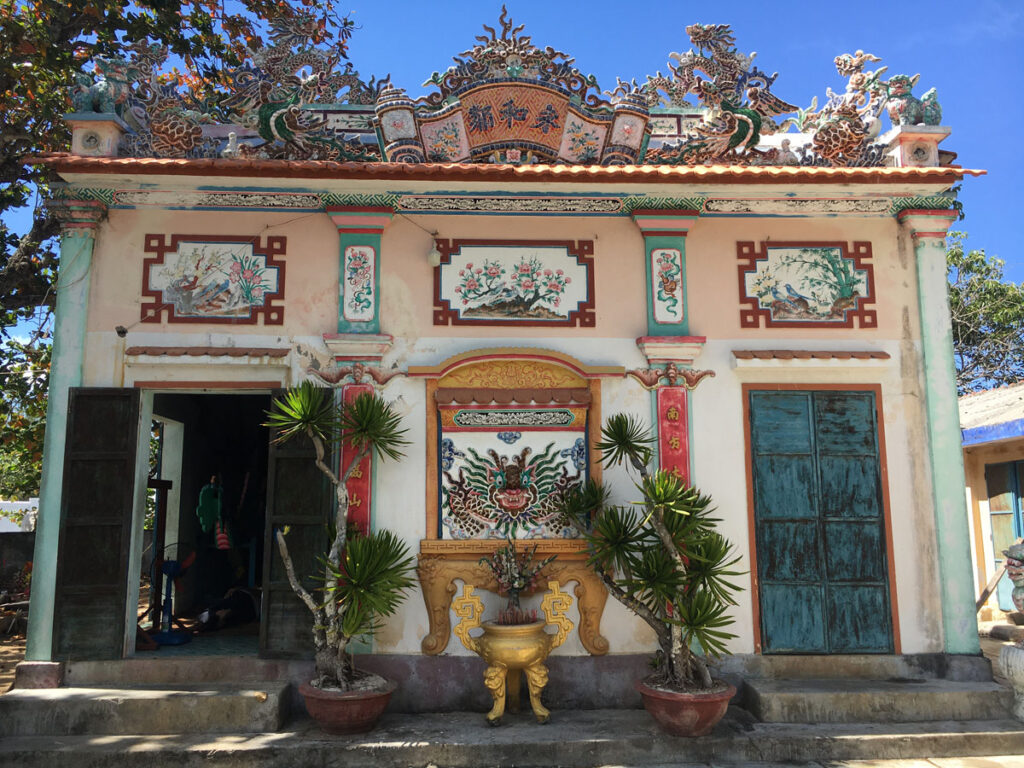

Hang Pagoda (Thiên Khổng Thạch Tự) lies beneath the volcanic cliffs of Thoi Loi Mountain, in Dong Ho Hamlet, An Hai Commune. Formed entirely within a natural cave carved by waves and time, this sacred site is one of the most iconic landmarks of Ly Son. Recognized as a National Historical and Cultural Relic, the pagoda plays an important role in the spiritual life of island communities.
Historic Origins
According to ancient Cham documents, the cave was once a Brahmanist sanctuary before Vietnamese settlers transformed it into a Buddhist temple. Genealogical records of the Tran family note that Tran Cong Quan founded the pagoda around 300 years ago, and later generations such as Tran Chau and Tran Tiem continued to restore and maintain it. In times of unrest, Hang Pagoda also served as a shelter for villagers fleeing pirate raids.
Unique Cave Architecture
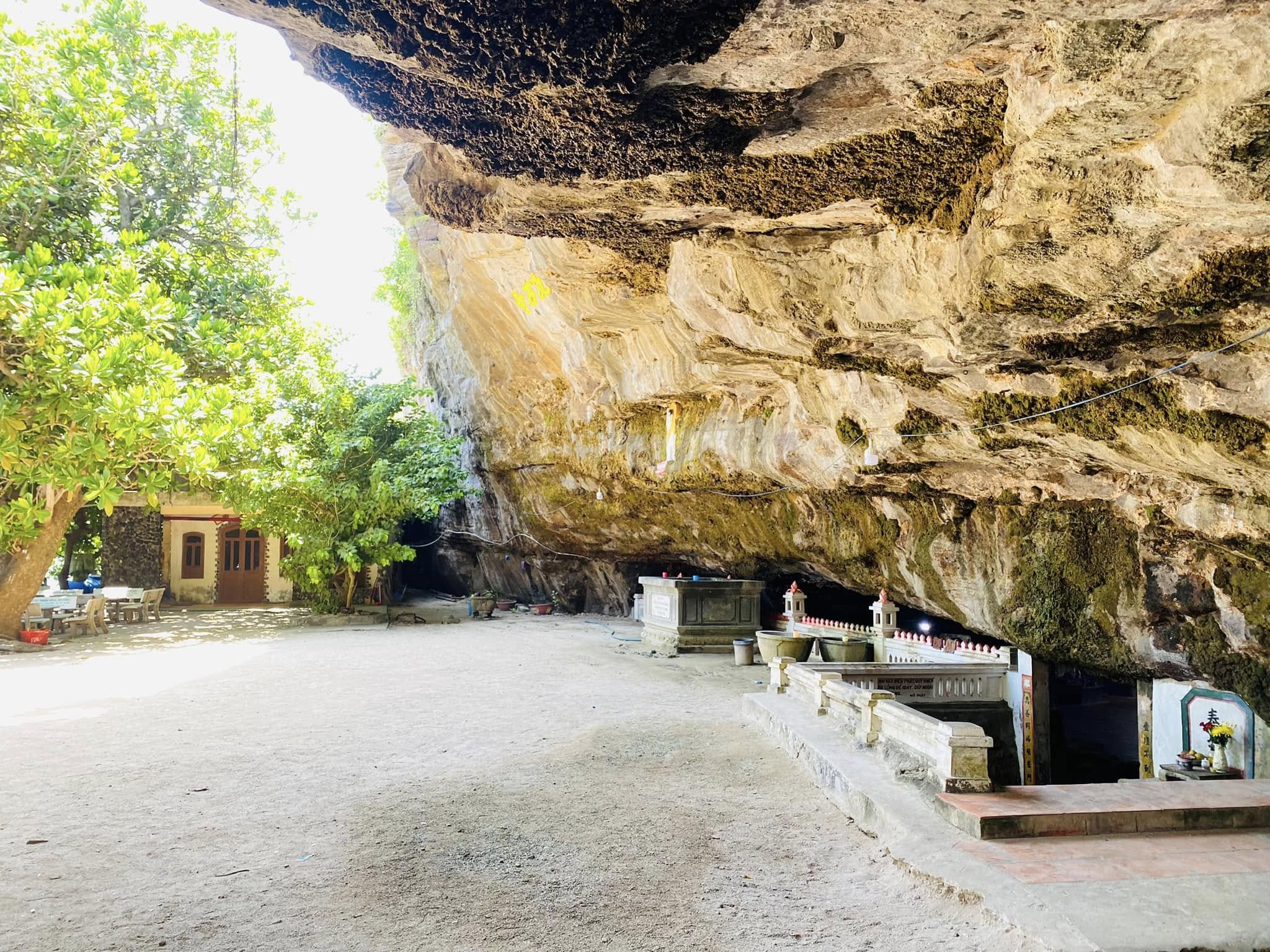
The pagoda sits entirely inside a natural cave measuring 24 meters deep, 20 meters wide, and 3.2 meters high, creating a cool and tranquil atmosphere all year round. Outside the entrance stand ancient square-fruited Barringtonia trees and a statue of the Bodhisattva Avalokiteshvara facing the open sea. The harmony of mountains and ocean forms an awe-inspiring natural tableau that few places can match.
Carved on the volcanic cliff is an image of the newborn Buddha in the posture “One hand pointing to heaven, one hand to earth” — a rare and remarkable symbol on the island.

Sacred Worship Space
Inside the cave, the worship system is arranged in a solemn and well-structured layout:
- Main altar: Amitabha Buddha, Shakyamuni Buddha, and Maitreya
- Right area: Guan Yu (Quan Thanh), the Twelve Kings of Hell, and ancestral altars of the Tran family
- Left area: Giám Trai, Ngu Loi, and the altar for Tiền Vãng (those who contributed to the pagoda)
- Entrance area: altar for wandering spirits and a statue of the Dharma Protector
Each altar resembles a miniature shrine with curved roofs and decorative motifs of dragons, scrolls, the Four Holy Creatures, and the Eight Auspicious Symbols, showcasing traditional Vietnamese artistry.
Spiritual Significance for Ly Son Residents
Hang Pagoda has long been the spiritual anchor of the island’s inhabitants. Locals visit during Lunar New Year, Vesak, Vu Lan, and especially during the Tran family’s ancestral ceremonies on the 10th day of the 3rd lunar month and the 8th day of the 4th lunar month. Legends surrounding the pagoda — such as the “path to heaven and the path to the underworld” or stories of monks Chau and Tiem practicing mystical arts — add layers of mystery and cultural depth.
Cultural, Historical & Tourism Value
As a testament to nearly 400 years of settlement and spiritual life on Ly Son Island, Hang Pagoda stands as both a historical relic and a natural wonder. Its dramatic location carved into volcanic rock, overlooking the vast sea, makes it one of the most breathtaking attractions on the island.
Today, Hang Pagoda is not only a revered place of worship but also a must-visit destination for travelers seeking peaceful landscapes, cultural heritage, and the unique history of Ly Son — the homeland of the Hoang Sa flotilla.