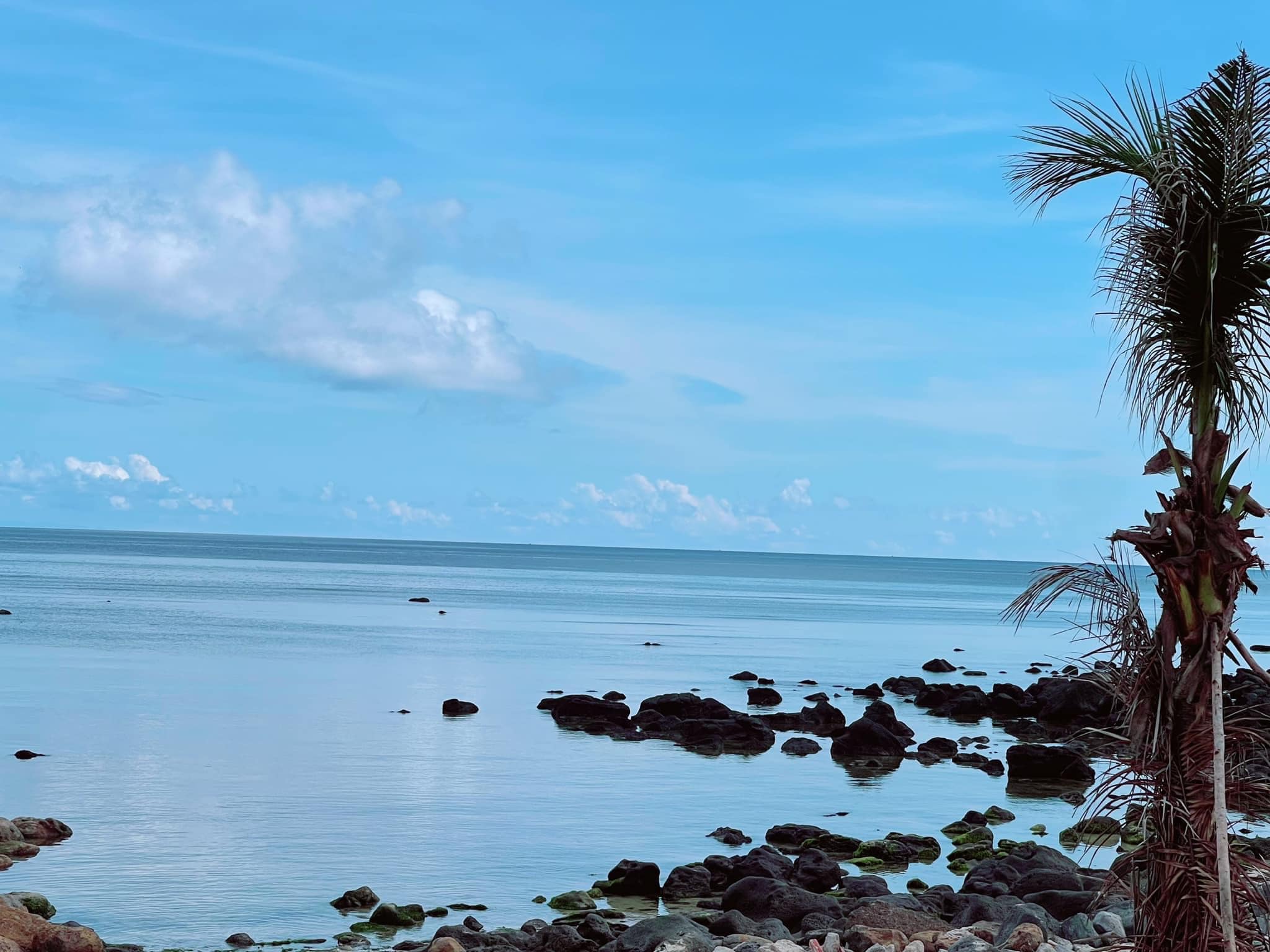
Between February and March 1923, the sea around Phu Quy Island witnessed an extraordinary natural phenomenon: a submarine volcano stirred to life, shaking the island and giving birth to a landmass that locals later named Hòn Tro.
According to oral histories, the events began near the end of the lunar year. The weather was calm when suddenly the whole island started to tremble. Houses shook, trees swayed violently, and many residents felt seasick as if the ground beneath them were pitching like a boat. Terrified, people fled their homes, fearing the sky was about to collapse.
From the offshore waters of the Phu Quy archipelago, villagers saw a towering column of smoke and fire rising into the sky, accompanied by thunderous explosions. The spectacle was unlike anything ever seen in the region, and tremors were reportedly felt as far away as Phan Thiet. This dramatic geological event marked the birth of a new volcanic island—Hòn Tro.
Scientific Records of the 1923 Eruption
Documents from the Geography Department of Ho Chi Minh City University of Education describe the sequence in detail:
- February 15, 1923: Many areas of Cù Lao Hòn (Phu Quy) experienced strong, continuous tremors for an entire week.
- Sailors aboard the Japanese ship Vocasamar, passing nearby, reported dense black smoke, thick steam columns, and loud detonations.
- March 8, 1923: The volcano expelled large amounts of grey and black material—steam, mud, and ash. Before each eruption, deafening explosions occurred, and glowing fragments of rock shot skyward.
By March 15, the volcanic activity briefly ceased, though the newborn island remained intensely hot. On March 20, another earthquake struck, triggering renewed eruptions.
Earlier, on February 8, 1923, a British Royal Navy ship inspecting the area had already reported a separate volcanic vent about 3.7 km from Hòn Tro, rising 12 meters above the water and surrounded by violent whirlpools.
French Exploration and Mapping
The sudden appearance of volcanic islands drew the attention of international scientists. On March 13, 1923, the French Indochina hydrographic survey team received an order to investigate the new island. Four days later, on March 17, the team conducted an on-site survey and submitted a detailed map to the French Academy of Sciences.
Researcher Trần Tân Mỹ cites the report:
“The island was formed from piles of very light, porous black material—evidently volcanic ash, hence the name Hòn Tro (Ash Island). Denser blocks were found in several areas, especially atop the largest mound, which rose 0.75 m high and 0.5 m across.
The island resembled a horseshoe or crescent moon, with both ends sharply cut as though by collapse. Its structure was fragile and unable to withstand ocean waves. The volcanic vent emitted ash and steam, while depth soundings revealed extremely steep underwater slopes—over 30 m deep just 150 m offshore, and 100 m deep at 1 km distance.”
Local residents also told French surveyors about strong tremors felt on February 12 and 16, which gradually subsided by February 22.
Within only three months, the island succumbed to erosion, collapsing beneath the waves. Many began referring to it as the “ephemeral island” of Phu Quy.
Could Hon Tro Awaken Again?
A 2008 thesis from Ho Chi Minh City University of Education, titled General Geology: A Study of Volcanoes, warns:
“The Hon Tro volcano may become active again. Establishing a seismic monitoring station on Phu Quy Island, near the Hon Tro volcanic cluster, is essential for tracking and predicting future eruptions.”
A Vanished Island, a Living Memory
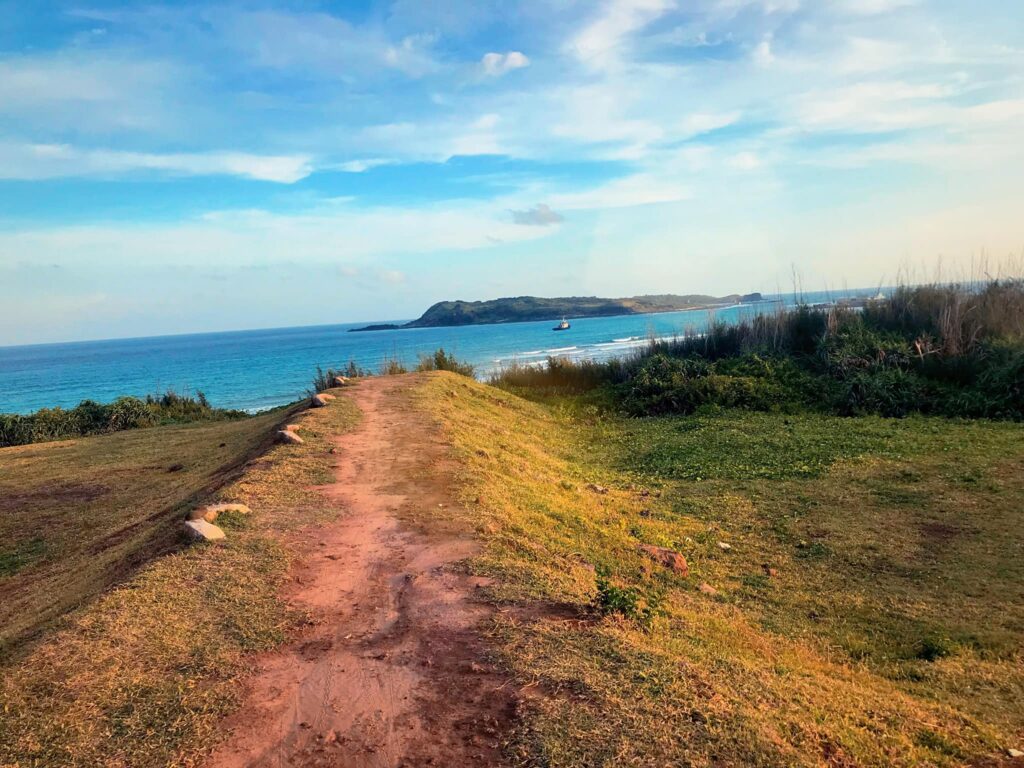
Standing atop Cam Mountain on Phu Quy today, one can gaze toward the distant horizon where Hòn Tro once rose. The island has long since disappeared beneath the sea, surviving only in the memories of island elders and in scientific reports from 1923.
Yet nature is full of mysteries. No one can say whether, someday, the volcano beneath Phu Quy might once again reshape the ocean’s surface.
From Cam Mountain, looking out to sea, Hòn Tro lives on—an island that appeared, glowed briefly in fire and ash, and slipped silently back into the deep.