Among the many agricultural specialties of Vietnam’s Lam Dong Highlands, Laba bananas are known for their distinctive texture, fragrance and sweetness. Also known as King’s Bananas or Da Huong bananas, they have long been associated with the cool highland climate and fertile soils of the region.
Unlike many common banana varieties grown in Vietnam’s lowlands, Laba bananas develop under the cooler conditions of the highlands. The combination of altitude, climate and soil gives the fruit a firm, dense texture, rich sweetness and an intense natural aroma.
For generations, Laba bananas have been more than an agricultural product. They are part of the story of Lam Dong’s highland farming traditions and the transformation of the region into one of Vietnam’s important agricultural centers.
From Laba to the “King’s Banana”
The name Laba is traditionally associated with La Ba, a place name connected with what is now Phu Son Commune in Lam Ha District. As agriculture developed across the Lang Biang Highlands, banana varieties were introduced and gradually adapted to the local environment.
Laba bananas later became associated with the name “King’s Banana”, reflecting stories that the fruit was once selected as a premium agricultural product for royal tables.
The banana was also known as “Da Huong”, a name inspired by its particularly distinctive fragrance when ripe. Unlike ordinary bananas whose aroma can be relatively mild, ripe Laba bananas release a rich and recognizable scent.
These stories have contributed to the special reputation of Laba bananas, making them one of the fruits historically associated with the highland agricultural landscape around Da Lat and Lam Dong.
A Firm, Sweet and Fragrant Fruit
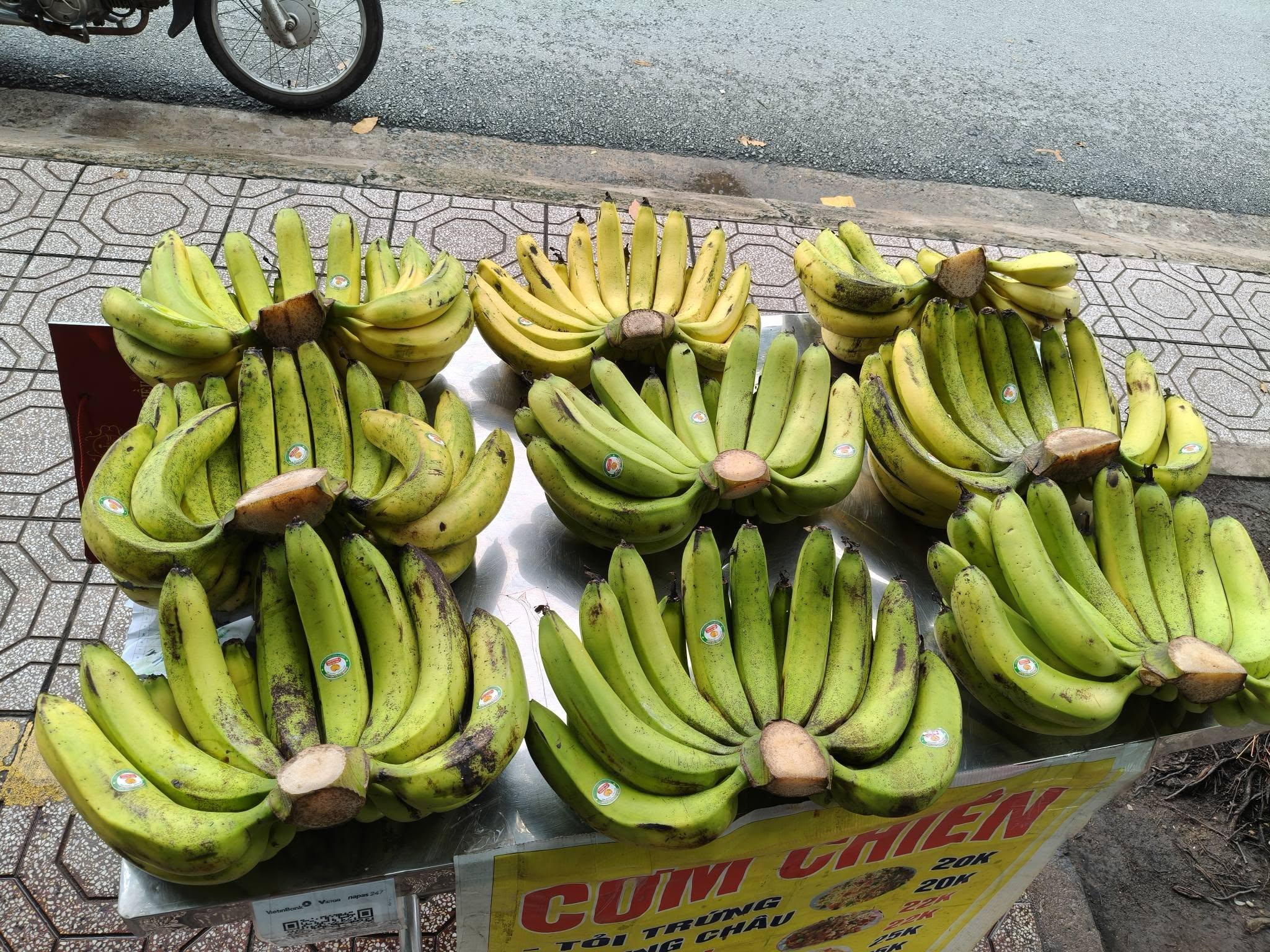
Laba bananas are easily recognized by both the appearance of their bunches and the texture of the fruit.
A mature bunch can be relatively large, with tightly packed hands arranged along the central stalk. The individual bananas are elongated and slightly curved, with a relatively thick stem.
When young, the peel is deep green and the ridges along the fruit are clearly visible. As the bananas ripen, the peel gradually turns a bright golden yellow.
Inside, the flesh is creamy yellow to pale golden, dense and smooth. One of the most distinctive characteristics of Laba bananas is their firm, chewy texture. The flesh does not become excessively soft or watery when ripe, but instead retains a pleasant density.
The flavor is distinctly sweet, followed by a refreshing finish, while the strong fragrance is one of the qualities that has made Laba bananas particularly memorable.
Grown in the Cool Highlands
Laba bananas are cultivated in several areas around Da Lat and throughout Lam Dong Province, particularly in places with relatively cool highland conditions.
Lam Ha District is closely associated with the cultivation and history of Laba bananas, especially areas such as Phu Son, Da Don and Phi To.
Bananas are also grown in parts of Don Duong and Duc Trong, as well as in several agricultural areas on the outskirts of Da Lat, including Ta Nung and Xuan Tho.
The distribution of Laba banana cultivation reflects the adaptability of the crop to the highland environment. What began with family-scale gardens has gradually developed into more organized agricultural production involving cooperatives and commercial farming.
From Tissue-Cultured Seedlings to Harvest
Modern cultivation has brought important changes to Laba banana production.
The use of tissue-culture propagation has made it possible to produce more uniform planting material and support healthier banana plantations. Compared with many bananas grown in the lowlands, Laba bananas generally have a longer growing cycle.
The cooler highland climate allows the plants to develop more gradually. Farmers must carefully manage irrigation, nutrition, pests and diseases throughout the growing period.
As Laba bananas have entered larger commercial supply chains, growers have also placed greater emphasis on production standards, traceability and post-harvest handling. Protective bags may be used to safeguard developing bunches, while cultivation and packaging processes are increasingly controlled to meet market requirements.
These changes represent the transition from traditional banana gardens to a more organized form of agricultural production, where quality and traceability are increasingly important.
Laba Bananas in Local Cuisine
The simplest way to enjoy Laba bananas is to eat them fresh when fully ripe.
When the peel turns evenly golden and the flesh reaches the right level of softness, the banana offers the combination for which it is known: dense texture, rich sweetness and a pronounced aroma.
Laba bananas are also used to make a variety of local products, including dried bananas, chewy dried banana slices, banana cakes and candied bananas.
Dried Laba bananas are particularly popular as a specialty product from the Da Lat area. Compared with fresh fruit, they are easier to store and carry, making them a convenient choice for visitors looking for a taste of the highlands to take home.
From Highland Specialty to Export Product
The development of Laba bananas reflects the broader transformation of agriculture in Lam Dong.
Modern growers increasingly pay attention not only to the variety itself, but also to planting material, cultivation practices, production standards, packaging and traceability. These factors become especially important when agricultural products enter international markets with strict requirements.
Laba bananas from Lam Dong have reached markets such as Japan, South Korea and Singapore, helping bring this distinctive highland fruit to consumers beyond Vietnam.
For local growers, access to these markets also creates opportunities to increase the value of the crop rather than relying solely on domestic fresh-fruit consumption.
A Taste of the Lam Dong Highlands
Every region has agricultural products that help tell its story. In Lam Dong, alongside coffee, vegetables, flowers, strawberries and artichokes, Laba bananas have become another distinctive part of the highland agricultural landscape.
From the name Laba and the stories surrounding the “King’s Banana” to today’s modern plantations, the fruit has followed the changing history of agriculture in the region.
Peel a ripe Laba banana and its appeal is immediately apparent: a dense, chewy texture, rich sweetness and an unmistakable fragrance.
These qualities make Laba bananas more than just another variety of banana. They are a distinctive agricultural product of Lam Dong, carrying with them the climate, landscape and farming traditions of Vietnam’s cool highlands.