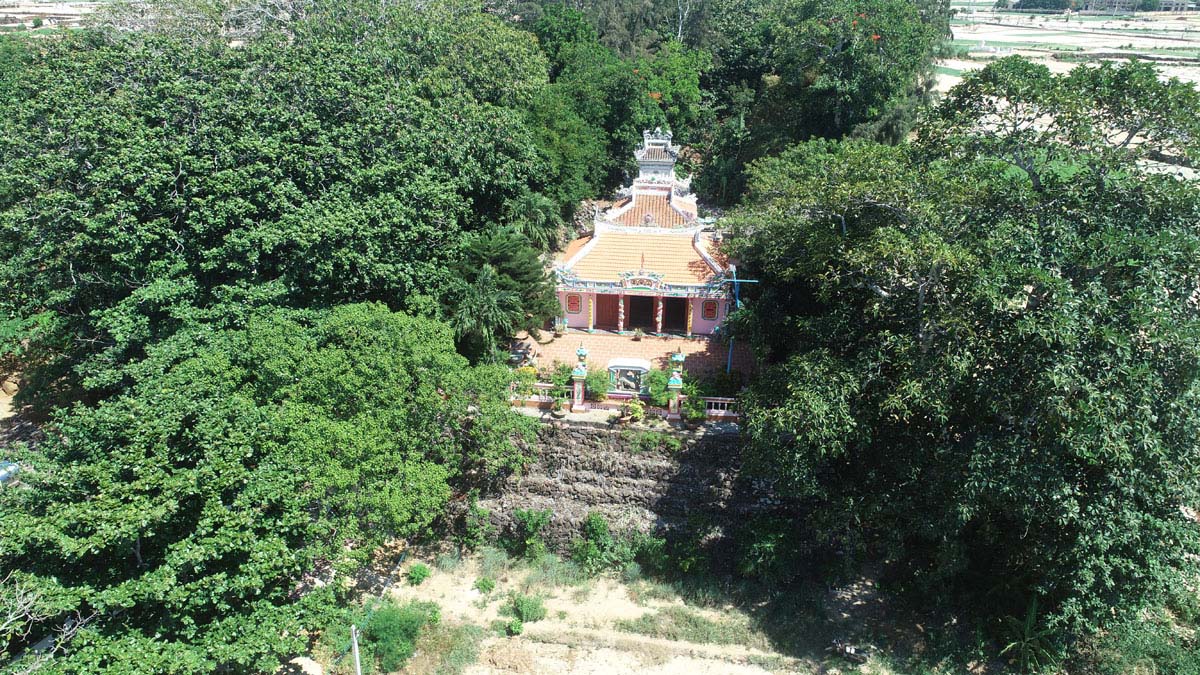
The Lady Thiên Y A Na Shrine, located in Trung Yên Hamlet, Đông Village, An Hải Commune, is one of the most distinctive Mother Goddess temples on Lý Sơn Island. It stands out for its elegant fusion of Cham and Việt cultural elements, embodying centuries of spiritual connection between the island’s inhabitants and the sea. Perched on a rocky hillside and facing the Southeast, the shrine blends harmoniously with the natural landscape, creating a sacred, serene atmosphere characteristic of coastal belief systems.
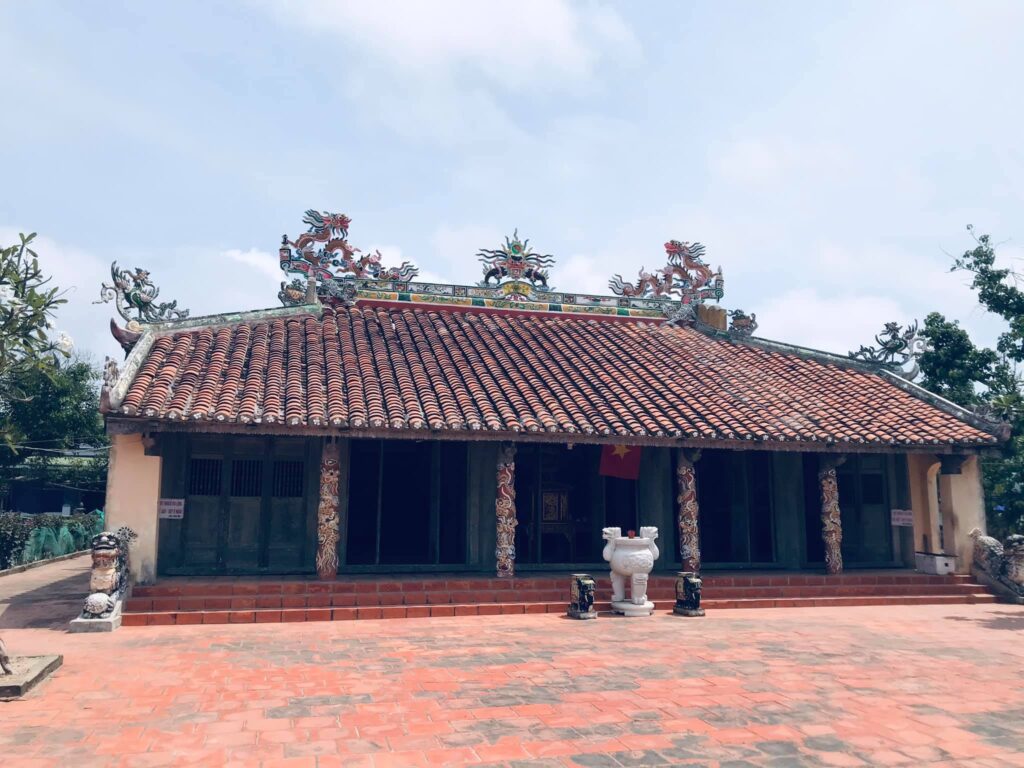
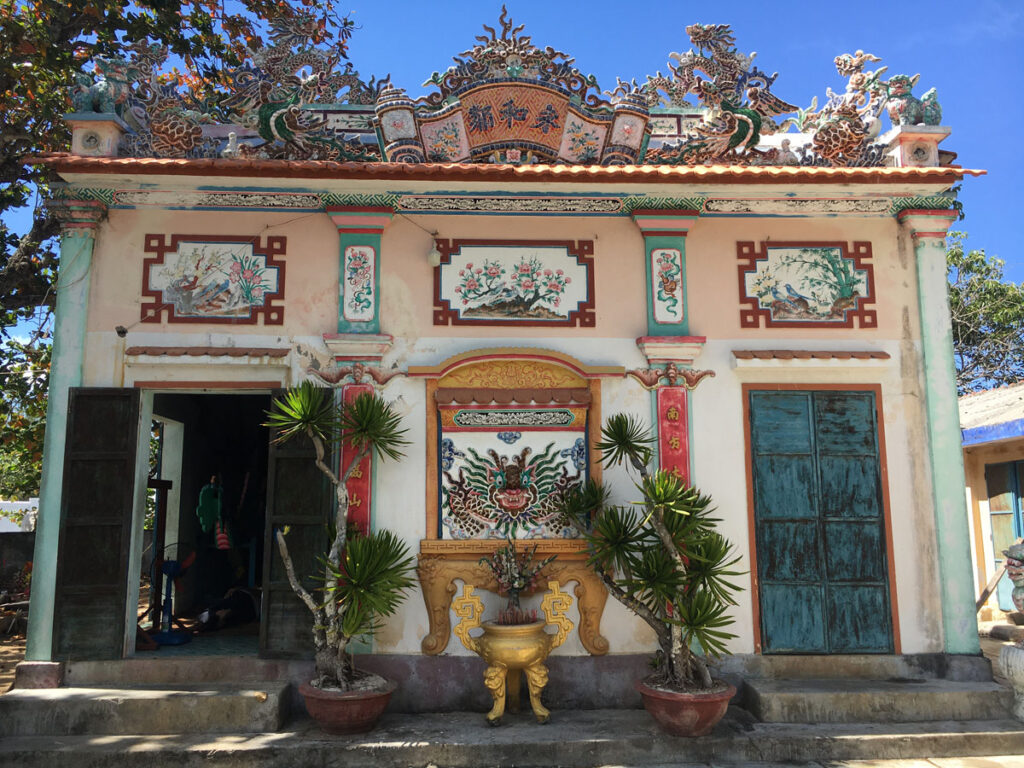
Originally built long ago using traditional materials such as bamboo, wood, and thatch, the shrine has undergone many restorations, including two major renovations during the reign of Emperor Bảo Đại. Its architectural layout includes a stepped entrance, gate, bình phong (screen wall), courtyard, forecourt hall, main sanctuary, and rear chamber. Both the forecourt and main sanctuary follow the classic “three bays – two wings” layout, with yin–yang roof tiles and intricate decorations featuring dragons, phoenixes, floral motifs, and calligraphic couplets. The ridge is adorned with the iconic “two dragons flanking a pearl,” the rear eaves feature dragons in a worshiping posture, and the gable is shaped like a bat—a symbol of blessings and good fortune. Inside, the traditional wooden framework is richly carved, offering a solemn and artistically refined interior.
While Lý Sơn Island hosts several shrines dedicated to Lady Thiên Y A Na—often called Dinh Bà or Dinh Bà Trời—the Trung Yên shrine is considered the most distinguished due to its architectural quality and excellent preservation. Each year, it hosts major community rituals such as the Lady’s Festival (Vía Bà), spring and autumn ceremonies, and especially New Year rituals. All are organized with reverence by the village’s ceremonial committee, reinforcing spiritual devotion and strengthening community bonds.
The Lady Thiên Y A Na Shrine is not only a sacred religious site but also a vivid testament to the island’s long history of cultural integration. It remains an essential destination for anyone wishing to understand Lý Sơn’s traditional architecture, folk beliefs, and the enduring cultural identity of its coastal communities.
Photo: Architect Nguyễn Quang Huy