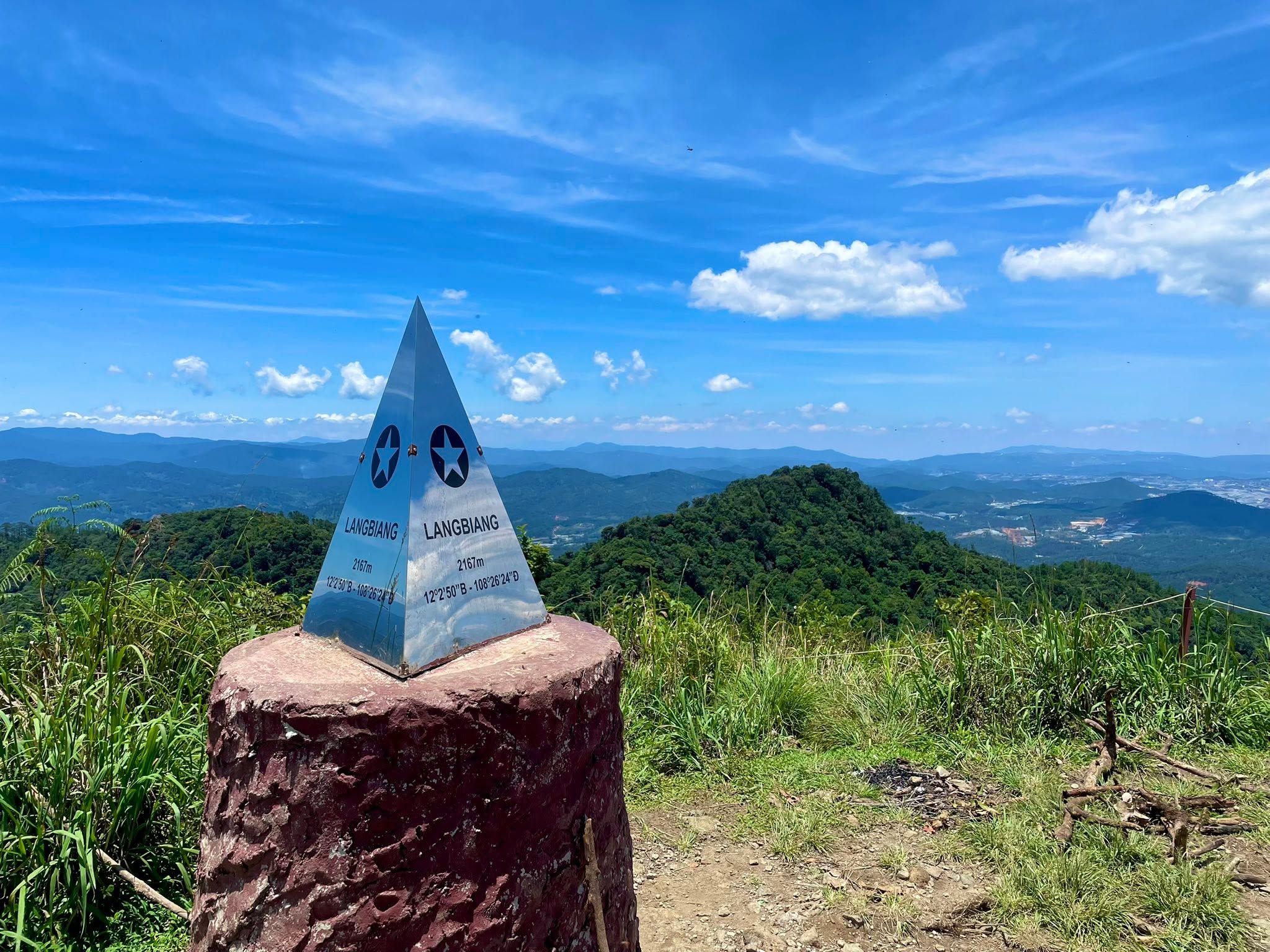
Address: 305 Langbiang, Lang Biang Ward – Da Lat, Da Lat City, Vietnam.
Located amid the mountainous landscape north of Da Lat, Langbiang Mountain is one of the most famous landmarks and enduring symbols of the highland city. Its mountain peaks rise above pine forests, clouds, and valleys, creating a distinctive landscape closely associated with Da Lat.
Langbiang is not only known for its high elevations, cool climate, and sweeping views across the highlands. It is also deeply connected to the legendary love story of K’Lang and Hơ Bian, the cultural traditions of the K’Ho people, and a wide range of outdoor and cultural experiences.
From mountain sightseeing and forest exploration to camping, hiking, paragliding, traditional food, rice wine, gong performances, and learning about K’Ho handicrafts, Langbiang brings together nature, culture, and adventure in one destination.
The Legend of K’Lang and Hơ Bian
The name Langbiang is associated with a traditional love story passed down among local communities.
According to the legend, there once lived a handsome young man named K’Lang and a beautiful young woman named Hơ Bian. The two fell deeply in love, but their relationship was opposed by a long-standing feud between their tribes.
Unable to overcome the hostility between the two communities, the lovers were eventually separated. After Hơ Bian died, she was said to have transformed into a mountain range. Local people of the Hơ Ho-Lạch community called it Núi Mẹ, or Mother Mountain.
According to the legend, milk flowing from her breast became streams and waterfalls, bringing fresh water and nourishment to the surrounding land.
From this story, the two mountains became known as Lang and Bian, eventually giving the landscape its familiar name, Langbiang.
The legend has made Langbiang more than a natural landmark. The mountain has become a symbol associated with love, separation, and the enduring relationship between people and the highland landscape.
Langbiang in the Da Lat Highlands
Lam Dong has a diverse topography, including the major highland plateaus of Langbiang – Da Lat, Dran – Lien Khuong, and Bao Loc – Di Linh, together with the Da Huai – Cat Tien plain.
At the beginning of the 19th century, the Langbiang Plateau was still a sparsely populated and difficult-to-access region. Indigenous communities lived mainly in a number of villages, with Dankia among the larger settlements.
Over time, the landscape of the Langbiang Plateau changed considerably. However, many areas have retained their mountainous environment and the cultural presence of the region’s indigenous communities.
From central Da Lat, visitors can reach the foothills of Langbiang in approximately 15 minutes by motorbike or car. The surrounding area has long been associated with indigenous communities including the Lach, Chil, and other K’Ho groups.
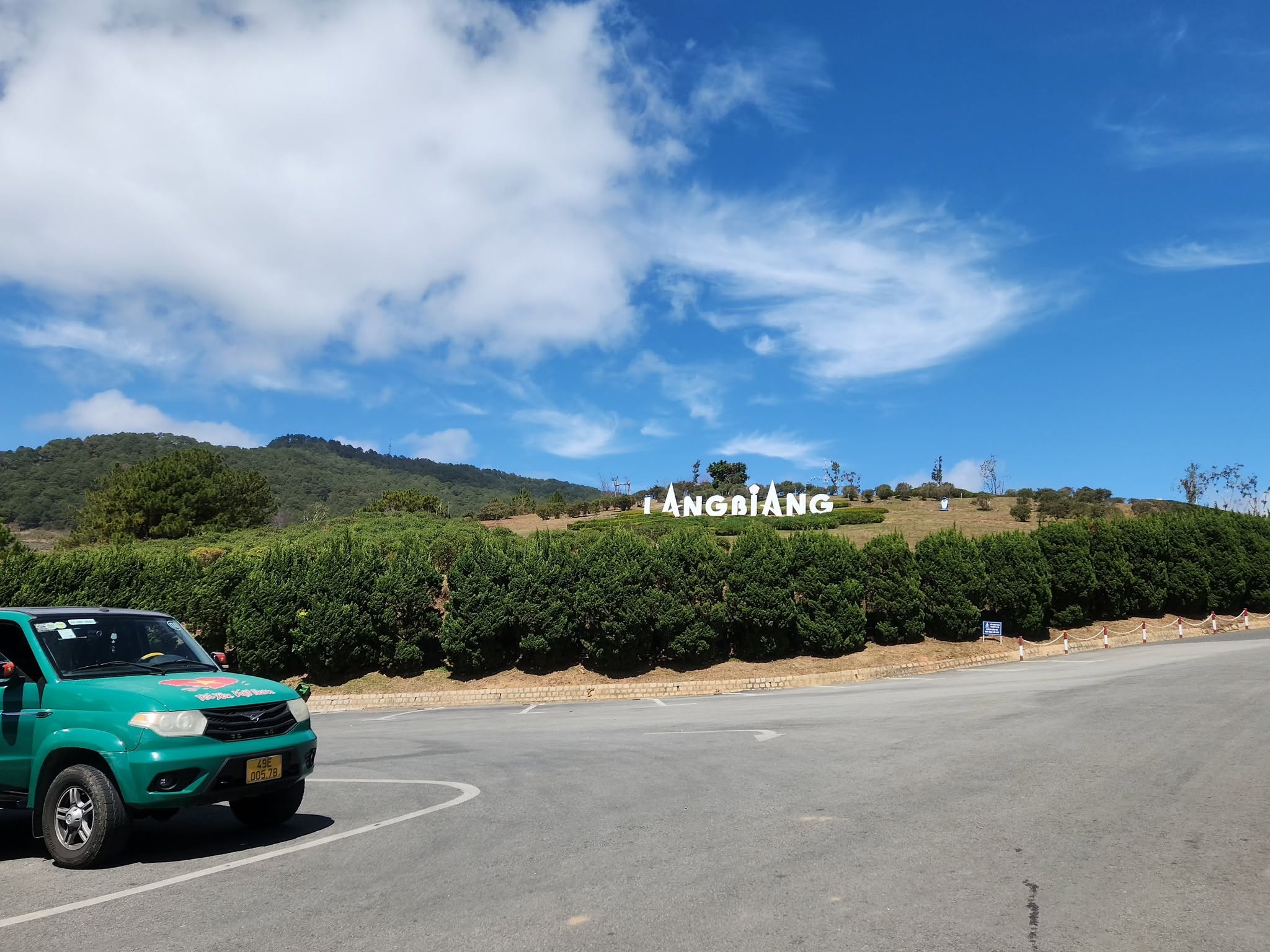
Since November 1999, the area has been managed as the Langbiang Tourist Area, creating opportunities for sightseeing, outdoor recreation, and cultural tourism.
The Landscape of Langbiang Mountain
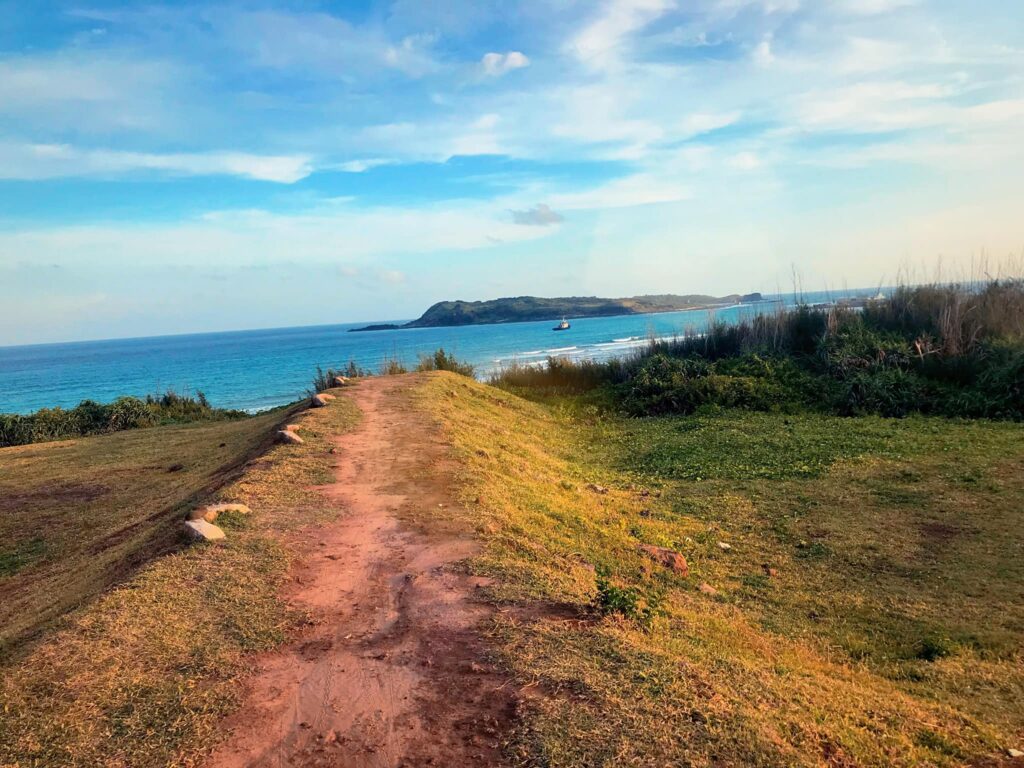
Langbiang features the characteristic terrain of the Central Highlands, with forest-covered slopes, pine forests, valleys, and high peaks frequently surrounded by clouds.
The air is noticeably cooler than in the urban areas, particularly in the early morning and late afternoon. The mountain climate and terrain make Langbiang well suited to outdoor excursions, nature exploration, and highland getaways.
From the higher points of Langbiang, visitors can enjoy broad views across Da Lat and the surrounding plateau. To the west lies Dankia – Suoi Vang Lake, standing out among the green mountains.
On clear days, the landscape opens into a wide panorama of the city, pine forests, valleys, and water, creating one of the most recognizable views associated with Langbiang.
The Foothills of Langbiang
The foothills contain visitor facilities, resting areas, camping grounds, and services for travelers.
For those who want to spend a night in the mountains, camping provides an opportunity to experience Langbiang after sunset.
Visitors may gather around a campfire, enjoy ruou can, traditional communal rice wine, listen to traditional musical instruments, and take part in cultural exchanges with local communities.
The atmosphere changes after dark. Firelight, gongs, songs, and traditional dances create a distinctive highland community setting.
During the day, visitors can learn about traditional brocade weaving practiced by the Lach people and discover handcrafted products such as woven textiles and traditional baskets.
Ways to Explore Langbiang
The terrain of Langbiang supports a variety of experiences, from leisurely sightseeing to more physically demanding outdoor activities.
Visitors can choose to travel by specialized vehicle, walk, hike, or explore forest routes.
Some young and active travelers choose hiking and mountain exploration as a personal challenge. For them, reaching the higher areas of Langbiang is not simply sightseeing, but also an opportunity to test their endurance and overcome personal limits.
Other activities, including paragliding and rope-assisted descent, have also been introduced at Langbiang, offering different perspectives of the mountain landscape.
Radar Peak
One of the main attractions within the Langbiang Tourist Area is Radar Peak, located at an elevation of approximately 1,950 meters.
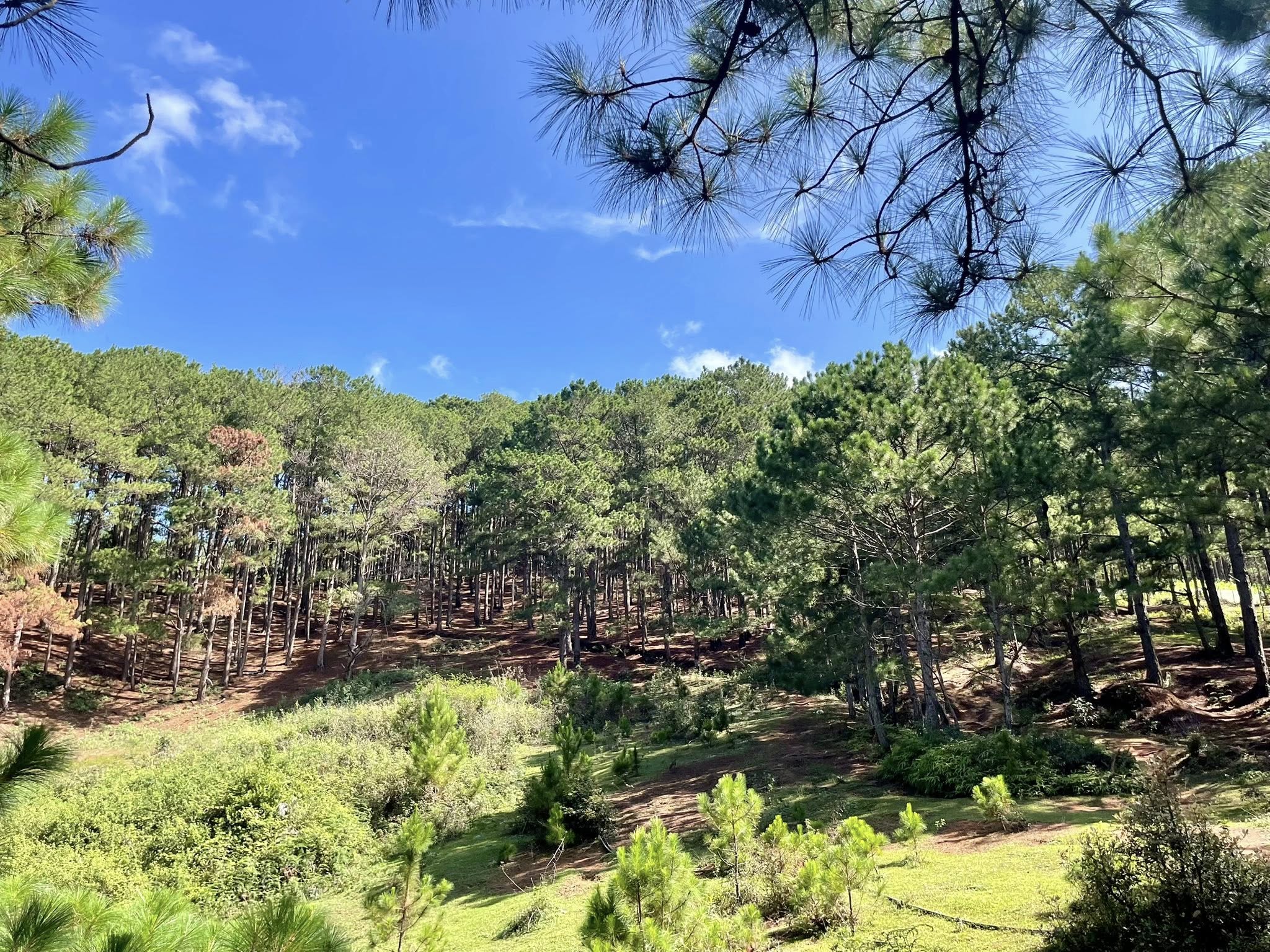
A specialized vehicle takes visitors along approximately 6 kilometers of pine-forest roads, following the mountainous terrain before reaching the Radar Peak area.
The drive itself is part of the experience. Visitors travel through cool green pine forests while enjoying the fresh mountain air. The winding roads and rugged terrain add an element of excitement to the journey.
From Radar Peak, visitors can enjoy panoramic views over Da Lat. The city lies among green hills and valleys, creating a landscape often described as resembling an ink-wash painting.
To the west, Dankia – Suoi Vang Lake appears among the surrounding mountains and forests, forming one of the most recognizable views from Langbiang.
At nearly 2,000 meters above sea level, visitors can also experience the changing atmosphere of the highlands, with clouds moving across the mountain landscape.
The Forest Trail
In addition to traveling by specialized vehicle, Langbiang also has a forest route of approximately 2 kilometers leading toward the summit area.
This option is suitable for visitors who want to experience the natural environment more directly rather than relying entirely on vehicles.
Walking through the forest allows travelers to observe the vegetation, terrain, and changes in temperature and atmosphere as the elevation increases.
K’Ho Culture at Langbiang
Langbiang is not only a beautiful mountain landscape but also an important cultural setting for the K’Ho people, particularly the Lach community, whose history is closely connected with the area.
Stories about the origins of mountains and rivers, traditional legends, daily life, and community activities have been passed down through generations.
This cultural heritage is expressed through gongs, music, traditional dances, brocade weaving, cuisine, and community ceremonies.
Visitors can learn about K’Ho culture through cultural exchange programs organized in the tourist area. Around the fire, traditional performances and stories provide an introduction to aspects of the cultural life of the Central Highlands.
Langbiang Gong Cultural Exchange
One of the cultural experiences introduced at Langbiang is the Gong Cultural Exchange Program, held at Thung Lung Tram Nam Restaurant.
The program is arranged in several sections, combining ceremonial elements, music, dance, and interaction with visitors.
Part 1: Welcoming Guests
The gong ensemble welcomes visitors. The organizers introduce the program and guests, followed by remarks from the group representative.
Part 2: Cau Yang Ceremony
The Cau Yang ceremony lasts approximately 15 minutes. A village elder delivers a welcome, introduces the guests, and begins the traditional spiritual ceremony.
This opening creates a solemn atmosphere before the artistic performances begin.
Part 3: Music, Dance, and Cultural Exchange
The program continues with performances inspired by the daily life, relationships, and traditions of the K’Ho community, including:
- Bàr Jơn and Rò Dà melodies.
- Jôh Yàng Kuôi dance – celebrating the new rice harvest.
- Dance and song of the pregnant girl going to collect water.
- Highland Rhythms dance.
- Gong performance celebrating the festival.
- Rice Pounding Under the Moonlight dance and song.
- The love story of K’Dung and K’Lang.
- Going Fishing dance and song.
- Traditional ruou can and grilled food.
- Langbiang Sơ ning song.
- Langbiang Flower dance with visitor participation.
- Youth dance with visitor participation.
- Passionate Highland song.
- Going to Gather Vegetables dance with visitor participation.
- Lòt Mir – The Young Man Going to the Fields.
- The Colors of Da Lat song.
- Proh gong performance calling the flock.
- Purple Jacaranda song.
- Oh Mi – Brotherhood dance.
- Bi Loi song, expressing a young woman’s affection for young men.
- Boat Rowing and Ma Kiê Kơ Ngan Xoang dances with visitor participation.
Part 4: Closing Performance
The program concludes with the song Nối Vòng Tay Lớn, bringing the cultural exchange to an end.
Venue: Thung Lung Tram Nam Restaurant, Langbiang Tourist Area.
Performance times: 17:00, 18:30, and 20:00.
Duration: Approximately 90 minutes.
Traditional Dances and Highland Life
The cultural programs at Langbiang are not limited to music. They also recreate activities associated with everyday life in the Central Highlands.
Dances such as Going Fishing, Rice Pounding Under the Moonlight, Going to Gather Vegetables, and Lòt Mir – The Young Man Going to the Fields are inspired by traditional activities and community life.
Through music and dance, visitors can gain a glimpse into the cultural world of the K’Ho communities living in the highlands.
These performances also provide a way for traditional stories and cultural practices to continue being introduced to domestic and international visitors.
Central Highland Cuisine
Langbiang also offers an opportunity to explore the flavors of the Central Highlands.
Local dishes use natural ingredients combined with characteristic mountain spices and cooking methods. Dishes such as grilled chicken with bamboo-tube rice, grilled meat skewers, Central Highland platter meals, grilled sturgeon with chili and salt, grilled pork with bamboo-tube rice, and buffalo dishes provide another way to experience the region’s culture.
Two notable dining venues within the tourist area are Radar Restaurant and Thung Lung Tram Nam Restaurant.
Radar Restaurant
Located on Radar Peak, approximately 1,950 meters above sea level, Radar Restaurant is a convenient stop for visitors after reaching the summit area.
The restaurant has two main levels offering different experiences.
Upper level: A suitable place to enjoy coffee in the cool mountain air while taking in views of Da Lat, Dankia – Suoi Vang Lake, and the surrounding landscape.
Lower level: A warmer and more intimate dining space serving Central Highland-inspired dishes such as:
- Herbal-stewed chicken eggs.
- Grilled meat skewers.
- Grilled chicken with bamboo-tube rice.
- Central Highland platter meals.
Guest hours: 7:30 – 17:00.
Thung Lung Tram Nam Restaurant
Located at the foot of Langbiang Mountain, Thung Lung Tram Nam Restaurant sits in a quiet forest setting approximately 500 meters from the entrance gate.
The name Thung Lung Tram Nam is associated with the location where a festival celebrating 100 years of Da Lat was held.
The restaurant is designed in the style of a traditional K’Ho stilt house and incorporates natural building materials. It can accommodate approximately 600 guests and serves a range of Central Highland dishes.
Featured dishes include:
- Nutritious buffalo hotpot.
- Pork belly with bitter eggplant.
- Grilled sturgeon with chili and salt.
- Grilled pork with bamboo-tube rice.
- Wild boar steamed with pumpkin.
The restaurant also hosts Gong Cultural Exchange programs for visitors.
Guest hours: 9:00 – 21:30.
Paragliding at Langbiang
For travelers seeking an aerial perspective and a more adventurous experience, paragliding is one of the activities introduced at Langbiang.
From above, forests, valleys, mountains, and lakes unfold into a broad highland panorama. The flight offers a completely different perspective compared with viewing Langbiang from the ground.
According to the service information provided, paragliding experiences range from approximately VND 2,200,000 to VND 2,500,000 per person, depending on the package.
Standard Package
Reference price: VND 2,200,000.
This package is designed for visitors who want to experience flying over green valleys while viewing the surrounding mountain scenery from above.
Premium Package
Reference price: VND 2,500,000.
This package is introduced with an experience and photo stop at the Lonely Pine Tree, intended for visitors seeking a longer and higher flight experience.
According to the provided service information, the paragliding packages include:
- Passenger insurance.
- GoPro video recording.
- A souvenir.
- Entrance ticket to the tourist area.
- Specialized transportation to the mountain.
Visitors booking the paragliding service are stated to receive complimentary entrance tickets and transportation according to the applicable service package.
Langbiang Visitor Information
Address: 305 Langbiang, Lang Biang Ward – Da Lat, Da Lat City, Vietnam.
Opening hours: 7:30 – 17:00.
Listed entrance fees:
- Children: VND 25,000 per ticket.
- Adults: VND 50,000 per ticket.
Vehicle to Radar Peak
Ticket price: VND 120,000 per person.
Guest hours: 7:30 – 17:00.
Shared vehicles depart when 6 passengers have been gathered. Visitors may also charter an entire vehicle if the minimum number has not been reached.
The route covers approximately 6 kilometers through pine forest and takes visitors to the Radar Peak area.
A Day at Langbiang
A day exploring Langbiang can begin at the foothills, where visitors learn about the K’Ho community and discover traditional handicrafts.
Visitors can then choose a specialized vehicle or another suitable way to travel toward Radar Peak. Along the route, pine forests and cool highland air provide a distinctly different atmosphere from the city below.
At Radar Peak, travelers can take time to enjoy panoramic views of Da Lat, Dankia – Suoi Vang Lake, and the surrounding mountains.
In the late afternoon and evening, visitors can return to the foothills to enjoy Central Highland cuisine and take part in a gong cultural exchange. Around the fire, the sound of gongs, traditional rice wine, dances, and stories about K’Lang and Hơ Bian offer a memorable way to end the journey.
For visitors who enjoy outdoor activities, additional time can be devoted to hiking, forest exploration, or other experiences available under the conditions organized by the tourist area.
Langbiang – Where Nature and Culture Meet
Langbiang is more than a famous mountain in Da Lat. It is a meeting point of highland peaks, pine forests, clouds, lakes, legends, and community culture.
From the summit of Radar Peak, visitors can see Da Lat spread across the green hills. At the foot of the mountain, another side of the destination comes to life through traditional houses, brocade, rice wine, gongs, dances, and the cultural traditions of the K’Ho community.
This combination gives Langbiang its distinctive character. A journey here can begin with scenic views, continue with mountain and forest exploration, and end with Central Highland cuisine and cultural experiences.
Amid the Da Lat highlands, Langbiang is both a natural landmark and a place where stories, legends, and cultural memories remain closely connected to the landscape. From the legend of K’Lang and Hơ Bian to the sound of gongs around a fire, the mountain continues to stand as an enduring part of the identity of Da Lat and the Langbiang Plateau.