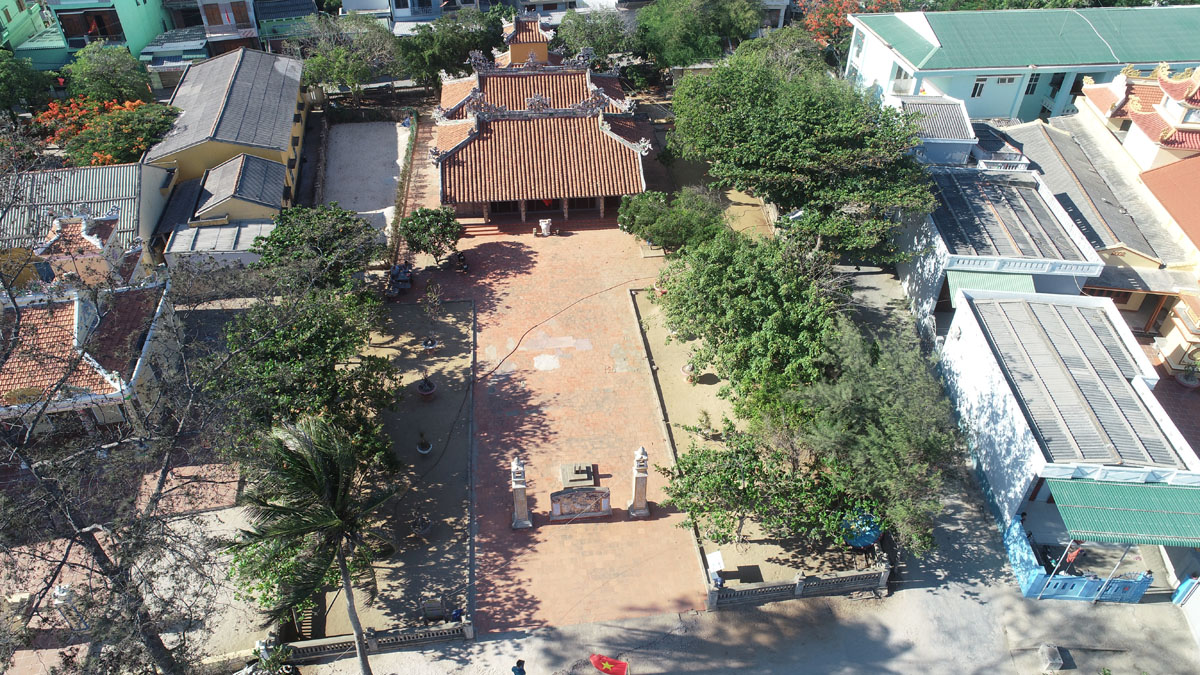
The Lý Sơn Special Zone is home to two ancient seaside communal houses: An Vĩnh Communal House and An Hải Communal House. These structures are among the most important cultural institutions on the island—serving as places of worship for village guardians (Thành Hoàng), founding ancestors, and revered spirits. They are also the central venues for traditional festivals, especially the iconic Lễ Khao Lề Thế Lính Hoàng Sa (Feast and Substitution Ritual for Hoàng Sa Soldiers).
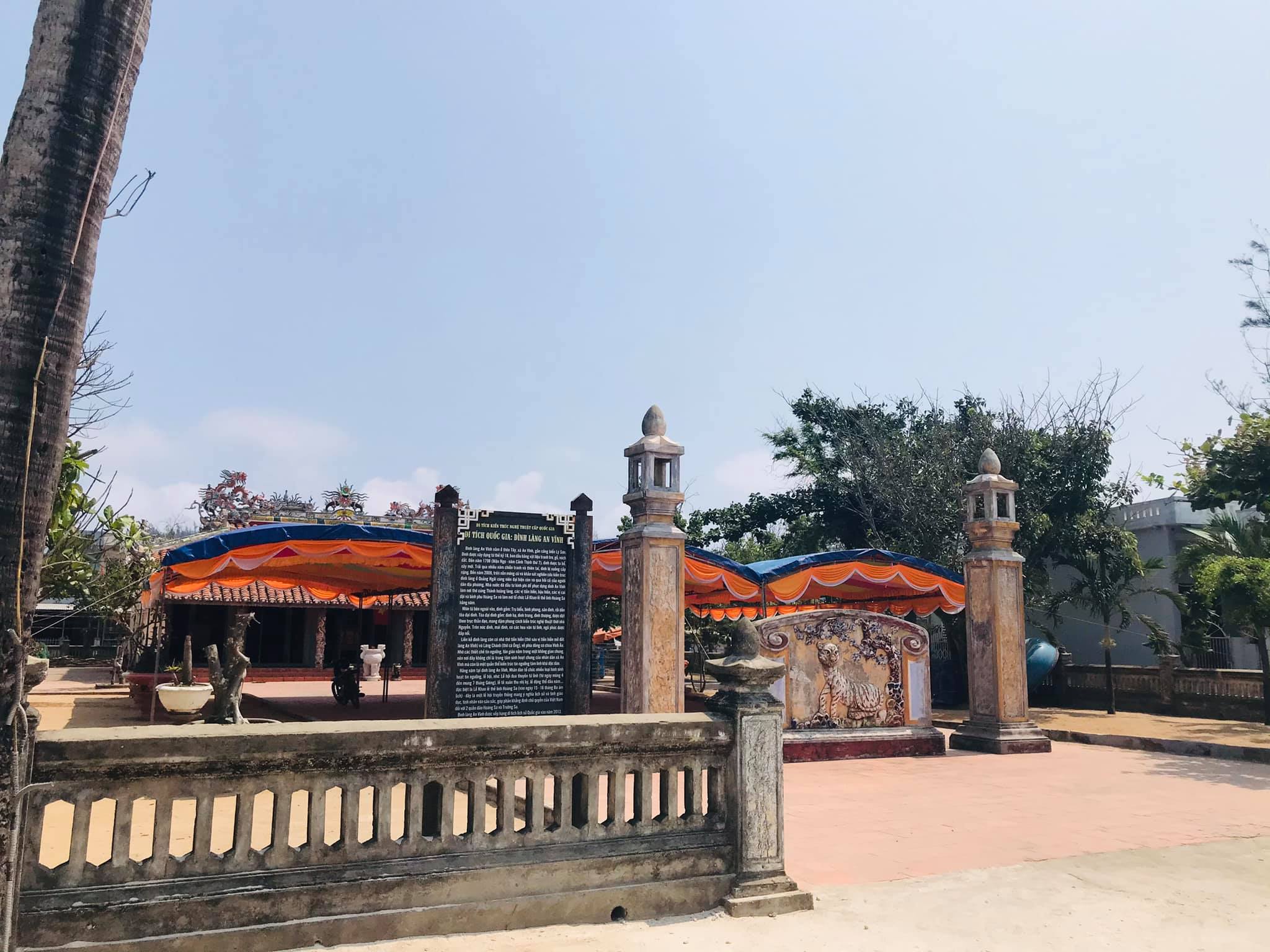
An Vĩnh Communal House – National Heritage Linked to the Hoàng Sa Fleet
Location: Tây Hamlet, An Vĩnh Commune
Main Orientation: South
Original Construction: 18th century
National Heritage Status: Recognized in 2013
Historical Background
An Vĩnh Communal House was first built in the 18th century using traditional materials—bamboo, wood, thatch, and earthen walls. After suffering damage over centuries and collapsing entirely in 1957 due to war, it was fully restored in 2009 based on archaeological research into the original foundations and design.
Today, the communal house serves as the sacred site for worshiping:
- The village guardian (Thành Hoàng)
- Founding and succeeding ancestors
- Captains and soldiers of the historic Hoàng Sa Fleet
- The central location for the annual Lễ Khao Lề Thế Lính Hoàng Sa
Distinctive Traditional Architecture
The complex follows a linear thần đạo (spiritual axis) layout, consisting of:
- Perimeter walls
- A bình phong screen and twin ceremonial pillars
- Flagpole
- Communal courtyard
- Forecourt hall (tiền đình) – Main hall (chính đình) – Rear sanctuary (hậu tẩm)
(also known as hạ đình – trung đình – thượng đình)
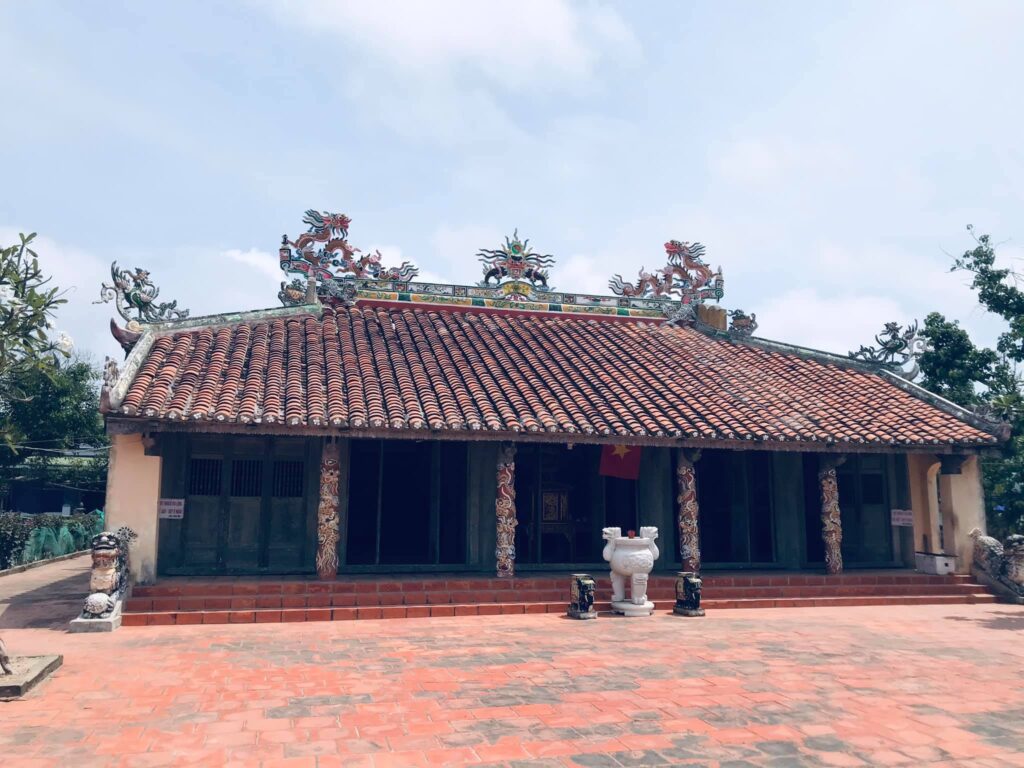
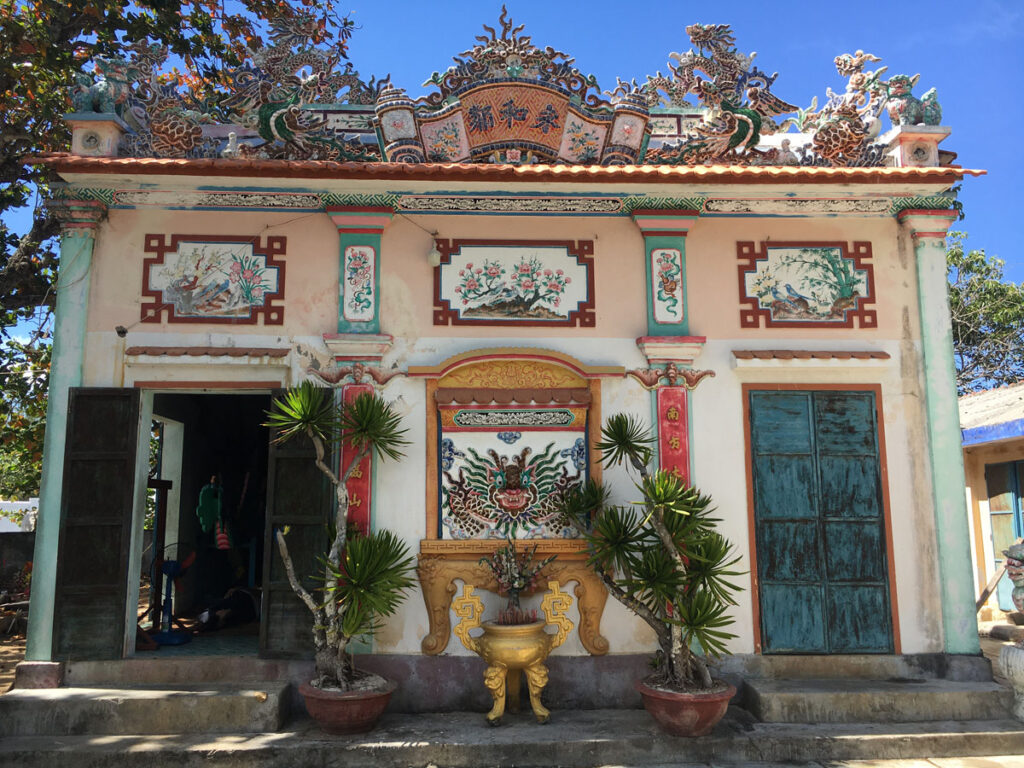
The lower and middle halls feature the typical three-bay, two-wing layout, wooden bàn khoa doors, and yin–yang tiled roofs adorned with the Four Sacred Creatures (Dragon – Qilin – Turtle – Phoenix).
The front bình phong is sculpted as a scholarly screen: a tiger motif on the front and a long mã (dragon–horse) carrying the Hà Đồ diagram on the back—symbols deeply rooted in Vietnamese spirituality.
An Hải Communal House – A National Artistic Architectural Complex
Location: Đông Hamlet, An Hải Commune
Main Orientation: Southeast
Initial Construction: Circa 1815 (Gia Long era)
National Heritage Status: Recognized in 1997
History of Construction & Restoration
Built with wood and thatch, the communal house has undergone major restorations in the years: 1820, 1926, 1938, 1943, 1999, 2007, and 2018.
Today, it is the worship site for:
- The Three Sovereigns and Five Emperors
- The Five Fairy Princesses
- Chúa Ngung Man Nương
- Founding and succeeding ancestors
- Lady Thiên Y A Na (in the rear sanctuary)
A Rich Architectural Ensemble
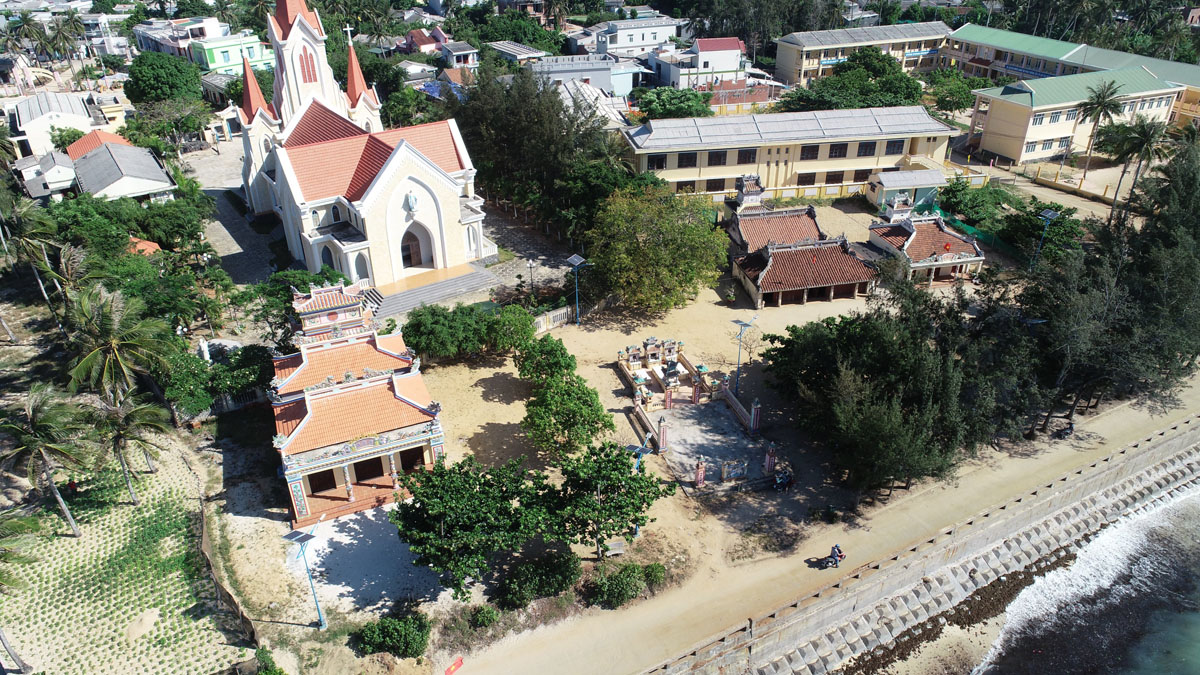
Unlike An Vĩnh, An Hải Communal House is designed as a full architectural complex, including:
- Central Area (Main Communal House)
- Bình phong and ceremonial pillars
- Flagpole
- Courtyard
- Hạ đình – trung đình – thượng đình
Auxiliary Structures
- Right side: Ancestral Shrine → Hoàng Thành Shrine
- Left side: Shrine for wandering spirits → Whale Temple (Lăng Cá Ông)
Notable Architectural Features
- Hạ đình with three bays – two wings, yin–yang tile roof decorated with lưỡng long triều nhật and phoenix motifs
- Original wooden structure and traditional bàn khoa doors
- Terracotta flooring, stone plinths protecting wooden columns
- Symmetrical pair of guardian nghê sculptures at the front
- Trung đình connected to hạ đình via a channeled water gutter with carp-head ornaments
- Thượng đình (one bay) dedicated to Lady Thiên Y A Na, blending Cham–Việt spiritual traditions
Cultural & Historical Significance
The two communal houses of Lý Sơn are living evidence of:
- The island’s early settlement and development
- The maritime worldview and spiritual life of Lý Sơn’s people
- Centuries of tribute to the Hoàng Sa–Trường Sa naval soldiers
- Unique architectural traditions of Vietnam’s coastal communities
An Vĩnh and An Hải Communal Houses are essential cultural landmarks—must-visit sites for anyone exploring the heritage, history, and sacred identity of Lý Sơn Island.
Photos: Architect Nguyễn Quang Huy