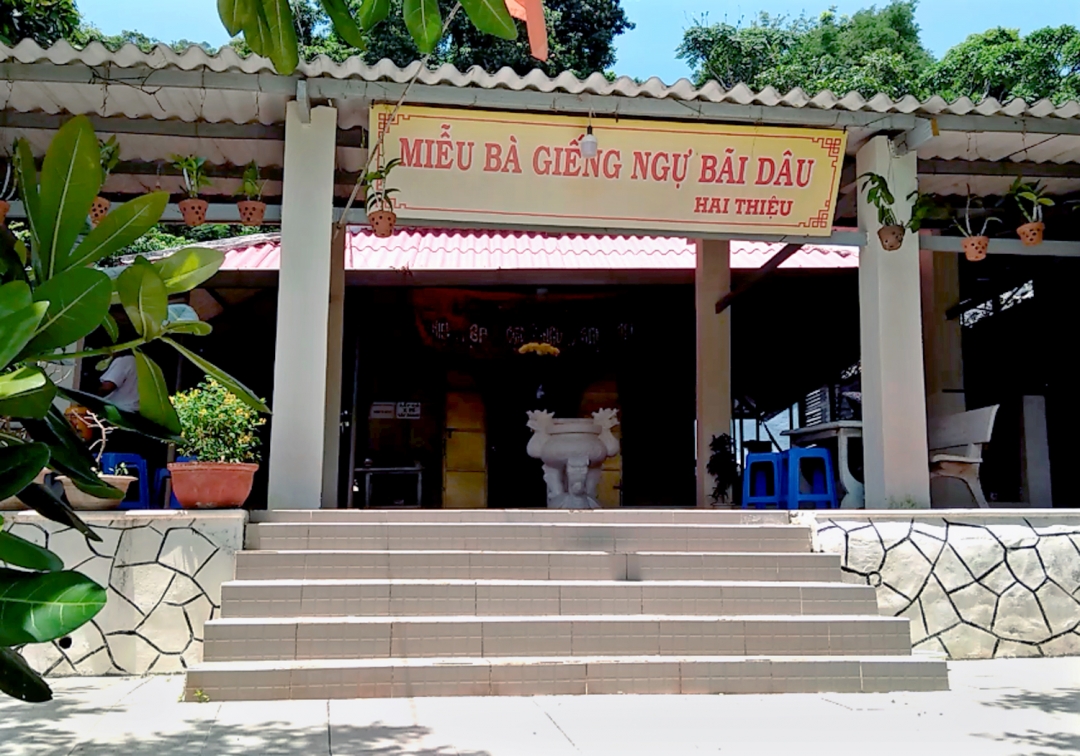
Nestled on the slope of Big Mountain (address: 90 Tran Phu Street, Vung Tau Ward, Ho Chi Minh City), Mieu Ba Gieng Ngu—also known as Mieu Gia Long—is one of the most well-known spiritual sites in Vung Tau. The shrine is closely associated with the legend of Emperor Gia Long, who is said to have created a freshwater well with his sacred sword in the late 18th century.
Today, the shrine stands as both a historical landmark and a living testament to Vietnamese Mother Goddess worship, blended harmoniously with local Buddhist traditions.
Origins & The Legend of the Royal Well
According to local folklore, during the period when Emperor Gia Long and his loyalists fled from the Tay Son forces, they stopped to rest on this mountain. Surrounded by the sea, the group desperately needed drinking water but could find none.
The king drew his sword, thrust it into the ground, and prayed:
“If I am destined to be the Son of Heaven, let fresh water flow for us.”
Miraculously, a stream of clear freshwater began to seep out around the blade. Overwhelmed with joy, the soldiers widened the opening and formed a well, which later became known as Gieng Ngu – the Royal Well.
For generations, locals believed that drinking water from the well brought health, good fortune, and even blessings for fertility—producing “handsome sons and graceful daughters.” Remarkably, the well remains fresh and abundant year-round, although it is only about 3–4 meters deep.
Visitors still come to collect the sacred water to pray for peace, healing, and good luck.
Formation of the Shrine
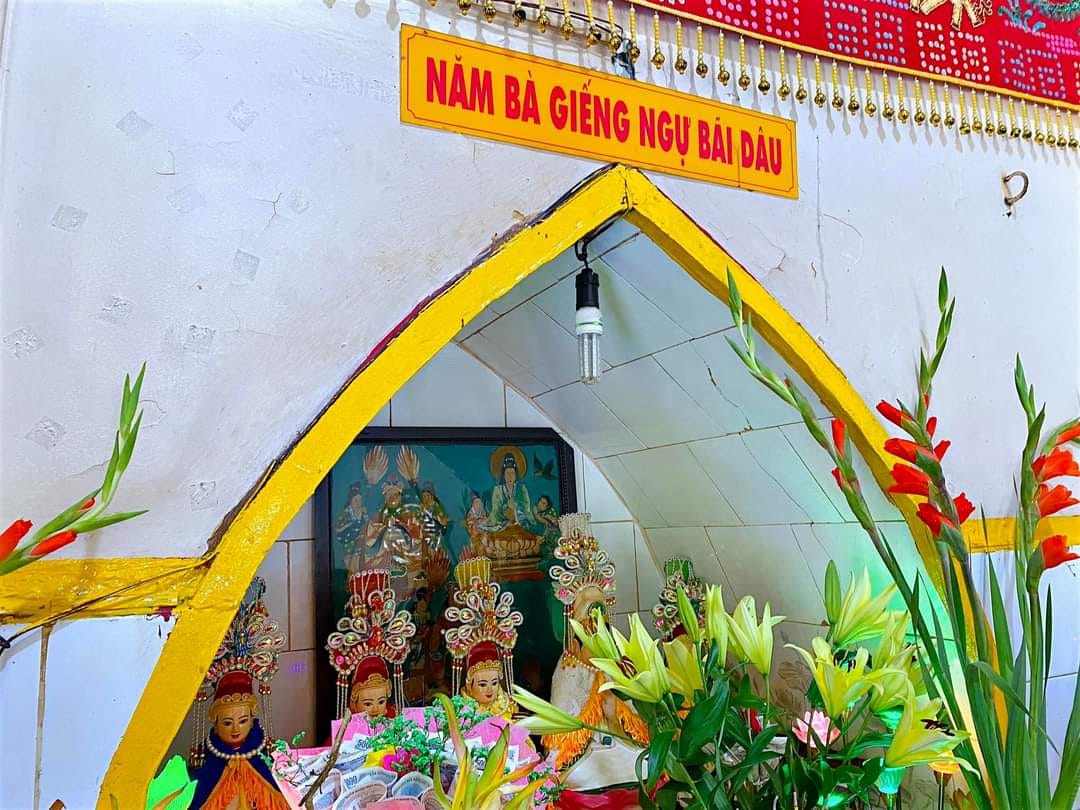
According to Mrs. Nguyễn Thị Thúy Phượng, the current caretaker, the shrine’s origins trace back to 1935, when her grandfather, Mr. Hai Thiệu, and local villagers discovered a small ancient hermitage next to the old well. Inside was a glass painting depicting Ngu Hanh Nuong Nuong—the Five Mother Goddesses who protect the land and waters.
Mr. Hai Thiệu rebuilt the hermitage into a proper shrine, now known as Mieu Ba Gieng Ngu. Since then, his family has lovingly cared for the site across multiple generations.
Sacred Beliefs – A Harmonious Fusion of Traditions
What makes Mieu Ba Gieng Ngu unique is its integration of Mother Goddess worship with Buddhist devotion.
Here, Thuy Duc Thanh Nuong (the Water Mother Goddess) of the Ngu Hanh system is venerated as Quan Am Nam Hai – Avalokitesvara Bodhisattva of the South Sea.
This fusion can be clearly seen through the shrine’s statues and paintings, where the compassionate figure of the Bodhisattva in white robes represents the Water Goddess.
Locals believe that Ba Thuy – Quan Am – Thuy Long Thanh Mau are essentially one manifestation, sharing the qualities of water:
- compassion
- protection
- healing
- salvation in times of distress
This reflects the distinctive nature of Vietnamese folk spirituality, where deities are localized and worshipped flexibly according to the beliefs of coastal communities.
Annual Festival & Worship Rituals
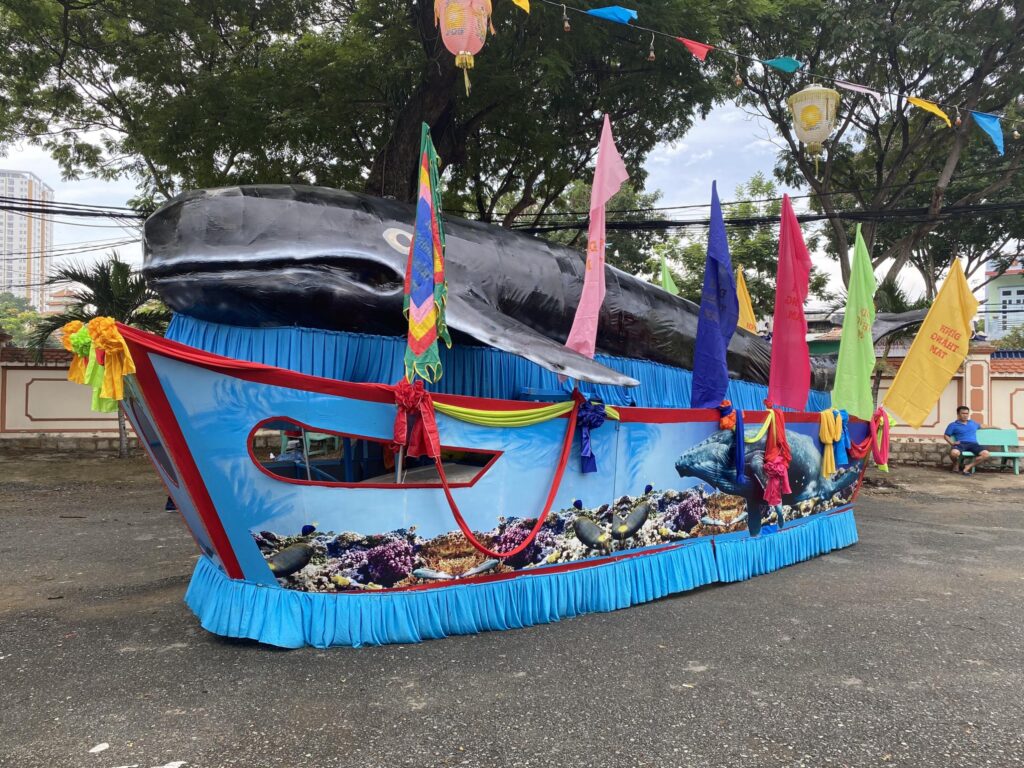
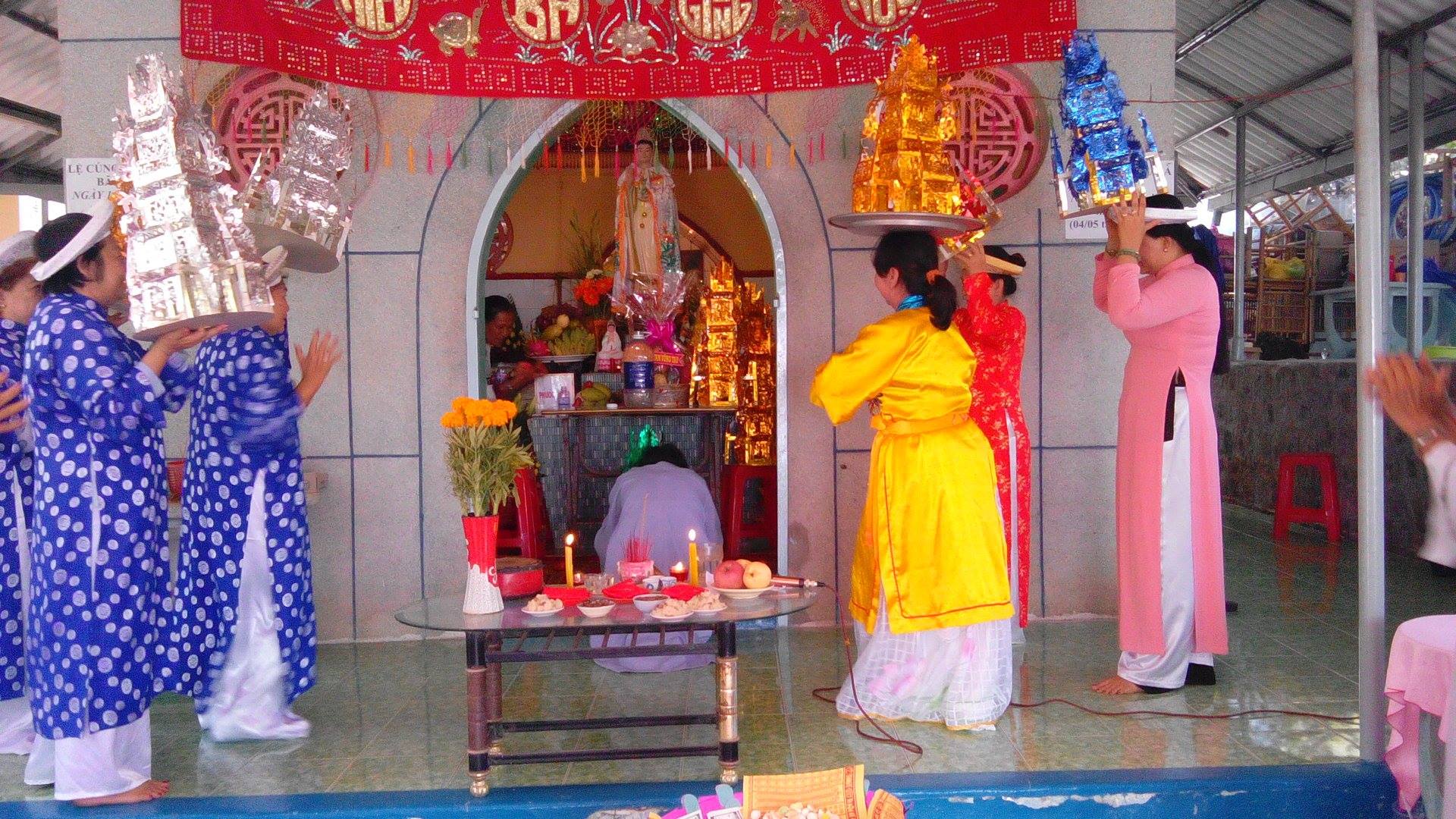
Every year on the 16th day of the 3rd lunar month, the shrine hosts the Festival of Ba Gieng Ngu, attracting many locals and pilgrims.
The offerings include seven ceremonial trays:
- one gold tray
- one silver tray
- five colorful trays representing the Five Mother Goddesses
All offerings are vegetarian, consisting of fruits, flowers, betel leaves, incense, and candles. The ceremonial process includes:
- carrying offering trays on the head
- presenting them before the altar
- traditional prayers for peace and blessings
The atmosphere is solemn yet warm, honoring the Mother Goddesses, the Bodhisattva, and Emperor Gia Long, who left behind the sacred well.
The Sacred Well – A Spiritual Water Source in the Coastal City
The Royal Well is still carefully preserved. The caretaker family draws water daily, bottling it for visitors who come seeking blessings. The well mouth is about 80 cm wide, with crystal-clear freshwater that, remarkably, never runs dry—even after centuries.
In 2019, the shrine underwent a significant renovation funded by local residents and Buddhist devotees. Today, Mieu Ba Gieng Ngu stands not only as a place of worship but also as a cultural landmark that reflects the spiritual depth and historical heritage of Vung Tau.
📍 Address: 90 Tran Phu Street, Vung Tau Ward, Ho Chi Minh City
🕯️ Main Festival: 16th day of the 3rd lunar month
💧 Highlights: Ancient sacred well; worship of Ngu Hanh Nuong Nuong, Quan Am Nam Hai, and Emperor Gia Long