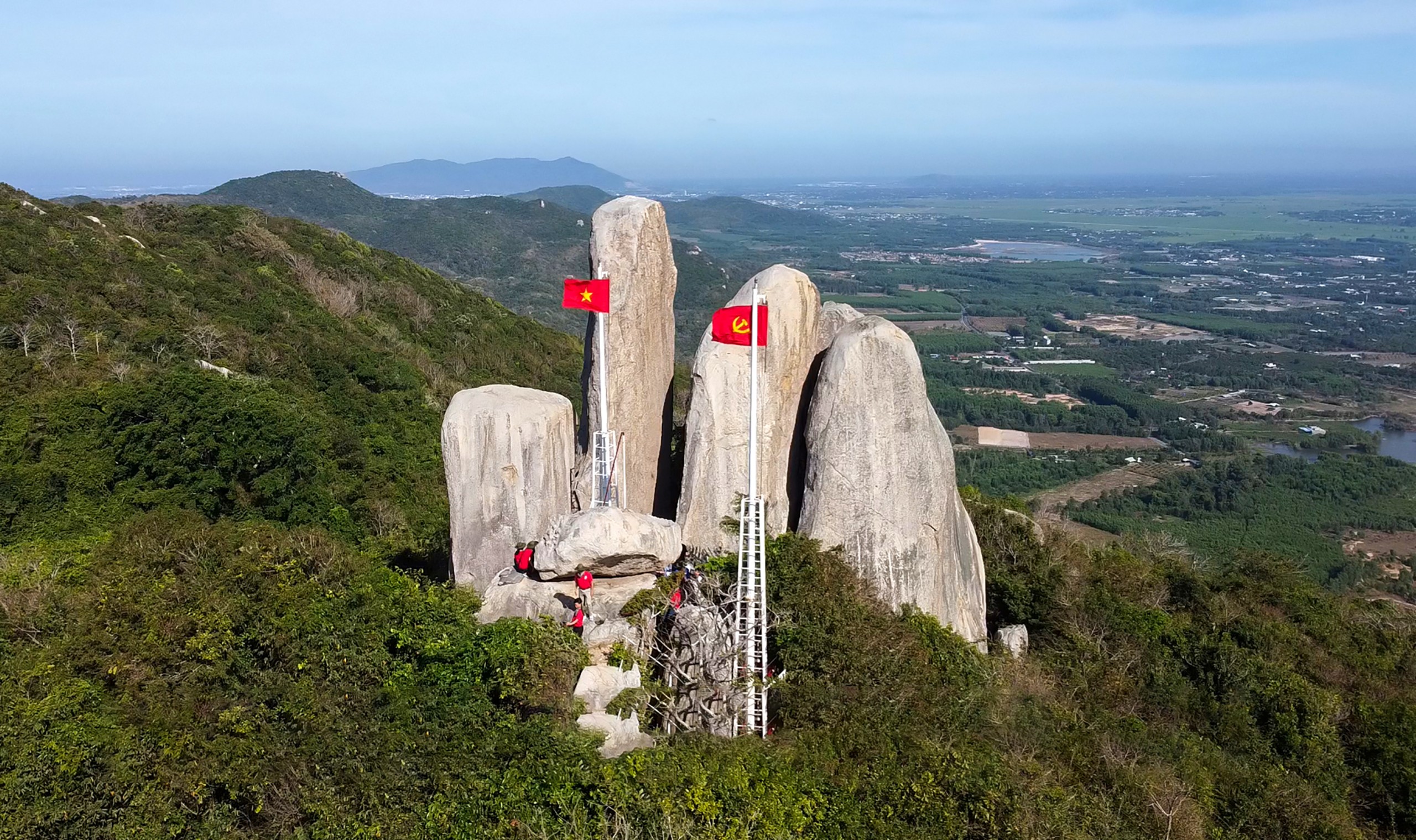
The Minh Đạm Mountain Revolutionary Base is one of the most representative historical–revolutionary relics of Bà Rịa – Vũng Tàu Province (formerly, now part of Ho Chi Minh City’s regional historical landscape). The site is closely associated with the arduous yet heroic struggles of the people and armed forces of Southeast Vietnam during the resistance wars against French colonialism and American imperialism.
The Unique Geography of the Minh Đạm Range
Minh Đạm is a low mountain range stretching roughly 9 kilometers, with its widest point nearly 4 kilometers, jutting toward the sea. The range includes several well-known peaks and landmarks such as Hòn Đá Dựng (173 m), Hòn Thung (217 m), and Hòn Chóp Mao (323 m). It spans across today’s Tam Phước, Phước Hưng communes and Long Hải Township (Long Điền District), as well as Phước Hải and Long Mỹ communes (Đất Đỏ District).
Seen from afar, the mountain range resembles a cluster of low clouds drifting close to the sea, which is why it is also known as Thùy Vân Mountain. Two ancient pagodas—Châu Viên and Châu Long—are located on the mountain, leading locals to call the area Châu Long – Châu Viên Mountain.
Minh Đạm’s terrain is especially rugged, featuring more than 300 caves of various sizes carved deep into solid granite formations. Interwoven among dense forests are year-round freshwater streams, creating ideal natural conditions for establishing a long-term revolutionary base.
The Name “Minh Đạm” – A Tribute to Fallen Heroes
The name Minh Đạm is derived from the names of two revolutionary leaders: Bùi Công Minh, Secretary of the Long Điền District Party Committee, and Mạc Thanh Đạm, Deputy Secretary. On November 17, 1948, during a mission, both men were ambushed and heroically sacrificed near Giếng Gạch Pagoda at the foot of the mountain.
To honor their sacrifice and commemorate their unwavering revolutionary spirit, local people named the mountain Minh Đạm—a lasting reminder of the resilience and patriotism of the coastal land’s sons.
A Central Revolutionary Base Hidden in the Mountains
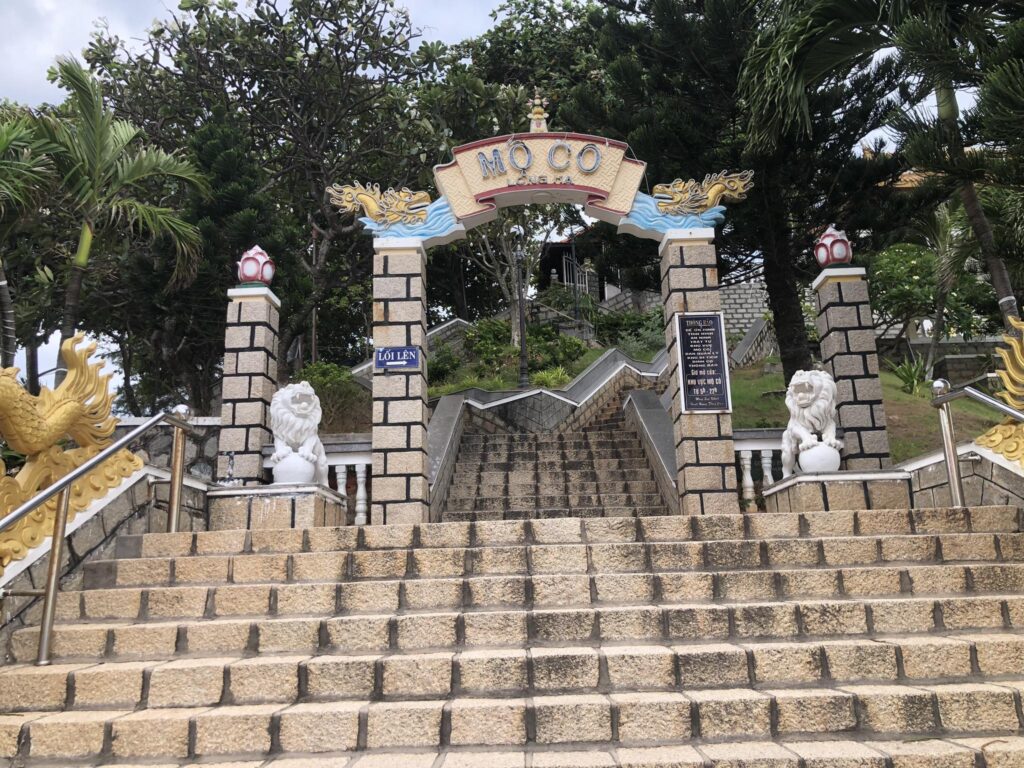
Following a narrow, winding mountain road, visitors can still sense the harshness and isolation that once protected the resistance. After more than a kilometer of forest paths, a clearing halfway up the mountain opens into a broad resting area. From there, climbing hundreds of stone steps beneath dense forest canopies—accompanied by cicada calls echoing through the silence—leads to the heart of the Minh Đạm Base.
The most prominent site is the District Party Committee Cave, which served as the command center of the Long Điền District Party Committee throughout both resistance wars. The cave has a natural “arched kiln” structure formed by massive overlapping rock slabs, making it both sturdy and discreet.
Other important caves include those used by the military command, ordnance unit, field hospital, Vũng Tàu urban unit, outpost, and Central Office intelligence unit. Together, they formed a closely connected and well-protected revolutionary system deep within the mountain.
A National Historical Site
Thanks to its outstanding historical value, the Minh Đạm Mountain Base was officially recognized as a National Revolutionary Historical Relic by the Ministry of Culture and Information (now the Ministry of Culture, Sports and Tourism) on January 18, 1993.
The relic area is divided into four main zones: Đá Chẻ, Giếng Gạch Pagoda, Đá Chồng, and Viên Pagoda. Due to the rugged terrain and dense cave system, many wartime traces have been preserved almost intact.
Today, the site has been restored and developed into a meaningful “return-to-the-roots” heritage destination, featuring:
- A memorial temple honoring 2,642 fallen heroes and Võ Thị Sáu
- The Minh Đạm Traditional House
- Key caves such as those of the District Party Committee, District Military Command, Urban Unit, and Field Hospital
- The Hòn Đá Chẻ flagpole, offering panoramic sea views
The Flagpole on Hòn Đá Chẻ – A Panoramic Viewpoint
One of the most striking features of the site is the flagpole complex on Hòn Đá Chẻ, located at an elevation of 355 meters above sea level. Two 12-meter-high flagpoles stand proudly—one flying the national flag and the other the Party flag.
From this vantage point, visitors can enjoy sweeping views of the plains below, Long Hải Beach, the gateways to Vũng Tàu, Xuyên Mộc, and even distant Ho Chi Minh City—a powerful visual connection between history, land, and sea.
A Space for Remembrance and Historical Education
At the Minh Đạm Traditional House, set beside the gentle “Tâm Tình Stream,” visitors can see many valuable artifacts, including handmade mine molds, shell casings, bomb fragments, medical tools, and daily-use items of revolutionary soldiers. These displays vividly recreate a period of intense warfare, when the Minh Đạm Base endured repeated B-52 bombings and large-scale sweep operations by combined American, allied, and former Saigon forces—yet remained resilient.
Today, especially during major holidays such as April 30 and September 2, as well as on weekends, the site welcomes thousands of visitors. Many student groups, soldiers, and organizations choose to hike up the mountain as a way to deeply reflect on the value of peace and independence.
Amid the deep forest, the murmuring streams, and the scent of incense rising before the martyrs’ memorial, the Minh Đạm Mountain Revolutionary Base is not only a historical destination but also a place of remembrance—evoking the heroic and poignant past of the people of Bà Rịa – Vũng Tàu. It remains a lasting symbol of national pride and an enduring milestone in Vietnam’s long journey of defending its homeland.