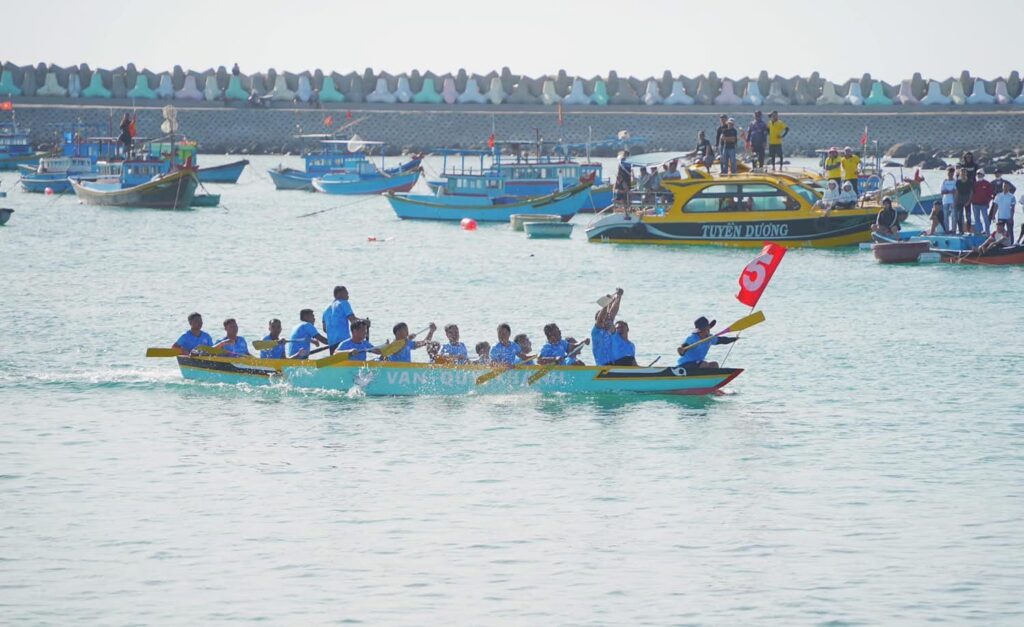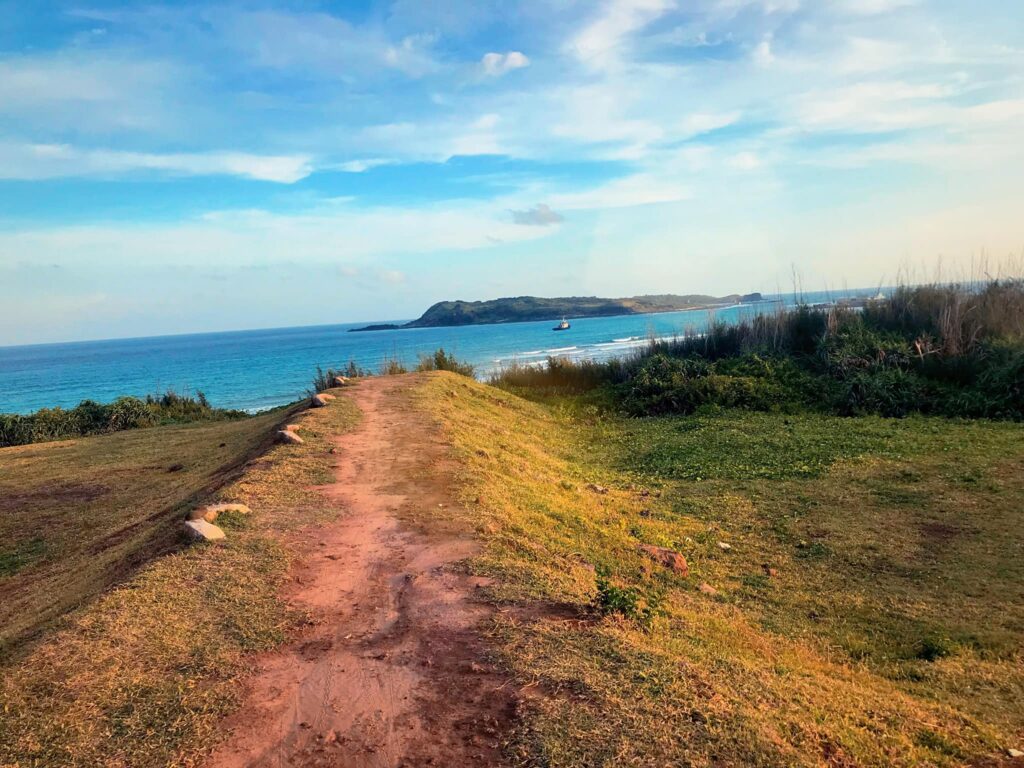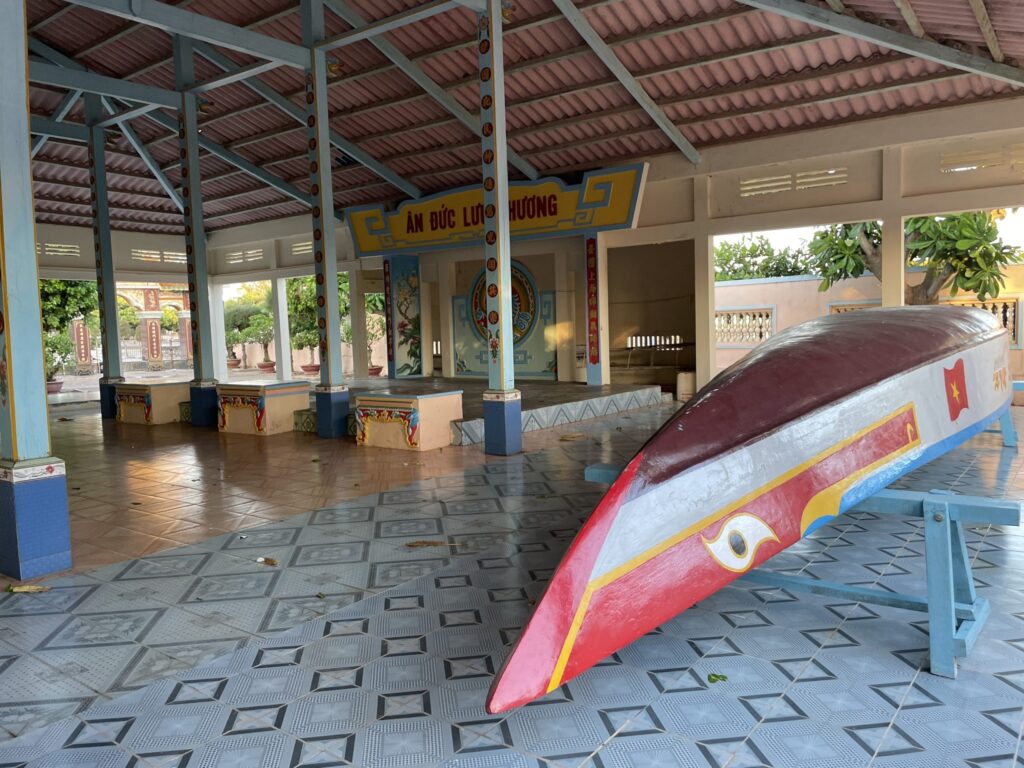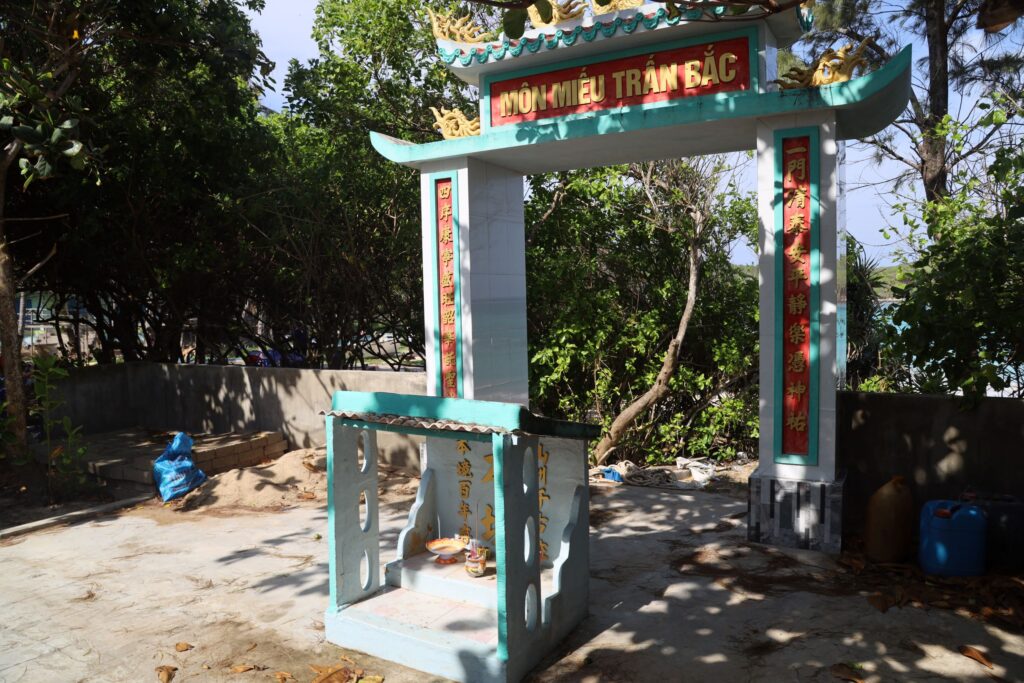
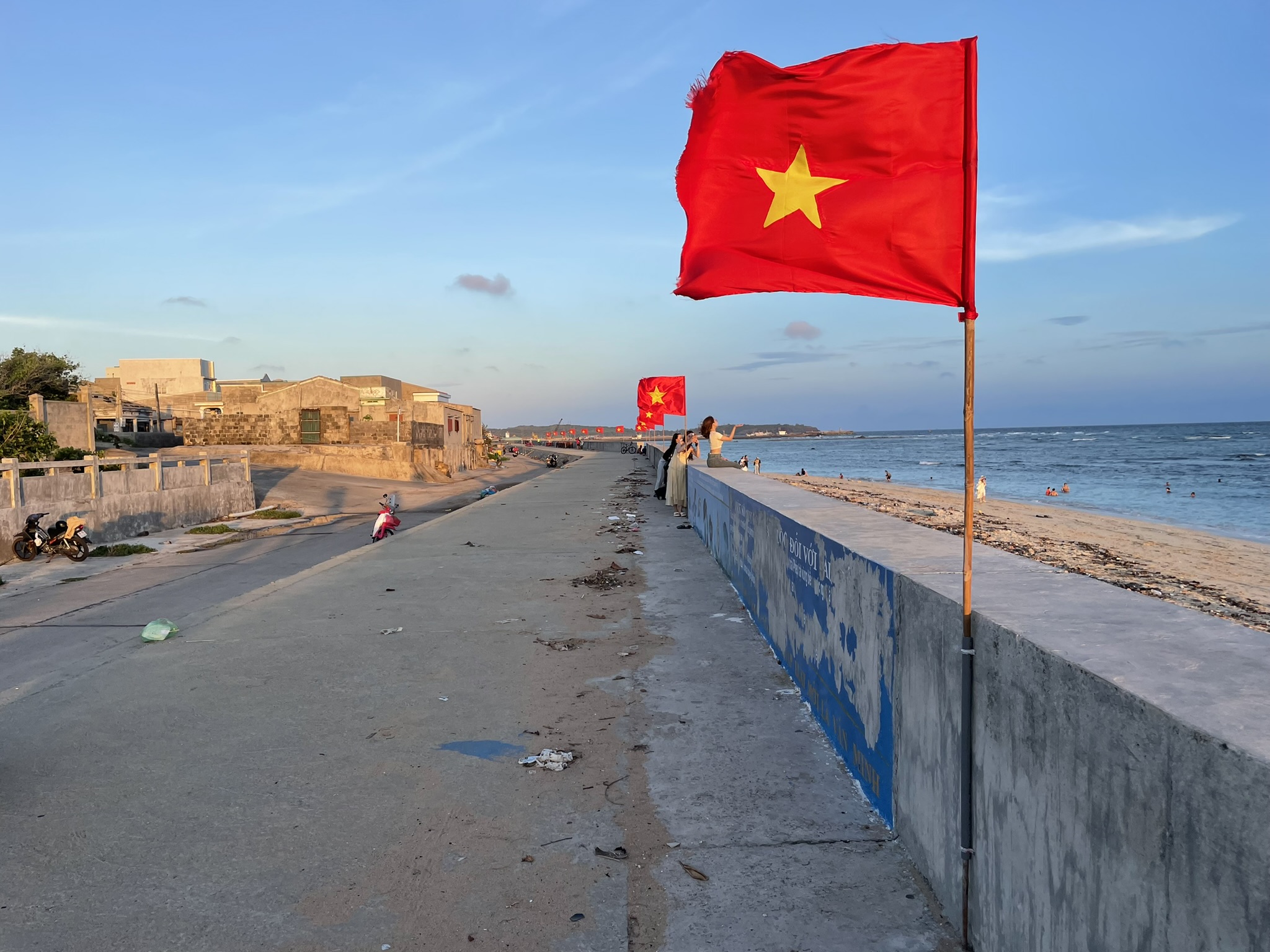
Phu Quy Island and its surrounding islets form the Phu Quy Special Zone of Lam Dong Province. The zone covers 17.82 km², or 32 km² including outlying islets, with a total coastal perimeter of about 35 km.
Geographical Setting
Phu Quy Island has a slightly rectangular shape, stretching 12 km in length and about 4.5 km at its widest point. The northern and northwestern waters feature several satellite islets such as Hon Trung, Hon Den, Hon Giua, and Hon Do. To the south and southeast lie second–tier islets including Hon Tranh, Hon Hai (Hon Kham), Hon Do Lon (Hon Bo), Hon Ty (Hon Vung), and Hon Do Nho (Hon Trao).
Among these, Hon Tranh is the largest, located roughly 1 km southeast of the main island. Shaped like the letter “S,” Hon Tranh covers 2.8 km², with its widest point at 400 m and longest point at 1,000 m. Previously an uninhabited island dominated by wild grasses, Hon Tranh has since been cultivated for crops and is now under reforestation. It also houses a naval radar station, so public access remains restricted.
The outlying islets hold immense ecological and scenic value, offering potential for eco-tourism and adventure travel should they be sustainably developed.
Phu Quy lies 120 km southeast of Phan Thiet and 385 km west of the Truong Sa (Spratly) Archipelago. Positioned along both domestic maritime routes (Ho Chi Minh City – Hai Phong) and international shipping lanes (Ho Chi Minh City – Hong Kong, Korea, Taiwan, Vladivostok, Tokyo), the island is naturally placed to attract visitors from Mui Ne and other nearby coastal destinations. Its remote charm and novelty make Phu Quy increasingly appealing to both domestic and international travelers.
Topography
Phu Quy’s terrain features hills in the north and flat plains in the south, with elevation gradually decreasing toward the coastline. The island has three distinctive mountains formed through ancient volcanic activity:
Nui Cam (Mount Cam) – 106 m
Located in the northwest, Nui Cam acts as a natural marine landmark. In 1996, a 28-meter lighthouse was built here, enhancing the mountain’s scenic appeal. At the foot of the mountain stands Linh Buu Pagoda, built in 1972, blending harmoniously with the serene landscape.
Nui Cao Cat (Mount Cao Cat) – 86 m
On the northeast side lies the iconic Cao Cat Mountain, renowned for its majestic coral-limestone formations eroded into spiral terraces and sculptural ridges resembling ocean waves. Numerous caves and boulders add a sense of mystery. Perched at 61 m is the sacred Linh Son Pagoda, and atop the peak stands a striking white Buddha statue. The combined scenery of the rugged mountain, the pagoda, and the summit statue forms one of Phu Quy’s most distinctive natural wonders.
Ong Dun Hill – 46–48 m
To the south sits Ong Dun Hill, adjacent to Trieu Duong Bay, home to powder-white sands and crystal-clear waters—one of the island’s most beloved beach destinations.
Across the island’s center, clusters of hills reach 20–30 m, interwoven with elevated plains of 10–20 m. The coastline is lined with 5-meter marine terraces, dotted with beautiful beaches ideal for swimming, snorkeling, and seaside recreation. The shallow, gradually sloping seabed adds safety and comfort for water activities and potential port construction.
The island also features numerous natural coves, bays, and headlands: Da Du Bay, Thue Bay, Ky Phu Bay, Dat Can Bay (east); Lang Beach, Cha Tre Bay, Ong Co Bay (west); Ong Luong Bay, Chua Bay, Cay Choi Bay, Nui Beach, Nho Beach, Da Do Beach (south); and other coastal points like Doi Dua, Doi Ong Tinh, Doi Thay, Lach Ong Ben, Mui Cay The, Mui Ganh Hang, Mui Trau Nam, and Bai Phu. These unspoiled landscapes offer excellent opportunities for exploration and swimming.
Viewed from different angles, Phu Quy resembles various sea creatures: a dragon from the east, a mackerel from the north, and a surfacing whale from the southwest—adding to its mythical charm.
Climate
Phu Quy experiences two distinct monsoon seasons influenced by Southeast Asia’s monsoonal circulation:
- Southwest Monsoon (May–October) – locally called Mùa Nam
- Northeast Monsoon (November–April) – known as Mùa Bấc
Key climate characteristics:
- Windy year-round, average 6.0 m/s—ideal for water sports and marine recreation
- Occasional strong winds during the northeast monsoon (levels 6–9), limiting sea transport
- Storms are rare, occurring mainly in October–November (0.66 events/year on average)
- High humidity: 75–85%
- Sunshine: 2,800–2,900 hours/year
- Temperature: 22°C–28°C, cooler than mainland areas due to marine influence
- Annual rainfall: ~1,200 mm, concentrated in May–June
The clear, breezy weather creates a refreshing environment favorable for tourism, although strong winds and rough seas in winter can hinder transportation.
Hydrology
The surrounding sea features relatively low waves with complex tidal patterns transitioning between diurnal and semi-diurnal tides. As a result, ferry departure times vary with the tide.
Sea surface temperature:
- Summer: 28–29°C
- Winter: 25–26°C
Salinity:
- Summer: 31.8–32.8‰
- Winter: 32.8–33.8‰
These stable conditions allow year-round marine tourism activities.
Freshwater resources on the island are limited, relying heavily on rainwater infiltration. With no rivers or lakes, most rainfall drains into the sea. Groundwater exists mainly in two aquifers identified in a 1997 hydrogeological survey, but water supply remains vulnerable to saltwater intrusion.
Marine Biodiversity
Situated off the coast of Binh Thuan, Phu Quy enjoys rich biodiversity supported by warm temperatures, suitable salinity, and abundant nutrients. Once the site of volcanic activity, the island hosts large offshore coral reefs and extensive underwater rock plateaus up to 600 m wide, covered in seagrass.
Marine Fauna
The waters teem with:
- Lobsters, emperor crabs, moon crabs
- Conchs, cowries, sea snails, and various shells
- Hawksbill turtles
- Sea cucumbers (dozens of species)
- Starfish, sea urchins
- Groupers, snappers, mackerel, squid and other pelagic fish
Among them, Huynh De Crab (imperial crab) is a prized specialty known for its sweet, firm meat.
Marine Flora
The island supports numerous seaweed species such as:
- Sargassum (rong mơ)
- Eucheuma and Gracilaria (rau câu) — especially rau cau chan vit and rau cau chi vang
Harvest season lasts from April to August (lunar calendar). Seaweed plays a traditional role in local cuisine and herbal medicine, particularly for cooling the body and treating thyroid conditions.
A Natural Haven for Tourism and Conservation
With its unique geology, lush biodiversity, mild climate, and stunning seascapes—coral reefs, coastal rock formations, black lava cliffs—Phu Quy is exceptionally suited for eco-tourism, marine sports, cultural tourism, and national defense development.
From snorkeling and fishing trips to island-hopping adventures and cultural heritage tours, Phu Quy promises refreshing, authentic, and unforgettable experiences.