Memories of turning an imperial prison into a revolutionary school—where blood was shed to color the national flag—have become an eternal source of pride for veteran revolutionary Đỗ Hằng. Now 95 years old and living in Vinh Trung Ward (Thanh Khê, Da Nang), he still recalls with striking clarity the nearly 20 years he spent imprisoned by the enemy on Con Dao.
Mr. Hằng joined the revolution in 1945 and served in various leadership roles. By 1954, he was a Provincial Party Committee member of Gia Lai–Kon Tum. After the Geneva Agreements, he was assigned to remain in the South, operating secretly in enemy territory. On September 4, 1957, he was arrested in Buon Ma Thuot and endured brutal torture until the Spring of Victory in 1975.
He often revisits the book “Political Prisoners in Con Dao, 1957–1975”, published by the Vietnam People’s Army Publishing House, where the stories of his generation are preserved in writing.
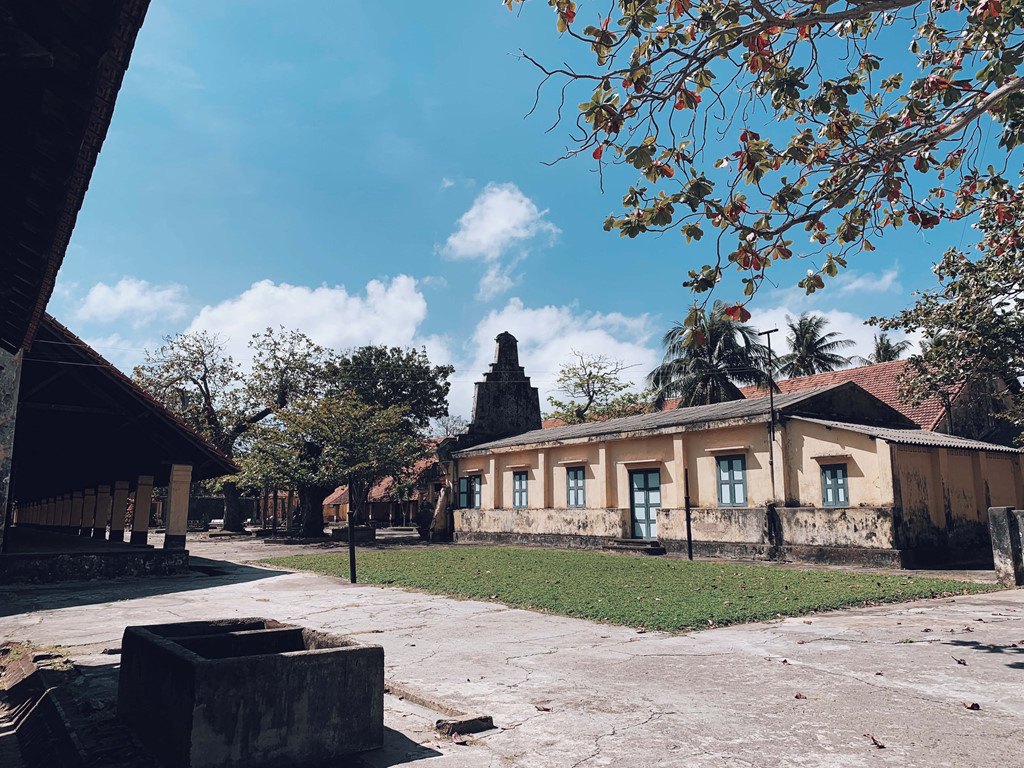
He recounts: After being moved through several prisons on the mainland, he was transported to Con Dao and classified as a “detained political prisoner”—meaning indefinite imprisonment without trial. In this hell on earth, he actively joined movements demanding improved living conditions, adherence to international conventions on political prisoners, and—most notably—the resistance against saluting the enemy’s flag.
Mr. Hằng remembers vividly how prisoners who refused to salute the puppet government’s flag were mercilessly beaten, faces swollen and blood soaking their clothes, many collapsing unconscious.
“We recognized only one national flag—the red flag with a yellow star. It flew over the Southern Uprising of 1940, and again over Ba Dinh Square on September 2, 1945. It was a part of us. We would never salute the flag of traitors,” he emphasized.
Political prisoners were tortured with the most inhumane methods imaginable: electric shocks, burning fingertips, pinching sensitive body parts with pliers, the “airplane” and “ship” torture positions, and being thrown into the infamous “tiger cages.” Yet they remained steadfast—unarmed, but unwavering in their revolutionary ideals. Many died from torture, but all accepted sacrifice with unbroken resolve.
One of Mr. Hằng’s most profound memories was the establishment and activities of the Lê Hồng Phong Party Cell inside Con Dao Prison. He was one of seven Party members in Camp IV who founded the cell on May 1, 1963, electing comrade Lương Thạnh as secretary. At that time, Camp IV had 8 prison rooms with 498 inmates.
The Party cell developed core leadership groups in every room, strengthened resistance movements, and led the campaign to refuse shouting propaganda slogans or saluting the puppet regime’s flag.
In November 1963, after the fall of Ngô Đình Diệm, the cell launched an open protest rejecting the new regime’s forced salutes. During the morning flag ceremony on November 3, four prisoners—Lê Quang Ba, Phan Minh Sáu, Lê Tam, and Nguyễn Văn Minh—stood up to voice their demands. They declared loudly:
“Diệm’s regime tortured and humiliated us. Now that he is gone, we demand an end to forced flag salutes and slogan chanting. We refuse to salute or chant for anyone.”
All four were immediately thrown into tiger cages, starved, deprived of sunlight, and subjected to intense repression. In response, the Party cell organized a collective hunger strike with additional demands:
- The right to elect prisoner representatives
- Medical treatment for the sick
- Fairer conditions and humane treatment
To coordinate leadership, the prisoners in Room 7—including Mr. Hằng—developed a secret communication code based on telegraph “dots and dashes,” tapping messages through the walls. This system allowed the Party cell’s directives to reach every room—quietly but effectively.
The strike lasted three days until the prison authorities conceded to the prisoners’ demands. But soon after, they broke their promises, triggering another wave of resistance. The violence that followed was brutal.
“Once again, political prisoners shed blood to defend the honor of the nation’s flag,” Mr. Hằng said proudly.
Nearly two decades of imprisonment could not break him—or the thousands of revolutionaries who turned Con Dao Prison into a symbol of indomitable spirit. Their sacrifices remain a powerful reminder of the price of freedom and the unyielding will that shaped Vietnam’s modern history.