


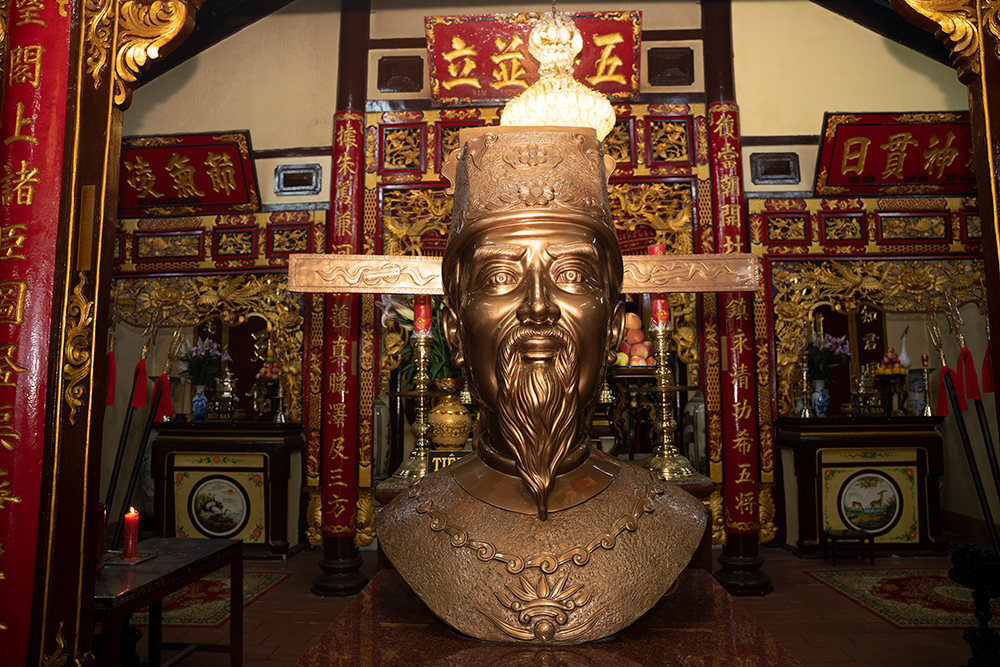
In the late 18th century, when the southern coastal waters played a vital role as the maritime lifeline connecting Vũng Tàu with Gia Định Citadel, the Nguyễn Lords appointed Nguyễn Văn Thoại, later honored as Thoại Ngọc Hầu, to guard Cửa Lấp—then known as Tắc Khái. This was a strategically crucial sea gate, holding exceptional importance in military defense, trade, and maritime security for the southeastern region of Vietnam.
A Strategic Sea Gate of Southeastern Vietnam
Cửa Lấp has been known by various names throughout history, including Tắc Khái, Tắc Ký, Giếng Bộng, and Phước Tỉnh. From the 17th to the 18th centuries, it stood as one of the nation’s most important coastal inlets. During the era of the Nguyễn Lords, it was officially called Tắc Khái Hải Tấn, serving as a key checkpoint controlling vessels entering and leaving the Biên Hòa – Gia Định area.
In 1776, this location witnessed a major confrontation between Tây Sơn forces led by Nguyễn Huệ and Nguyễn forces under Nguyễn Phúc Thuần. Later, in the 5th year of Emperor Minh Mạng’s reign (1824), the Nguyễn court renovated the site and renamed it Long Hưng Hải Tấn, while reinforcing patrol forces and assigning local residents responsibilities for guarding and servicing the sea gate.
In Gia Định Thành Thông Chí, scholar Trịnh Hoài Đức described Tắc Khái as a wide estuary with constantly shifting sandbanks, strong tidal movements, and a dense coastal population living by fishing and seafood harvesting—a prosperous “land of fish and salt” within the southern citadel.
Nguyễn Văn Thoại – A Distinguished General of the Southern Frontier
Nguyễn Văn Thoại was born in 1761 in An Hải Village, Diên Phước District, Quảng Nam Province (now Sơn Trà District, Đà Nẵng). From a young age, he followed his mother and sibling southward, growing up amid the dynamic and often turbulent frontier lands of southern Vietnam.
Thanks to numerous military achievements, in 1791 he was promoted by Nguyễn Ánh to the rank of Khâm sai Thống binh Cai cơ, and soon after appointed Commander of Tắc Khái, taking direct charge of defending Cửa Lấp.
According to Phủ Biên Tạp Lục by Lê Quý Đôn, the Tắc Khái garrison consisted of three naval units, each with three warships carrying around forty soldiers. Although Nguyễn Văn Thoại held this post for only about a year, he successfully suppressed piracy, restored order, and ensured safe passage for both domestic and foreign vessels traveling the Vũng Tàu–Gia Định route—thereby securing the maritime gateway of both southeastern and southwestern Vietnam.
Major Contributions under the Nguyễn Dynasty
Nguyễn Văn Thoại’s legacy extended far beyond Cửa Lấp. In 1817, while serving as Governor of Vĩnh Thanh (present-day An Giang), he mobilized tens of thousands of laborers to excavate two major hydraulic projects: Thoại Hà Canal (over 30 km long) and Vĩnh Tế Canal (87 km long). These canals played a crucial role in land reclamation, agricultural development, and the defense of Vietnam’s southwestern border.
He passed away in 1829 in Châu Đốc, at the age of 68. Today, his mausoleum and temple at Núi Sam (An Giang) remain important historical and spiritual landmarks, honoring a pioneer who helped shape southern Vietnam.
Cửa Lấp Today – A Living Historical Landmark
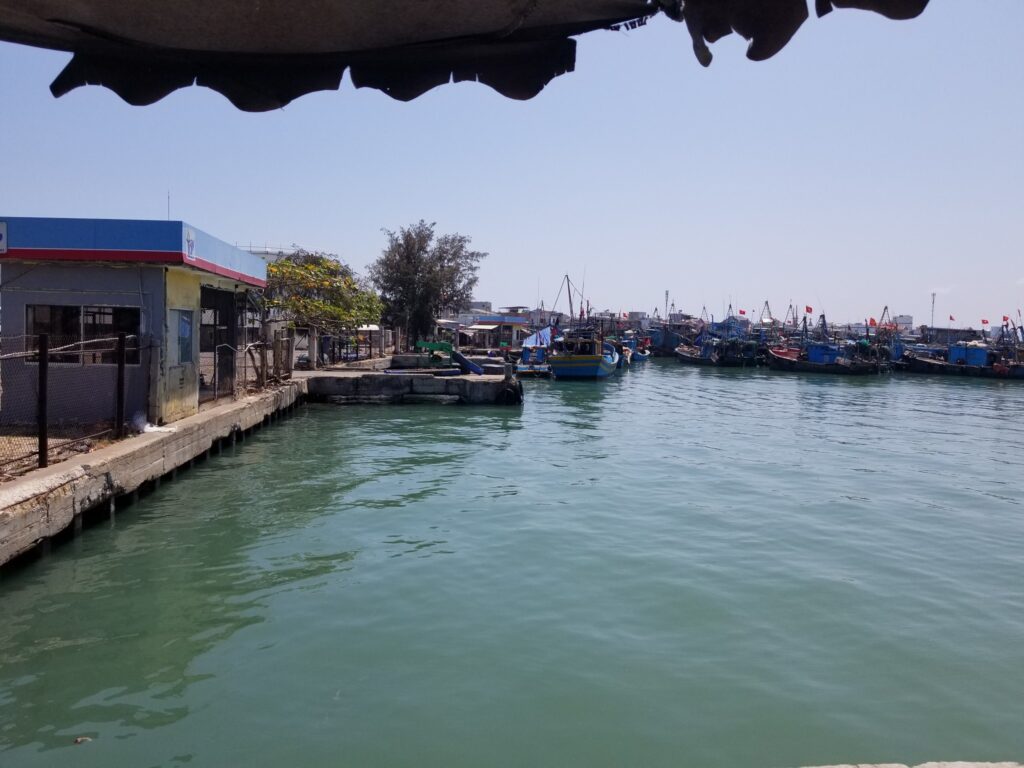
Today, travelers along the coastal road from Vũng Tàu to Phước Tỉnh – Long Hải cross Cửa Lấp Bridge, which spans the Cửa Lấp River and connects Phước Thắng Ward with the fishing village of Long Hải. Beneath the bridge lie tidal sandbanks used for clam and shellfish farming, providing a sustainable livelihood for local communities. This coastal route not only improves transportation but also opens up new opportunities for seaside tourism in Long Hải, Đất Đỏ, and Xuyên Mộc.
Amid today’s peaceful and prosperous coastal life, the people of the former Bà Rịa – Vũng Tàu region (now part of Ho Chi Minh City) continue to remember the great contributions of Nguyễn Văn Thoại—the general who once braved dangerous seas to guard Cửa Lấp, ensuring peace for the southern coastline and leaving an enduring mark on the history of Vietnam’s southward expansion.

+–+The+First+Commander+to+Guard+Cửa+Lấp)