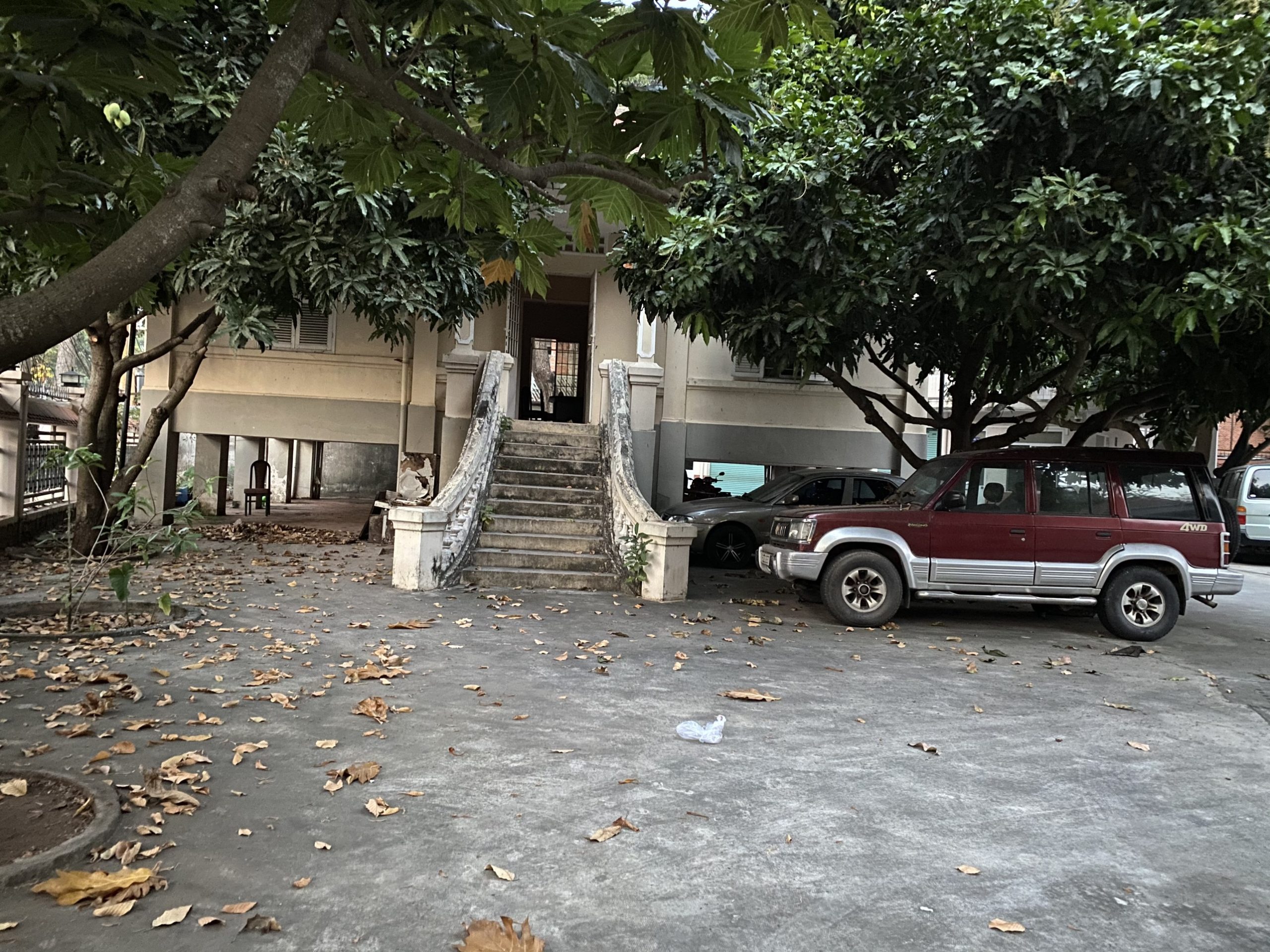
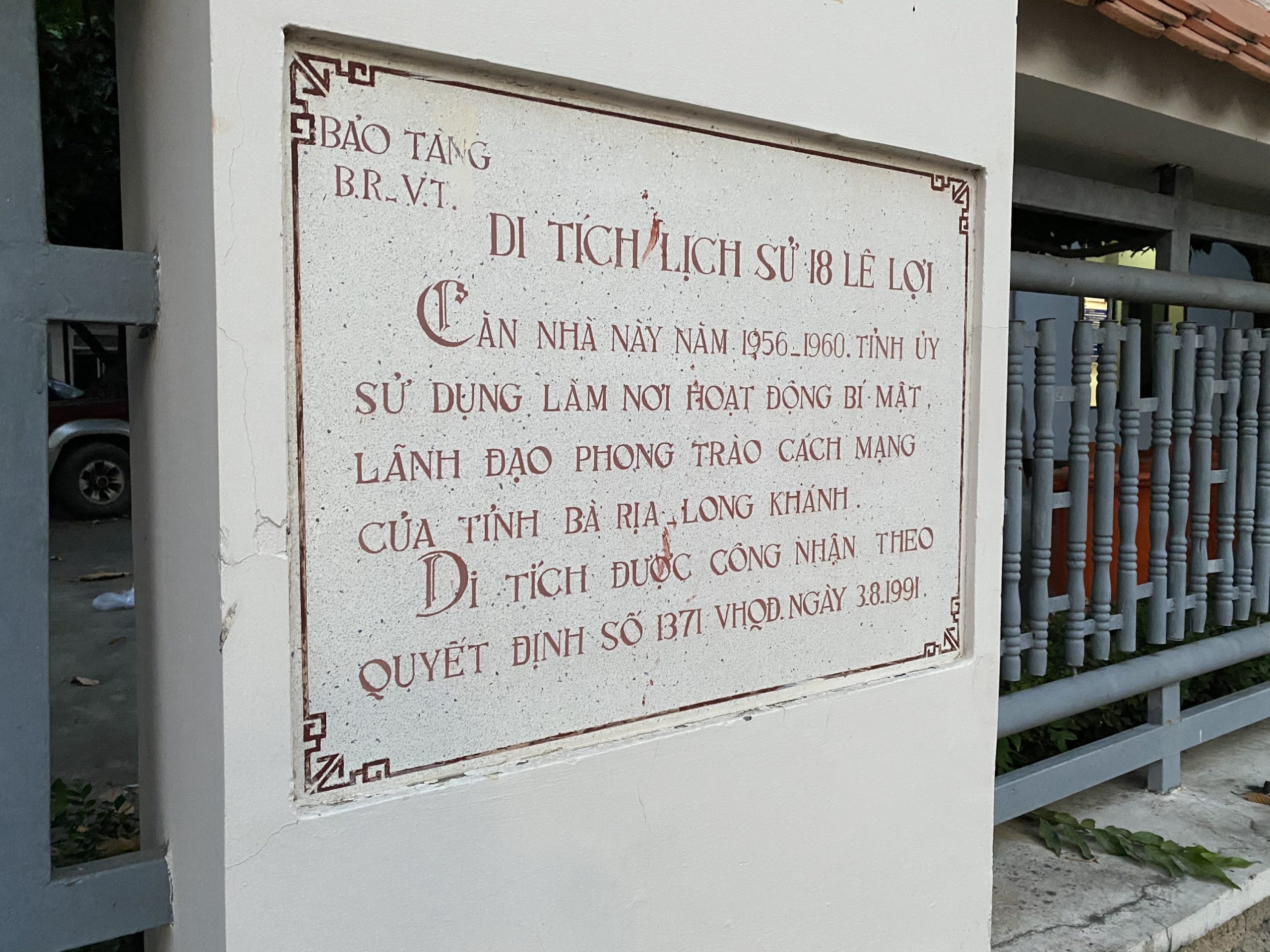
“Nha Cao Cang” is one of the most notable revolutionary relics of Ba Ria – Vung Tau Province. Located at 18 Le Loi Street, Vung Tau Ward, Ho Chi Minh City (formerly part of Vung Tau City), the site once served as a secret meeting base for the Ba Ria – Long Khanh Provincial Party Committee during the resistance war against the United States. Many key decisions that shaped the local revolutionary movement were made here.
Unique Architecture of “Nha Cao Cang”
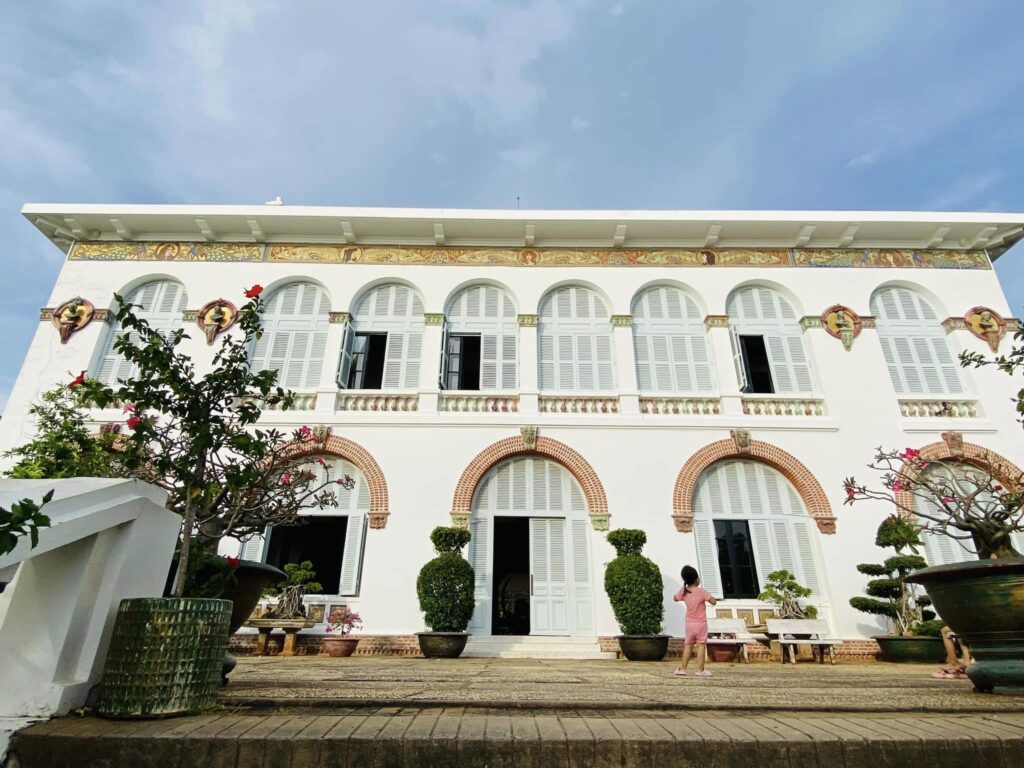
Covering an area of 160 m², the house was named “Nha Cao Cang” (“High-Leg House”) because its floor is elevated on four rows of square stone pillars—each pillar standing about 2.2 meters tall with a width of 40 cm—resembling sturdy “legs” supporting the entire structure.
The building follows a European-style villa design, featuring gardens, a perimeter fence, and two main sections:
Main house
- Two stories, with the ground floor consisting of stone pillars and the upper floor serving as the living area
- Two staircases (front and back)
- Reception hall and small bedrooms
- Windows overlooking the garden
- Four-sided sloping French-style tiled roof and triangular ventilated gables
Auxiliary house
- About 2.25 meters wide, with a 6-meter roof span
- Used as the kitchen and the connecting walkway to the main house
This architectural style is airy, modern for its time, and distinct—making the house one of the few well-preserved French colonial villas that still exist in Vung Tau.
History and Role During the Resistance War
The house was built around 1949 by Deloudet, a French civil servant and military officer stationed in Saigon, as a seaside holiday villa for himself and his wife, Chau Chon. In 1950 he returned to France, and the property later passed to Chau Chon before being sold to agricultural engineer Nguyen Van Chien in 1951.
In 1952, Mr. Ba Tra, a worker at Ba Ria Water Plant and an active revolutionary, was assigned to look after the villa. Despite multiple arrests, he remained steadfast in his underground activities.
From 1956 to 1959, taking advantage of periods when the enemy’s surveillance was lax, the Standing Committee of the Ba Ria – Long Khanh Provincial Party chose Nha Cao Cang as a secret base. Here, they organized strategic meetings, directed revolutionary tasks, and strengthened the local movement under the leadership of comrade Nam An Chi.
Notably, in March–April 1959, the Committee held important meetings with the Vung Tau District Party to implement Resolution 15 of the Central Committee and plan mass mobilization efforts against Law 10/59 under the Ngo Dinh Diem regime.
Historical Value and Preservation
According to Vo Quy Khanh, the relic now lies within the premises of the Vung Tau Customs Department, which is responsible for its management. While original objects are no longer preserved due to the secretive and short-lived nature of revolutionary activities at the site, most of the architectural features remain intact.
In 1991, Vietnam’s Ministry of Culture and Information officially recognized Nha Cao Cang as a National Revolutionary Historical Site, honoring its contribution to the country’s revolutionary legacy.
A Symbol of Vung Tau’s Revolutionary Spirit
Nha Cao Cang is more than a colonial-era architectural landmark—it is a powerful testament to the resilience, courage, and determination of the revolutionary fighters of Ba Ria – Vung Tau.
Within its walls, local leaders forged strategies, inspired comrades, and kept the revolutionary flame alive during the most challenging years of the struggle.
Visitor Information
📍 Address: 18 Le Loi Street, Vung Tau Ward, Ho Chi Minh City
🏗️ Built: 1949
🏅 Listed as National Historical Site: 1991
⭐ Significance: Secret command base of the Ba Ria – Long Khanh Provincial Party Committee during the resistance war