


Nirvana Pagoda, also known as Niết Bàn Tịnh Xá, sits on the slopes of Small Mountain overlooking the serene Dứa Beach—one of the most picturesque locations in Vũng Tàu Ward, Ho Chi Minh City. Located at 66/7 Hạ Long Street, the pagoda was built between 1969 and 1974 on an area of over 10,000 m². It was funded by devout Buddhists and benefactors who wished to create a grand spiritual sanctuary for the region.
Construction took five years to complete. The first abbot was Venerable Thích Thiện Phụng. In 1981, after the abbot’s departure, the complex was handed over to the Department of Culture and the Vũng Tàu – Côn Đảo Heritage Museum for restoration and completion of unfinished structures. By 1984, the pagoda reopened to welcome pilgrims and visitors. On December 14, 1989, it was officially recognized as a National Historical and Cultural Monument.
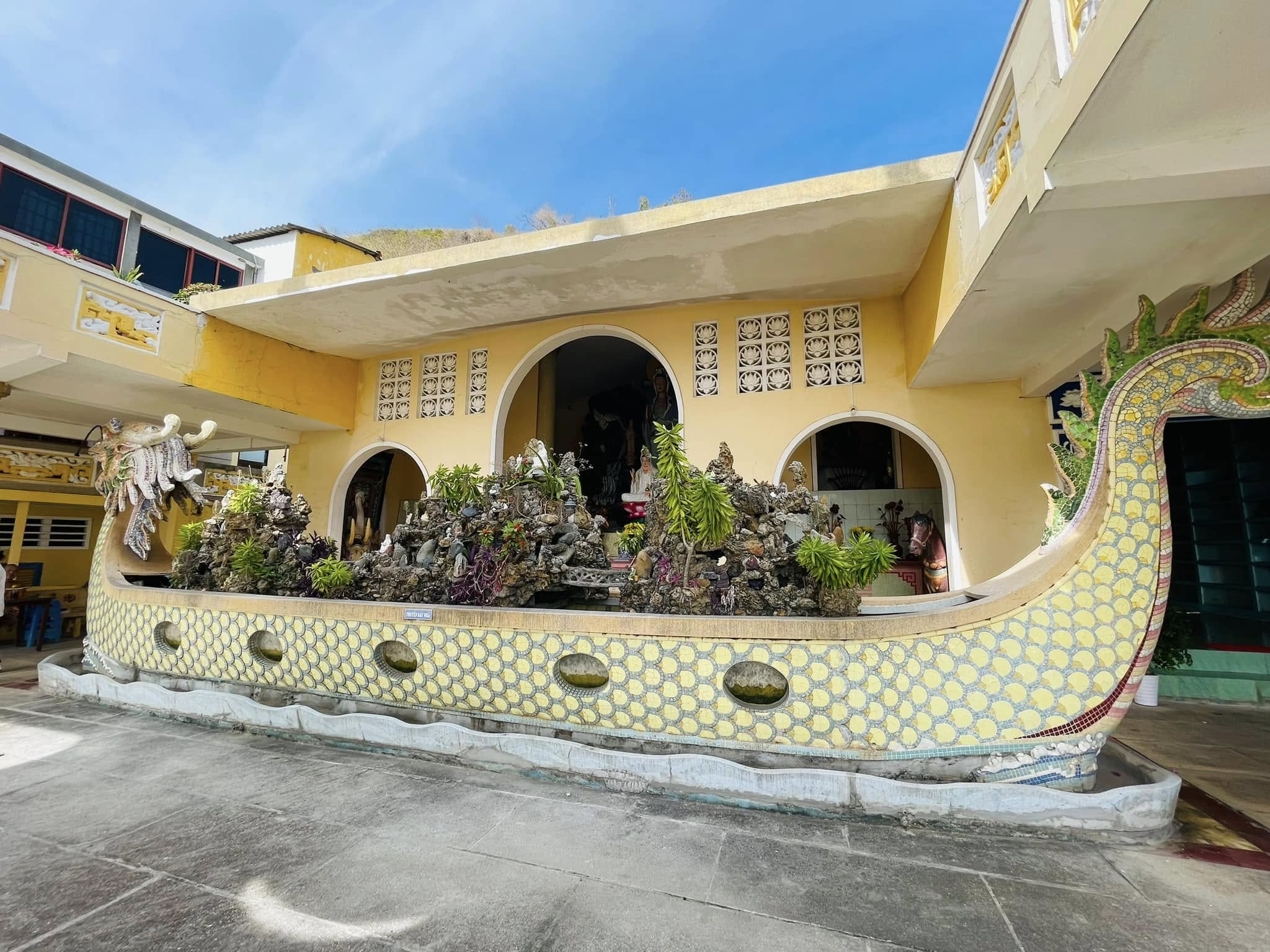
Niết Bàn Tịnh Xá features a distinctive blend of Eastern and Western architectural influences. Built along the mountain slope, the multi-tiered structure faces the open sea, capturing sunlight and ocean breeze throughout the day. The complex includes the main hall, drum and bell towers, monks’ quarters, the iconic Bát Nhã Boat, and several auxiliary buildings.
The entrance pathway is lined with stone steps leading to the main gate, guarded by statues representing Good and Evil—symbolizing the balance of human nature. A carved Long Mã relief sits on the right, while the bell tower adorned with dragon–qilin–turtle–phoenix motifs stands to the left.
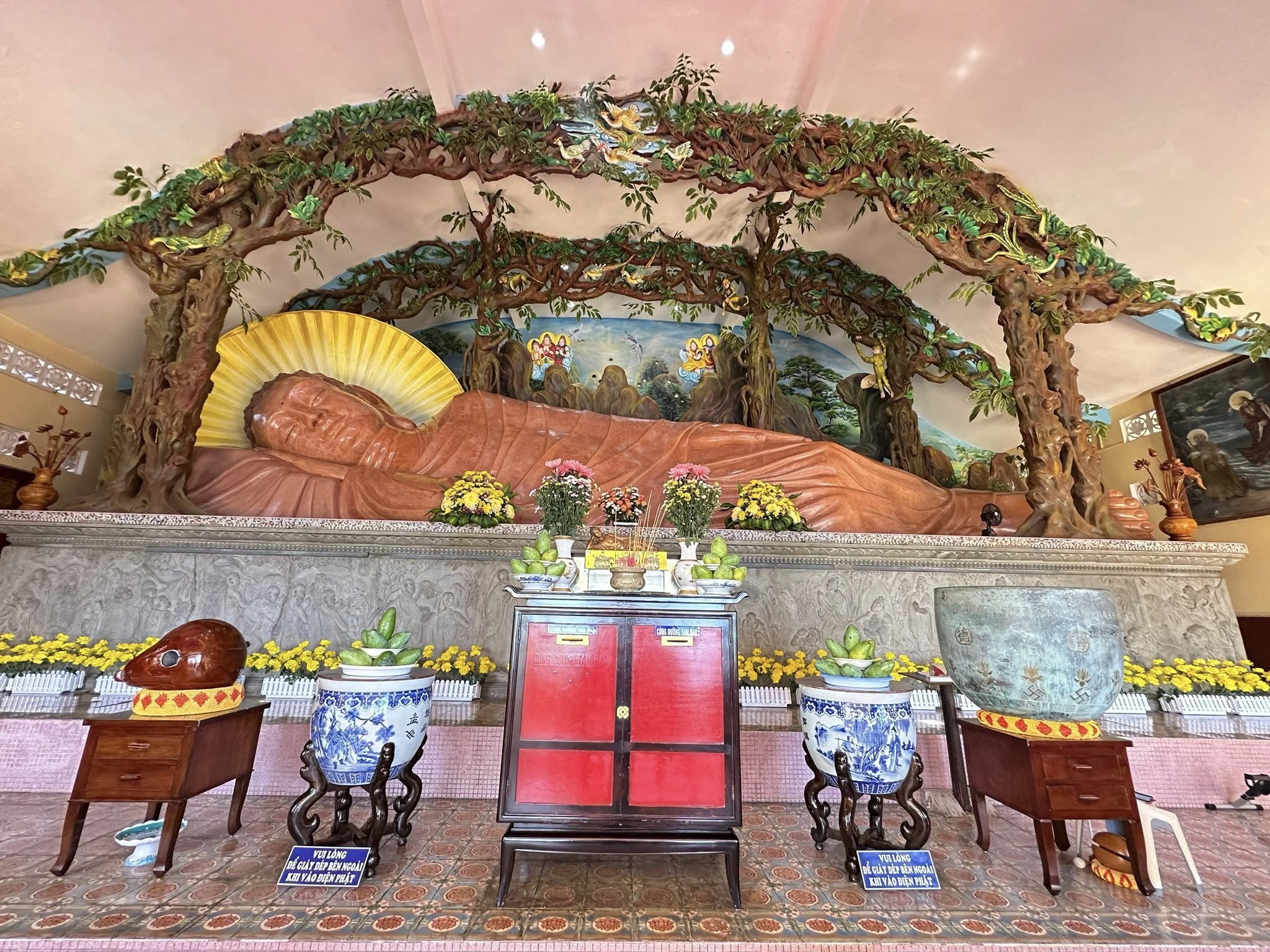
At the heart of the pagoda is the main hall housing a striking 12-meter marble statue of the Reclining Buddha, depicting Gautama Buddha’s final moments before entering Nirvana at Kusinara. The statue, carved from pink-brown marble, shows the Buddha resting on his right side with 52 symbolic marks engraved on the soles of his feet, representing stages of spiritual cultivation. Behind the statue is an elaborate relief illustrating the Buddha’s Parinirvana, surrounded by sal trees and animals paying homage.
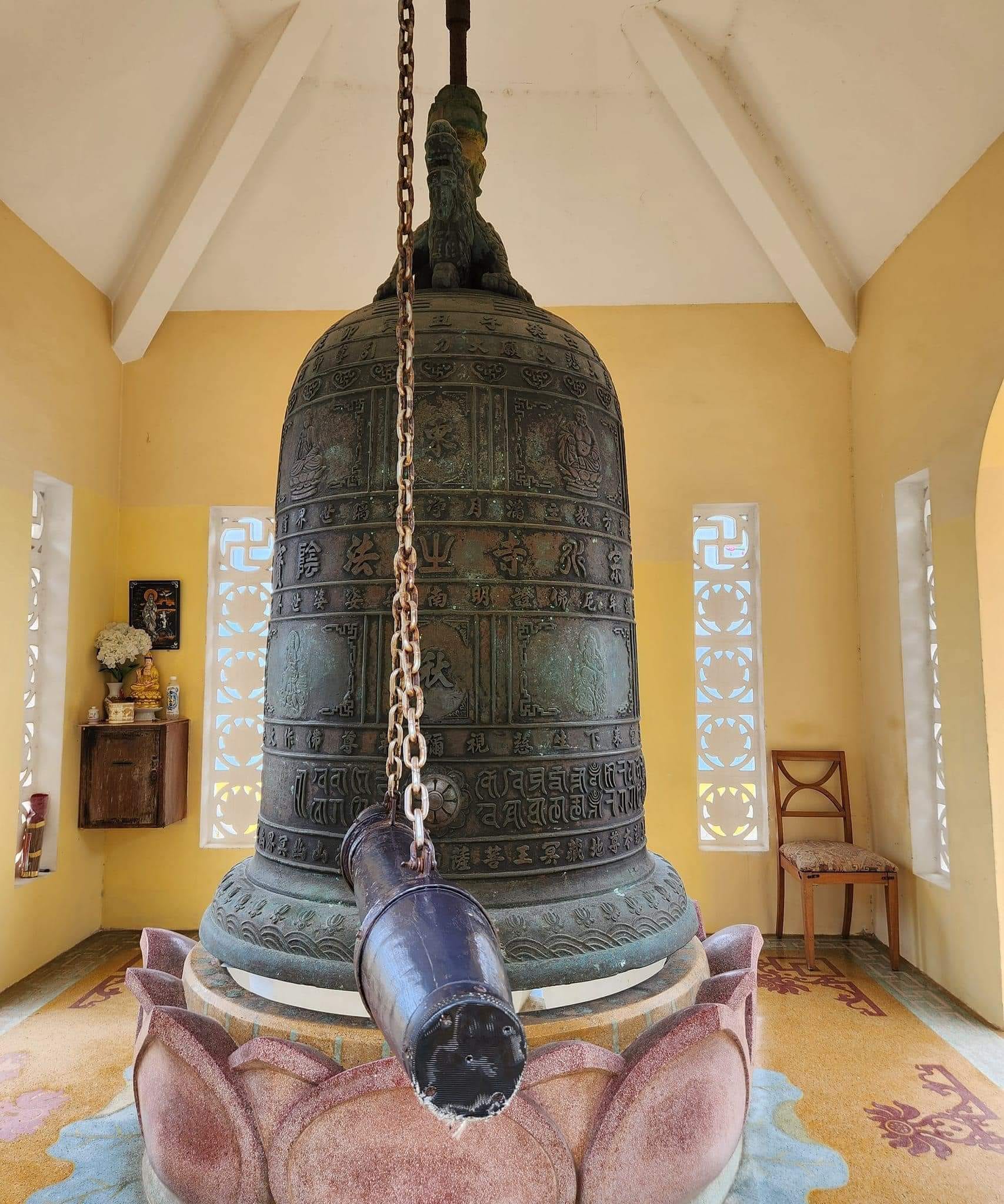
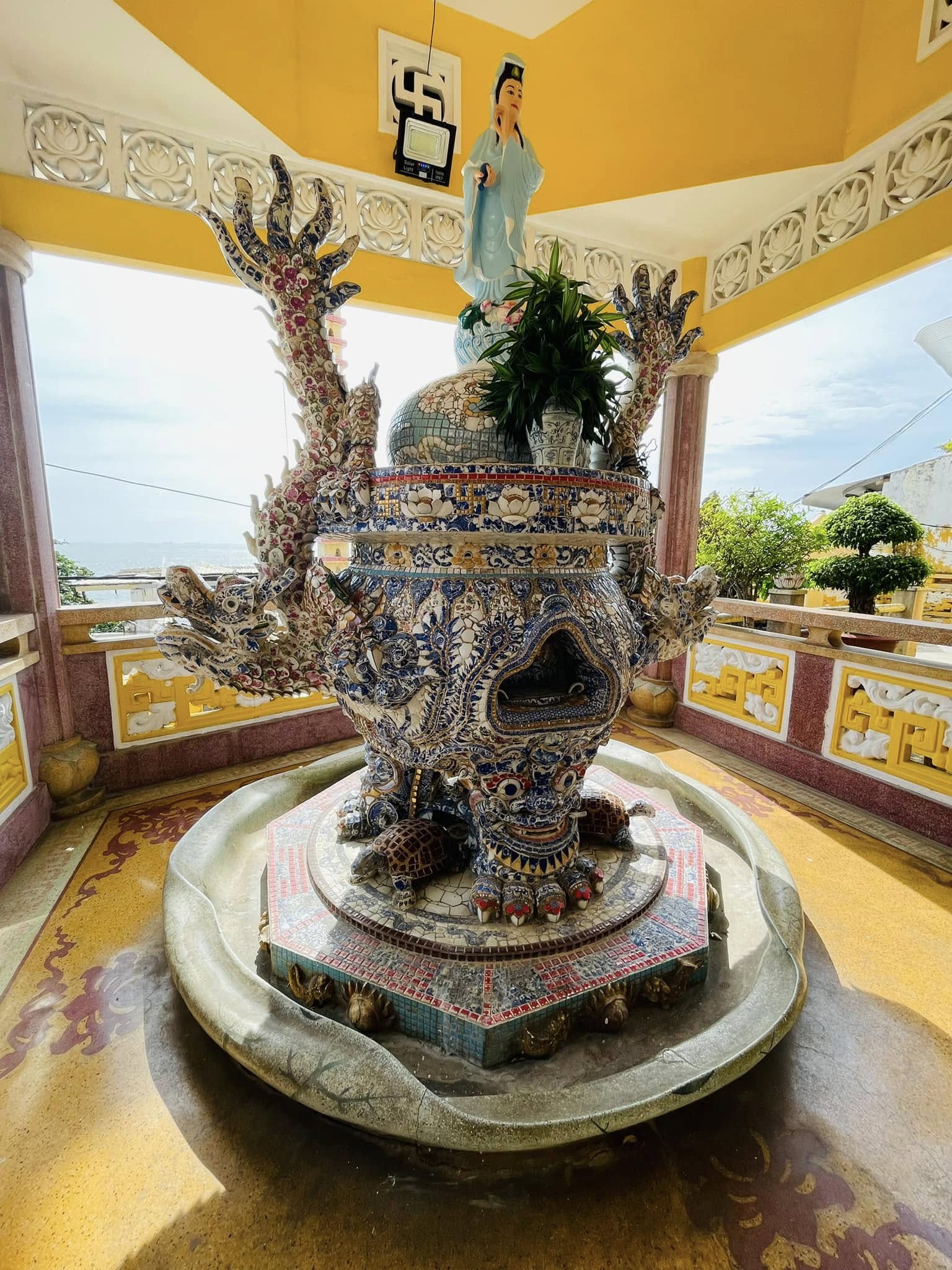
In front of the hall stands a large glazed-ceramic incense burner featuring the Four Sacred Creatures. Nearby is the bell tower holding a massive 3.5-ton bronze bell—one of the largest and most resonant temple bells in Vũng Tàu. When rung, its deep, echoing sound blends with the sea waves and mountain winds, creating a powerful sense of tranquility. Many locals believe that those who offer prayers and place a wish slip on the bell will receive blessings and peace.
Following the right pathway leads to the Bát Nhã Boat, an artistic symbol of Buddhist wisdom and compassion designed as a stylized dragon boat. Decorated with blue-and-colored ceramic tiles, it contains a small water basin with ornamental fish. The boat represents the journey from delusion to enlightenment. The surrounding courtyard features statues of Avalokitesvara, Kṣitigarbha Bodhisattva, Bodhidharma, and reliefs inspired by the forests of Bodh Gaya.
Behind the main hall is the monks’ dining hall, where 34 wall murals depict the entire life of the Buddha—from his birth to his passing into Nirvana and the distribution of his relics. Adjacent is the ancestral worship hall with three golden-seated Buddha statues, flanked by Avalokitesvara and Kṣitigarbha, and decorated with carvings expressing Buddhist teachings on compassion and karma.
Because the pagoda is built along the natural mountain terrain, it offers sweeping views of Dứa Beach and the surrounding coastline. Whether at dawn or dusk, the interplay of sunlight, sea breeze, and temple bells creates an atmosphere that feels both sacred and peaceful. A 21-meter prayer flagpole stands at the courtyard with 42 segments symbolizing the 42 Chapters of Buddhist scripture, crowned with three lotus buds representing the Three Jewels—Buddha, Dharma, Sangha.
Nirvana Pagoda is more than a place of worship; it is a cultural, artistic, and spiritual icon of Vũng Tàu—a serene refuge where visitors can find clarity, peace, and a moment of stillness above the vast ocean.
Summary Information:
- Name: Nirvana Pagoda (Niết Bàn Tịnh Xá)
- Address: 66/7 Hạ Long Street, Vũng Tàu Ward, Ho Chi Minh City
- Area: 10,000 m²
- Construction: 1969–1974
- Status: National Historical and Cultural Monument (1989)
- Highlights: 12 m Reclining Buddha, 3.5-ton Great Bell, Bát Nhã Boat

+–+A+Coastal+Buddhist+Landmark+of+Vũng+Tàu)