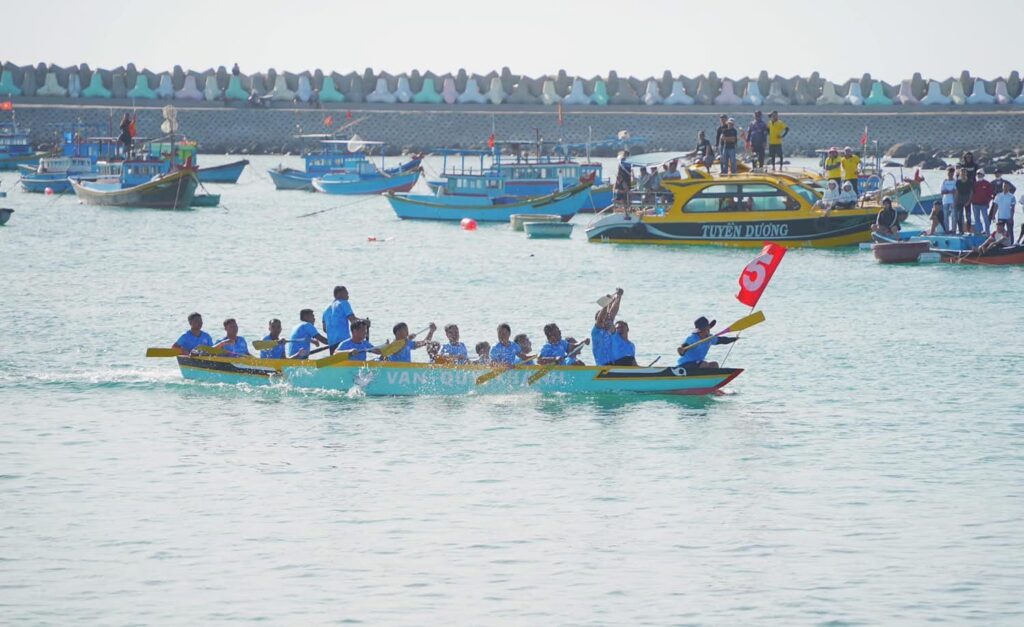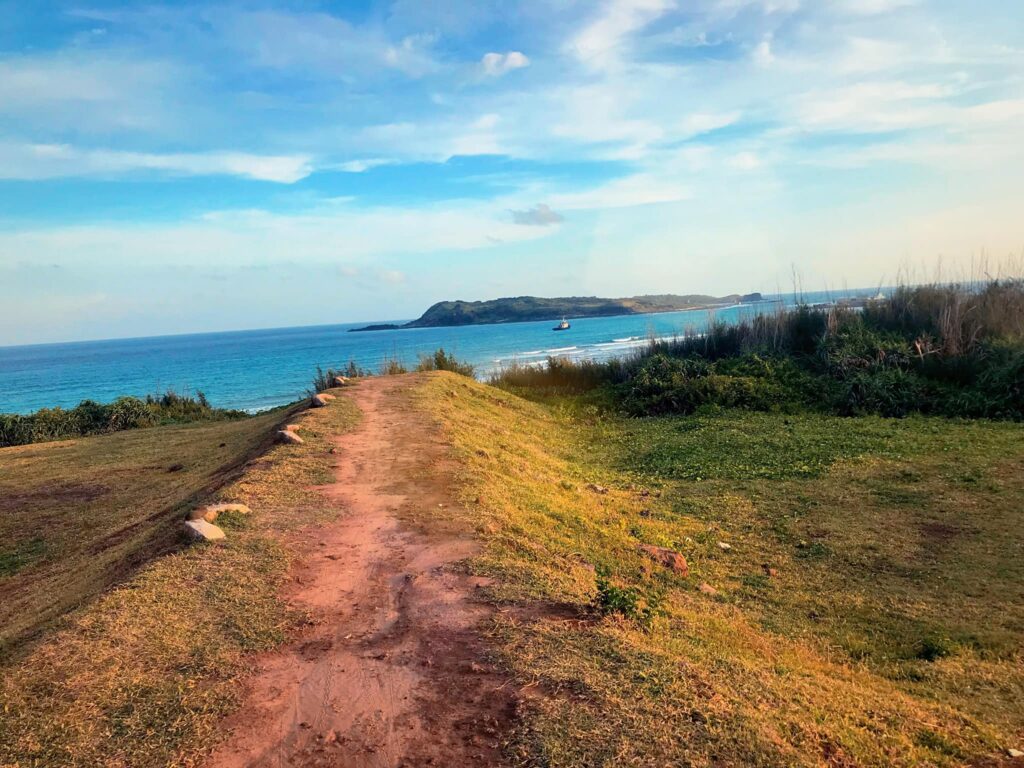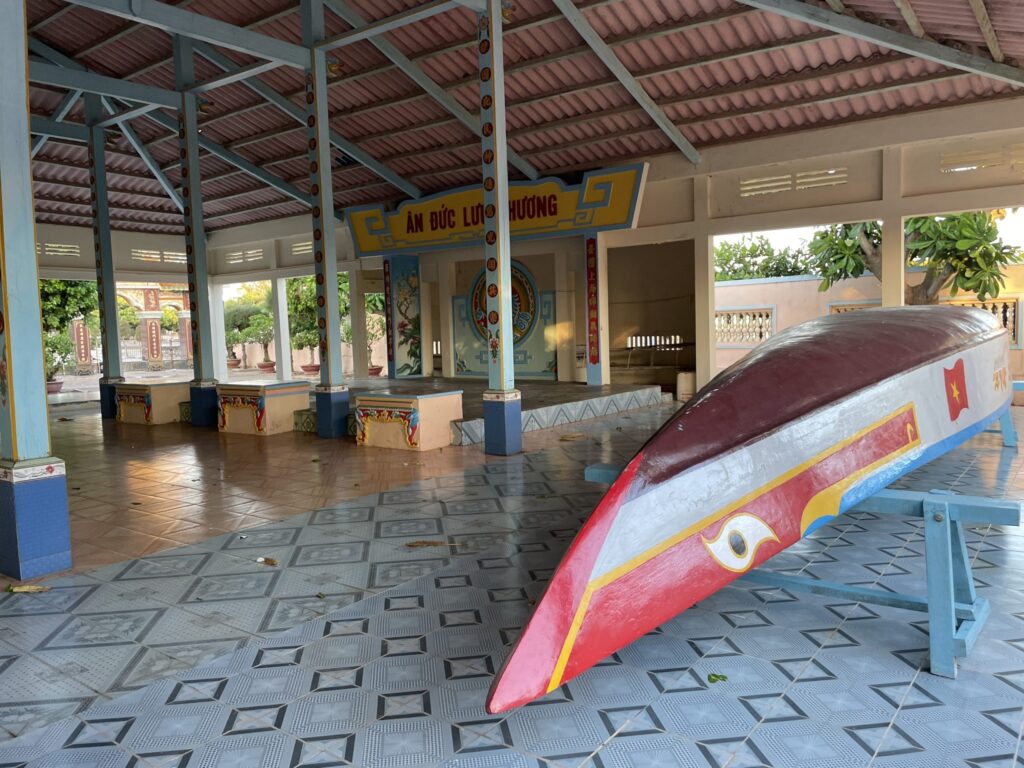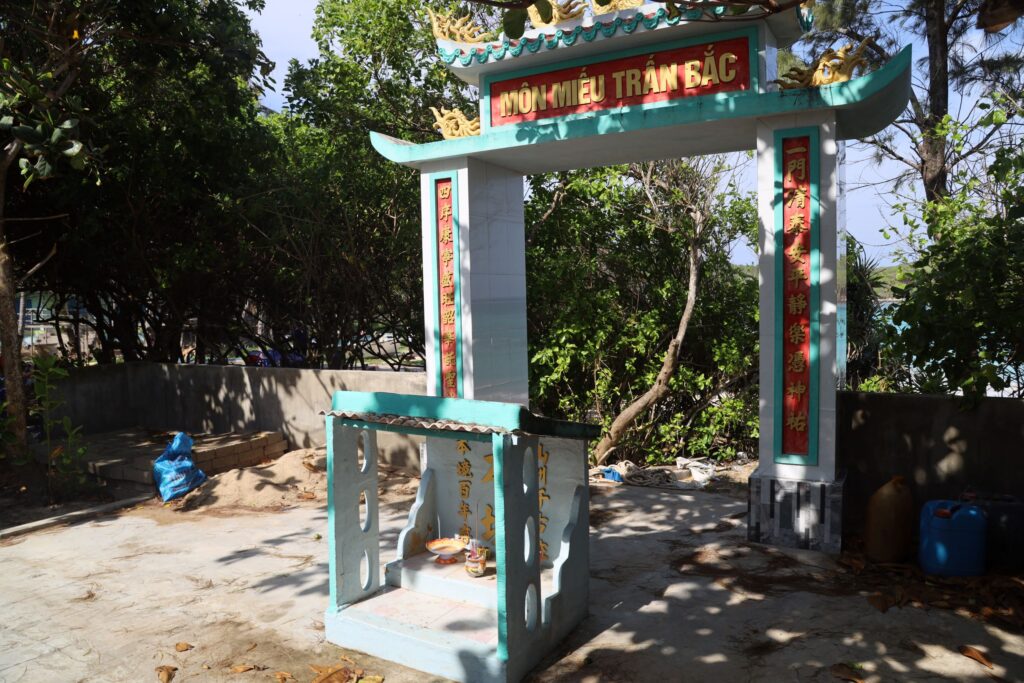
The system of occupational beliefs on Phu Quy Island is considered far more diverse than that of many other island districts in Vietnam. These beliefs include agricultural worship, veneration of craft founders, whale worship (Ông Nam Hải) among fishermen, and the worship of the God of Wealth, among others.
Worship of Village Tutelary Deities (Thành Hoàng)
In Vietnamese folk culture, the worship of Thành Hoàng—the guardian deity of each village—is one of the most longstanding traditions. A Thành Hoàng may be:
A human deity (nhân thần): a historical figure, national hero, land founder, or official whose contributions earned them posthumous ennoblement by the king; or
A nature deity (nhiên thần): associated with rivers, mountains, or mythological beings such as the “Four Immortals.”
These deities are believed to safeguard the spiritual and physical well-being of the community and are honored through annual rituals and festivals. Under the Nguyễn Dynasty, the monarchy formalized the system of conferring royal decrees (sắc phong) upon these deities.
On Phu Quy Island, the people worship Thành Hoàng Bổn Cảnh in village communal houses (đình làng). Historical records show that in 1839, during Emperor Minh Mạng’s reign, all localities were ordered to establish altars for “Thành Hoàng Bổn Cảnh”—meaning the guardian deity assigned to protect that very locality.
These deities were often symbolic representatives appointed by the king, not actual historical figures, and are typically worshipped through a simple plaque inscribed with the character “神” (Thần).
Whale Worship – Belief in the God of the Southern Sea (Thần Nam Hải)
Whale worship (thờ cá Ông) expresses the deep faith of coastal communities in the whale as a sacred protector. According to folk tradition, whales appear during storms to rescue sailors and guide boats to safety.
Legends recount that during his years fleeing the Tây Sơn forces, Lord Nguyễn Ánh (later Emperor Gia Long) was saved by whales at sea. In gratitude, he conferred upon the whale the title:
“Nam Hải Cự Tộc Ngọc Lân Từ Tế Chương Linh Trợ Tín Trừng Trạm Chi Thần.”
Another legend tells that when Avalokitesvara Bodhisattva traveled across the Southern Sea, she witnessed many people drowning in storms. Out of compassion, she tore her robe into pieces and cast them into the sea, transforming each piece into a mighty whale—giving rise to the belief that whales are divine beings sent to rescue humanity.
Classical texts describe whales as benevolent creatures.
Đại Nam Nhất Thống Chí, compiled by the Nguyễn Dynasty court, notes:
“The whale is gentle and often saves people. It has a round head, a blowhole, smooth dark skin without scales, and a split tail. During Minh Mạng’s reign, it was called Nhân Ngư (the Humane Fish), and during Tự Đức’s reign renamed Đức Ngư.”
The Gia Định Thành Thông Chí also records widespread whale worship across southern Vietnam, particularly from Quảng Bình to Hà Tiên, where whale burials, funeral rites, and temples were established. Communities believed that villages burying a whale would enjoy prosperity and good fortune.
Today, Phu Quy Island in Bình Thuận Province has the highest number of whale-worship temples of any district in Vietnam. Relying heavily on the sea for their livelihood, the people hold profound faith in the divine protection of Ông Nam Hải. Each year, dozens of ceremonies—especially the Nghinh Ông Whale Worship Festival—are held to pray for safety and bountiful fishing seasons.
The Cult of Master Sai Nai (Thầy Sài Nại)
According to local legends, Master Sai Nai was a Chinese merchant in the 16th century. Besides trading across many countries, he was also a skilled geomancer and healer. During his voyages, he visited Phu Quy Island and recognized its strong spiritual energy.
By the time he arrived, Princess Bàn Tranh and her community had already established a settlement on the island. Master Sai Nai became her sworn brother and often returned to treat illnesses and help the poor. He wished for his ashes to be buried on the island, which he believed to be an auspicious land with powerful dragon veins.
He passed away on the 4th day of the fourth lunar month. A fleet from the north sailed to Phu Quy at night, performed rites, and buried his ashes at Doi Thầy in present-day Đông Hải village.
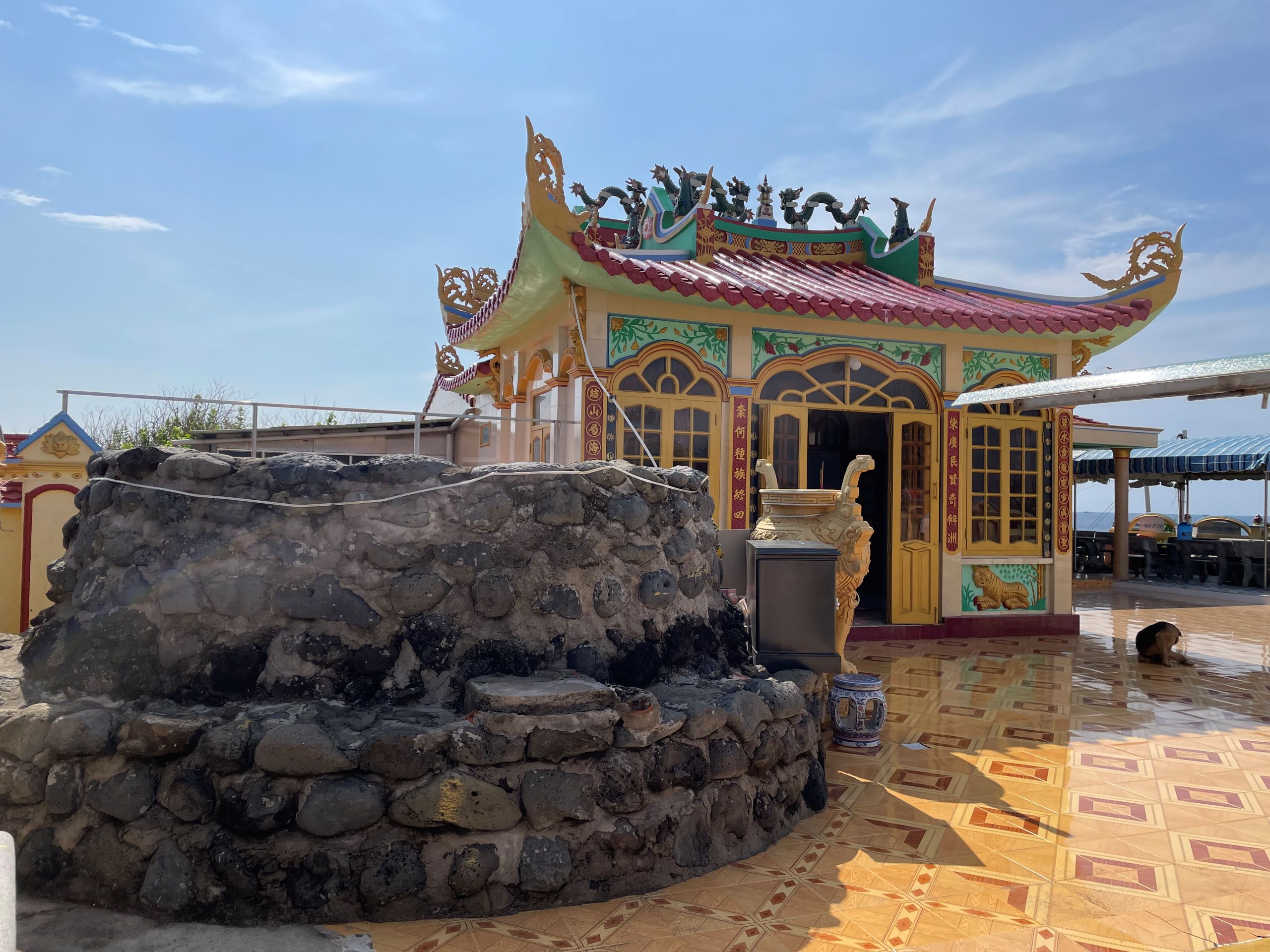
The next morning, islanders discovered offerings of incense, flowers, meat, rice wine, and ritual items at the site. Realizing it was his tomb, they built a circular coral-stone grave, now known as Mộ Thầy Sài Nại.
For generations, locals believed that Master Sai Nai revealed himself in divine manifestations—thunderclaps, flashes of light—and protected fishermen during storms and wartime hardships. His cult remains influential on the island.
The Cult of Bạch Mã Thái Giám (The White Horse Eunuch Deity)
The worship of Bạch Mã Thái Giám originates from Indian Buddhist mythology about the sacred horse Balaha:
Eight hundred merchants, lost at sea, were captured by man-eating demonesses on a remote island. They begged the Buddha for salvation. Out of compassion, the Buddha transformed into a divine white horse and carried them across the ocean—but warned them not to look back. Only one obeyed and survived; he later became a king of India.
In Buddhist iconography, Avalokitesvara (Quan Âm) manifests in many forms, including Mã Đầu La Sát—a being with a human body and a horse’s head. Scholar Huỳnh Ngọc Trảng explains:
“Mã Đầu La Sát is a manifestation of Avalokitesvara Bodhisattva. In Mahayana Buddhism, Avalokitesvara transcends gender, capable of appearing as male or female.”
Thus, the deity Bạch Mã (White Horse) combined with the title “Thái Giám” (Eunuch) reflects a gender-transcendent spiritual being. Under the Nguyễn Dynasty, this deity received a royal decree titled:
“Dương Uy Ngự Vũ Bảo Chướng Kiện Thuận Hòa Nhu Hàm Quang Thượng Đẳng Thần.”
Bạch Mã Thái Giám is widely worshipped in several temples across Phu Quy Island. Annual rituals are held to pray for protection, successful trade, good health, and peaceful seafaring.