



Ông Temple at Cửa Lấp, also known as Quan Thánh Đế Miếu, is one of the most important spiritual sites of the Hoa (Chinese-Vietnamese) community on Phú Quốc Island. Located in the Cửa Lấp area of Cửa Cạn Commune, the temple embodies a harmonious blend of Hoa and Vietnamese cultural elements and has served as a spiritual haven for local residents across generations.
Worship of Phúc Đức Chánh Thần – The Revered Guardian of Land and People
At Ông Temple, the Hoa community venerates Phúc Đức Chánh Thần, one of the most respected deities in traditional folk belief. According to longstanding custom, this deity:
- Oversees the land and protects its geomantic energy
- Safeguards households and community life
- Brings peace, prosperity, good fortune, and harmony
Because of this, locals often visit the temple to pray for peace, protection, success in studies, family harmony, or blessings during significant life events such as groundbreaking ceremonies, weddings, long journeys, or military service. Those working in construction, in particular, hold deep reverence for Phúc Đức Chánh Thần and always offer prayers before starting a project to ensure safety and smooth progress.
Origins and the Founder
According to local accounts, the temple was first built by Mr. Phù Thọ Tiến, an early Hoa settler who made Phú Quốc his home. Out of devotion and respect for the deities, he established the shrine to provide a place of worship and spiritual support for the growing Hoa community on the island.
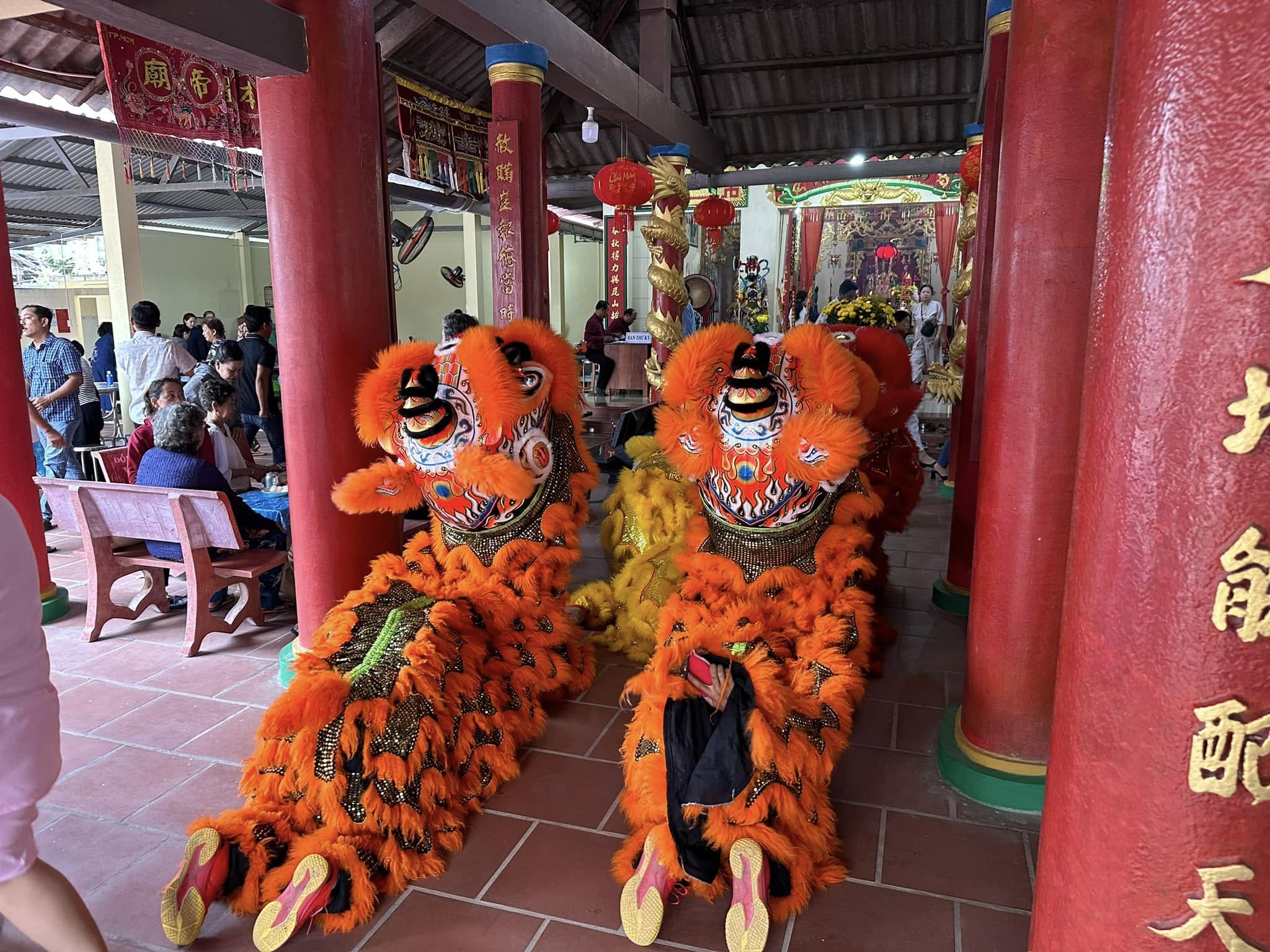
Over time, the temple has undergone several renovations, yet it continues to preserve its traditional Chinese architectural style: red and gold as the dominant colors, intricate dragon–phoenix motifs, Chinese parallel verses, and a solemn altar layout.
A Sacred Space Rich in Hoa–Vietnamese Cultural Identity
Inside the main hall, visitors will immediately recognize the characteristic features of a traditional Chinese temple. The altar of Phúc Đức Chánh Thần is placed at the center, above which hangs a large plaque inscribed with “Phúc Đức Chính Thần” (福德正神).
Flanking the altar are parallel couplets, gilded wooden panels, and golden dragon motifs that create an atmosphere both dignified and serene.
The temple’s airy interior, gently scented with incense, offers a peaceful setting for those seeking blessings or wishing to explore the spiritual heritage of the Hoa community on Phú Quốc.
A Cultural and Spiritual Landmark Not to Be Missed
For local residents, Ông Temple is not only a house of worship but a vital part of community life and cultural identity. Visitors to Phú Quốc often stop by to learn about local religious traditions, pay respects to Phúc Đức Chánh Thần, and appreciate the unique blend of Vietnamese and Chinese cultural expressions on the Pearl Island.

+–+A+Sacred+Shrine+Honoring+the+Phúc+Đức+Chánh+Thần+of+the+Hoa+Community+in+Phú+Quốc)