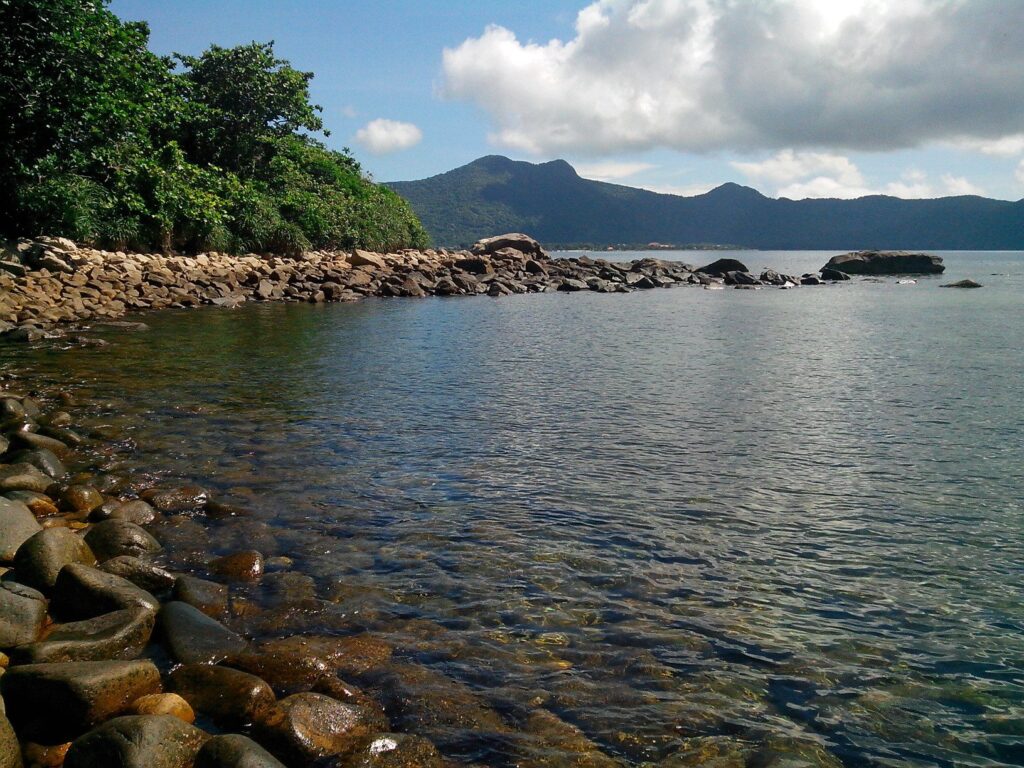
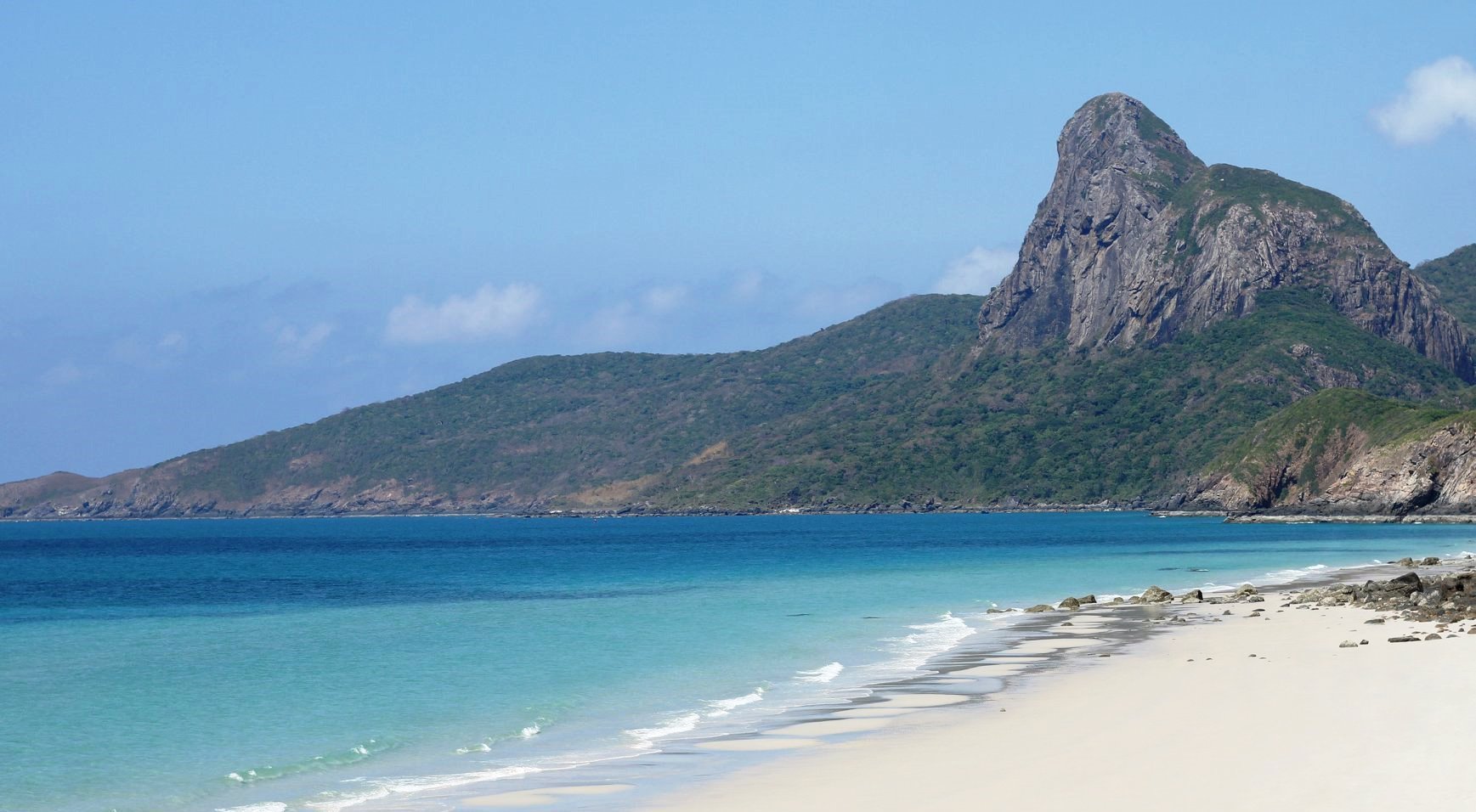
The Con Dao Special Administrative Zone is an archipelago of 16 islands located in the open sea, about 185 km from Vung Tau, 230 km from Ho Chi Minh City, and 83 km from the Hau River estuary (Can Tho). Covering a total natural area of 76 km², the largest island—Con Lon (Con Son)—spans 51.52 km² and serves as the cultural, political, and economic center of the entire archipelago.
Despite its modest size and a population of roughly 7,000 (as of 2013), Con Dao stands out as one of Vietnam’s most beautiful and meaningful island destinations, combining pristine nature with profound historical significance.
Nature’s Gift – Clear Seas, Ancient Forests, and Rare Ecosystems
With over 200 km of coastline, Con Dao is home to some of Vietnam’s most stunning beaches, such as Dat Doc, Dam Trau, Hon Cau, Hon Tre, and Bai Canh. These beaches offer turquoise water, fine sand, and a peaceful, untouched charm—ideal for swimming, snorkeling, SUP paddling, or island hopping.
Con Dao National Park covers nearly 6,000 hectares of forest and 14,000 hectares of marine area. It shelters hundreds of rare plant and animal species, thousands of marine organisms, expansive coral reefs, nesting sea turtles, and the endangered dugong, which still inhabits these waters.
With an average temperature of 26–27°C, Con Dao enjoys a pleasant, cool climate suitable for year-round travel and eco-tourism.
A Sacred Destination in Vietnamese History
Con Dao is inseparable from its history as the site of one of the most notorious prison systems built by French colonists and later the Saigon government. For 113 years (1862–1975), the island was known as “hell on earth,” where tens of thousands of Vietnamese revolutionaries were imprisoned, tortured, and killed.
Today, the prison system remains preserved as a powerful reminder of the nation’s past, including:
Phu Hai, Phu Son, Phu Tuong, and Phu Binh prisons
- The Tiger Cages and Cow Shed
- The former Governor’s Residence
- Hang Duong Cemetery, final resting place of more than 20,000 patriots and revolutionaries
These sites draw countless visitors each year, who come to honor the sacrifices of previous generations.
A Diverse Tourism Hub: History, Nature, Culture, and Spirituality
Con Dao’s tourism is uniquely multifaceted:
- Beach and relaxation tourism: swimming, island hopping, SUP paddling
- Eco-tourism: coral diving, fishing trips, trekking, forest exploration
- Historical tourism: visiting the prison system, Ma Thien Lanh Bridge, Tiger Cages
- Spiritual tourism: Vo Thi Sau’s grave, Hang Duong Cemetery, Phi Yen Shrine, Nui Mot Pagoda
Accommodations range from local hotels such as Phi Yen Hotel and Saigon–Con Dao Resort, to guesthouses inside the National Park—comfortable options for all types of travelers.
A Strategic Marine Economy
Beyond tourism, Con Dao is a major fishing hub in southern Vietnam. The 336-meter-long Ben Dam Fishing Port accommodates vessels up to 2,000 tons, and the local fleet brings in tens of thousands of tons of seafood annually.
Located just 60 km from an international maritime route, Con Dao offers easy sea access to Northeast Asia—Russia, Japan, Korea, Taiwan, Hainan, Hong Kong—and to Southeast Asian nations like Singapore, Indonesia, Malaysia, Cambodia, and Thailand.
If Thailand’s future Kra Canal becomes operational, Con Dao will stand at a crucial intersection along the new East–West maritime corridor.
The 16 Islands of Con Dao
The archipelago includes 16 islands, among them:
- Con Son (Con Lon) – 51.52 km²
- Hon Ba – 5.45 km²
- Bay Canh Island – 5.5 km²
- Hon Cau – 1.8 km²
- Hon Trac, Hon Tai, Hon Trung, Hon Tre Lon, Hon Tre Nho, and several others
Con Son Town lies in a crescent-shaped valley overlooking the East Sea, surrounded by mountains on three sides, and is the heart of daily life within the archipelago.
A Brief History of Con Dao
Con Dao’s location on key maritime routes made it known to the world very early. As far back as 1294, the fleet of explorer Marco Polo sought refuge here after a severe storm.
During the 17th and 18th centuries, British and French East India Companies made repeated attempts to survey and occupy the islands. In 1702, the British East India Company built a fort here, but three years later, Macassar soldiers rebelled and drove them away.
On February 1, 1862, the French officially established Con Dao Prison, turning the island into a colonial penitentiary for more than a century.
After many administrative changes through various political regimes, Con Dao reached a new milestone on July 1, 2025, when it officially became the Con Dao Special Administrative Zone under Ho Chi Minh City—marking the start of a new era for this sacred and historic island.