
Phu Hai Prison Camp, also known by various names over time such as Banh I, Lao I, Camp Cộng Hòa, Camp 2, is the oldest prison facility on Côn Đảo. Built by the French from the late 19th century (1862) and completed between 1889–1896, it later officially carried the name Phu Hai Camp from November 1974.
Covering an area of 12,015 m², the prison complex includes:
- 10 collective detention rooms
- 1 execution room
- 20 stone solitary cells (known as “hầm đá”)
- A forced-labor stone-breaking yard
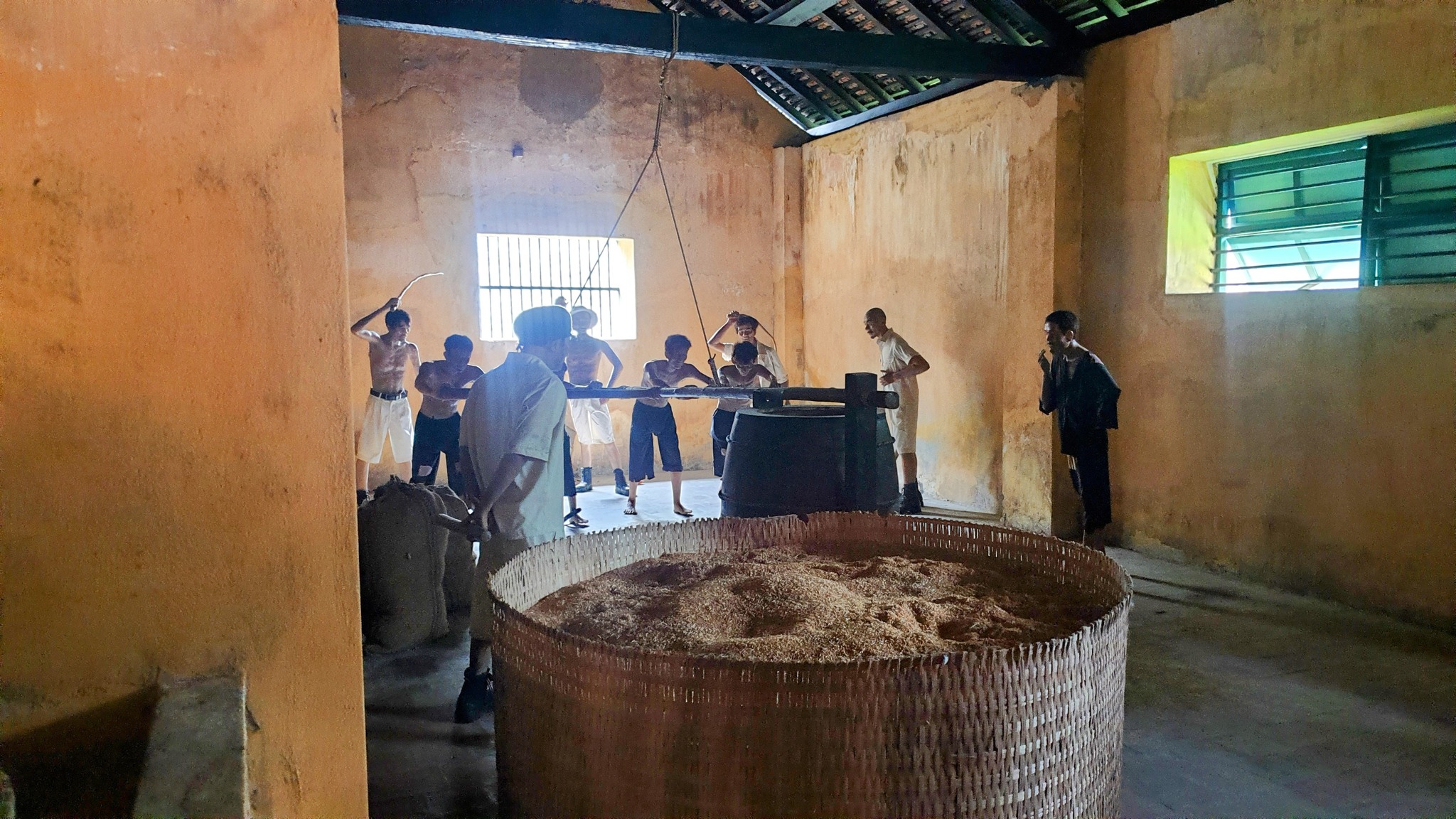
- A rice-milling dungeon (later transformed into an infirmary under the U.S.–Saigon regime)
Additional facilities such as a club room, barbershop, kitchen, canteen, chapel, lecture hall, warehouse, warden’s office, and gardens

A Place that Held Generations of Vietnamese Patriots
Phu Hai Camp witnessed the imprisonment of multiple generations of revolutionary and patriotic prisoners:
Early anti-French scholars and activists such as Ngô Đức Kế, Đặng Nguyên Cẩn, Lã Xuân Oai, Phan Chu Trinh
Prominent revolutionaries and national leaders including Tôn Đức Thắng, Phạm Hùng, Phạm Văn Đồng
Later, student and youth activists who took to the streets against the U.S.–Thiệu regime
In 1932, the first Communist Party cell within the Côn Đảo prison system was established here, later becoming the Côn Đảo Party Committee.
Phu Hai was also an intellectual cradle where prisoners secretly organized classes on culture, politics, Marxism–Leninism, and revolutionary theory. A special course following the curriculum of the Oriental University was taught by Professor Trần Văn Giàu. Newspapers such as “Tiến Lên” and “Ý Kiến Chung” were circulated from here in the mid-1930s.
Notable Historical Events and Stories
The Stone-Breaking Yard – Imprinted with the Spirit of Phan Chu Trinh
At this site, patriot Phan Chu Trinh composed the famous poem “Đập đá Côn Lôn” (“Breaking Rocks on Côn Lôn”), a timeless symbol of resilient revolutionary spirit.
The Rice-Milling Dungeon – A Place of Extreme Hardship
This dark, airless underground chamber forced prisoners to mill rice manually—a labor so brutal that many died from exhaustion or respiratory disease.
Here, Tôn Đức Thắng was later reassigned to repair boats at Sở Lưới. In 1945, he famously operated the boat “Giải Phóng”, helping transport revolutionaries back to the mainland.
The Historic Escape from Cell No. 3 (1966)
Cell No. 3—reserved for death-row prisoners—became the site of the first successful jailbreak in Côn Đảo’s history.
Three political prisoners—Lê Văn Việt, Lê Hồng Tư, and Phạm Văn Dẫu—broke through the roof and escaped on the night of 12 October 1966, taking advantage of a brief gap during guard shift changes.
Although they were eventually recaptured and killed under torture, their daring escape shook the entire prison system, forcing guards to install barbed wire across all cells afterward.
Phu Hai – A Cradle of Revolutionary Willpower
As the starting point of the 1957 anti-renunciation movement, Phu Hai became a center of resistance where political prisoners united to defend their ideals.
Here, they confronted:
- Forced labor
- Brutal oppression and psychological coercion
- Schemes by the U.S.–Saigon regime to force political prisoners to renounce the Communist Party
Instead of bowing to repression, the prisoners formed highly organized structures, carried out strategic struggles, and defended the dignity and ideology of revolutionary fighters.
Historical Recognition and Cultural Value
With 113 years of existence, Phu Hai Prison Camp preserves countless stories of courage and sacrifice.
- April 29, 1979: The Ministry of Culture and Information issued Decision 54-VHQĐ, recognizing Phu Hai Camp as a Nationally Important Historic Site.
- May 10, 2012: The Prime Minister issued Decision 548/QĐ-TTg, designating the entire Côn Đảo Prison System—including Phu Hai—as a National Special Historic Site.
Phu Hai Today – A Testament to Revolutionary Strength
Today, Phu Hai Prison Camp stands as:
- A solemn witness to colonial brutality
- A cradle of revolutionary education
- A symbol of unbreakable resolve and patriotic courage
Every corner of this prison echoes the sacrifices of countless Vietnamese revolutionaries. Visiting Phu Hai is not only a lesson in history but also a journey of reflection on the immense price paid for freedom.