Phu Hai Prison is one of the oldest confinement facilities within the notorious prison system established by the French on Con Dao. From the French colonial era to the U.S.–Saigon regime, this prison held many of Vietnam’s most prominent revolutionary leaders. It is regarded as a cradle of ideological training, political education, and cultural development for numerous Party and State leaders.
The Oldest Colonial-Era Prison
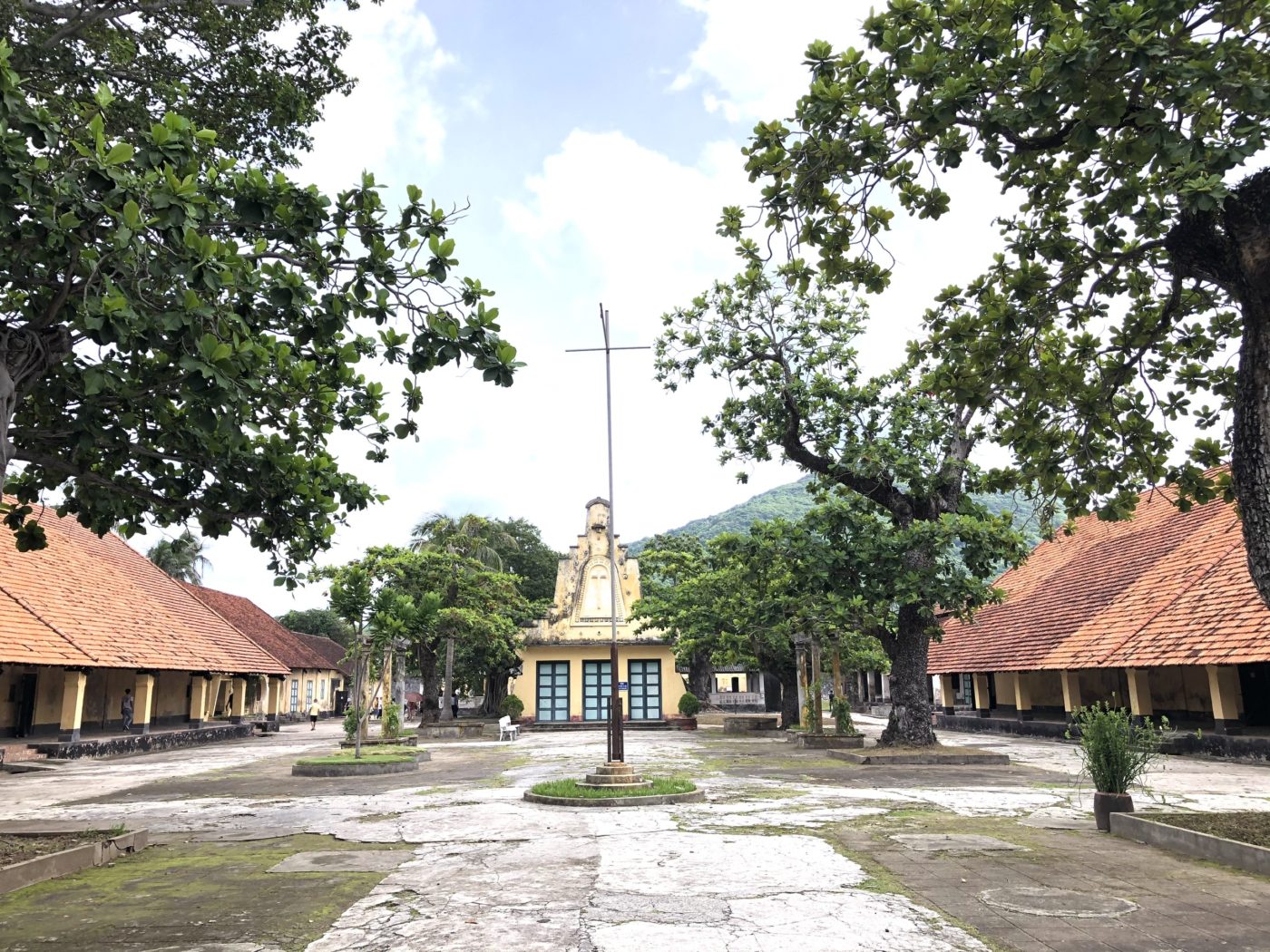
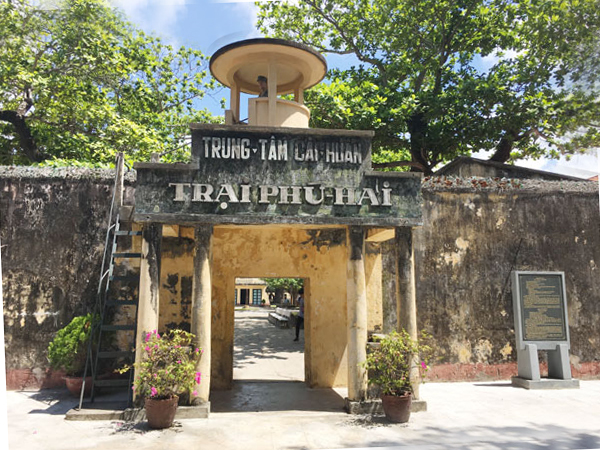
Located in the center of Con Son Town on Le Van Viet Street, just 50 meters from the shoreline, Phu Hai Prison is the oldest prison on the island. Established by the French in 1862 and built solidly between 1889 and 1896, it was originally named Bange 1, later Lao 2, Camp 2, and finally Phu Hai Prison after the 1973 Paris Peace Accords.
Covering more than 12,000 m², the compound housed 10 collective cells, one execution chamber, 20 stone solitary cells, two rice-grinding pits which also served as punishment rooms, and an area for forced stone-breaking labor. The facility included structures such as a dining hall, kitchen, club house, barber shop, warehouse, chapel, well, infirmary, and administrative offices—most of which existed merely to deceive international human rights observers.
During the resistance against the French, the left wing of cells (No. 6–10) was used exclusively to isolate “dangerous elements” from March 1951 onward. This area became the headquarters of the prisoner federation and the clandestine island party committee between 1951 and 1952. Although political prisoners were not officially required to perform hard labor, the oppressive conditions led them to organize secret classes on Marxist–Leninist theory, culture, and political training—structured from elementary to advanced levels. Many revolutionaries who later became key leaders of Vietnam were intellectually shaped here. Prisoners also launched numerous struggles, from refusing to sign reactionary petitions to resisting forced salutes and rejecting the prison’s oppressive regulations.
Footprints of Remarkable Revolutionaries
Over time, Phu Hai Prison held some of Vietnam’s most renowned patriots and revolutionaries: Huynh Thuc Khang, Phan Chu Trinh, President Ton Duc Thang, General Secretary Le Duan, Le Duc Tho, Pham Hung, Nguyen An Ninh, and many others. Visiting the site today, one can still feel the indomitable spirit that echoes through its walls.
One of the most symbolic locations is the stone-breaking yard, where patriot Phan Chu Trinh composed the famous poem “Breaking Rocks in Con Lon”:
“A man should stand proudly on Con Lon’s land,
Strong enough to shake mountains and scar the earth…
Those who mend the sky, even if they stumble,
See hardship as nothing but a trivial test.”
If the stone yard reflects the prisoners’ resilience, then the rice-grinding pits immortalize the legacy of steadfast revolutionary Ton Duc Thang. The French forced prisoners to grind rice in sealed pits where many died from respiratory illnesses or violent beatings. Recognizing Ton Duc Thang’s skill as a mechanic, the French assigned him to repair boats at the Marine Station. In 1945, the canoe he repaired—named Giai Phong (Liberation)—was used to transport key revolutionary leaders back to the mainland.
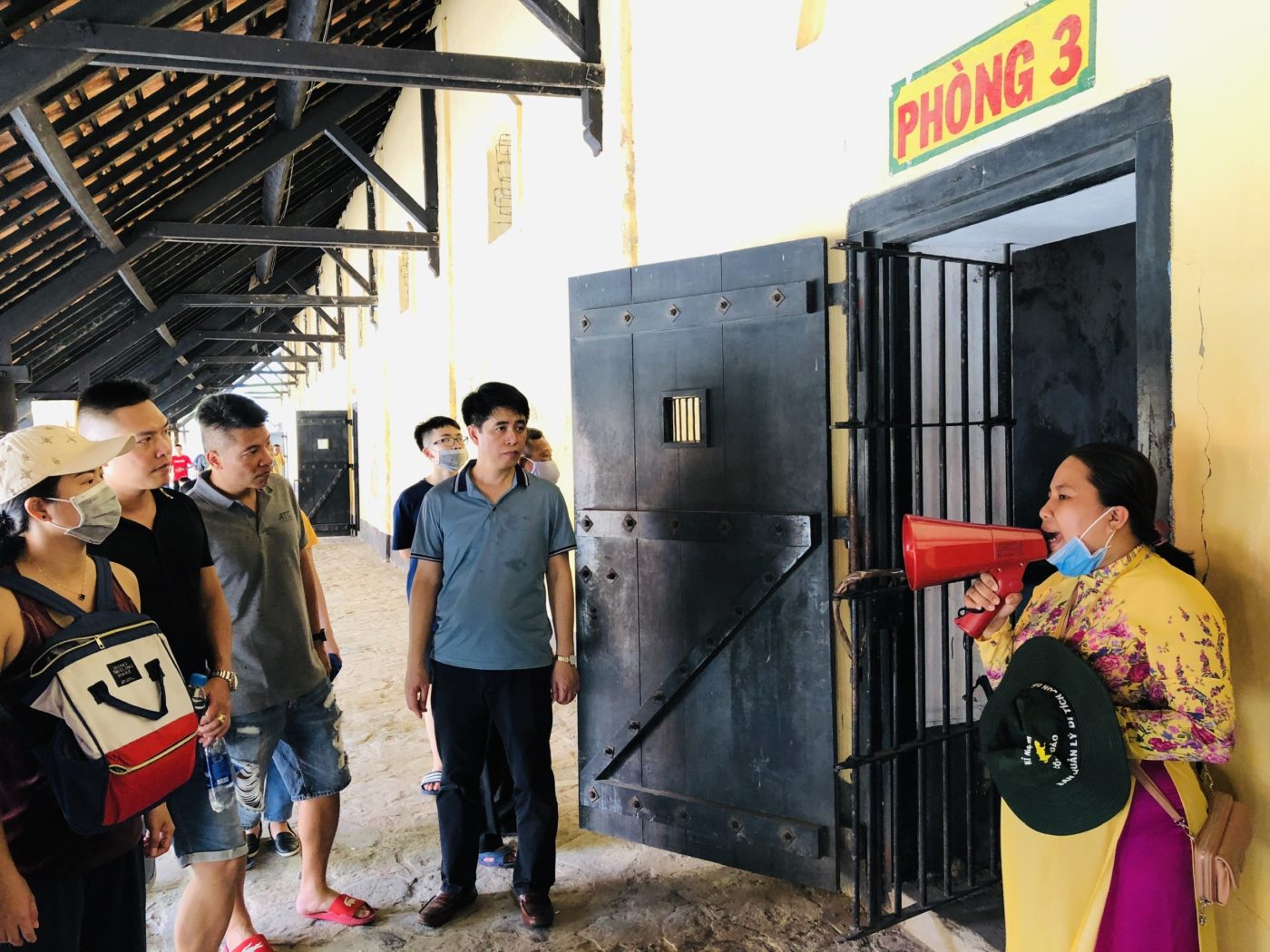
Another legendary event was the daring escape from Cell No. 3, the first documented escape in Con Dao Prison’s history. Cell No. 3 housed death-row prisoners under strict surveillance. Yet on October 12, 1966, revolutionary fighter Le Van Viet, a commando unit leader from Saigon–Gia Dinh, together with comrades Le Hong Tu and Pham Van Dau, broke through the ceiling during a brief gap in the guards’ shift change. Though they temporarily evaded capture, all three were eventually found, brutally tortured, and killed. After this escape, the guards reinforced all cells with barbed wire.