


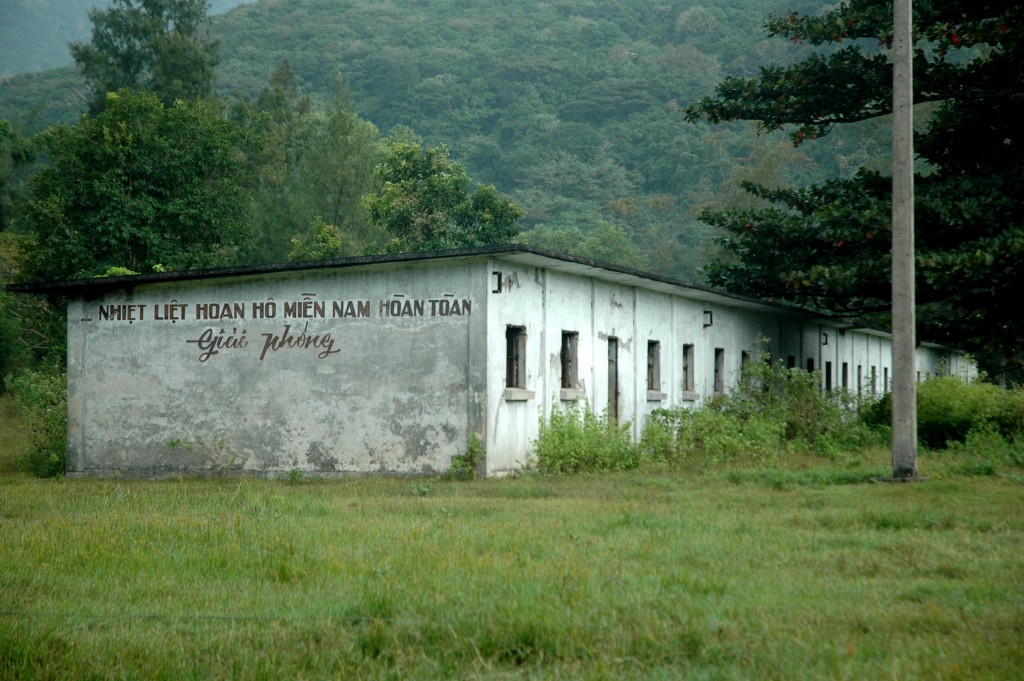
Phu Hung Prison Camp, commonly known as Camp 8, was one of four prison facilities built by the U.S.–Saigon regime during the late 1960s as part of the “Vietnamization” strategy. Construction began in late 1968 and was partially completed in 1972.
The camp covered more than 26,200 m², designed to include 20 large detention rooms (115 m² each), divided into two facing blocks with 10 rooms and 4 solitary cells per block. Only 10 rooms were completed; the rest remained unfinished after the signing of the Paris Peace Accords.
Camp 8 was intended to detain patriots and political prisoners, especially those who resisted forced flag-salute ceremonies or opposed the regime. The authorities intensified psychological and physical repression to break the prisoners’ revolutionary spirit.
Harsh Conditions and Daily Deprivation
The camp typically held around 800 prisoners, but after the Paris Agreement, the number rose to as many as 1,500.
Life inside Camp 8 was extremely harsh:
- Only six prisoners were allowed outside each day to carry water for the entire camp
- Daily water rations were limited to two small gigo cans per person, reduced to one during protest periods
- Food was poor in quality—mostly dried or spoiled items, bitter fish sauce, and almost no vegetables
Beatings were frequent; even during routine tasks such as collecting meals or water, prisoners were brutally assaulted
Amid these conditions, prisoners organized collective resistance movements and presented demands, such as:
- Ending beatings and torture
- Adequate food and access to vegetables
- Medical treatment for the sick
- Daily access to sunlight and fresh air
- Proper clothing distribution

Waves of Resistance (1972–1973)
From late July 1972, prisoners at Camp 8 launched continuous protests in various forms, demanding humane treatment. The authorities responded by tightening restrictions, cutting water supplies, increasing confinement, and escalating acts of violence.
After the Paris Peace Accords of 1973, prisoners shifted their demands toward:
- Publicizing the terms of the Agreement and Protocol
- Immediate repatriation under the prisoner exchange provisions
- Abolition of tiger cages, stone pits, and forced labor
- Persistent collective resistance forced the regime to concede and address several prisoner demands.
Recognition as a National Special Historic Site
The historical significance of Phu Hung Prison Camp has been formally acknowledged:
April 29, 1979: The Ministry of Culture and Information issued Decision 54-VHQĐ, designating Phu Hung Prison Camp as a Nationally Important Historic Site.
May 10, 2012: The Prime Minister issued Decision 548/QĐ-TTg, officially recognizing the site as a National Special Historic Site.
Phu Hung Today – A Place of Memory and Reflection
Today, the Phu Hung Prison Camp stands as a solemn reminder of the suffering endured by political prisoners and their unwavering determination in the face of oppression.
Visitors to the site can:
- Understand the brutal conditions imposed on prisoners
- Learn about the powerful resistance movements that emerged within the camp
- Reflect on the sacrifices that contributed to the freedom and peace enjoyed in Vietnam today
Every remaining structure—every wall and cell—carries stories of resilience, courage, and the unbreakable spirit of those who fought for independence.



)