



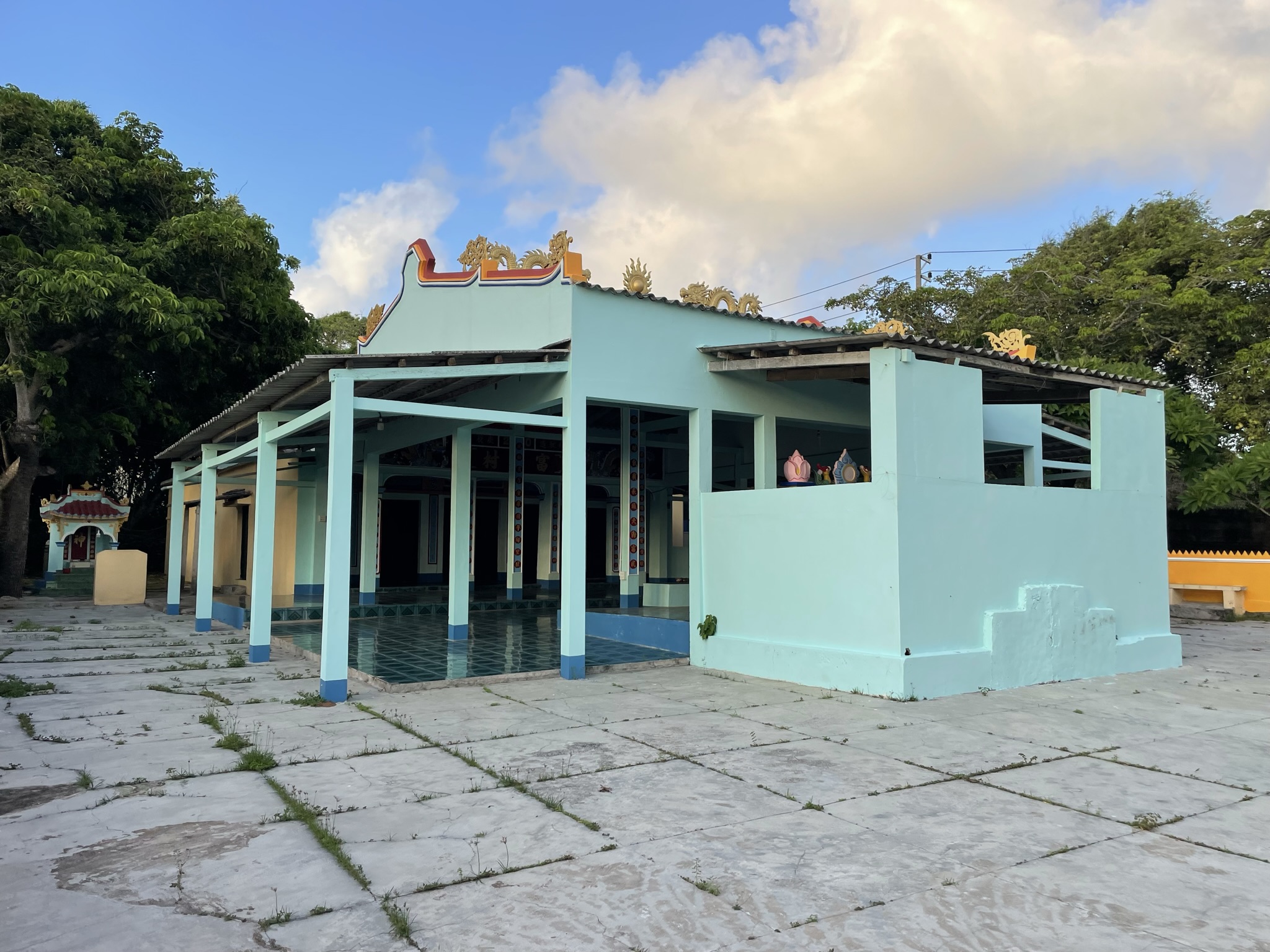
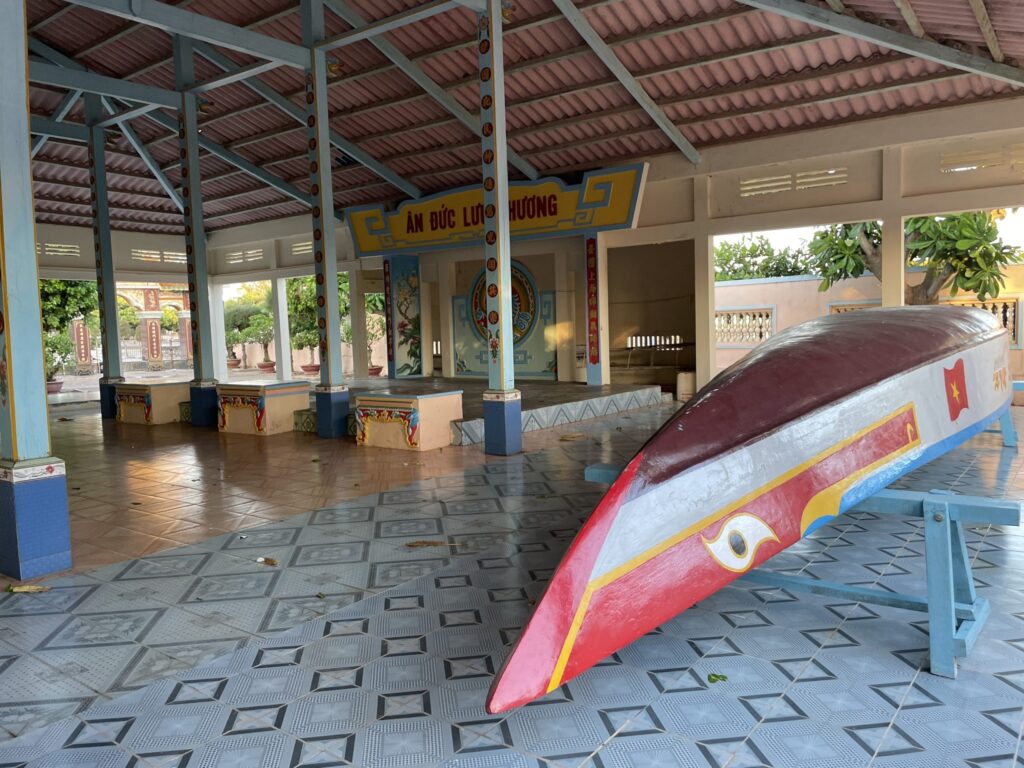
Phu My Communal House, also known locally as Phu Village Shrine, is located in Phu My Village—formed from the merger of the former villages Phu Ninh and My Xuyen—in Ngu Phung Commune. The communal house was originally built in 1813, making it one of the oldest cultural structures on Phu Quy Island.
Phu My Village sits along the inter-communal road and covers an area of 40,000 m². Its boundaries are as follows:
- East: adjacent to the coastal hamlet of Coi (Phu Long Hamlet)
- North & West: bordering Long Hai Commune
- South: bordering An Hoa Village (Phu An Hamlet, Ngu Phung Commune)
When the two villages were officially merged on February 25, 1909, Phu My had a population of only about 200 residents, who lived primarily by farming, livestock raising, and near-shore net sweeping. Life during those early days was extremely challenging.
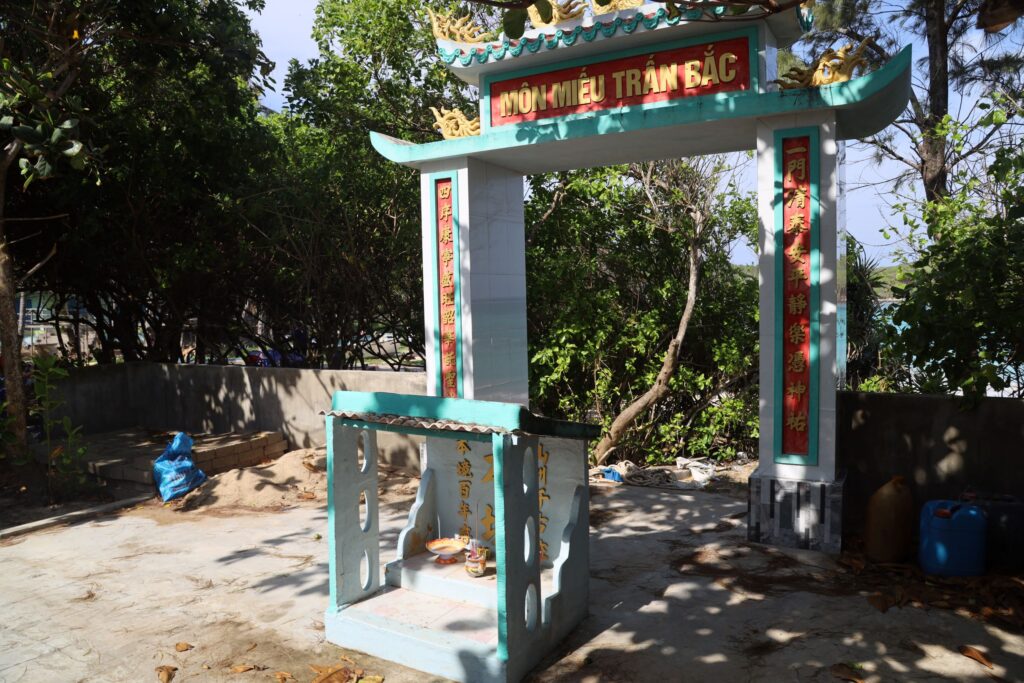
One notable feature when surveying spiritual and worship sites on Phu Quy Island is that most are referred to by locals as “miếu” (shrines) rather than “đình” (communal houses), even when they function as communal temples worshipping village tutelary deities. For example, the My Khe Village Tutelary Shrine and Phu Village Shrine both serve the role of communal houses but are still called “miếu,” with the official name on the entrance gate using this term.
The original royal decrees (sắc phong) of Phu My Communal House were unfortunately lost. Today, the only remaining decree preserved in the area is the imperial edict honoring Bach Ma Thai Giam, kept at the Bach Ma Thai Giam Shrine.
Every year, Phu My Village holds two main ceremonial rites at the communal house:
- Spring Festival (Tế Xuân): held in the first lunar month
- Autumn Festival (Tế Thu): held in the seventh lunar month
These ceremonies honor the village’s tutelary deity and preserve the long-standing cultural traditions of the community.


)