The Phu Quy Special Zone possesses ideal natural conditions for marine aquaculture, allowing the cultivation of an impressive range of species such as grouper, cobia, lobster, emperor crab, tiger grouper, sea bass, and various unique local mollusks including oc vu nang, oc ban tay, oc ban chan, oc hoang hau, oc giac sat and sea urchins.
Aquaculture on Phu Quy Island began in the early 1990s with only a few small floating cages. Today, the island has 72 aquaculture facilities covering 14,484.9 m², including 61 households raising fish in floating cages (9,301 m²) and 11 tidal rock ponds (5,183.9 m²). Key species cultivated include grouper, cobia, and lobster, with an average annual output of around 100 tons.
The island also hosts dozens of seafood purchasing, processing, and export establishments. Phu Quy’s fishing fleet includes 1,735 vessels with 7,540 workers; among them, 594 boats have engines over 90 horsepower, including 130 service boats specializing in seafood collection and processing at sea. The island’s average annual seafood catch exceeds 32,000 tons, and in 2024 alone it reached over 36,000 tons.
Local specialties such as moon crabs, emperor crabs, red crabs, baby painted lobsters, and countless species of unique mollusks are bred and raised across floating cage systems throughout the island.
Before the COVID-19 pandemic, most seafood was exported to markets such as Taiwan and China. During the pandemic, consumption shifted to domestic provinces like Dong Nai, Binh Duong, and Ho Chi Minh City, though market prices were unstable. However, since high-speed ferries began transporting passengers more frequently to Phu Quy, tourism has grown rapidly—bringing increasing numbers of visitors who enjoy tasting fresh seafood directly at the floating farms.
Lach Du Floating Village – A Unique Aquaculture Hamlet at Sea
From Phu Lan Beach in Long Hai Commune, it takes about 30 minutes by fishing boat to reach the tranquil waters of Lach Du Bay, where dozens of floating huts cluster together to form a “village” drifting in the middle of the sea, known locally as Lach Du Floating Village.
Located in a sheltered bay with calm waves and crystal-clear turquoise water, the seabed reveals a mosaic of white and colorful coral reefs. This vibrant coral system spreads across nearly one hectare of aquaculture water surface bordering Tam Thanh and Long Hai communes.
Among the many fish farmers here, Mr. Vo Sinh (42) stands out with over 20 years of experience raising high-value grouper species such as red grouper and black grouper. He currently manages 35 floating cages, with each red grouper cycle lasting about 16 months. Thanks to strong demand from seafood restaurants and traders in recent years, red grouper prices have reached up to 800,000 VND/kg, typically stabilizing between 650,000–700,000 VND/kg. Black grouper sells for about 400,000 VND/kg. Each harvest, he produces nearly 2 tons of grouper, earning profits of up to 800 million VND per year.
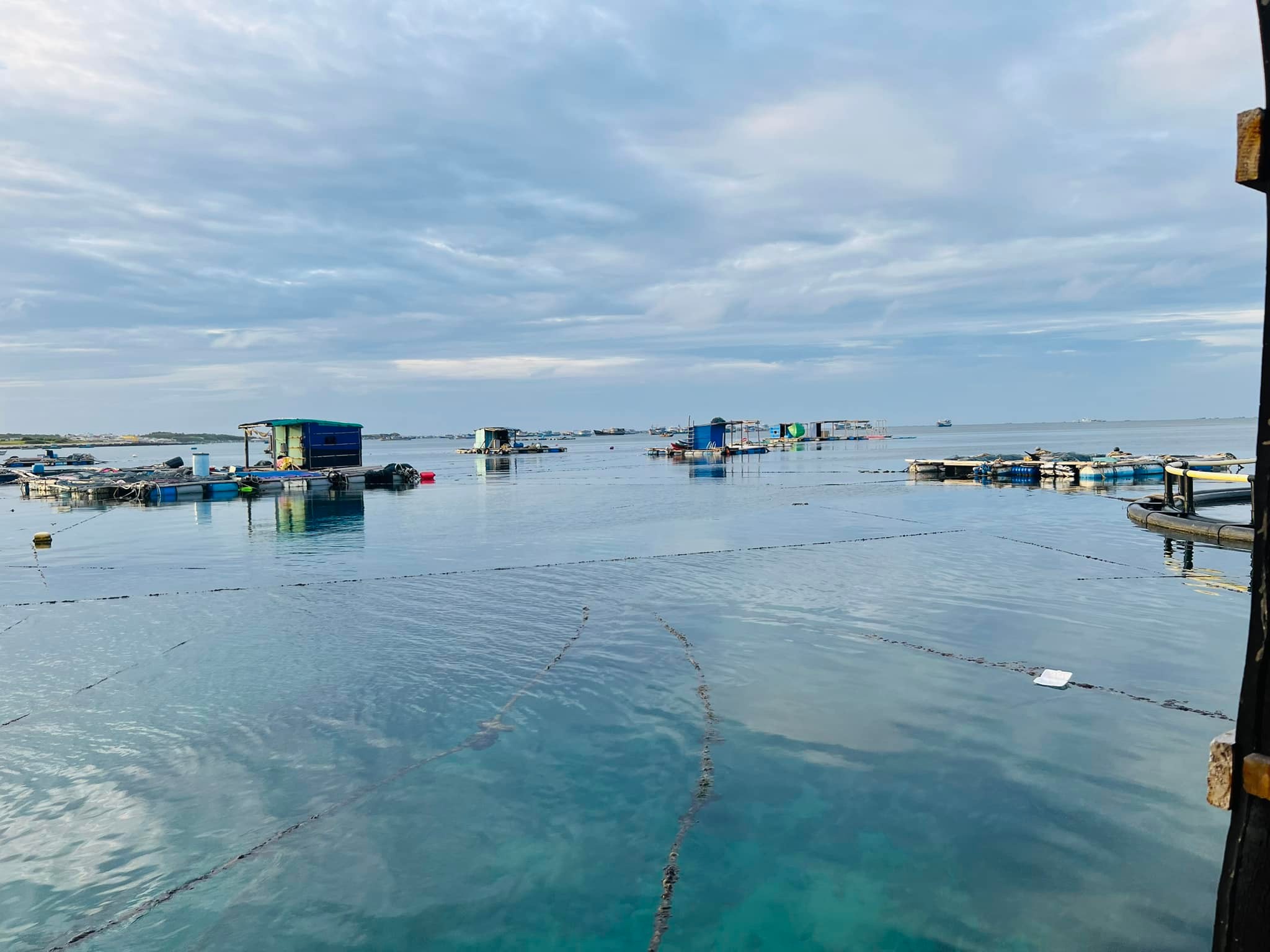
Today, Lach Du is home to hundreds of floating cages that contribute significantly to improving the livelihood of local residents. On weekends and holidays, the floating village often becomes crowded, welcoming hundreds of visitors eager to explore.
Around eight cage owners now combine aquaculture with tourism services, offering fresh seafood meals and sightseeing on their floating platforms. What started as a secondary livelihood has naturally evolved into a thriving tourism product, thanks to fresh, fairly priced seafood and picturesque seascapes that attract visitors from the mainland.
Recognizing the potential of green and sustainable tourism, Phu Quy authorities encourage cage owners to invest in essential aquaculture infrastructure as well as safe, eco-friendly visitor facilities. The goal is to integrate tourism with marine farming while protecting the environment and ensuring the safety of visitors exploring Lach Du’s floating village and enjoying its fresh seafood.
The Rock Tide Pools of Long Hai – The “Vietnamese Colosseum” by the Sea
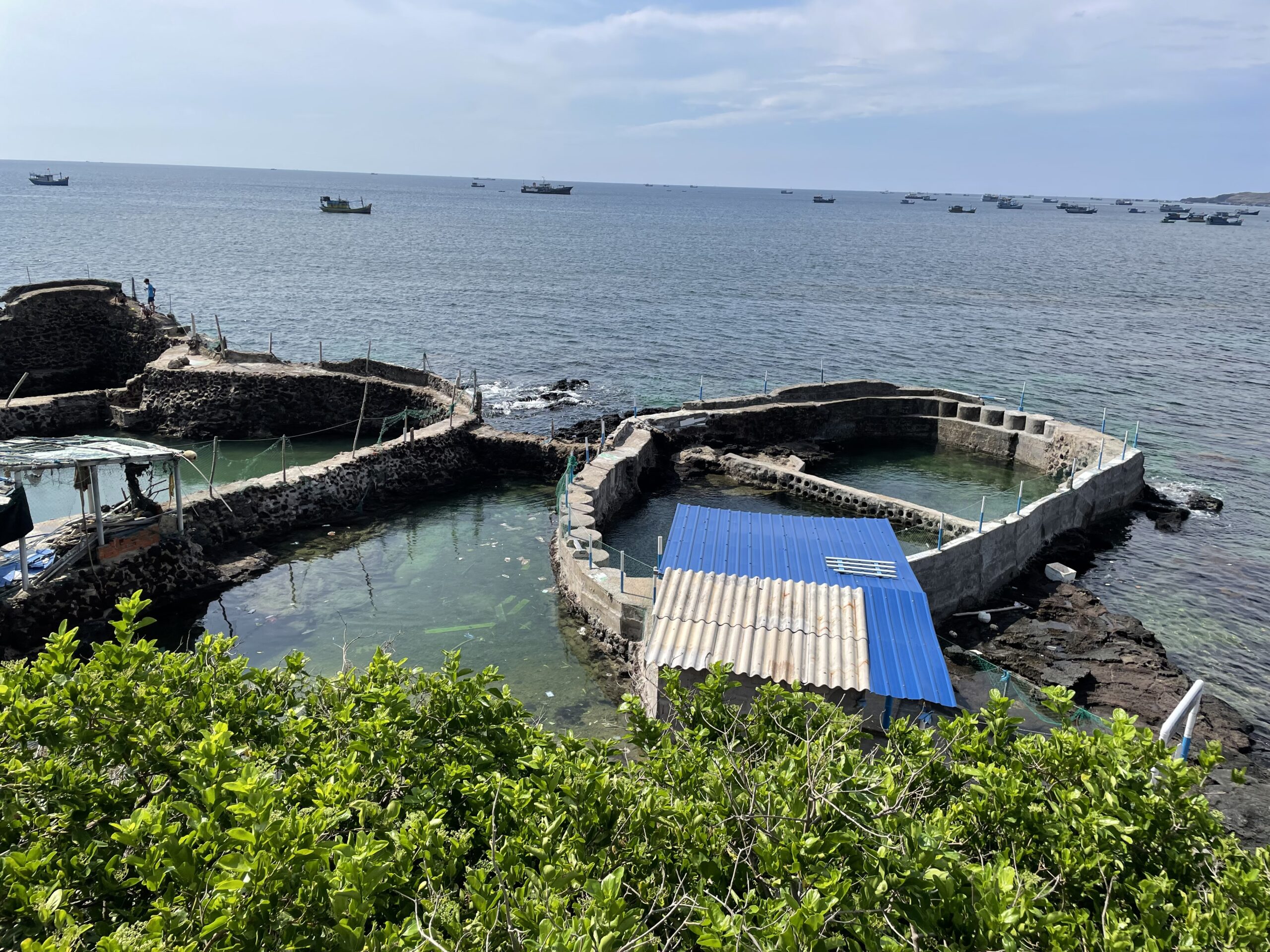
Another unique attraction—especially beloved by young travelers—is the system of rock tide pools in Long Hai Commune. The island has 11 stone-and-cement tide pools built right along the shoreline, which naturally fill and drain with seawater as the tides rise and fall.
Viewed from above, these interconnected pools form an eye-catching geometric complex that netizens affectionately call the “Vietnamese Roman Colosseum.” For years, the pools were abandoned, weathered by sun, wind, and seawater—accumulating moss and algae, creating an ancient, photogenic aesthetic.
Over the past 2–3 years, tourists visiting Phu Quy—especially those stopping at Sai Nai Master’s Tomb—often flock here to take photographs. However, in early 2022, owners resumed aquaculture activities and fenced off the area for operational safety. Many of the picturesque “window frames” and old walls have since been rebuilt into sturdy huts for equipment and water pumps.
Currently, visitors can only take photos from the outside unless they personally know a local fish farmer who can grant access.
Compiled by Travelin.vn