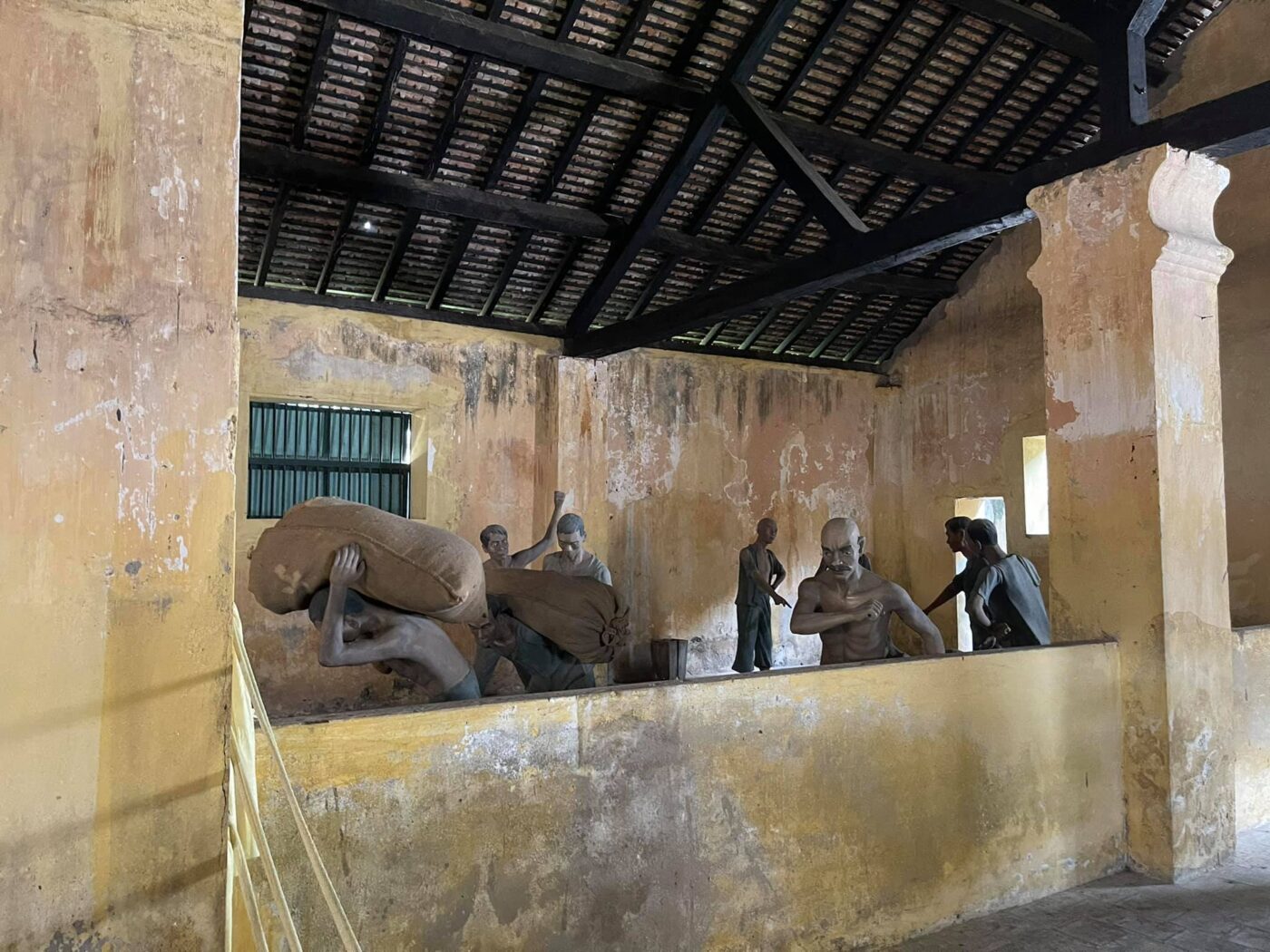
From the establishment of the Côn Đảo prison system by French colonialists until the island’s complete liberation (February 1, 1862 – May 1, 1975), Côn Đảo endured 113 dark years of persecution—standing as a living indictment against the colonial and imperialist policies imposed on Vietnam.
In March 1862, shortly after the prison was created, the French exiled the first 50 prisoners to Côn Đảo, followed by thousands more. They were farmers and patriotic scholars involved in movements such as the Cần Vương uprising, Đông Du, Đông Kinh Nghĩa Thục, the Central Vietnam Tax Resistance, and uprisings across Cochinchina. Among them were notable figures such as Lã Xuân Oai, Nguyễn Thiện Kế, Phan Chu Trinh, Huỳnh Thúc Kháng, Phan Thúc Duyện, Dương Đình Thách, Trương Bá Huy, Ngô Đức Kế, Phạm Cao Chẩm, Trần Trọng Cung, and Trần Cao Vân.
In the following decades, tens of thousands of communist cadres and party members were imprisoned, including Nguyễn Hới, Ngô Gia Tự, Nguyễn Văn Cừ, Tạ Uyên, Tống Văn Trân, Tôn Đức Thắng, Lê Hồng Phong, Phạm Văn Đồng, Hà Huy Giáp, Lê Duẩn, Phạm Hùng, Lê Văn Lương, Lê Đức Thọ, Nguyễn Văn Linh, and Nguyễn Duy Trinh.
In September 1945, more than 2,000 political prisoners rose up, seized control of the island’s administration, and were later brought back to the mainland to join the resistance.
However, on April 18, 1946, French colonial forces reoccupied Côn Đảo and reinstated the prison. The French High Commissioner in Indochina ordered the transfer of more inmates to Côn Đảo to ease overcrowding and unrest in the Saigon Central Prison.
At the end of July 1954, a large-scale hunger strike demanding prisoner exchanges under the Geneva Agreement broke out. The French were forced to hand over 593 prisoners of war and 1,150 political prisoners to the Government of the Democratic Republic of Vietnam. Côn Đảo still held 603 judicial prisoners, including several dozen revolutionaries who had been deliberately sentenced as “criminal offenders” and therefore not eligible for repatriation.
In March 1955, the French transferred control of the Côn Đảo prison to the Saigon regime.
In 1957, the U.S.–Diem administration expanded the prison system. That year alone, they deported 10 shiploads with a total of 3,080 prisoners to Côn Đảo.
As the U.S.–Saigon forces escalated the war, the number of detainees steadily increased, reaching up to 10,000 prisoners between 1967 and 1969. Among them were women, students, schoolchildren, and even infants aged 1 to 8 months who were imprisoned alongside their mothers.
After the Paris Peace Accords (January 1973), several waves of prisoner reclassification took place. The number of inmates on Côn Đảo fluctuated around 8,000 until liberation.
According to the handwritten notes of comrade Tịnh Văn Lâu, Interim Party Secretary on the day of liberation (May 1, 1975), Côn Đảo had 7,448 prisoners, including 4,243 political prisoners, of whom 494 were women.
“We were overwhelmed with joy and tears. Our comrades—our own flesh and blood—who had long been imprisoned in this notorious hell on earth, had risen up and liberated themselves. They accomplished on our behalf an extraordinarily difficult mission entrusted to us by the Politburo.”
These were the words of comrade Tường, Political Commissar of the Navy vessel that first arrived at Côn Đảo at dawn on May 4, 1975, as part of the liberation fleet.
Côn Đảo today stands as a sacred land, bearing witness to the indomitable courage and sacrifice of countless heroes, revolutionaries, and patriotic compatriots throughout both resistance wars against French colonialism and American imperialism.