Commemorating the 115th anniversary of the birth of Comrade Hoàng Quốc Việt (1905–2020). “The Revolutionary Marks of Comrade Hoàng Quốc Việt at the Con Dao Prison”
Comrade Hoàng Quốc Việt was one of the eminent early leaders of the Communist Party of Vietnam, a devoted revolutionary who made significant contributions to the Party and to the nation. Throughout nearly 70 years of revolutionary activity, he held many important positions entrusted to him by the Party, the State and the People. Among his major responsibilities was organizing and leading the newly founded People’s Procuracy, serving as the first Prosecutor General of the Supreme People’s Procuracy from 1960 to 1976. During 16 consecutive years in this position, he greatly contributed to the formation and development of Vietnam’s prosecutorial sector.
Throughout his revolutionary journey, Comrade Hoàng Quốc Việt left deep imprints in many localities, including Bà Rịa – Vũng Tàu Province. Especially meaningful are the years he spent in Con Dao Prison, where he left behind a remarkable legacy of political struggle after being sentenced to life imprisonment with exile during the period 1931–1936.
Con Dao – A Land of Heroic History
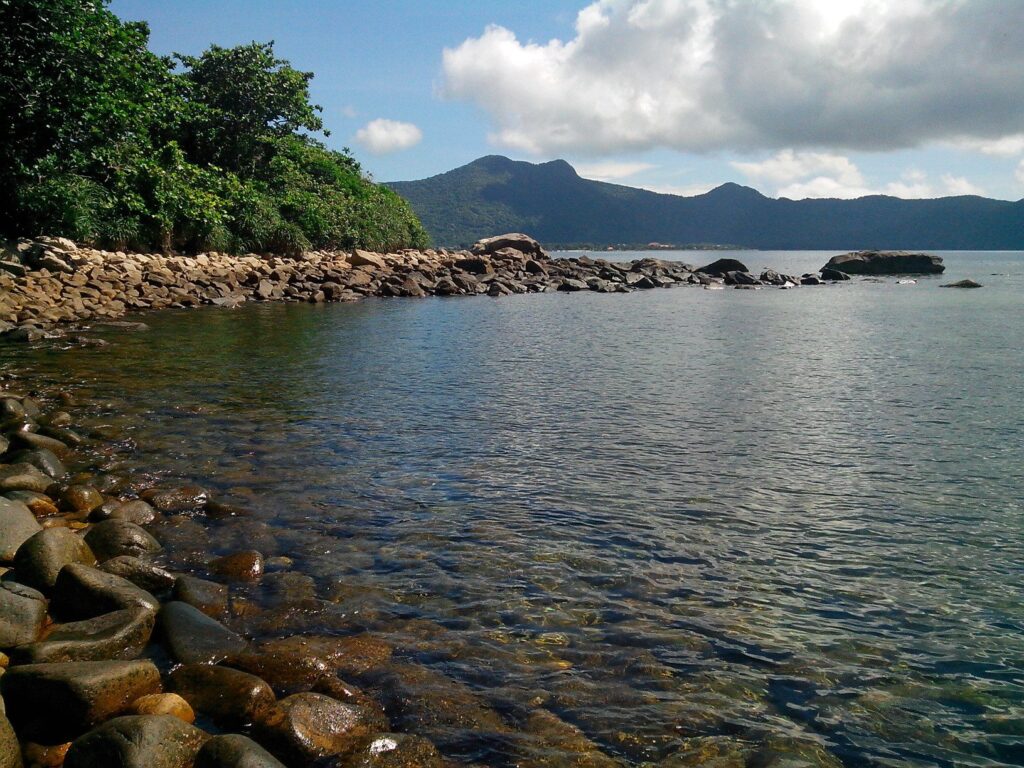
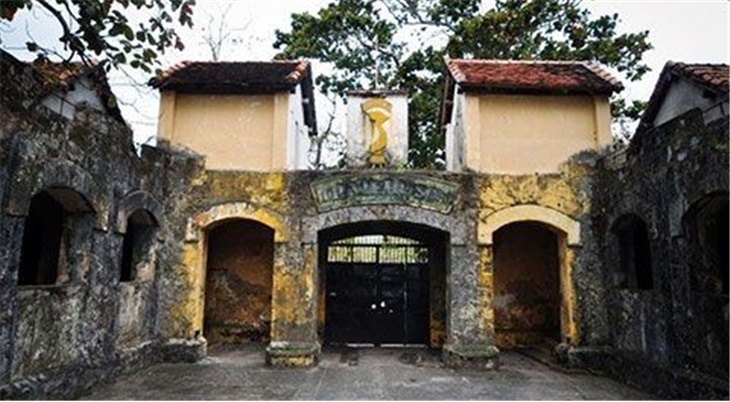
Visiting Con Dao today is to step into a living museum of Vietnam’s heroic past, where historical relics remain intact. Con Dao Prison—established on 1 February 1862 by Governor Bonard of Cochinchina—became a vast detention complex incarcerating nearly 2,000 resilient revolutionaries over more than a century.
Today, Con Dao is not only a national revolutionary relic but also a sacred destination for both Vietnamese citizens and international visitors. As one of Vietnam’s specially recognized national sites, the Con Dao Prison system stands as the most concentrated example of colonial oppression—where French colonists and later the U.S.-backed Saigon regime brutally tortured, starved and enslaved political prisoners. Yet, this was also where the enemy trembled before the indomitable spirit and revolutionary determination of those they tried to destroy.
Con Dao Prison became a true “Communist School,” a place where communist fighters forged their will under the harshest circumstances, educating younger generations about patriotism and the unbroken revolutionary tradition.
Life and Revolutionary Path of Comrade Hoàng Quốc Việt
Comrade Hoàng Quốc Việt, born Hạ Bá Cang on 28 May 1905 in Bắc Ninh Province, excelled in his studies from an early age. His revolutionary awakening began in the 1920s, and by 1928 he had become a committed activist, joining the Vietnam Revolutionary Youth League and later participating in the founding efforts of the Vietnamese communist movement.
In early 1929, due to revolutionary activities, he was dismissed from work and entered a fully clandestine life of activism. He was entrusted with expanding the Party’s influence in the South, working alongside comrades Ngô Gia Tự and Lê Văn Lương, and even undertaking a dangerous mission to France to contact the French Communist Party. His memoirs recall this period as “the fiery days of youth,” when he found his ideal and devoted himself fully to the revolutionary cause.
Upon returning to Vietnam, he was soon arrested in 1930 and, together with many comrades—including Nguyễn Văn Cừ, Lê Duẩn, Phạm Văn Đồng and Lê Đức Thọ—was sentenced to life imprisonment with exile to Con Dao.
Revolutionary Struggle at Con Dao Prison
At Con Dao, Comrade Hoàng Quốc Việt was imprisoned at Banh II (Phu Son Camp), then the central hub of political prisoners belonging to various revolutionary movements. The urgent task for communist inmates was to unify political tendencies, organize collective struggle, demand improved conditions, protect the lives of Party cadres, and establish educational activities to train future leaders.
Because forming an official communist cell at Banh II was initially difficult, political prisoners established a “Disciplinary Committee” in each block and a unified prison-wide leadership. This leadership, which the prison administrators had no choice but to accept, coordinated all activities—struggle, education, mutual aid, and negotiations with guards.
Comrade Hoàng Quốc Việt, along with comrades Phạm Hữu Lầu, Lương Khánh Thiện, Nguyễn Văn Cừ, and Phạm Văn Đồng, played key roles in leading the prison population. Their strategy was clear: organize struggles step by step, from low to high intensity, securing small victories to build momentum.
These efforts succeeded. Prisoners won the right to organize cultural activities, performances, and political study sessions. The monthly handwritten magazine “Ý Kiến Chung” (Common Opinion)—secretly produced under the leadership of Hoàng Quốc Việt—became the intellectual lifeline of political prisoners, offering political commentary, theoretical discussions, and updates on global affairs.
Confronting Hostility and Building Unity
Besides confronting colonial brutality, the communist prisoners also had to deal with violent anti-communist elements among Quốc Dân Đảng inmates, who attempted to assassinate key leaders such as Tôn Đức Thắng, Phạm Văn Đồng, and Hoàng Quốc Việt. Thanks to careful organization and solidarity, these plots were thwarted, exposing extremist factions and isolating them.
Through study sessions and ideological debate, many genuine patriots from the Quốc Dân Đảng came to embrace Marxism-Leninism and eventually joined the communist cause. Con Dao Prison became a place where revolutionary consciousness deepened and where many future Party leaders were shaped.
Release and Continued Contribution
In 1936, as the Popular Front rose to power in France, political prisoners at Con Dao mounted a powerful campaign demanding better conditions and amnesty. Under pressure from prisoners and progressive forces, the colonial administration was forced to release a number of political detainees.
Comrade Hoàng Quốc Việt returned to the mainland and immediately resumed revolutionary activities—organizing, recruiting, strengthening Party bases and promoting the revolutionary movement across the country.
Those who survived Con Dao emerged as some of the Party’s finest cadres—strong in theory, mature in struggle, and capable of leading the masses. Many became key leaders of the August Revolution of 1945 and later high-ranking figures in the Party and State.
An Unbreakable Revolutionary Spirit
From 1930 to 1936, despite being brutally tortured and imprisoned in the “Hell on Earth” that was Con Dao, Comrade Hoàng Quốc Việt never wavered. He remained steadfast in his oath: never betray the Party, never betray the nation. Every beating, every hunger strike, and every confrontation with the colonial authorities only strengthened his resolve.
For him and countless other comrades, the prison became a crucible of revolutionary will—“hot metal forged into steel.”
Con Dao Prison could not break the communist spirit. Instead, it forged revolutionaries. As President Hồ Chí Minh later affirmed:
“Turning misfortune into opportunity, our comrades used their time in prison to study and organize. Once again, this proves that the enemy’s barbaric repression could not halt the advance of the revolution—on the contrary, it acted as a fire that tempered the revolutionary will of our comrades. The revolution won; the imperialists were defeated.”
(Hồ Chí Minh Selected Works, Vol. II)