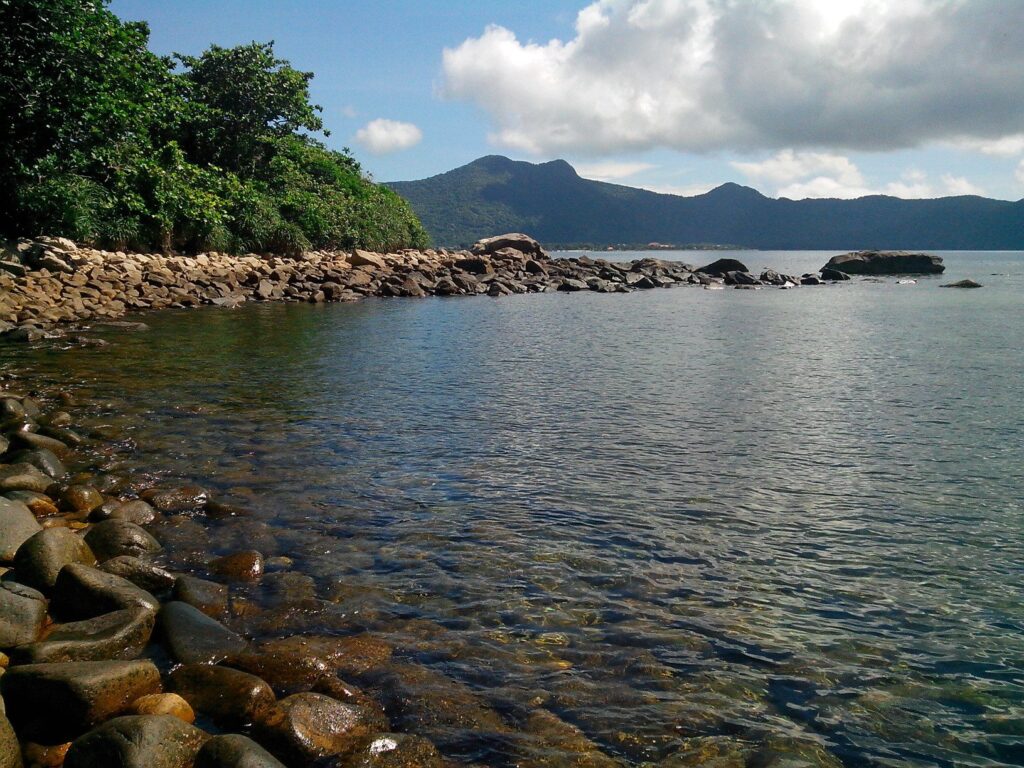
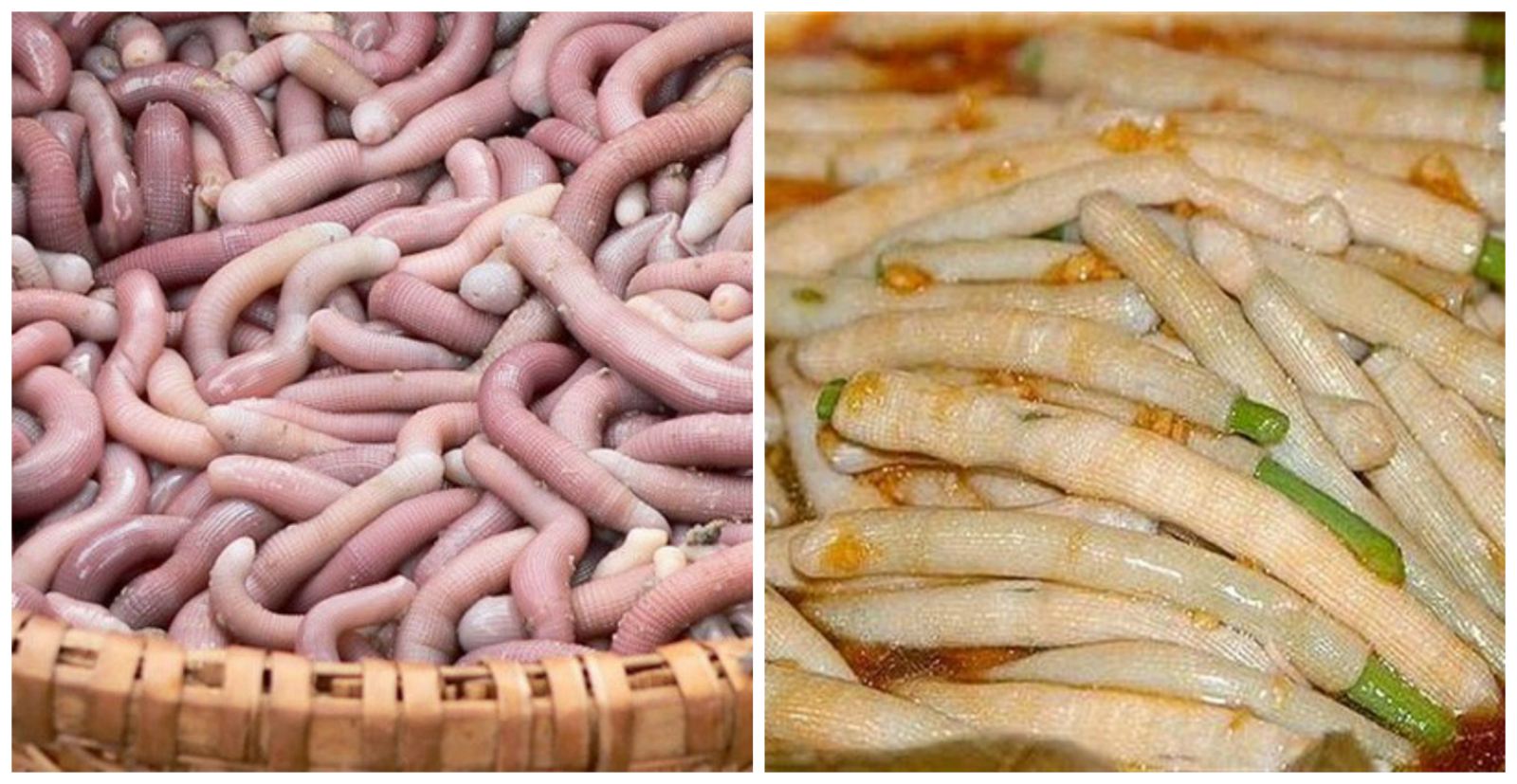
Sa sung is one of the most prized and expensive seafood specialties of Côn Đảo. Difficult to harvest and found in abundance only from March to July, this unique marine creature has become a culinary treasure for travelers seeking an authentic taste of the island.
What is sa sung?
Sa sung is a soft-bodied marine worm that lives deep in sandy beaches. It is valued for its natural sweetness, high nutritional content, and signature briny aroma. Only a few coastal regions in Vietnam are home to this species, and Côn Đảo is considered one of the most productive grounds.
Catching sa sung is extremely labor-intensive. Fishermen must look for winding trails left on the sand at low tide, then dig deep to find even a single worm. The cleaning process is equally meticulous: sa sung is soaked in seawater, its inner sand is removed, then it is rinsed several times with saltwater to eliminate the natural odor before cooking.
How sa sung is prepared
Fresh sa sung can be cooked into a range of dishes, including:
- Sa sung porridge
- Sweet-and-sour stir-fried sa sung
- Sa sung soup
- Crispy fried sa sung
- Sa sung salad
But the standout dish—the one most associated with Côn Đảo—is grilled sa sung. Lightly charred over charcoal, the meat turns crisp on the outside, chewy inside, and releases a rich umami flavor. Paired with lime-salt pepper or chili sauce, it’s a snack many travelers become addicted to after just one bite.
Visitors often buy dried sa sung as a souvenir because it is easy to store and transport.
- Fresh sa sung: around 500,000 VND/kg
- Dried sa sung: 1.8 – 2.4 million VND/kg depending on grade
You can find it at Côn Đảo Market, specialty shops, or local seafood stalls.

Nutritional and medicinal value
Historically, sa sung was considered a royal tribute due to its rarity and impressive nutritional profile. In traditional medicine, sa sung is believed to:
- Boost vitality and energy
- Strengthen the digestive system
- Soothe the lungs and reduce phlegmy coughs
- Support recovery from fatigue and weakness
In Vietnamese cuisine, dried sa sung is famously known as the “secret ingredient” that gives Hanoi–Nam Định phở its naturally sweet, savory broth—adding depth beyond beef bones alone.
Scientific studies show that sa sung is rich in:
- Essential amino acids (glycine, alanine, glutamine, succinic acid…)
- Taurine
- Vital minerals beneficial to overall health
Behavior & seasonal appearance
Fishermen say sa sung typically emerges on sandy surfaces during the first days of the lunar month and on full-moon tides. Though few have ever witnessed its movement, the zigzag marks left behind suggest that sa sung is more active at night and burrows back into the sand during daylight hours.