Đờn ca tài tử, also known as Southern Vietnamese Amateur Music, is a distinctive traditional art form of southern Vietnam that combines instrumental music and singing. It emerged in the late 19th century among ordinary people and rural communities, who gathered to play and sing after their working hours. From these informal community gatherings, Đờn ca tài tử gradually developed into an important musical tradition deeply connected with the culture, people, and landscape of southern Vietnam.
On December 5, 2013, UNESCO inscribed The Art of Đờn ca tài tử Music and Song in Southern Viet Nam on the Representative List of the Intangible Cultural Heritage of Humanity, recognizing its outstanding cultural value.
Origins and Development
Đờn ca tài tử emerged around the late 19th century and has roots in ritual music, Huế court music, and Vietnamese folk literature. In southern Vietnam, these musical elements were adapted and creatively developed to suit the cultural life of local communities.
The term “tài tử” refers to a talented musician, particularly someone skilled in traditional classical music. In its early form, the tradition primarily involved instrumental performance. Singing was introduced later, giving rise to the name đờn ca, meaning instrumental music and singing.
The tradition is distinctive because it combines elements of learned traditional music with an informal and accessible style of performance practiced by ordinary people.
The Cultural Space of Đờn ca tài tử
Đờn ca tài tử is not confined to a formal stage. Performances traditionally take place whenever musicians and enthusiasts have free time, during gatherings of friends and neighbors, or at community celebrations and family events.
The music may be heard in many different settings, from formal festivals to informal gatherings beneath coconut trees, beside waterways, or aboard boats. Spontaneity and intimacy are important characteristics of the tradition.
Participants are often friends, neighbors, or people who share a passion for traditional music. They gather to enjoy and exchange music as a refined leisure activity, and traditional performances generally place little emphasis on formal costumes or elaborate staging.
Musical Ensembles and Instruments
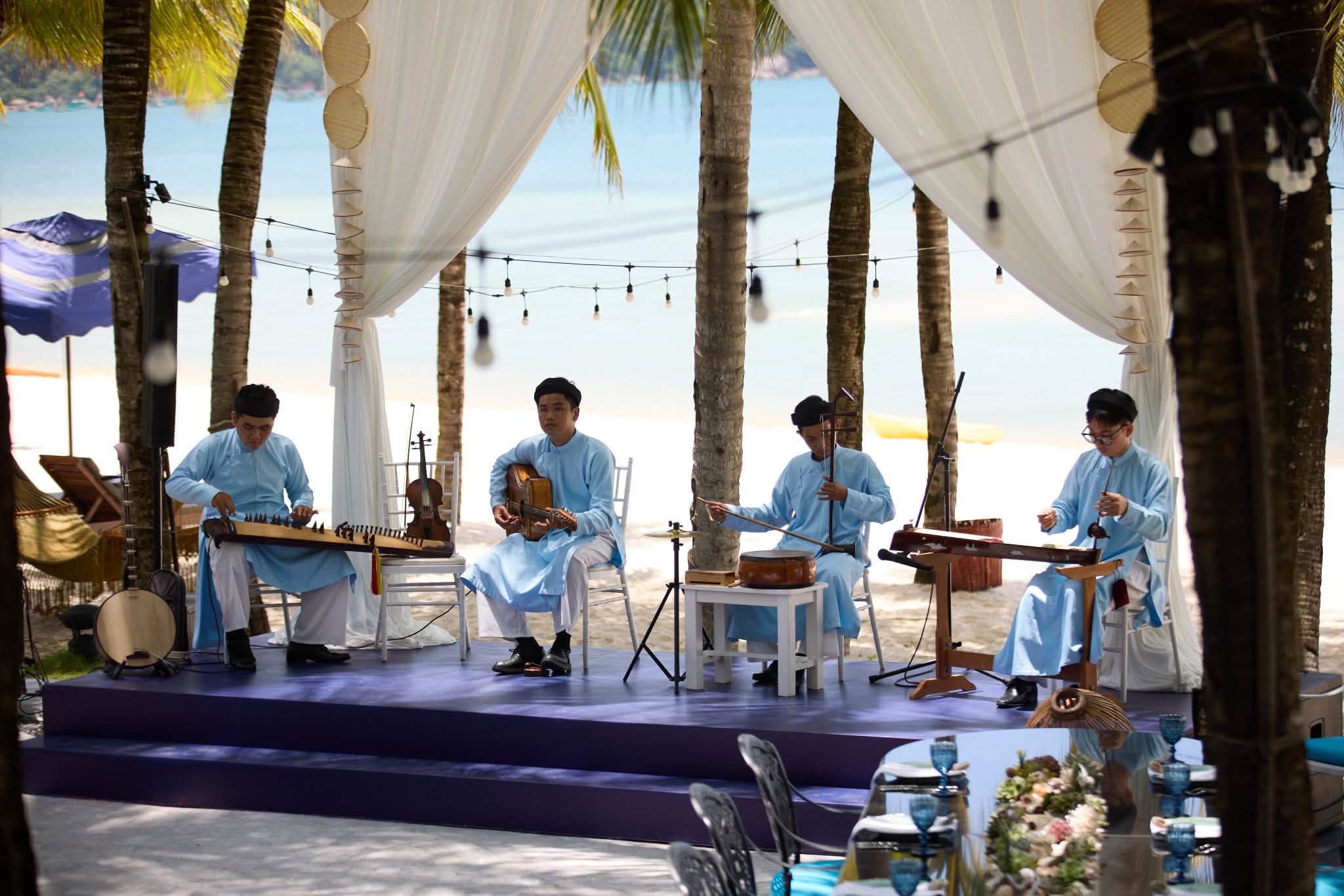
Traditional Đờn ca tài tử ensembles commonly feature a group of instruments known as the “tứ tuyệt”, consisting of the đờn kìm, đờn cò, đờn tranh, and đờn bầu.
Over time, other instruments were introduced, including the đờn tỳ bà, flute, bamboo flute, and modified fret guitar, commonly known as the guitar phím lõm.
The modified guitar was later used in some forms of performance in place of the đờn bầu, demonstrating how the tradition has adapted while maintaining its characteristic musical language.
The song loan, a small percussion instrument, is also used to maintain the rhythmic structure of performances.
The combination of these instruments creates the distinctive sound of Đờn ca tài tử, with instrumentalists and singers interacting closely to produce an expressive and often spontaneous performance.
Musical Repertoire
Đờn ca tài tử has a rich and diverse repertoire. According to traditional musicians and researchers, its core repertoire includes 20 foundational pieces, commonly referred to as “Nhị thập huyền tổ bản.”
These pieces are traditionally classified into different melodic modes:
- 3 pieces belonging to the Nam mode.
- 6 pieces belonging to the Bắc mode.
- 7 pieces belonging to the Bắc lễ mode, including Bài Hạ and Bài Cò.
- 4 pieces belonging to the Oán mode.
This repertoire provides the musical foundation for learning, teaching, and developing instrumental and vocal techniques. Within these traditional frameworks, performers can draw on their own skills, emotions, and creativity during each performance.
The Interaction Between Instrumental Music and Singing
One of the defining characteristics of Đờn ca tài tử is the close interaction between music and lyrics, instrumentalists and singers. The instruments do not merely accompany the vocalist. Together, the musicians and singers create an integrated artistic performance.
The lyrics explore many aspects of human emotion, including love for one’s homeland and country, romantic love, parental love, friendship, and family relationships.
Through instrumental melodies and singing, the thoughts, emotions, and character of southern Vietnamese people are expressed naturally. The music is closely connected with everyday life, work, community activities, and the riverine landscape of southern Vietnam.
Đờn ca tài tử in Southern Vietnamese Life
Đờn ca tài tử has become deeply embedded in the cultural life of southern Vietnam. From informal musical gatherings after working hours, it has developed into a tradition practiced during festivals, family celebrations, community gatherings, and other social occasions.
Its distinctive character lies in the combination of elements associated with learned traditional music and the natural performance practices of ordinary communities. This combination has allowed the tradition to survive and continue developing in contemporary life.
In southern Vietnam, some families have maintained Đờn ca tài tử traditions across three or even four generations. These families provide important environments for transmitting musical knowledge, performance techniques, and appreciation of the tradition from one generation to the next.
Cultural Values and Community Life
Đờn ca tài tử is more than a form of musical performance. It is also a means of cultural exchange and community interaction. Participants share their love of music, exchange repertoire, and teach musical skills to one another.
Because it is practiced in diverse settings, from homes and neighborhoods to festivals and community gatherings, Đờn ca tài tử maintains a close relationship with everyday social life.
Through its songs and performances, values associated with family affection, friendship, love of homeland and country, and the strong sense of human connection characteristic of southern Vietnamese culture continue to be transmitted.
UNESCO Recognition
On December 5, 2013, UNESCO inscribed The Art of Đờn ca tài tử Music and Song in Southern Viet Nam on the Representative List of the Intangible Cultural Heritage of Humanity.
According to the criteria associated with its inscription, Đờn ca tài tử is transmitted from generation to generation through both formal and informal education across 21 southern provinces and cities. The tradition is also continuously recreated through cultural exchange among different communities, reflecting cultural interaction, harmony, and mutual respect.
UNESCO’s recognition affirmed the importance of Đờn ca tài tử within the cultural life of southern Vietnamese communities and provided further momentum for safeguarding and promoting the heritage.
Safeguarding and Promoting the Heritage
Following UNESCO’s inscription, many localities in southern Vietnam have implemented activities to safeguard and promote Đờn ca tài tử. Numerous clubs and community groups have been established, creating spaces where musicians and enthusiasts can meet, practice, perform, and teach one another.
Competitions, festivals, and performances are regularly organized. The Đờn ca tài tử Festival is held in rotation among southern provinces and cities, providing opportunities for communities to exchange experiences and showcase the distinctive characteristics of their local traditions.
Safeguarding efforts also emphasize the role of traditional musicians and families that have practiced Đờn ca tài tử across several generations. These community-based environments are important for maintaining traditional transmission and ensuring the continuity of the heritage.
Đờn ca tài tử and Tourism
Đờn ca tài tử has increasingly become connected with tourism in southern Vietnam. Many tourist destinations, ecological tourism areas, and cultural attractions organize performances to introduce local traditions to visitors.
Performances held amid waterways, aboard boats, or within gardens and rural landscapes allow visitors to experience Đờn ca tài tử in settings that reflect its traditional cultural environment.
The combination of music, landscape, and community life has helped make Đờn ca tài tử a distinctive cultural tourism experience in southern Vietnam.
The Đờn ca tài tử Heritage Stamp
In 2016, a postage stamp set titled “Đờn ca tài tử – Representative Intangible Cultural Heritage of Humanity” was issued as part of efforts to preserve and promote Vietnamese cultural identity.
The stamps introduced characteristic elements of Đờn ca tài tử and helped promote the image of this art form associated with the riverine culture and community life of southwestern Vietnam.
A Living Heritage of Southern Vietnam
From informal musical gatherings among local people after their working hours, Đờn ca tài tử has developed into a living cultural heritage with remarkable continuity. Its instrumental melodies and songs can be heard in many settings, from family gatherings and local communities to festivals, stages, tourist destinations, and cultural events.
The vitality of Đờn ca tài tử lies in the close relationship between the heritage and the communities that practice it. Traditional repertoire, multigenerational families, community clubs, and festivals all contribute to the continued transmission and recreation of the tradition in contemporary life.
Đờn ca tài tử therefore preserves not only traditional music but also the emotions, values, way of life, and humanistic spirit of the people of southern Vietnam. Through its instrumental melodies, songs, and intimate community gatherings, this heritage continues to resonate as one of the defining cultural expressions of the southern region.
Quick Information
| Item | Information |
|---|---|
| Heritage name | The Art of Đờn ca tài tử Music and Song in Southern Viet Nam |
| Common name | Đờn ca tài tử |
| Type | Traditional Performing Arts |
| Period of formation | Late 19th century |
| Origins | Ritual music, Huế Court Music, and Vietnamese folk literature |
| Key instruments | Đờn kìm, đờn cò, đờn tranh, đờn bầu, song loan |
| Later instruments | Đờn tỳ bà, flute, bamboo flute, modified fret guitar |
| Core repertoire | 20 foundational pieces, known as “Nhị thập huyền tổ bản” |
| Practice areas | Homes, communities, festivals, celebrations, waterways, and tourism destinations |
| Geographical scope | 21 southern provinces and cities |
| UNESCO inscription | Representative List of the Intangible Cultural Heritage of Humanity |
| Date of inscription | December 5, 2013 |
| Heritage stamp set | Issued in 2016 |
| Outstanding values | Traditional music, singing, community transmission, cultural exchange, and southern Vietnamese identity |
Location: Southern Vietnam.