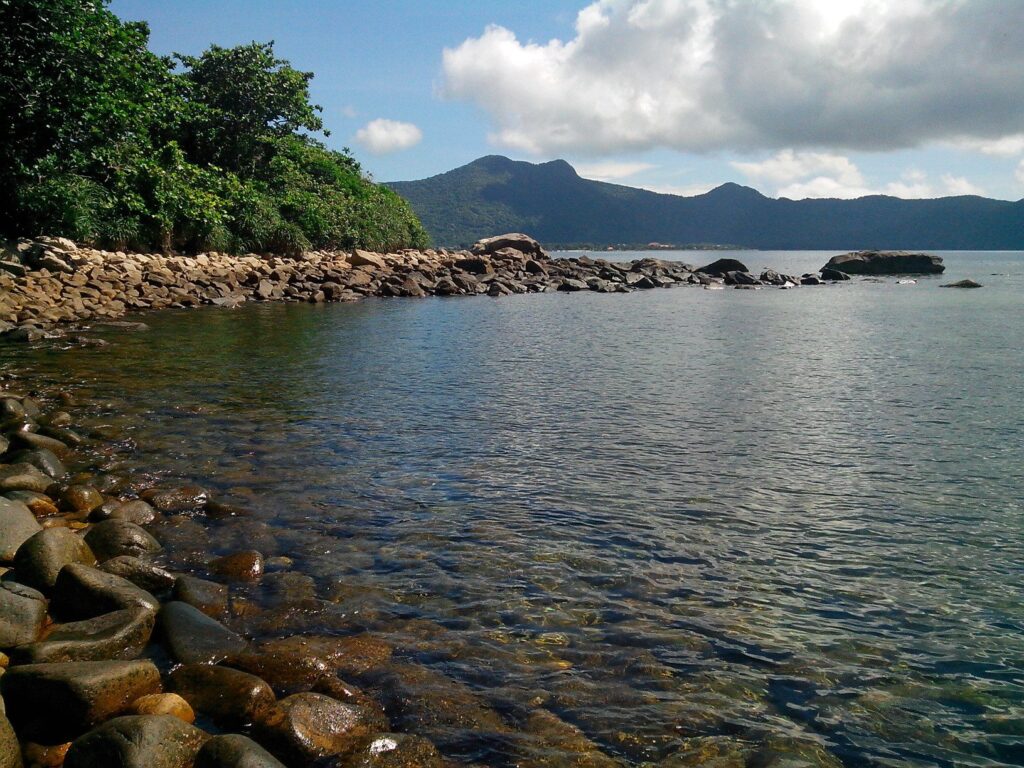
July and August mark the peak of the sea turtle nesting season in Côn Đảo. This is also when forest rangers on the islands become even busier than usual—patrolling the forests by day and acting as “midwives” for nesting turtles by night.
After a quick evening meal, rangers at the Bảy Cạnh Ranger Station gather their equipment and wait on the beach for mother turtles to come ashore. According to Bùi Quang Khải, head of the Bãi Dương ranger team, these two months are the peak nesting season. “During this period, we take turns staying awake throughout the night. Hardly anyone gets a full night’s sleep,” he said.
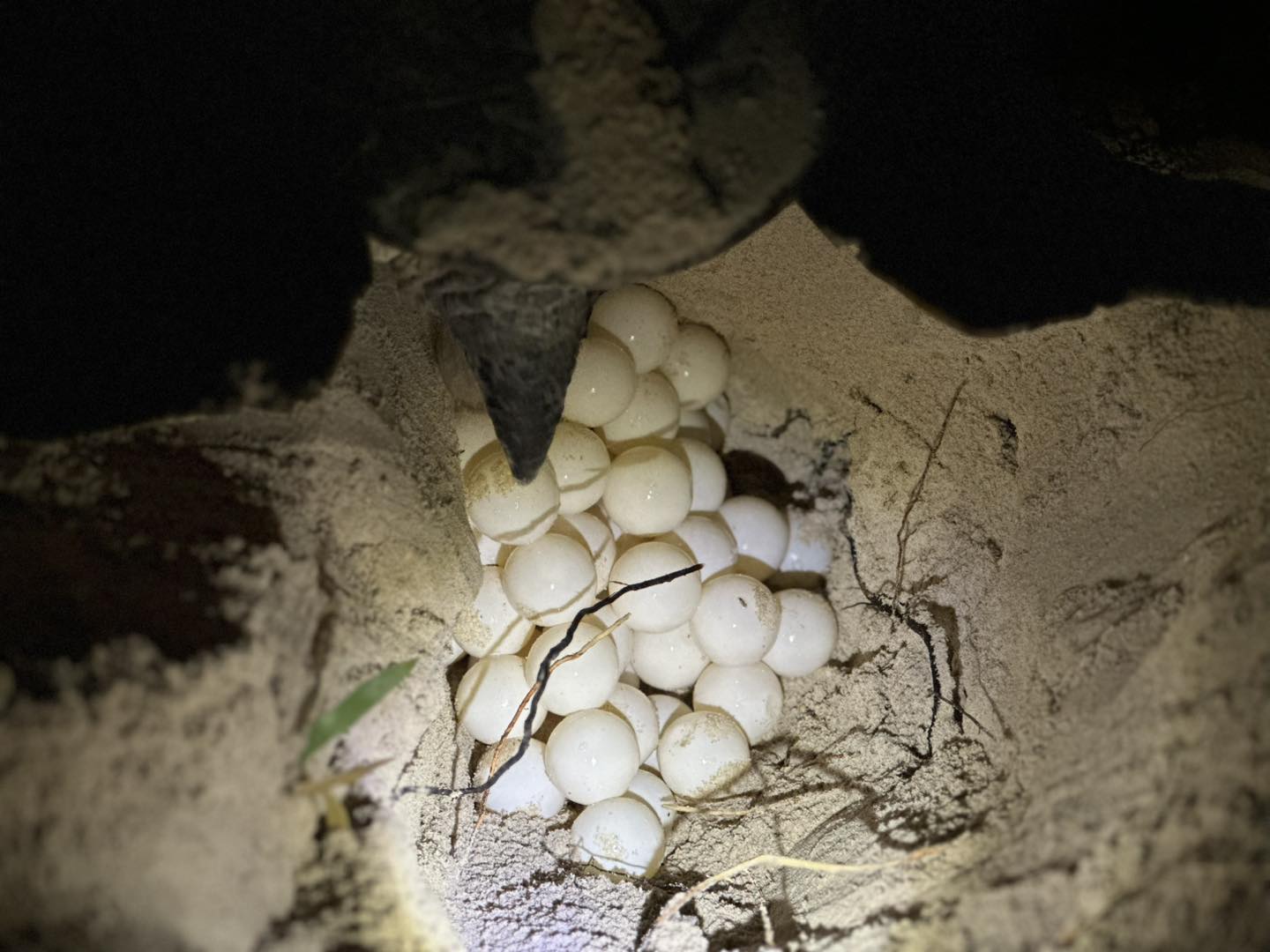
Around 1:00 AM on an early July morning, two sea turtles slowly crawled up onto Bãi Dương Beach. After a long moment of listening and sensing their surroundings, they began digging nests. Once the nest reached a depth of about 60 cm, the turtle started laying eggs. As soon as the mother turtle entered her laying phase, rangers carefully measured her shell and attached an identification tag to track her growth and future nestings.
About 30 minutes later, ping-pong–sized eggs dropped slowly into the chamber. When the turtle finished laying, she used her back flippers to cover the nest and erase all traces before returning to the sea. Each female lays between 70–120 eggs per night and nests 3–5 times each season.
Once the turtle leaves, rangers gently collect the eggs and transfer them to protected artificial nests inside the ranger station compound. After 45–60 days, the eggs hatch. Ranger Cao Đức Cường explained that in the past, nests were simply marked and left to hatch naturally. However, hatch rates were low due to poaching, flooding, and predators. Over the last five years, artificial nests have greatly increased the success rate.
By 3:30 AM, five mother turtles had nested, producing roughly 500 eggs. Just when the rangers thought the night was over, another turtle gradually emerged from the sea. When she had laid about 20 eggs, Cường used a small flashlight so visiting tourists could observe. Watching each egg drop into the nest, visitor Lê Đình Tân from Phước Hải exclaimed: “It’s an incredible experience. Even witnessing it with my own eyes, I still can’t believe a turtle can lay this many eggs!”
For many years, Côn Đảo National Park has offered guided night tours for visitors to watch the nesting process. According to Deputy Director Trần Đình Huệ, Côn Đảo’s waters are home to large populations of green turtles (vích) and hawksbill turtles. The park manages 14 nesting beaches, including major sites such as Bãi Cát Lớn and Bãi Dương on Bảy Cạnh Island, and large sandy beaches on Hòn Cau and Hòn Tre Lớn.
Five ranger stations, each with 5–8 staff members, are assigned to protect the nesting habitats and sea turtle populations. Each year, from May to October, more than 400 mother turtles come ashore to nest under the park’s protection. To date, over 150,000 hatchlings have been safely released back into the ocean, with a remarkable 87% hatching success rate.
Since 1994, the park has operated a comprehensive conservation program, including tagging, satellite tracking, ecological research, beach maintenance, nest relocation, and strict patrols. “These efforts not only protect sea turtles but also provide a unique ecotourism experience. Watching turtles nest is one of the most special tours Côn Đảo offers,” Huệ said.
Story & photos: Quang Vũ – Bà Rịa–Vũng Tàu Newspaper