“On Côn Đảo, think carefully before you speak or act. Don’t take anything that isn’t yours, don’t make promises you can’t keep, and don’t harbor bad intentions… or you may regret it.”
Those were the very first words from Lê Hữu Hòa, a Côn Đảo forest ranger, the moment we met him.
Promises that cannot be broken
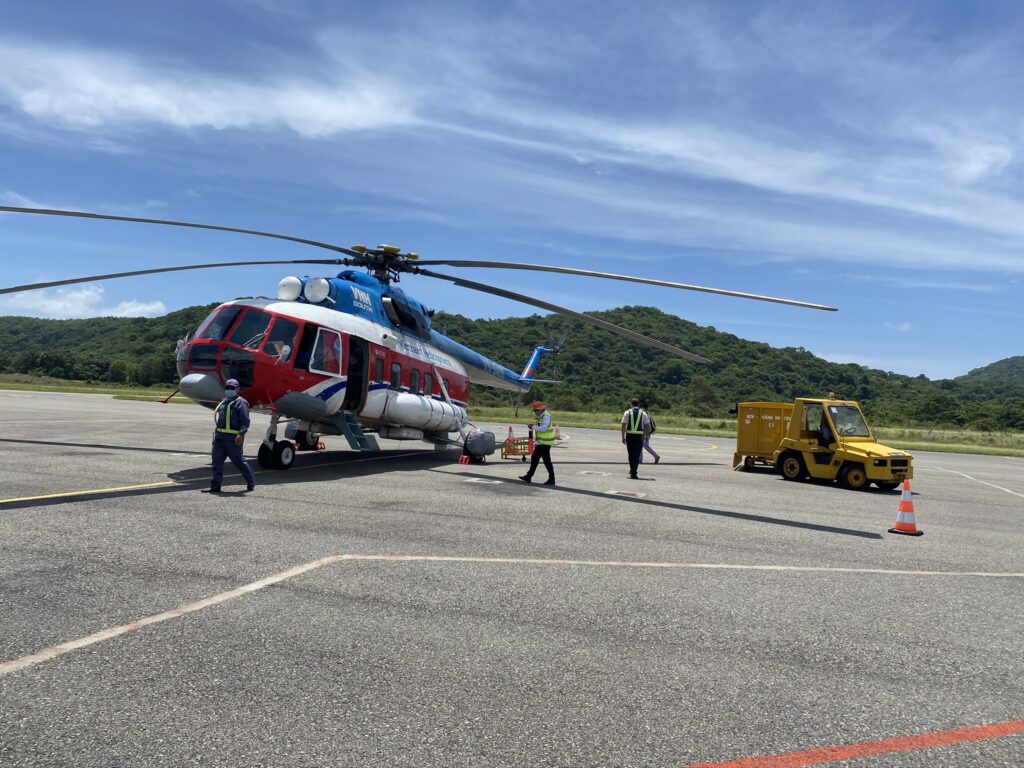
Mr. Hòa picked me up at Cỏ Ống Airport on his motorbike, offering a helmet even though the island has no traffic police. Seeing my confusion, he simply said, “If you don’t wear it, things will become… difficult to explain. You’ll understand after a few days here.”
On the way to town, I was surprised to see brand-new motorbikes left casually along the roadside—unlocked, unattended—yet theft is unheard of. Despite empty streets, everyone drives slowly, wears a helmet, and stops at red lights—even when there isn’t a single vehicle around.
Mr. Hòa told me that more than 30 years ago, he made a silent vow: if the island’s spirits blessed him with a child, he would stay and serve Côn Đảo not for a few years as planned, but for three decades. A short time later, he and his wife had a child. His career shifted, he joined the forestry department, and before he realized it, 33 years had passed.
“There’s something about this island,” he said. “Break a promise or do something wrong—even unintentionally—and you’ll feel the consequences.” He recalled that each time he rode without a helmet, something odd happened: the engine stalled, or he hit a hidden rock and fell. Nothing serious, but unsettling enough to be remembered.
The thieves who never returned from the sea
To help me understand more, he brought me to meet Lê Minh Chương, known as Sáu Chương—one of the last surviving former prisoners who chose to remain on the island. His house stands on the former French-era Sở Tiêu, once considered a “haunted” zone where countless laborers perished. Yet Mr. Chương calmly said, “They were our own people. If you live honestly, there’s nothing to fear.”
As the night deepened and the wine set in, he recounted the story that still haunts him decades later.
In 1990, the island had almost nothing—no supplies, no entertainment, only one communal television. Moved by the hardship, a friend from Duyên Hải brought two motorized dinghies to help the islanders travel between the islets. The boats were tied up at Pier 914 with a simple rope—nobody imagined theft could happen.
But one morning, both were gone.
A few days later, Mr. Chương began having disturbing dreams—vague images suggesting a tragedy near Hòn Bà. After two identical dreams, he alerted the rangers, who reluctantly took their only patrol boat out to search.
By the end of the day, they found three drowned men, severely mutilated by fish and missing both hands. The next day, they discovered the two stolen dinghies drifting nearby.
“What exactly happened—weather, waves, or something else—we never knew,” Mr. Chương said quietly. “But the island does not tolerate wrongdoers.”
Local police confirmed rare past incidents where thieves tried to steal motorbikes by dismantling them and sneaking the parts off the island on fishing boats. Yet every attempt failed in unexpected ways—caught by chance, exposed by strangers, or simply unable to leave the island.
Over time, the message became clear:
On Côn Đảo, the wrong actions always return to their doer.
And perhaps that’s why today, crime is almost nonexistent on this sacred, deeply spiritual island.