


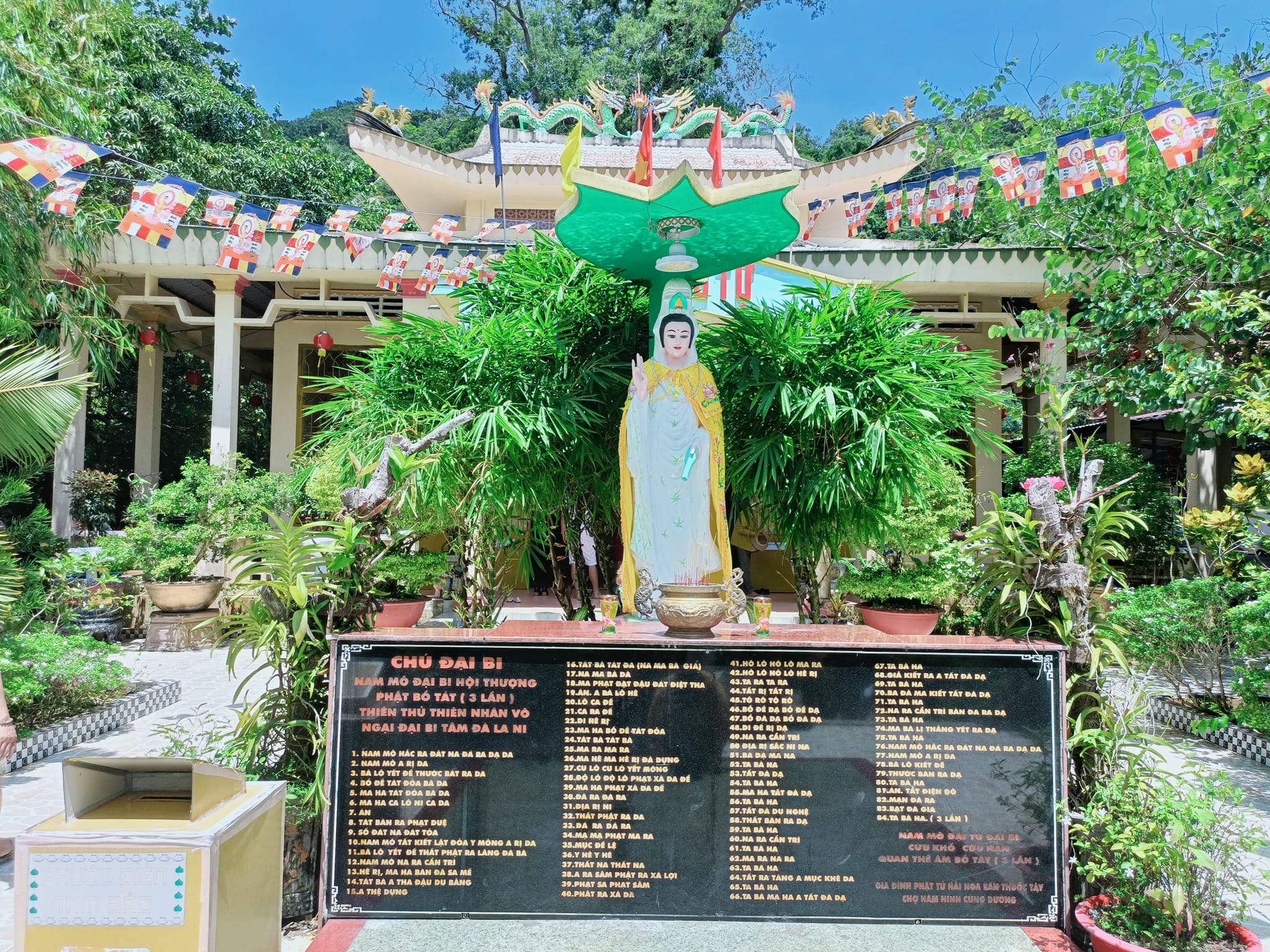
Located just 5–7 km from Duong Dong Town, Su Muon Pagoda (Hung Long Tu) sits along the road toward Ham Ninh, quietly nestled on a hillside surrounded by lush forest. A winding cement path leads visitors up to the pagoda — accessible even by car — where the peaceful temple rests beneath the shade of a 300-year-old kơ-nia tree. Founded in 1932 by the monk Nguyen Kim Muon of the Pure Land Buddhist sect, the pagoda features a solemn main hall with a large statue of Shakyamuni Buddha, a lively Maitreya statue in the front yard, and a serene sculpture of the Buddha meditating under a bodhi tree against a rocky cliff behind the temple.
Su Muon Pagoda welcomes visitors from early morning until late afternoon, with the quiet pre-sunset hours being the most atmospheric for sightseeing and photography. The journey from Duong Dong is simple by motorbike or taxi, and the route offers expansive views of Phu Quoc’s countryside, making it a pleasant trip for those who love nature.
Historically, the pagoda was first built in the 1930s by Zen Master Gia Minh as a humble wooden and leaf-thatched structure. It was almost completely destroyed in 1945, and only in 1955, after his passing, did Venerable Minh Uc arrive to restore it. A major renovation from 1995 to 1997 transformed Su Muon Pagoda into the solid, graceful complex visitors see today.
Today, Su Muon Pagoda serves not only as a historical landmark but also as a peaceful spiritual refuge. Passing through its gate, visitors immediately feel embraced by tranquility. The temple’s layout reflects traditional Vietnamese Buddhist architecture, with symmetrical structures, tiled roofs, and stone pathways guiding guests from one sacred space to another.
The main hall stands at the heart of the complex, elevated on a high platform with multi-layered curved roofs and intricately carved wooden altars. Nearby is a 2.8-meter stone statue of Avalokitesvara Bodhisattva seated on a lotus pedestal, surrounded by beautiful stone carvings depicting Buddhist symbols and natural motifs.
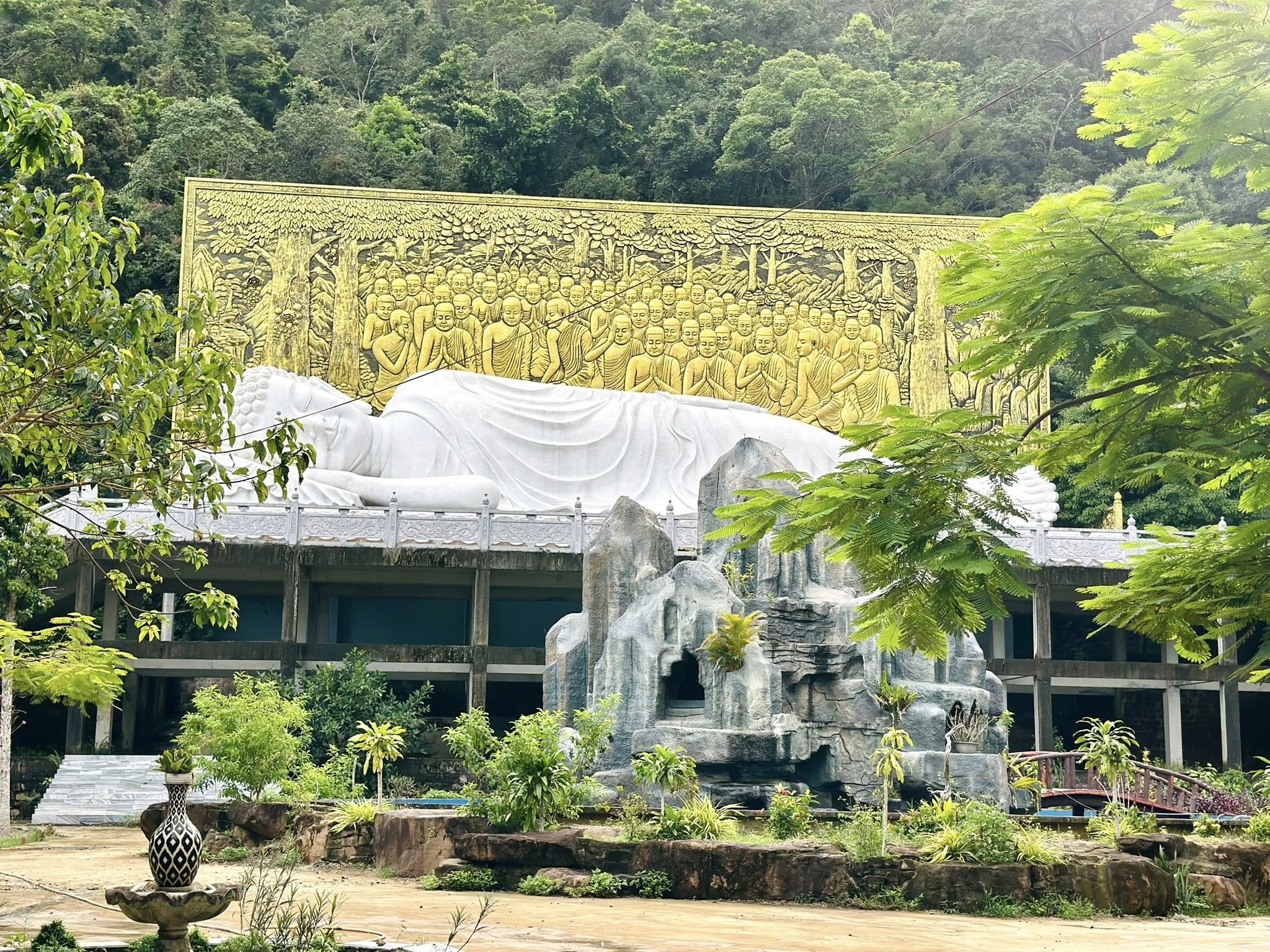
Climbing higher up the hill leads to one of the temple’s most striking features: the Reclining Buddha statue, about 3.5 meters long and symbolizing the Buddha’s final enlightenment. Flanked by two jade-green dragon statues, this area combines dynamic and serene elements in perfect harmony.
Behind the worship area stands a 3-meter stone statue of Shakyamuni Buddha in meditation, overlooking the rolling hills around the pagoda. The landscape is equally captivating: in front of the temple sits the Quan Âm statue on a lotus, framed by natural rock formations shaped like “dragons and tigers guarding the gate,” while terraced pepper gardens, grass fields, and scattered rooftops stretch out below. Towering trees rise behind the pagoda, and streams from the mountain flow around its base, dividing into gentle channels that weave through bamboo groves toward the lower slopes.
A visit to Su Muon Pagoda is not only a journey into the island’s spiritual heritage but also an escape into one of Phu Quoc’s most peaceful natural settings — a place where architecture, history, and nature come together in quiet harmony.




,+Phu+Quoc)