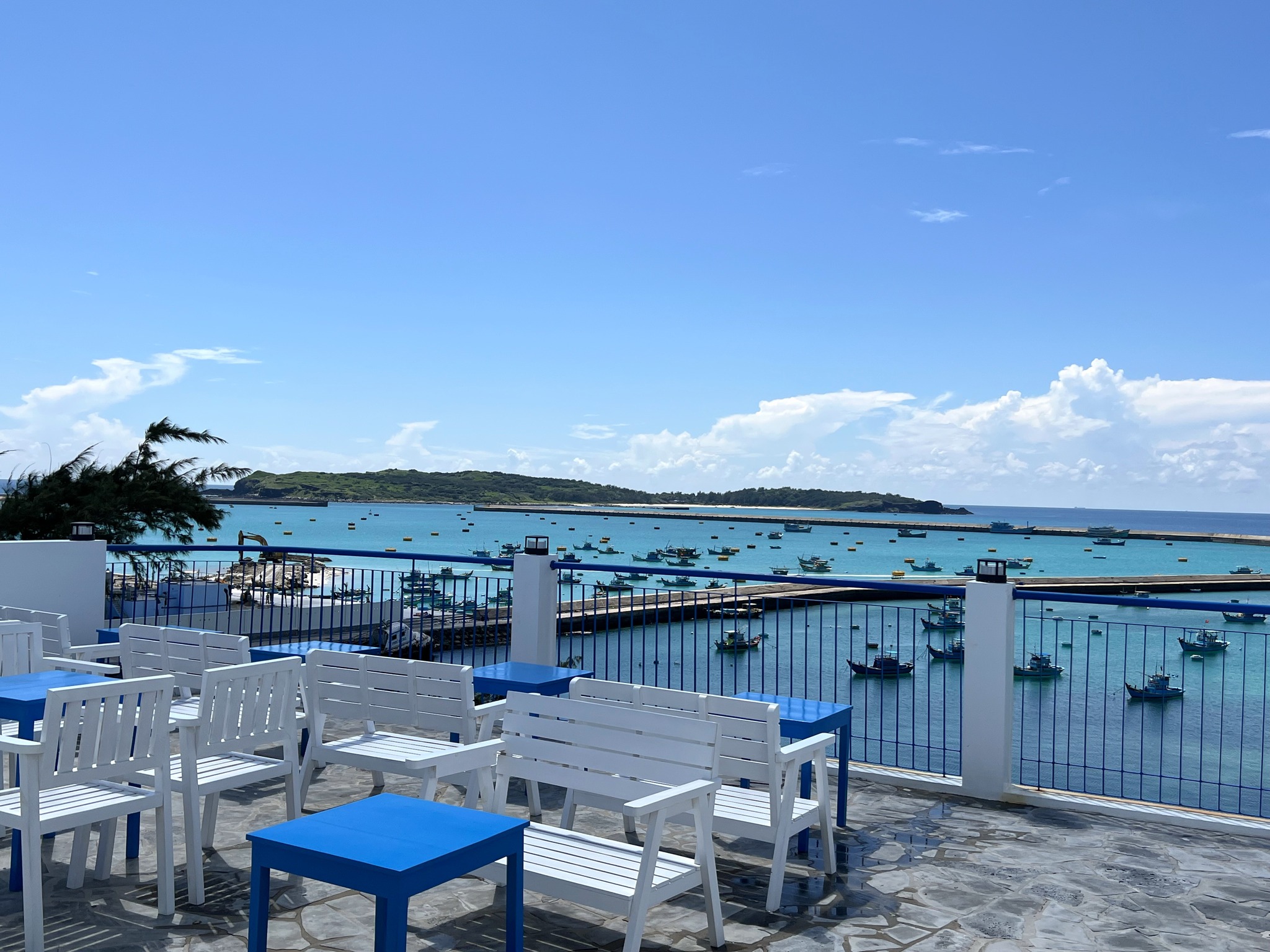
Based on extensive field surveys and firsthand experiences on Phú Quý Island, we present several recommended travel routes for tour operators to develop suitable itineraries for their guests.
Triều Dương Bay – Phú Quý Flagpole – Bai Nho – Ganh Hang
Located in the northwest of Tam Thanh Commune and about 5 km from the district center (Ngũ Phụng Commune), this route is easily accessible—only a five-minute motorbike ride from most accommodations.
Triều Dương Bay
The first stop is Triều Dương Bay, one of the most popular and scenic beaches among tourists and locals. Visitors can enjoy its long stretch of white sand, crystal-clear water, shady casuarina forest, and distant views of Hòn Tranh. It is ideal for swimming, picnicking, and photography.
Phú Quý Flagpole
Follow the coastal ring road for about 500 meters to reach the Phú Quý Flagpole—an iconic symbol of Vietnam’s maritime sovereignty. The area around Đồi Chuối Hill is perfect for light trekking, team-building games, or storytelling about local history while enjoying the tranquility of sea and sky.
Bai Nho – Ganh Hang
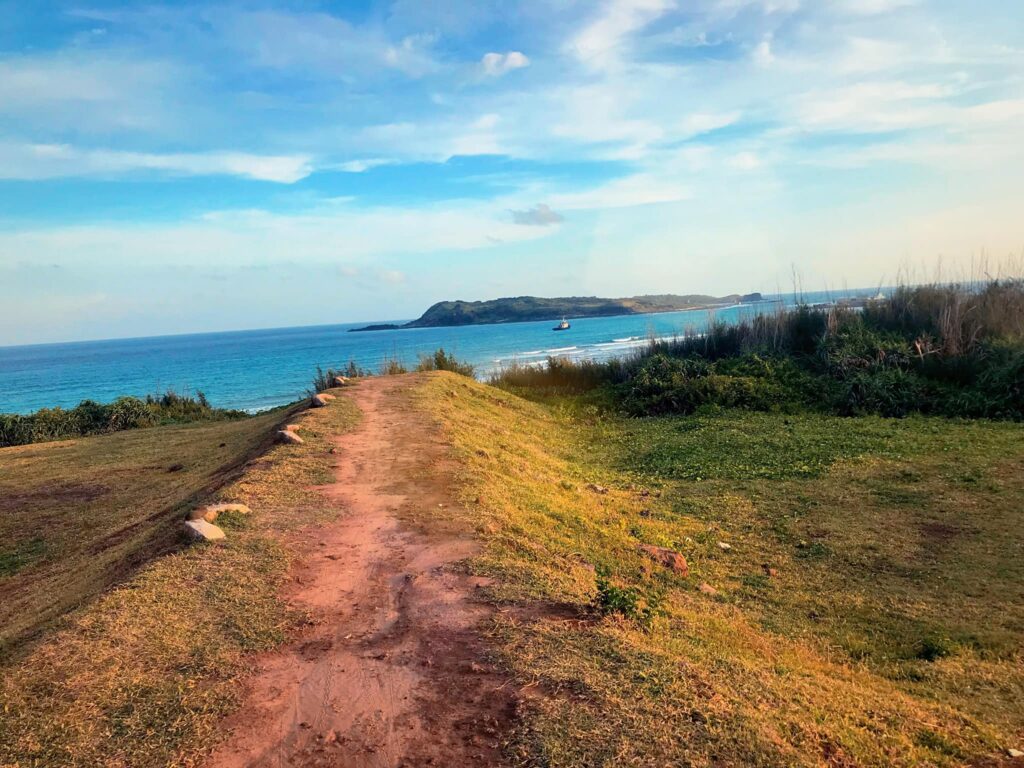
Another 700 meters along the ring road leads to Bai Nho – Ganh Hang, known for its dramatic geological formations. Here, visitors can observe unique spiral-shaped volcanic rocks, stroll along a pristine white-sand beach, admire sunrise or sunset views, or simply immerse themselves in the island’s serene landscape.
After the visit, guests can stop at local coconut stalls to enjoy naturally sweet Phú Quý coconuts—a simple treat enhanced by the locals’ warmth and hospitality.
Route highlights: swimming, beachfront picnics, family leisure, sports activities, geological exploration, and coral-viewing opportunities.
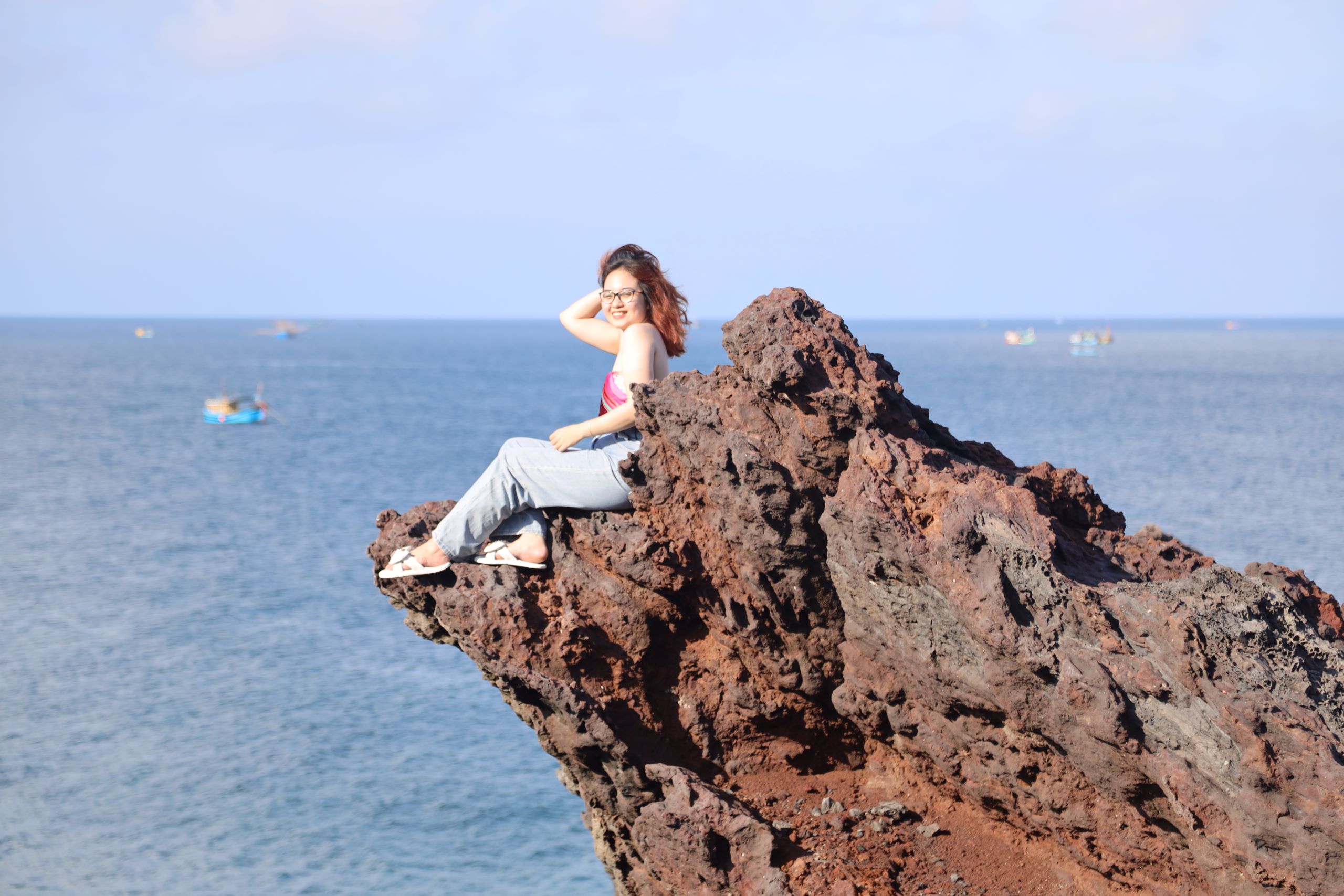
Mộ Thầy – Cao Cát Mountain – Linh Sơn Pagoda – Bàn Tranh Princess Shrine
This route covers major cultural and spiritual sites in Long Hải Commune, around 10 km from the district center.
Mộ Thầy
A 15-minute ride leads to Mộ Thầy, where visitors can explore the surroundings, visit local grouper farms, and enjoy fresh seafood at Long Vĩ Restaurant.
Cao Cát Mountain & Linh Sơn Pagoda
From Mộ Thầy, travel another 15 minutes to reach Cao Cát. Motorbikes can ascend to the first terrace of Linh Sơn Pagoda, while cars must park below (about 70 meters from the footpath). The paved walkway, lined with vibrant bougainvillea, provides a pleasant approach.
Linh Sơn Pagoda, more than a century old, is nestled among towering ancient trees. Visitors can enjoy cool mountain air, panoramic views of the lighthouse and wind farms, and engage with local monks and residents.
From the pagoda, a short climb leads to the summit of Cao Cát, where impressive black basalt formations stack like giant beehives. At the peak stands the statue of Avalokiteshvara (Guanyin), overlooking endless ocean views and the green island landscape.
Bàn Tranh Princess Shrine
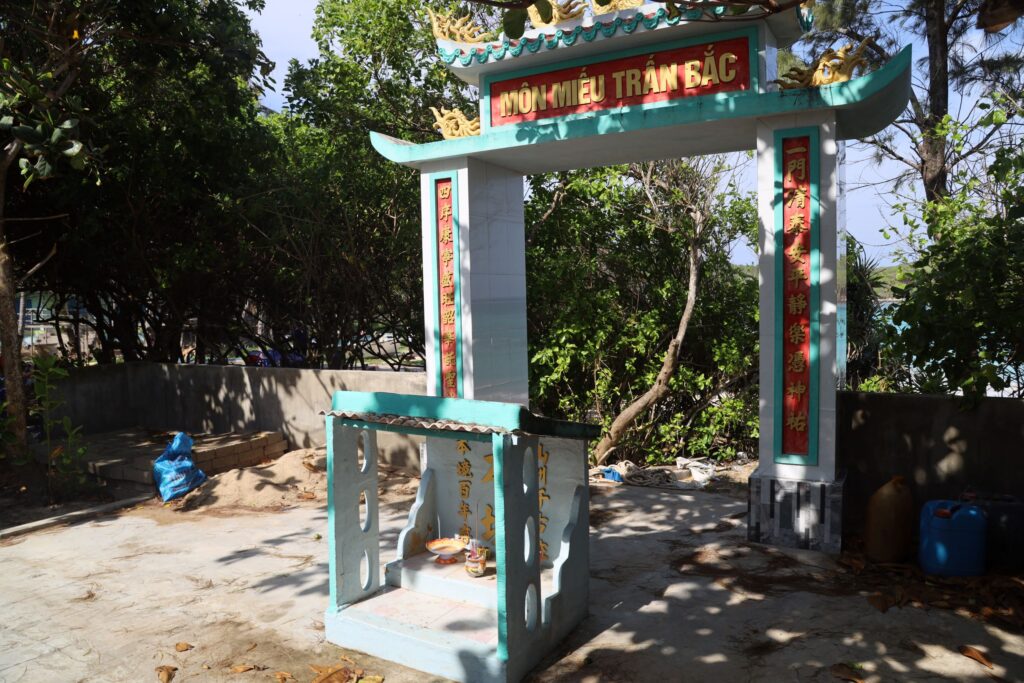
From the summit, the shrine is visible to the north. A 10-minute ride brings visitors to this historical landmark near Long Hải Market and the commune administrative office.
Route highlights: historical storytelling, spiritual tourism, geology, landscape photography, and community-based tourism.
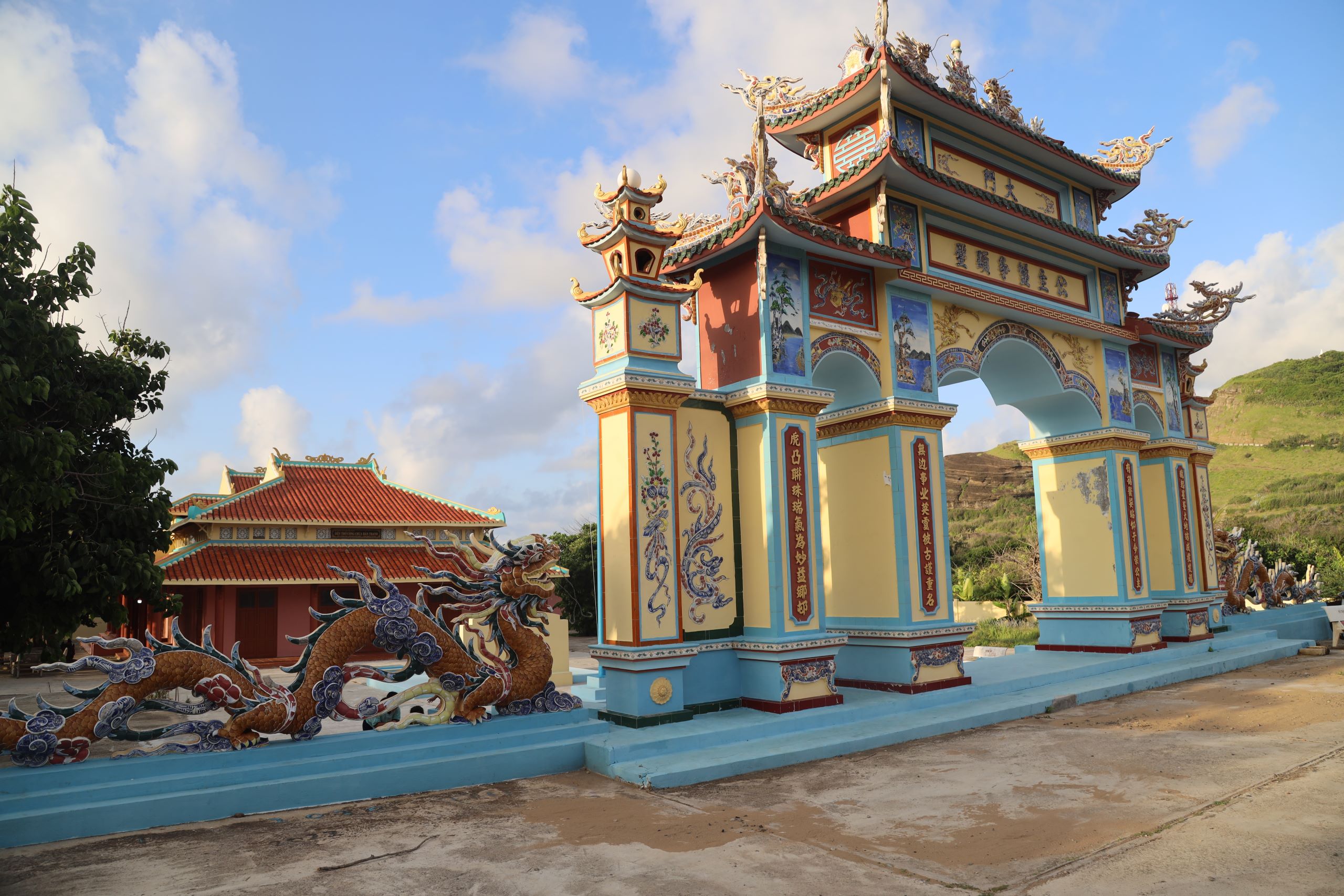
Mui Doi Dua – Linh Bửu Pagoda – Núi Cấm – Lighthouse – Uncle Hồ Torch – Wind Farm
This scenic route covers dramatic coastal views and iconic landmarks of Ngũ Phụng Commune.
Linh Bửu Pagoda
From Mui Doi Dừa, travel to Núi Cấm (15 minutes) and visit Linh Bửu Pagoda at the mountain’s base—a peaceful retreat offering views of sea and sky.
Phú Quý Lighthouse & Uncle Hồ Torch
Leave your motorbike at the base and climb 120 steps to the lighthouse and “Uncle Hồ Torch,” a symbolic monument. Though the trail is narrow and forested, the reward is magnificent: panoramic island views and encounters with naval officers who often share their life stories and experiences at sea.
Nearby, the lighthouse platform offers sweeping views of Phú Quý’s wind turbines standing proudly against the horizon.
Wind Farm
A short 500-meter ride along the ring road leads to three monumental wind turbines—an impressive backdrop for photography and environmental education.
Route highlights: trekking, religious sites, panoramic viewpoints, cultural interpretation, and sustainable tourism.

Thạnh Lâm Pagoda – Linh Quang Pagoda – Vạn An Thạnh Whale Museum
This inter-commune route (Ngũ Phụng – Tam Thanh) highlights heritage architecture and coastal spiritual traditions.
Thạnh Lâm Pagoda
Just five minutes from the town center, this grand pagoda features large architectural complexes, over 30 ancient Buddha statues, a seven-story stupa, and a 1.2-ton bronze bell. Its spacious grounds are dotted with statues, Bodhisattvas, arahants, and figures from the Journey to the West.
Linh Quang Pagoda
Located on Võ Văn Kiệt Road, this pagoda is deeply tied to the island’s cultural and spiritual life. It preserves five royal decrees from the Nguyễn dynasty and was recognized as a National Scenic Site in 1996.
Vạn An Thạnh Whale Museum
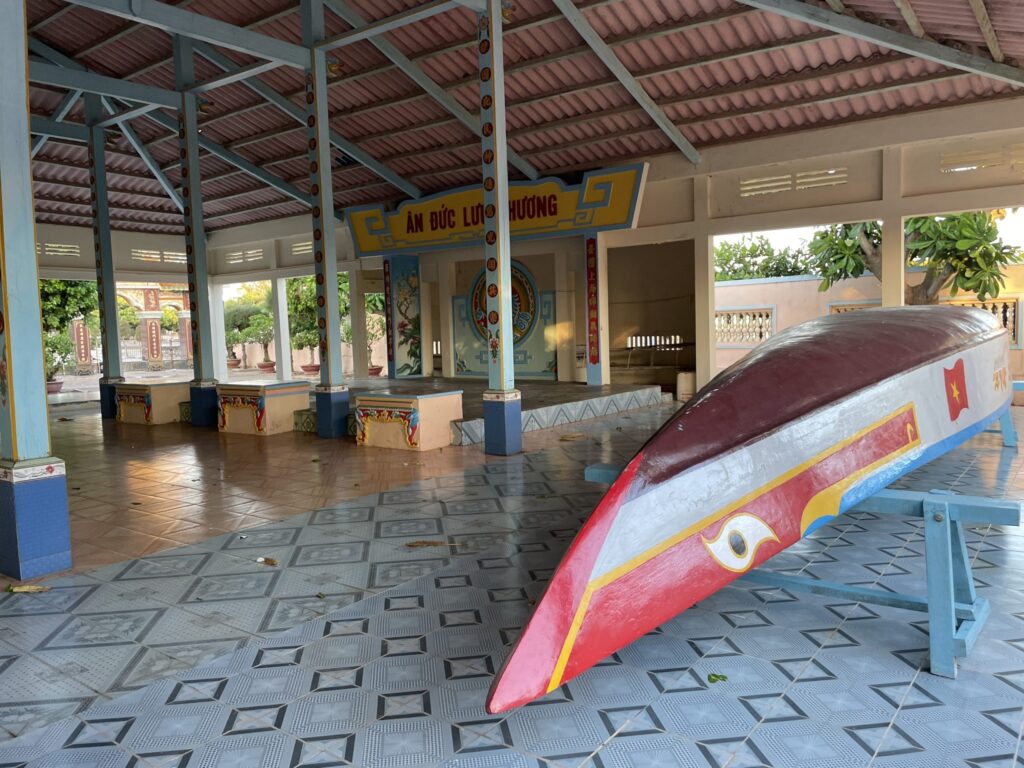
A 10-minute ride brings visitors to Vạn An Thạnh in Triều Dương Village, home to nearly 100 whale and marine mammal skeletons. This extraordinary collection—one of Vietnam’s largest—offers valuable insight for marine researchers and embodies the islanders’ deep respect for Cá Ông (whale deity).
The shrine also hosts annual festivals such as the Spring Ceremony (10–20 January, lunar calendar) and the Fisherman’s Praying Festival (Lễ Cầu Ngư).
Route highlights: cultural heritage, spiritual tourism, marine conservation, museum visits.
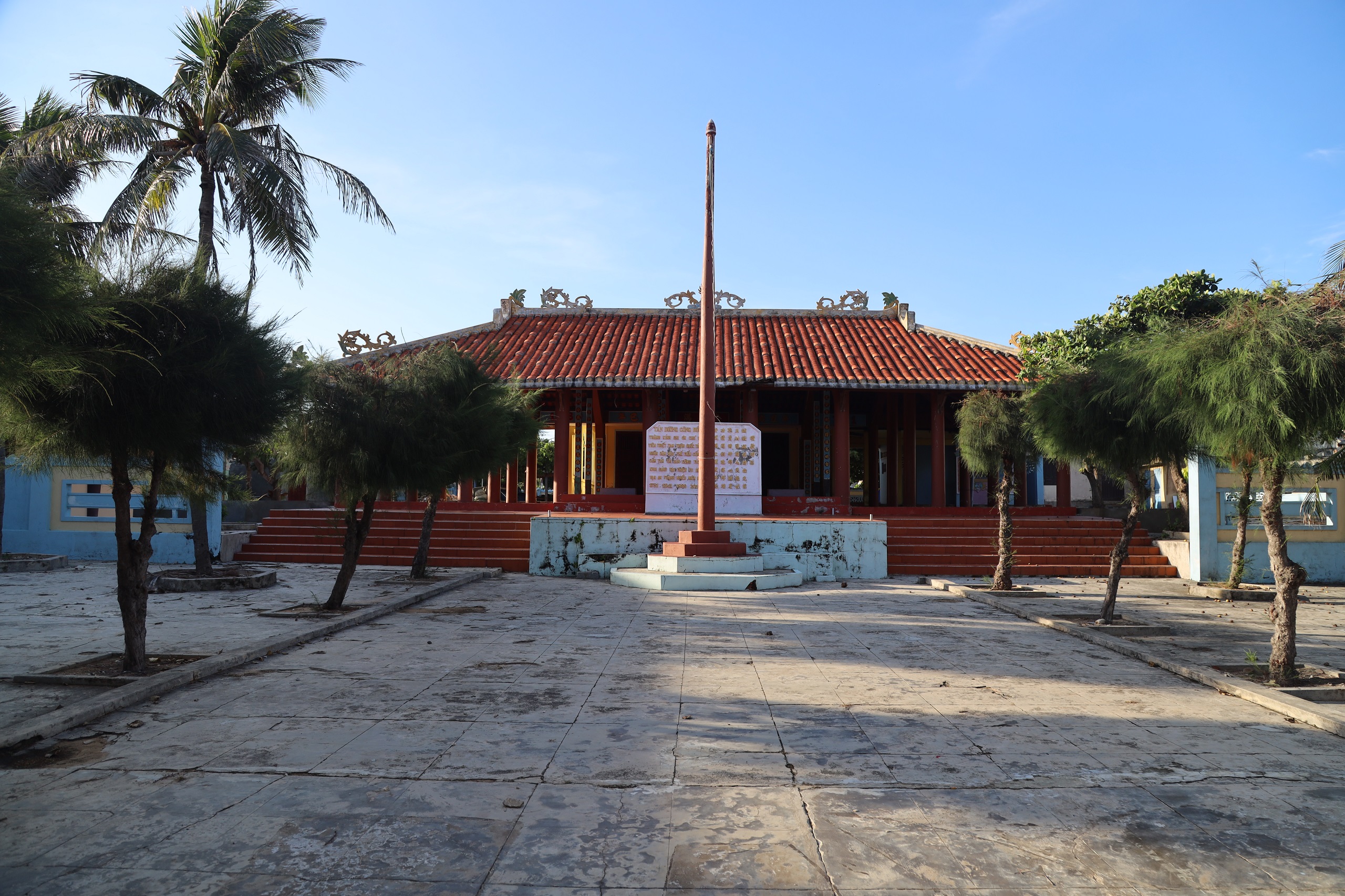
Long Hải Fishing Port – Lạch Dù Floating Farms
This route captures the daily rhythms of Phú Quý’s fishing communities.
Long Hải Fishing Port
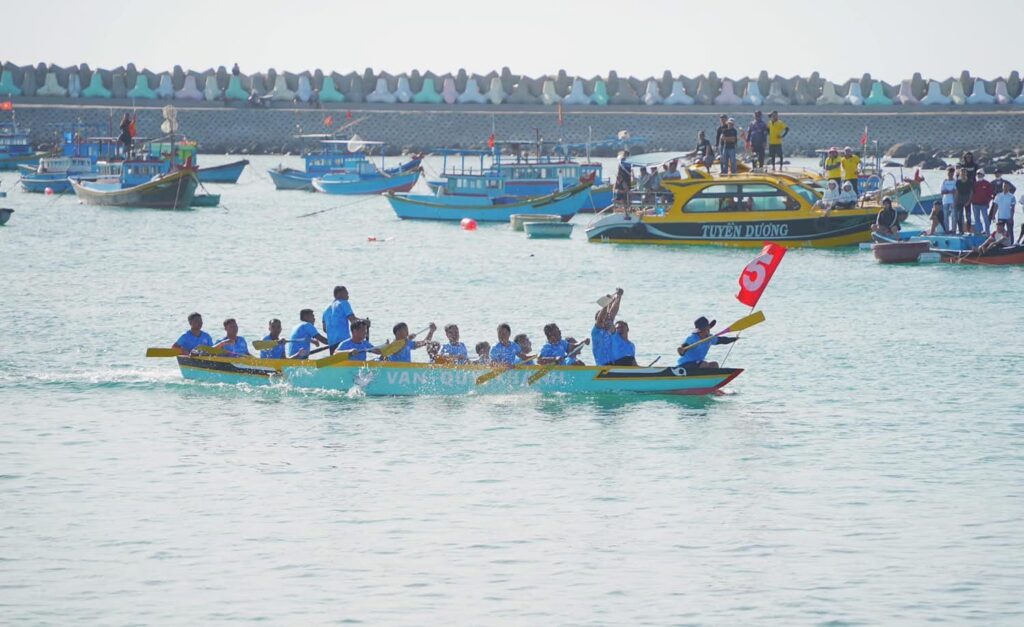
Located in Đông Hải Hamlet (also called Dốc Cái), the port bustles during the southwest monsoon season when fishing boats return at dawn with fresh seafood sold at local prices.
Lạch Dù Floating Farms
From the port, a 20-minute motorbike ride and a short canoe transfer bring visitors to the floating fish farms. Here, guests can select and enjoy fresh seafood, swim, snorkel, fish, or buy local products to take home.
Route highlights: local lifestyle, seafood tasting, snorkeling, and community tourism.
Phú Quý Port – Hòn Tranh Island
From Phú Quý Port, a 20-minute boat ride reaches Hòn Tranh, the island’s largest satellite isle (2.7 km²).
As a radar base, all visitors must register with Border Guard authorities before landing.
Hòn Tranh offers pristine beaches, vibrant coral reefs, unique rock formations, and historical relics such as:
- Shrine of General Bùi Hữu Ích
- Whale deity shrines
- Nguyễn Ánh Well, providing water year-round
- Numerous natural coves and sea caves
Its calm waters, biodiversity, and nearly untouched scenery make Hòn Tranh ideal for snorkeling, fishing, and nature exploration.
Hòn Đen – Hòn Đỏ
Departing from Long Hải Fishing Port, boats reach:
- Hòn Đen in 10 minutes
- Hòn Đỏ in 20 minutes
These islands are especially suitable for snorkeling, fishing, and photography during the southwest monsoon season.
Both islands offer:
- Rich marine ecosystems
- Clear turquoise water
- Abundant coral reefs
- Secluded beaches perfect for leisure outings
Note: Hòn Giữa, located between the two, is too small for tourism activities.