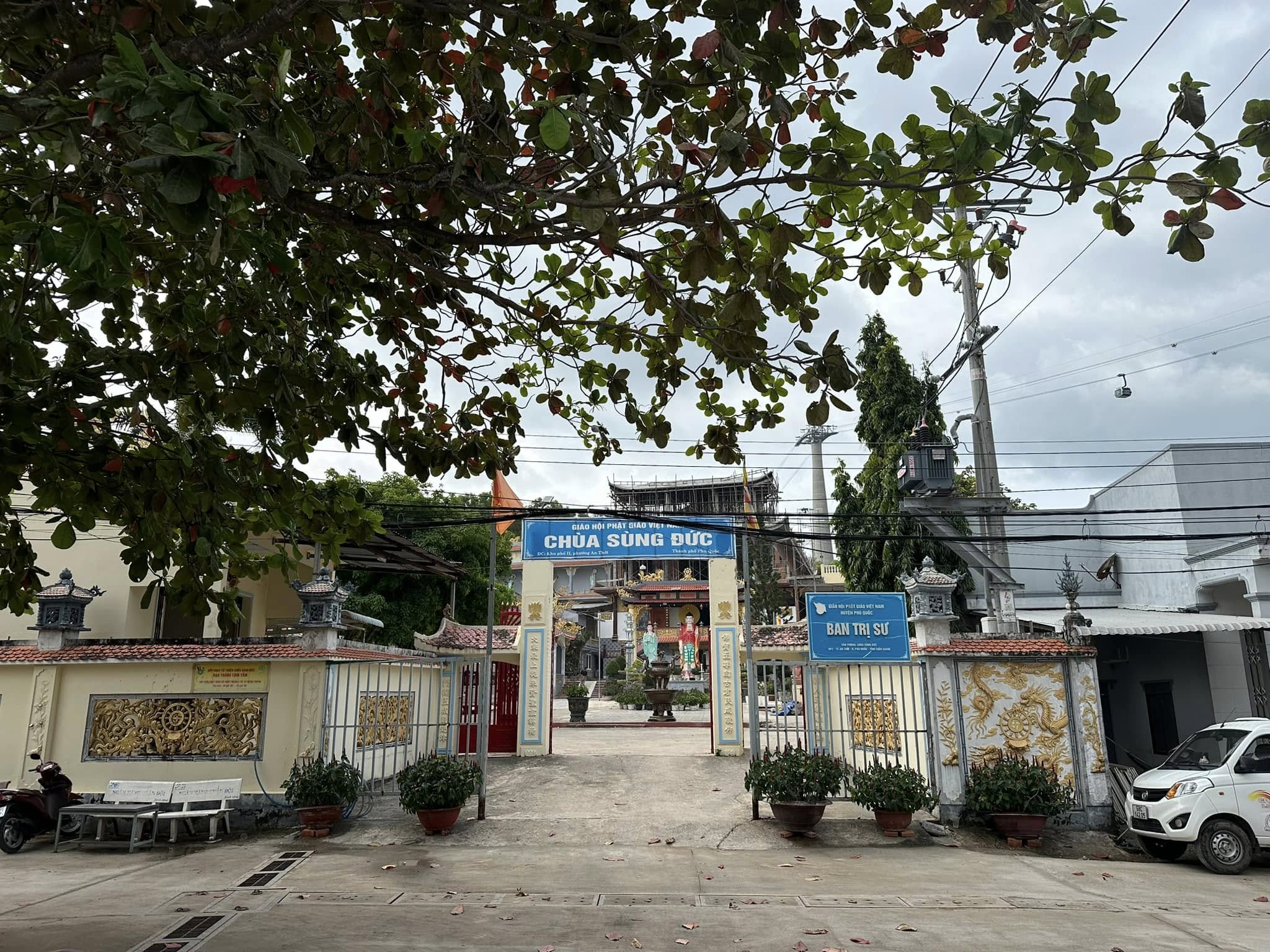
Sung Duc Pagoda is one of the most tranquil and spiritually significant temples on Phu Quoc Island. Known for its peaceful atmosphere and simple charm, the pagoda attracts both devout Buddhists and travelers seeking a quiet, contemplative space during their journey across the island.
Located nearly 30 km from the old Duong Dong center, Sung Duc Pagoda is accessible by both motorbike and car. From town, visitors can follow the route through Cach Mang Thang 8 – Hung Vuong – Nguyen Van Cu – Phung Hung, then turn into a small path leading directly to the temple grounds.
History of Sung Duc Pagoda
In the early 1960s, Venerable Thich Nhu Ngoc traveled from Quang Ngai to the South and chose Phu Quoc as his new home. Here, he built a simple temple to practice and serve the local community. However, the temple was later cleared by the former regime to construct a military airbase, prompting the Venerable to relocate.
With the support of local residents, he rebuilt the temple at its current location, naming it Sung Duc Pagoda, and became its first abbot.
In 1996, as Venerable Nhu Ngoc fell seriously ill, the role of abbot was transferred to Venerable Buu Minh, who simultaneously served as a member of the Phu Quoc District People’s Council. After nine years, he stepped down to return home and care for his parents.
In 2004, Venerable Thich Giac Phuoc from Phat Giang Pagoda was assigned to guide Buddhist practitioners. Four years later, in 2008, Venerable Phuoc Thien was officially appointed as the abbot and continues to oversee the temple to this day. Under his leadership, many structures have been restored and upgraded, helping the pagoda maintain its traditional beauty while becoming more welcoming and refined.
Architectural Features
Sung Duc Pagoda is built using reinforced concrete, with a fibrô-cement roof that creates a sturdy, durable impression. The temple follows the traditional “Tam” (Three-Hall) architectural layout commonly seen in Southern Vietnamese pagodas, featuring:
- A 100 m² main hall
- An 80 m² ancestral hall
The overall design feels harmonious, traditional, and deeply connected to Buddhist aesthetics.
One of the most remarkable features is the row of 48 standing Amitabha Buddha statues, each placed on a white lotus pedestal and arranged symmetrically along both sides of the main hall. This unique structure enhances the solemn and peaceful ambiance of the pagoda.
Surrounded by Lush Nature
The pagoda is embraced by large, centuries-old trees, offering shade and cool breezes throughout the year. The serene natural surroundings blend perfectly with the temple’s traditional architecture, creating an ideal retreat for visitors seeking quiet reflection and spiritual comfort.